 Ukraine Military History Institute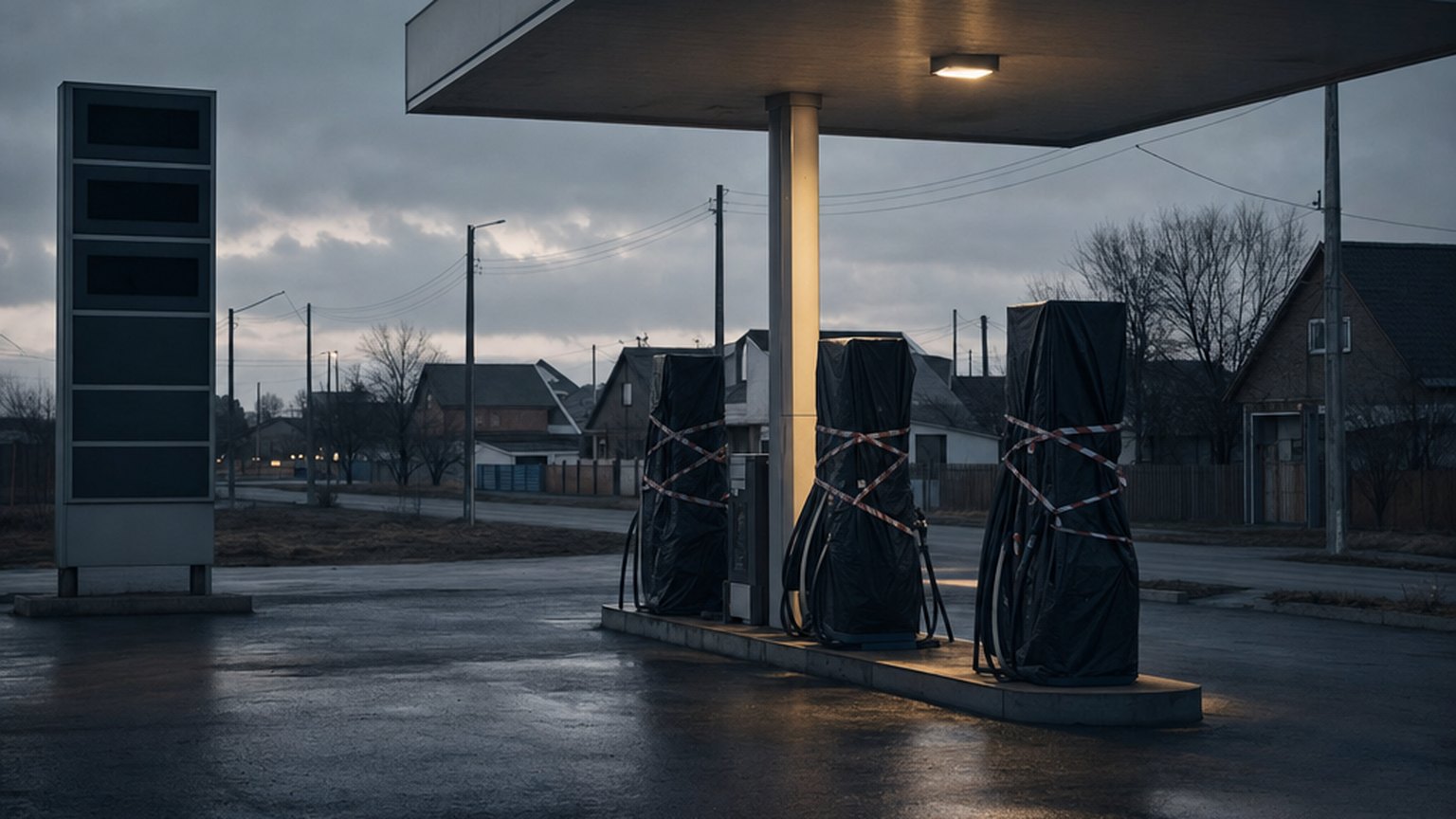
Russians complain about petrol, not about the coffins
The chapter opens with an observation that is uncomfortable and, as a piece of targeting logic, hard to argue with.
Nobody expects Crimea to end the war by blowing up filling stations. But there is a clear difference between Russian bodies going home and a Russian being unable to fill a fuel tank. And the measurable fact offered on the episode is that there have been far more Russians complaining about not getting petrol than about all the dead coming back.
The conclusion drawn from it is blunt. They do not care that Russians are going home in boxes and missing limbs every month. What they care about is fuel in their vehicles and electricity in their homes.
That is a claim about what a society actually notices, and it points a strike campaign at a different target set from the one a casualty-focused theory would choose.
The leverage moved, and that is the real result
Rob Lee agrees it is a positive dynamic, and he frames it in terms of negotiating position rather than damage.
He goes back to when Donald Trump took office, when Trump said Zelenskyy had no cards and Russia had the leverage. At that point, if negotiations happened, Russia was demanding not merely a freeze along the front line but the rest of Donetsk Oblast as a concession.
That has changed. Ukraine now has far more leverage if negotiations occur. Lee sketches the position it buys: we can freeze the front line, and we are not making concessions beyond that, because you cannot advance and we can see the cost you are paying at home.
This is the useful way to read the deep-strike campaign. Its product is not a destroyed refinery. It is a sentence Ukraine can say at a table.
The question he keeps returning to
Lee then puts the same question that runs through this whole subject, and again declines to answer it.
Where is the breaking point for Russia? Where is the point at which you strike one more thing, remove one more capability, and cause Putin to negotiate? He does not know exactly what it is.
Holding that question open is the honest position. Every strike campaign carries an implicit theory that enough accumulated pain produces a political decision, and nobody has located the threshold.
In the occupied territories, the breaking point is a governance problem
Ryan O'Leary offers the most concrete answer in the chapter, and he locates it somewhere other than Moscow.
For Crimea and the occupied areas, he argues the breaking point arrives when the Russian military has to move assets in simply to keep governance running. People will tolerate no running water, no electricity and no fuel only for so long.
Then he follows both branches, which is what makes the argument worth reading.
If civilians leave, the occupation does not get simpler, it gets harder. Ukraine loses nothing and Russia loses port access and the local economy. And the military suffers, because neither side runs logistics good enough to feed everyone three meals a day. Everyone uses local shops. Empty Crimea of civilians and the garrison has no economy to live off.
If civilians stay, Russia has to protect them. That forces a choice O'Leary states plainly: defend Moscow and St Petersburg, or move air defence assets into the occupied areas. It cannot do both indefinitely.
He expects the same pressure to be applied to Donetsk and Luhansk at Crimean intensity, not just the current level. And he ends on the demographic problem underneath it: what do you do with the 7 million Russians who have moved in since 2014? Protect them, let them leave, accept governance failure, or mobilise the occupied areas first. His own view is that there is not much left there to mobilise.
A hundred thousand men, going nowhere
Dima Putyata takes the mobilisation question and gives it a number, with a heavy qualification.
It would be possible, he thinks, for Russia to mobilise up to 100,000, through a mix of voluntary contract signings and small quiet mobilisations. But that still leaves them short of manpower, and in his assessment the whole exercise would lead, frankly speaking, literally nowhere.
That is a significant dissent from the usual framing, in which mobilisation is the decisive escalation. Putyata's reading is that it is a number large enough to be politically costly and too small to be militarily decisive.
What to watch
- Russian air defence moving south. O'Leary made this the observable form of the choice. Interceptors relocating from Moscow or St Petersburg toward Crimea and the occupied areas would show the pressure is working.
- Whether Donetsk and Luhansk get struck at Crimean intensity. He predicted the campaign widens. The comparison to make is the strike tempo against those two areas versus Crimea.
- Civilian departures from Crimea. Both branches of his argument run through what the population does, so movement out of the peninsula is the leading indicator for either outcome.