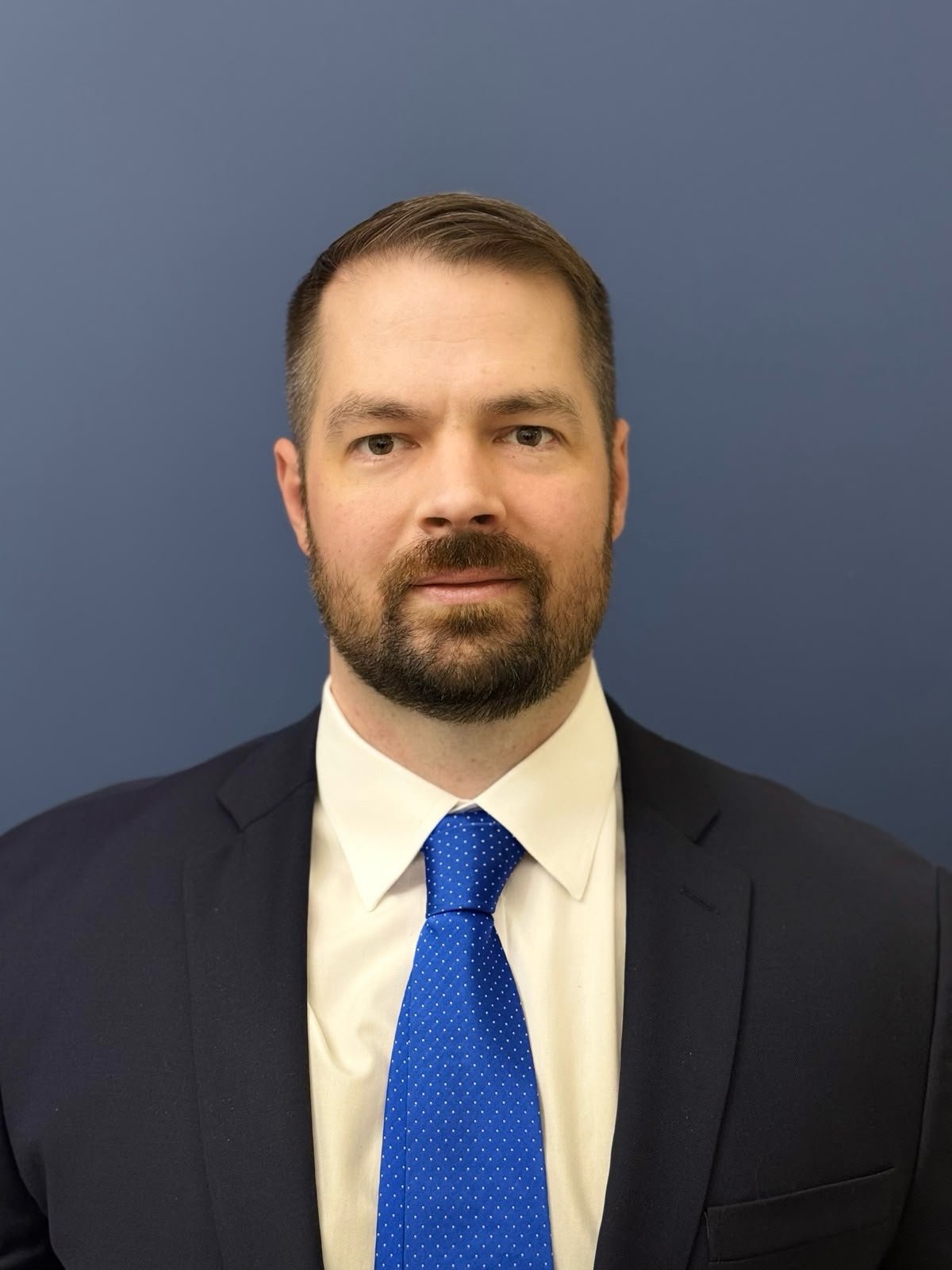
 Rob Lee
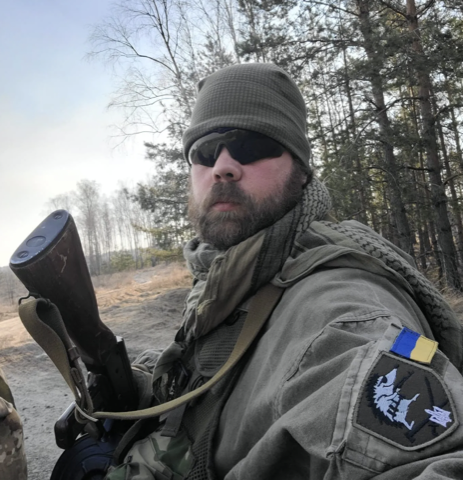 Ryan O’Leary
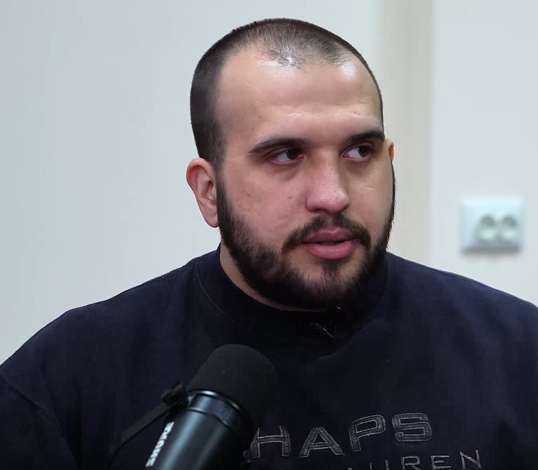 Dmytro Putiata
“We spent a week destroying Starlinks — over a hundred in a two-kilometre section — and we got our asses ripped for it.”
Dmytro Putiata — on what E-points actually reward
“The response from the general staff, and I quote: you can either cancel contract and join the National Guard, or you can go AWOL and join them.”
Ryan O’Leary — on foreigner transfers, year four of the war
“Fedorov cannot fire generals. He cannot replace brigade commanders. That is all in the general staff.”
Rob Lee — on the structural flaw beneath every reshuffle
“Despite the fact that I can be critical — he was, unfortunately, the best Minister of Defence.”
Dmytro Putiata — the verdict
Hello, and welcome back to another episode of the Ukraine Military History Podcast. This is the second in a two-part series that our, our military analysts Rob Lee, Dima Poddyakada, recorded with a special guest, Ryan O'Leary, on the dismissal of Mykhailo Fedorov, the defense minister, and the impact that's having on the Armed Forces, the war effort, and civil society's reaction to it. I'm Sam Cooke, the founder of the
Ukraine Military History Institute and the co-fa- co-host here of the Ukraine Military History Podcast, where we examine military history from the very beginning all the way up until the current war against Russia. So this second of a two-part series picks up where we left off at the beginning where Rob, Ryan, and Dima go through and start listing the specific complaints and problems that Mykhailo Fedorov listed in
his very explosive and widely covered and shared exit press conference where he, he talks about the problems frankly, that he was facing in reforming the Ministry of Defense, the Armed Forces of Ukraine, and the obstacles as he sees it with his commander-in-chief that he was working with General Oleksandr Syrskyi. So this is a in-depth discussion of those problems. They were gonna go through all 11 of the things that Mykhailo
Fedorov listed, but I, I don't think they got through all of them because they go into so much detail and discussion on each one of the points. But it's gonna be highly educational and a perspective that they're channeling from their extensive contacts inside the Armed Forces both Dima and Ryan having served, Dima having left service, Ryan still in, and Rob, of course being incredibly close to a number of soldiers and, and commanders in the
Armed Forces as he lives here. So enjoy the second of this two-part series on this hugely important historical event in today's war against Russia.
I'm gonna go through the list. So Fedorov, in his speech yesterday, it was a very interesting speech where he kind of laid out his entire view of everything that's been happening. He laid bare the conflict he had with Syrskyi on a, on a variety of issues. But he talked about, he said after the first month in office, he identified e- 11 problems that he's been kind of trying to solve, and I think it's a good roadmap to discuss the
current issues in the military and kind of, you know, w- to what extent we agree or disagree with it. So I'm gonna go through the list and let's have a little discussion about this, okay?
Full send.
yes, you know, and let's, let's let's keep the language PG.
I, I've been waiting for this.
yeah, I, I, I know you have, Ryan.
At least on the foreigner part.
Yes. All right, number one, Ukraine's Armed Forces are fighting at the tactical level. Although increased going through the operational two still fundamentally we're fighting at the tactical level.
I don't agree with it. Yeah. I mean, like, it's, it's- It's like yes and no at the same time like, yes, it's at a tactical level but no, it's not, like, a cohesive tactical level. It should be... Like, what he should say, and maybe it's just a language thing that's different but each unit fights as an independent tactical level. There's no cohesion on this frontline. Like, look, nobody owns depth. Nobody owns target prioritization.
There's no planning between multiple brigades. It's slowly changing because of the core structure somewhat. In some cases right.
If the core, if the core has all the brigades in a line.
They have all the brigades, yes. But, like, at the tactical level, okay yeah, he's correct, but the problem is if you look at it one step further, it's each unit is fighting their own battle at the tactical level. There's no cohesive, you know, tactical front when it comes to, like, you have one brigade here that's fighting their own little sector, their o- their own little king of the capital- castle. You have another one fighting here, same
setup, king of the castle. They stick with their lanes. They don't really organize well with the other ones. like drones, it's, it's helped a little bit, but it's also not helped. Like, look, if Russia launched 100 ar- or 20 armored vehicle assault tomorrow in one area, obviously this sector is gonna pivot a little bit to hit it but, like, outside of that, to get the EBOs or whatever, you know, there's no real...
Like, we're, we're fighting at a tactical level, but an independent tactical level. - There's no cohesion.
Yeah, and as of this statement, I need to disagree because in from my perspective, seems like that he is trying to use this SMM, his former experience, in trying to put his hands into this middle strike campaign. because I know that military, they've been planning this before Fedorov arrive to the office, and it's up to them that we have this campaign. -. Yes, he pri- he prioritized these drones, which is, I'm thankful for that which is good.
But our military, our, our definitely not beloved general staff and some generals outside of th- this kind of stuff, they were thinking about that, but they just needed these capabilities. Of course, it's very hard. It's, it's really extremely hard to, to tell some colonel or whoever or higher that you need to adopt drones and use them. It's for every country, not only for Ukraine. Right. But as Ryan mentioned about this tactical
level well, I don't want to ruin someone's illusion about Unmanned Systems Forces Brigades, so I will try to be-
No, go for it.
- It's your podcast. [laughs]
Yeah. [laughs] total different topic. so I will, I will be diplomatic, but I was a part of this forces for a year, and it was in a high position. -. And I would like to see how to fight in a tactical level with drones against Russians. But instead of that, the only things that SBS told me is that we need to form our reports in PDF instead of docs. So I wasn't told, for example, how to fight artillery. Yeah. How to fight against drone operators.
The only thing I was told, "Oh kill infantry. You are not efficient because you are killing drone operators with your freaking bombers. Kill infantry on regular basis. Why the heck you are killing URAL trucks?" -. You are not, you don't need to. Kill infantry.
So I heard, heard an anecdote recently that one Unmanned Systems Forces unit Which was been killing trucks at like, 100 kilometers with, with darts that the, the pilot had some success. They knocked out a bunch of trucks at operational depth. It was, like, a very good operation. and then the commander saw this and said, "Why are you hitting things at 100 kilometers? You can hit things at the zero line- - and get lots of points."
Yes. And they, they-
Yeah basically rebuked for-
And it's, and it's right now. It's not six months ago. Yes yes. It's right now. And another example, I know one battalion under SBS forces that they decided to target drone operators' positions- - which is absolutely right. Right. Because I'm sorry, if you say that drones are killing 90% of everything- - why the heck are you not killing drone operators? No. So, but yeah it's about tactics strate- strategy and et cetera.
so they put all their attention to destroy these drone operator positions, and they've been, how to say diplomatically punished- Yes for what they are doing. -. And they became not very... they appeared to be not in good position in front of SBS forces commander. But in some period of time, they managed to, to find a place under the sun and were allowed to do this. So E-points would be a, a longer discussion.
Yeah, I mean, like- Separate podcast I, I, I don't wanna, I don't wanna dive into it. It'd be a separate podcast. There's a lot of interesting things about it. I would say this is also one area where there, there's plus and minuses to it. this is one area where I think, again, I, I have a very positive view of Fedorov in general. I think he's been a good Minister of Defense. I think he's, he did a very good job in the Ministry of Digital
Transformation. The E-point system, my criticism of it is that when you, when you assign points for certain targets, you are centralizing targeting de- decisions, right? So it's, it's now, it's not a decentralized choice. You are incentivizing from Kyiv what targets we want you to hit at the tactical level, but you, the commanders at the tactical level have to make choices on, on their own, 'cause they will know, "Here is my problem.
My, my problem is artillery. My problem is drones, it's infantry," whatever it is. They need to go after the targets they think are the best. The E-point system creates different incentives, and the incentives, every part of the front line will be different. I mean, again, the, the- - the targeting choice should be different. You need decentralized things. So on one hand, you centralize this. The, the benefit though, I'd say, is
I think Brave 1 Marketplace, it has an interesting way of decentralizing procurement choices because units can say, "Here is what we need on our part of the front line. We need this kind of drone. We like this type of drone," whatever. And it may not be true across the front line, but the unit can then make their own choices enabled by the system. So in, in some, in some respects you have a unhealthy centralization, but you
also have a useful decentralization. And so my view, again, I, I I'm, I have a mixed view. I don't think it ma- Like- Yeah I don't think it makes sense for the militaries. I think it- Yeah like- it has some, had some benefits here. -
The, the, the point thing basically measures success by your ranking, not really... And, like, what I mean that, by that is, like, your, your point level obviously the more points you have, the higher you are on the chart. Like, you know, SBS is always like "Hey," or whatever, 412, 414 is like "Hey, we're number one. We have 200,000 points this week." But that's not a good way to measure success. Succe- success should be measured, like, what
did you change at the tactical level for your sector? Right. And I think, I think the whole idea was a good thing, but, like again, like you're saying, you centralize the decision-making on targeting, whereas in reality, success should be like, look, you know, each month the sector commander, whatever, for Kharkiv should submit a document saying, "Hey, this is what we're targeting this month." And then at the end of the
month, instead of tallying up all the points every week, at the end of the month, you say, "Okay, let's see results." And then there should be a report that says, "Hey, we hit, you know 5,000 fuel trucks. This is what it did to our front line. This is the success we had that I..." Like, the follow-on success with our infantry or whatever. But we're not doing that. It's just, "Hey, you killed 500 dudes in Kursk yesterday. Good job.
Here's a bunch of points."
So, so I do know some, some... I've, I've talked to some commanders about this, and they say, "Look, we make targeting choices not based on E-points. We do it-" So, yeah w- we do it based on what what, what we need to do. E-points is, is, is fine, but it's it's not the priority." When that's the case, I think it works out fine- - where it's okay. Here's where we're gonna get some points. We can use it for buying things we need. It's decentralized.
We're still going after this focus. The, the problem is, okay, if, if if you're the battlespace owner of a brigade or corps or so on, if you lose territory, you're gonna get blamed for that, right? So that, that, that always is gonna be usually the priority. If you're an unmanned services forces unit the issue, they're not tasked with holding territory. So they're not, they're not responsible for you know, holding the front line, in
which case these incentives become stronger. And in some cases, some, some commanders say, "Where are we in the rankings? This is what matters to me," because it's a tangible thing. It's seen by everyone. When that becomes the case, then it leads to bad incentives. I think, I think it's okay as long as you, you understand holding the front line is a priority, protecting the lives of your infantrymen is a priority.
This is a, a additional thing, which is fine, but it's not the, the main priority.
Yeah. I don't want to talk a lot about E-points because as I said it's that, it's, it-
[laughs] Sore subject.
[laughs] It's, it, it's, it's very painful, first of all, and secondly, it's literally two hours conversation.
How many infantry did you kill?
not that much, and I am proud of that, to be honest- [laughs] having all the resources I had. [laughs] you s- you said that he accused General Staff because fight at tactical level, right?
He s- no, not, not, not General Staff. He said the, the armed forces in general-
Oh, okay are just- Okay. But but who created E-point system? I think it was, it was Ryan, right? [laughs] No Fedorov. Yeah yeah. Okay. If Fedorov created E-point system, but he's he's saying right now that army fights at a tactical level. Why, for years- - we had the highest points for that infantry? -. It's, it's like, like let's imagine, 12 points for that - five points for Urals truck, for example. -. That was kinda approximately the ratio So
if you put all the points to infantry- - is that a fight and tactical level? -. Why I r- you're talking right now. Right. That army is fighting at tactical level. Right. Man, we, we went after s- so in '24 we spent a week destroying Starlinks and got, like, zero point, like- Yeah barely any points. Yeah. And then we got our asses ripped for it, and it was like we hit over 100 Starlinks in, like, a
two-kilometer wide section, just obliterated Starlinks- every time. And we got yelled at for it. So like, yeah, I think the point thing is an issue.
but this, this is, like, one of those valid criticisms on Fedorov too and, like, his, his background. Like you know, some of your general staff or upper leadership are like "Well, Fedorov doesn't have a military background at all. That's one of his problems." And, like, that is true to a certain extent. Like, some of his ideas just don't work as how you wanna implement it you know? Like, I think, I think it was a good idea to try to incentivize
effectiveness because, like, look, in 2023, '24 you might have some units at, like 2 to 5% hit rates with drones. Yeah. Like, I mean, like, look, we In tw- 2023 we were trying to fly drones around our little, our little base HQ to figure out how to fly them, 'cause back then we didn't have training. Well so so- But, like, now, now there's no reason any drone unit should have, like a 10% effective rate.
So I think the, if I understand it correctly, I think the reason they came up with E points in the first place was b- when they, when they created drone line, they wanted to determine who are the most efficient, effective drone units. They did so by having a point system. They then found those five, and they elevated those five, and tried to make it into an operational unit. -. Part of the drone line development, which
worked and then kind of didn't work initially it was part of the ground forces, right? So initially it was, "We're gonna create a kind of structure above the maneuver brigade," because at this point we didn't have corps, right? So you didn't have anything above brigades. You create some kind of drone unit that is above the maneuver brigade that can operate at greater depth on the front line ideally, and then they'll
back up brigades on the front line. And that was initially an- it happened under Drapaty when he was, he was land force commander. The initial idea, I think, was good. When those units went to Omesis forces they no longer tied to the battle space owner, and that created some of the problems. But I won't, I won't belabor this too much. I would say there is still an issue of coordination at tactical level and operational as well.
middle strike is a very promising direction. It's not fully clear to me, maybe you guys have a different idea, whether or not all the units doing middle strike are actually coordinating their campaigns. Be-
Doubtful.
Because, and, and you have a lot of d- so, I mean, right now okay, you have Omesis forces doing middle strike. So 1st Center, you've got Madyar's brigade, you've got Nemesis, a few other ones doing it, K2, so on. You've got Alpha is doing it. You have Horror is doing it. You have -
Omega
Oma- yeah, National Guard, Omega, and then you have corps, right? You have, you have Azov Corps, 3rd Corps. Yeah. look, my, my view is that the corps should have this capability. It's good that corps have operational middle strike capabilities. Sure. It's nice seeing corps have HIMARS now too, so they've got something to be on this. but it's not clear to me that these are all coordinated. Right. You have, you have different units doing
some of this. Also, Assault Regiment too has this as well. I, I think the, the Azov C and the Black Sea stuff that SBS is doing now is probably coordinated.
But when it comes to, like, like you can tell it's not coordinated. Like, look-
Well, well, ce- certainly the, the, the strikes on tankers are definitely coordinated.
Yeah.
The Crimea campaign is definitely coordinated.
But when it comes to, like, what Azov did, they smacked a bunch of stuff in Mariupol. Like, not even really their sector. Like, I mean, like, like, I, I don't, I don't think, I don't think it's really... I, I would almost bet that it's not coordinated- at a decent level. It's probably, like, look, every, every one of these drone units is now getting Hornets, Darts, RAM- Right whatever, 20 other different types, and
it's like now they have the capabilities they're gonna go use it. -. Doesn't necessarily translate to, like, a planned out thing. Like, "Hey, today we're gonna strike every fuel truck in this sector," or, "We're gonna strike... We're gonna, we're gonna... All of our, all the units in this sector are gonna focus on this one road to basically deny movement." I don't think it's being done like that. You probably have some battalions and brigades
like, doing it this way, where, like you know, there's communication, you know, horizontal but not vertical.
Yeah, I mean, I know in... So Azov Corps, at, at the corps level you have units of Hornets, at the brigade level you have it, too. -. And they, they are, they are coordinating what levels we operate at. Azov had a very clear perspective of what they wanted to achieve, and so they are, they are executing it themselves. Part of this comes back to, too Azov worked with Pernal Tahnami early on. -. The Hornet. Yeah. And so they helped.
They, they developed and they made the Hornet much better. And so they got a lot of them, 'cause they, they coordinated with this unit, this company for a long time. Some units worked with Fire Point, so they have a lot of FP2s. It becomes kind of a ad hoc thing, where it depends what, what company you work with, which drone you get-
But but I don't I don't- and what capability you have I don't think they're really coordinating to like... I, like, I think all of them are like, "Look, this is the area we're gonna hit." But, like, I don't think, I don't think, don't think, like, Azov is saying "Hey, 3rd Assault Brigade, we're going to - we're gonna deny this road. You should help deny this road."
No, not in their relationship, definitely not.
You know, like, but, but I mean like, bad example using those two. But, like, you know what I mean? Okay. Like, I don't think- Right whatever, 93rd and - 59th Brigade saying, "Hey, look, we're gonna..." 59th's gonna be like—
They're not near each other at all though.
Well, I'm just, two random units. I'm just saying, look, nobody's saying—
Yeah, of course. They're, of course, not coordinating. They're opposite sides of the front line.
[laughs] [laughs] Whatever.
Of course they're not coordinated.
Two units near each other, one's gonna be hitting this road. They're not saying, "Hey, we're taking out this road. Hit the new ones when they go down the next road." I don't think—
Most likely no.
There might be some teams that talk to each other, but there's no coordination.
Yeah, as it usually happens. What I really don't like right now is that we give these possibilities to strike 150 kilometers deep to maneuver brigades. Which for me absolutely makes zero sense. For example, NGB Spartan Brigade— operating Hornet fine. Striking somewhere 150 kilometers from the front line, not fine. They set a sole brigade having a quite decent UAS regiment— that was made to support army corps at operation tactical level.
Is using Hornet and striking somewhere 120 kilometers from the front line. The question is, why? Where will it lead to? It literally makes no sense because it's a decision about here and right now without thinking about the future and how you wanna deploy your forces.
I think there could be an argument to be made though. If I take a deep strike drone that can go 1,000 kilometers with a 100-kilogram payload because it has 80 liters of fuel, if I'm gonna go 300 kilometers, I can now run a 200-kilogram payload or 300-kilogram payload. So I think there is a reason to have the deep strike, the large platform drones in these units. But I think they also need to be told, "Hey, look, just because you
have a fricking whatever, FP2, don't launch at 500 kilometers. Increase your payload weight, decrease your fuel hit at your depth."
Yes but— Don't worry about Алабуга or whatever. But this is under Army Corps command. It's not for a maneuver brigade or maneuver battalion, "Oh, I'm fighting here right now." "Here's my air responsibility. Let me strike Луганськ." What's the point? That's what I...
Yeah, but that's what I mean though. They should be able to have these larger platforms, but they should be told—
Yes sure. Absolutely.
"Hey, this is your depth. Don't go past it," unless it's some general, what—
Yeah, it should be... The main thing here is that responsibility should be divided.
But I would say Spartan Brigade is not operating with the rest of the corps, and so the Hornet is getting sent to the corps, the corps distributes to the brigades, and you've got Spartan on their own with the rest of the corps away from Spartan, and so...
[sneezes] Fuck.
Okay. No, it's okay.
But yeah, I think having the assets everywhere is good, but they should... There should obviously, there's no reason a combat brigade should be launching 200 kilometers deep, 300. Okay.
Yep. No, okay.
Number two. We're gonna keep getting through these. All right? He talks about the corps system. He says, "The corps system has not yet fully taken shape. We have corps that are successful. They advance every month. They do not lose territory. We have corps where the commander is replaced every month. There are corps that have developed their own school of thought and philosophy. There are corps we do not know how many brigades they have or what
is happening inside of them. Everything depends on organization, but there are corps that do not distribute all the resources internally."
I think that's a very generic statement and again, this goes back to not being military. Look, this idea that some corps aren't losing ground, okay, cool. If there's a corps in charge of Суми and Чернігів, they're probably not gonna lose ground, whereas if you're in the Запоріжжя or Покровськ sector— You could be the best corps in Україна, and you're gonna lose territory in that just because of the pressure. So I don't think he's taking into
account what the operational tempo is in certain sectors versus others. I think he's right that there's still work to be done -. but I think, yeah, I think there's still room for improvement. you know, like transitioning over to a corps structure when you have units based everywhere all over Ukraine, it was gonna be a hard thing to do. I think they've, what- Yeah I don't know, 50% of the way there. Is that right? - What do you think?
I mean, first of all, for me it's a little bit weird- - statement, to be honest. Okay. And it was... I definitely will never, ever you know, like have my opinion for Syrskyi, but he said it publicly- and not only him, that corps reform has a, a couple of let's say, sorry, forgot the right word, a couple of echelons. The first one, we create corps. We understand, okay, this corps will have these brigades and these opportunities. Right.
[clears throat] So this is, will, will be the ar- of responsibilities of the corps. The second pha- oh, phase. The second phase will be we will take this brigade from here and move it to its corps command. -. But this is the hardest thing here because, for example, if you have rapid for- sorry, rapid forces, I mean, they are rapid. -. And they are, were made to do maneuvers and -
Right to make a breakthrough.
So is it okay to give him to give them a part of frontline where they should defend? No, I think this is the forces for you know, like for the reserve, where you, you, you use them in some directions where you need to, maybe to improve your situation, to make it better- or to break through. And talking about having every corps under every corps that ha- will have their own brigades, yeah, absolutely true, but it, it requires a lot of time. Right.
And in some cases, we had, unfortunately way too much examples when during the rotation, knew about that, and they made significant advance. Right. This is how we lost -
Toretskaya
Toretskaya. Yes. -. Yeah. Kind of re- A, a, a, a big city. Yeah. And it happened so fast that people even didn't, didn't understand what happened. -. So-
Yeah, I, I think it's like 50% of the way done, but like, like it's a huge endeavor to be done. Like, I mean, you have to, you have to understand that you're now staffing the corps level too, so you know this brigade commander gets pushed up. This battalion commander gets pushed up. So like- Al- also- each one of these levels has to learn, you know? And plus the, the corps assets are not fully established. Yeah, that's like- So I
mean- I think it's like 50% there.
So yeah, corps reform- Yeah someplace like maybe that's a pre-federal reform, began 2025 or early on. -. Ukraine is a brigade cell military which has some benefits, but the big detraction is you have nothing above that. And so you don't have division assets. You don't have army assets, so on. And so especially the Russians, Russians have divisions. They have armies. They have assets at higher levels, including like, you know, fires assets, EW, and
Ukraine brigades just lack that, and they lack the support, and so it's always a big issue.
Did, did they ever like give a timeline on this? Like, this might be another one of those things where like when they did this, if they just said, "Hey, 2025 we're gonna build out corps, division, whatever. We'll, we want it done by 2028." You know, like-
I mean, I'm not sure that they have some kind of deadline because it's hard to predict-
But I mean, like-
b- and plan, but maybe, yes
but I mean, is there any steps?
Well, I think the, the corps, they are established, and they took over from OTUs. -. OTUs got disbanded last year. The OSUV got disbanded too. So you now have operational commands. You've got nor- with the Joint Forces Command under Drapaty, which is the operational command north. -. You've got east under Nikolyuk, and you've got south, right? They, it kind of control the front line essentially. Yeah. the corps reform I think has been positive.
Brigade commanders have said they think it's better. The OTU is a temporary structure. The commanders were temporary. The staff was temporary, and all the brigades underneath them were just attached brigades. And so like they didn't, they didn't care long term about the development of those brigades. the corps reform is very haphazard because, as you said... Okay, Third Corps is a good example. Third Corps, they had the brigades ma-
basically there next to the Third Assault Brigade. And so, Baletskyi was given the, the qu- the brigades to the left and right of Third, Third Assault Brigade. Said, "Okay, you, you have a cohesive front line. You have a huge front line, which we're gonna give you." And then when he took over, he started replacing brigade commanders. He started kinda spreading out the quality from Third Assault Brigade across the corps.
He also set up, you know, Kraken came over from, from Horu, and so he had, he could set up his own UAV regiment pretty quickly. also for staff, he had more volunteers, more so quality due to the staff work, through all that kind of things, right? So a lot of the corps level assets, Third Corps could set up faster than other corps. Also, the benefit of just being all together, like, you know, Azov, for example
initially the corps was, you know, south of Konsta. You had the brigade there. You had brigades up in Kupyansk, all over the place, right? Yep. Now they're trying to consolidate into Opytne and, like, m- many of them are there now. Things are working better as, as they operate as a corps. but then you have the regular kind of army corps, right? They're like mechanized brigades under them. They're not, you know, Azov, Khartsyzk, Third
are unique corps. Then you've got, okay, rapid re- response Seventh and Eighth, that are kind of unique as well. Marine Corps does not operate as a corps, and that's actually a big problem. They need to put all the marine brigades together, 'cause the, the brigades don't get treated as well as they should be by the commanders, and they, they they identify it as a problem. but for the other kind of corps, very mixed quality, right? Yeah.
They don't necessarily have the staffs. They don't necessarily have the UAV regiments. They don't necessarily have all the other kind of things, and so the quality's it's gonna be more difficult, essentially. So my view is corps reform is a good reform. It's already had positive dynamics. you see very good success in some directions. Other areas, it's still difficult. But look, it's, it's a reform happening during wartime.
It's always gonna be difficult, right? It's not peacetime, and so it's never gonna be perfect. Yeah. So anyway, I, I think it's a good development, but-
Like, yeah, I don't, I don't think there's really much criticism there there should've been. Because, like, as, if anyone thought the corps was gonna be done in a year, like, out of reality.
Yeah, but I mean, like, they're, they're they're, they're operating You s- Again, Liman it is a reason why Liman- Yeah is better now than it was a year ago, right? Third Corps' taken over. They have responsibility, and, like, you know the, the cooperation is better. So again, I think it's a good s- it's good idea. it's true it's still a problem and you still need to improve it. I think the really what needs to happen is at the MOD level, you
need to look at the corps that are not the special corps and say "How can we bring these corps- - up to the level of Third Second, and First so on, right? Yep. and also, of course, you know First, Second, Third, they have different political connections. They have huge PR c- component. They get more volunteers. They have economic support. They have a lot of things that you know, are, are not just normal you know, essentially.
So but okay, let's move to the third one. Third one well, it's kinda same topic. «Brigades and corps have been fragmented. There are brigades that cannot even determine how many battalions they have. Battalions pulled out of one brigade, thrown into another. It's impossible to build a management system under conditions like these.»
what does it mean brigades don't know how many battalions they have? Well- Everyone, everyone knows how many battalions they have. What does it mean?
Well, well, okay. I w- I'm, I mean- I know but like- I'm taking, I'm taking it from the article.
Yeah, but it's -
I, I, I think he's talking about piecemeal deployment of units. I think that's the, the problem.
Which, I mean, that's been a problem since 2022.
Yes.
I think it's it's- but the corps is getting it better.
Yes.
And like, again, it just takes time. When the corps, you know, gets m- as the corps matures more and more you'll see the piecemeal stuff hopefully dropping lower and lower. Obviously, like you pointed out, there are certain corps that are gonna need maybe some more help than others. -. And like, again, like you said, the MOD should identify the ones that are having some issues, and then they should throw their weight behind it to make
sure that they catch up with the other ones. -. But, like, as far as what he's talking about there, I disagree with him.
Yeah absolutely. I mean, it's improving.
So I mean, I, I remember when Drapaty took over a year ago, or more than that, that was one of his big focuses. Like, f- less piecemeal deployments. Because what had happened before is, again partially 'cause of the brigade style structure where you didn't have enough manpower. Brigades didn't rotate throughout the front line. And so if you have problems somewhere the only way to respond to it you don't have reserves you can send
there, so you have to pull from a brigade on a different part of the front line where it's safer, and you pull a battalion, you pull a company, whatever. And it created huge problems, because first off, it, it, it's you're not operating under, you know, your, your actual command. if you have a company gets sent somewhere else, they don't know who this brigade is. They don't, they don't know the left and right of the unit.
They don't have any experience working with these guys. -. If you get attached to a different brigade, if you're a brigade commander and your brigade has, like, 50% strength, right? And you get two new battalions, you are gonna use those two battalions aggressively because you wanna save your other battalions that are yours long term. Yeah. And you gotta use these guys in a different way, right? So this, the piecemeal deployment system was
a huge problem. It still is a problem. Less so now than it used to be. but look, this is because Ukraine has had a manpower problem since 2023 Ukraine responded in a bunch of ways. They were often short-term stopgap measures that had a lot of long-term problems. Yeah yeah. This has been an identified issue for a long time. still a problem. I do think it's a smaller issue now than it used to be. and I, and I do think
they w- they, you know, people have been trying to address it, but, you know, it's still like-
Well, and like, even, so before the corps, you had a bunch of separate battalions too that was like- rifle battalions. Yeah, it was like- Yeah who's actually in charge of the rifle battalion? It was like, well, whose sector are they in? So, like, I, I think, I think that, I think he's wrong on that. I think the MOD general staff and the corps level, like, they're all doing a good job. It just takes time to move, whatever
100 different battalions around to get them in one sector without complete chaos.
Well, I mean, he, he, he's saying it's a problem. I don't, I don't know if he's if he's, you know. It, it's, it's been a problem. I, I'd have to watch Okay, this is coming from an article.
It's a problem but there's improvement.
It's not, I'm, I haven't watched the video, so I, you know, I'm, I'm gonna, I'm gonna, gonna take it-
But it, it's improving. That's the thing. The thing is- Yeah I agree it's, it's getting a lot better than it was, and it's only gonna continue to improve. Like, that's one thing I don't think the leadership can mess up at this point, because, like, they've already started moving a lot of it. Like you said, you know, you have Third Assault Corps now in one area. Azov's getting in their own area. So, like, I don't think they can
really mess it up again.
But I will make another point here So the assault regiments, because we know they are used piecemeal. So Scala is on like-
We should probably stop too. Put one in the north, east, and south
But I'd say, so I mean, I know Scala, earlier in the war, you'd have, you might have units on eight parts of the front line, right? It is impossible for a regiment to operate that way. Because again, the regiment's got a UAV battalion. I think it's two now. How can a UAV battalion support nine infantry battalions elsewhere? They can't.
But, but the question is-
But but if the corps gets better and all the units get put in the right spots-
Sure will that happen with the assault regiments?
Sure, sure.
But I would say is in some respects, the development of the assault regiments where Syrskyi prioritize them, so we're gonna man them well, equip them well, so on, these are gonna be my QRF for anything. Anything goes wrong, they get sent there. In some ways, that reduced the need for piecemeal deployment from regular brigades. Because instead of a brigade pulling up a time, you say, "No, the assault units are the ones who are gonna do all this.
They're gonna get used very heavily. They're gonna go to the worst places. and they're also gonna be the priority for manpower, everything else," right? And so again, my view is that [clears throat] I have a mixed view of the assault concept. I think there's good reasons for it. I think, I think maybe it was it was the right option, maybe. I, I'm, I'm not fully sure. but I do think in some respects this may have reduced the problem
with piecemeal deployment from regular brigades. But as you said, this is one of the important things this year, I think. [clears throat] The assault regiments, again, they're supposed to do assaults. That's the purpose of them. -. They're actually used as the QRF, sheer QRF for Syrskyi. So when there's a problem, probably one part of the front line, okay, Scala battalion goes here, they plug a gap you don't have to piecemeal deploy anything
else, right? And, and they're basically defensively, you know all holding an area. the more the assault regiments are holding the front line, the less they can be pulled back and do offensive operations. But if we get to the point this year where the corps can hold the front line more or less on their own, they become kind of autonomous- - Then you start pulling back the assault regiments, you start consolidating them.
And then if you give them time to plan and prepare for an offensive operation, I think you can then have better chances for some kind of breach some kind of offensive operation, and so on. But if it's still battalions on every part of the front line and you have to counterattack... Again, when Куп'янськ happened in January, when they got redeployed, they got deployed on one day's notice, two days' notice, right?
The Харків offensive was, what, 36 hours I think. It was very, very minimal, right? I think actually Харків had to get there the same day because it became such a mess the first day. So when those things happened, it was a very difficult response. If the corps can hold things themselves then you start opening up new opportunities I think.
Again, I think that goes back to if they can get all consolidated in their areas, it should prevent... You'll probably still have to have stabilization forces once in a while moving around but it should be able to allow consolidation. We'll see. I would assume that's what the ultimate goal is.
Okay. Number four, no one is held accountable for anything.
True.
Responsibility is always pushed down the chain. Someone else is always made to carry the blame. There's always talk and investigation of finding out who's guilty.
True. But I mean still. Everyone knows this one. I don't... This is one of those where everyone from Ukrainians to Westerners understand that, look... And this is another thing where most Westerners don't follow the war. Some Westerners do. But this is another thing where it's like, look, a reason Mykhailo Fedorov was good is because he was open about stuff with the Ministry of Defense. And a lot of this criticism as
far as nobody's held accountable, it's true because nobody sees the accountability. Like, oh, the commander got relieved. Okay, what happened to him? Did he just get relieved or is he getting criminally charged for something? Or is it, "Hey, we're not going to charge you criminally because we're in a time of war and it looks bad"?
So I think there are valid arguments there that it's right. There is... accountability sucks. This has also been Yuriy Butusov's main point, I'd say, for a long time. His big criticism of the military is that for any issue, if something goes wrong, there has to be someone in charge. You're responsible for this. It's your fault this happened. And again, like the United States military officers are responsible for everything.
And a lot of times you'll obviously get fired. If you're a division commander and some big issue happens, it's your fault. You'll get fired for something, and it may not really be your fault, right? Because soldiers, junior guys, will do something stupid. It's always gonna happen to some extent. Maybe you're unlucky and it happens when you're in command. But you need this to be the case because you need to know that
when something happens, the blame is gonna go to the commander. If you know you're gonna get blamed you have incentive to fix everything. You can never say, "Oh, well, my guy screwed up. It's not my fault." It will always be no. That's never accepted. Again, when I was in the Marines you can never shirk responsibility. If anything happens in your unit, you will never say, "It's not my fault. It's actually someone else's fault."
No, it's always your fault, and that mentality is beaten into us when we're younger. I think that's important. I think it's also important, in some cases of certain failures, it's not always clear who is responsible for this failure. And it can't be a situation where it's like, well, it's kind of multiple people. It needs to be, you need to create a structure where it's very clear this is your responsibility, your responsibility.
If this happens, you're gonna be held accountable for it.
There's no ownership, honestly. The only time anyone's responsible for something is if you lose ground. It doesn't matter if you have 30 cadets or candidates die in basic training oh, whoops. But you lose a bunker in the middle of a blown-up village, you're fucked.
Okay.
There is no ownership. Short answer is yes, absolutely yes. Three times yes. But it's not only an army problem. It's a general state problem. Because as far as I remember, Volodymyr Zelenskyy said officially that Mykhailo Fedorov should fix the problem with mobilization. In general, he shouldn't. Because this is not his responsibility. But it was one of the main topics from the president. So we see that nothing happened. And what?
I mean, he's not accused of something nothing like that. So the same issue is here. So yeah, that's true that it happened in their army. But it happened in their army because it happened at a higher level, in our state in general.
Yeah. So, mobilization is kind of pervasive across everything that was talked about this week. So this is one of the official criticisms of Mykhailo Fedorov you just mentioned that pacification's still a problem. There's still an issue with treatment of ТЦК officers. There was a thing in Lviv a few weeks ago where maybe two guys got attacked. There are still cases where ТЦК officers sometimes abuse people on the street.
Yeah, and the people can kill them
also, different.
Yeah, so out— A lot of violence as well.
Outside of the military, there are repercussions on stuff like this. Look, in the United States, if we had a draft tomorrow, and on live TV there's a bunch of military MPs beating up some dude in the street they're immediately gonna get in trouble. Like, immediate. It's not like, "Oh, maybe the guy shoved him first." It's like, "No, you're fucked." You're gonna get in trouble. And I think because there's this delayed
reaction in regards to enforcing stuff publicly on whether military officers, ТЦК guys grabbing people off the streets, because there's no real open... Nobody sees the results on what happened with the investigation. Nobody sees anything. We're gonna see something with the 155. But that's because they killed two civilians. But when it comes to your average ТЦК grabbing some guy off the street he gets beat in the head with
a baton, ends up in a coma for a month, no one's gonna see the results on that.
Mobilization is maybe the most important topic in the war still. It's also difficult because it's a lot of people's responsibilities. It's not one person in particular. And the problems we see today, I think it is an impossible task for any new minister of defense to, say fix mobilization. Doesn't matter who it is. Doesn't matter if it's— It'll never get perfect. It could be... And partially because one of the biggest
mistakes Україна made in this war is in the beginning of the war, they did not think through, okay, if this war goes four or five years, how do we maintain human resources? How do we take care of it? You have to have some kind of rotation. That hasn't happened. So, I mean, you just demobilized, but everyone else who volunteered at the beginning or even for you, you've served four years, right? Guys get tired, and then you have
some people who have not served at all, some people who have served for five years. It's a very unfair kind of system. There's never been a rotation. There's not a system of like, okay you'll do one year in the rear and you'll come back and serve later on. That's not necessarily happening. It just has not been thought through of what happens if the war keeps going on. It's always been this kind of, okay we need to survive this month, let's
get to the next month. Same with mobilization numbers, like, hey, we need to get like 30,000 people this month to satisfy our needs, instead of how many people do we need six months from now, a year from now and so on. And it's consistently led to just huge problems that kind of... It's a vicious circle, right? So one of the things he was saying yesterday is that, first off, the minister doesn't have full responsibility for mobilization right?
Land forces has responsibility for ТЦК officers. The general staff has a lot of the control for the training centers, where what units guys go to, and so on. The general staff is pushing guys to assault units. Some of these assault units don't have a great reputation. Some people who hear bad things about assault units, this is something that Mykhailo Fedorov mentioned, is that guys who are getting mobilized, if they hear terrible things
about certain assault units, they're gonna say "I need to run away. I don't wanna serve because I will get beaten or whatever else." The reputation becomes a big issue. So part of it becomes a question of how do you employ units to the frontline, right? Are you doing assaults that are unnecessary assaults? Are guys getting killed unnecessarily? If that's true, they tell their friends who are not mobilized, "Hey, don't come
in because you're not gonna get treated properly." Quality of leaders changes, right? Some brigade commanders very much care about their guys. Some brigade commanders not as much, right? If you get in one of those units and there's a perception that your leadership doesn't value your life enough, that's gonna have an effect on other people who are not serving whether or not they wanna serve.
Well, it'll have an effect on society in general, but this goes back to the whole thing where the government and military leadership is really reticent on fixing problems with leadership. And it trickles down to your civilian issues with the ТЦК. Look, if guys are... There should be an absolute red line. If you're a ТЦК employee and you start beating dudes with batons and people are getting broken noses, comatose, whatever, there
should be some repercussions for that. At the end of the day, somebody who's evading the draft, and I hate draft dodgers or mobilization dodgers, if you're doing that, that doesn't mean you should get your ass kicked. It should mean you should be detained brought to a center. Obviously, if you're throwing punches at the police, you're gonna get roughed up. But the whole... Some of the stuff here with people
getting broken jaws, it's just uncalled for. Well, I remember a friend of mine his brother-in-law, when the war began, he went and signed up. He's like, "Hey, I'm ready to fight if needed." And they said, "Hey, we've got enough people. We'll call you when needed." So he went back to his job. He was doing his job, and then like late 2024, he's leaving work and some ТЦК guys show up to him they put a bag over his head and they throw him in the back
of a van. That's un— That shouldn't be allowed. Right? And again, it's an anecdote, but this guy was fully willing to fight, and he's like, "Hey, if you just called me, I would've shown up and I would've done my job." His first aspect of the military is being treated like a cog, where it's like—
Yeah, true.
You are not a human being. You're not considered valuable. You are just gonna get thrown in there. And the rest of his time in the military was like, well, this is...
It creates really big reputational issues, right? And a lot of the problem now I think, is that there's been some really bad reputational associations with parts of the military. Some guys are very concerned about joining because they think, "Oh, I'm gonna be used in a really bad way." And it's not all true, right? It's not like everything's a horror story. You have good commanders, you have good units, and so on.
But the perception has been a problem and it has not been managed very well.
Yeah, because it hasn't been managed, though now you see the stuff in Lviv where ТЦК people are getting assaulted, cars are getting flipped over. If they started addressing these problems three years ago, the ТЦК guys shouldn't be getting shot. They shouldn't be getting beat up. There should be some respect that goes both ways, but it's eroded in society because nothing was dealt with.
And plus, if the ТЦК guys... And this is what, when I talk to guys who are serving, they're like "Look, we need the ТЦК because we—" So we need to get replaced at some point, right? The guys who've been serving four years we need someone to come and replace us. We need someone to man the units with us. If these guys are not doing their jobs, it means the guys holding the front line are gonna be in a terrible situation, that you need mobilization.
You need new people, and the violence against us is not a good thing either. It's something that has to be dealt with. I think for three years, the problem was not addressed. It was kind of pretended like this is not a problem, and now Mykhailo Fedorov came in. He came with some ideas of trying how to fix it. It was always a question to me can you change this now? Four years into the war, can you affect it? Dmytro Putiata, what's coming to you?
What's your take on— On everything?
Yeah, backing back to Mykhailo Fedorov's statement he's right. But that's a little bit of manipulation because, as I said, nothing is working here in Україна, unfortunately. Sometimes I think that the state does not function at all. Sometimes I think that only some small amount of people who care about their country are fighting, and that's why we still have this independence under fire. Because no one has responsibility for anything.
No punishment. Nothing at all. So it's not only about the army. The army is only a part of things, so to say that something doesn't work in the army, yeah, absolutely true. Same with the police, same with ministers same with the parliament. We kind of officially have a parliament but in general it does not exist because everything is up to the president— Whether it's good or bad. So how can we accuse the army of that?
No, I mean, it—
I will say last week, Sunday, I was coming out of a meeting. And I got rushed by, was it three police officers just screaming at me. And I was like—
Probably deserved it.
No, they were... It was mobilization people.
Yeah, okay.
But I was standing there on the phone, and literally, a police vehicle slammed on its brakes. They all jumped out. All of them started yelling at me right away. I was like, "What the fuck?" And then I was like—
We started with you trying to not use curse words— And it just got worse and worse.
But I looked at him. I was like, "Заспокойся," calm down, and I was like, "American." And they're like, "Ah," and I was like, "Dude..." But I mean, that, my first ever... Not my first, but lately, my first 2026 thing with the ТЦК was literally three guys bum-rushing me as I'm standing on the sidewalk screaming at me. That's not how—
Wow.
That's not how mobilization should be. You shouldn't... If you get out and get aggressive right away, you're gonna obviously get aggression in return. Luckily, I'm an American, so I was just like, "Hey, American."
Well, for four years, I had an encounter with the ТЦК only once, and it happened literally two months ago— Maybe less. So they approached me, and they just checked my documents and we said—
Oh, no, mine were all gung ho man. They— Yeah, they just— If I would've been, I'd probably ended up in the trunk.
And we said, "Okay, bye." That's it.
But I think there are various enforcement standards.
Yeah absolutely.
And I think they need to fix it. I don't know. It's three years in. How do you fix it now? But it is also a problem, this happens to all militaries, but some of the ТЦК, if the guys are veterans if they've already fought, when they mobilize someone now, they might be like, "Hey I've already done my time. I'm gonna treat you like whatever because you should have already fought now," right? And so they might be more aggressive.
They might be more, whatever. But there should be a standard.
Of course there should be. And if you go beyond that standard—
But what I'll say is, okay, in the United States military too, right? When new boots come in or new enlisted Marines— When they show up to a unit, they don't get treated very well by the senior guys there, right? And it becomes an issue with hazing and so on. That can be a problem in all militaries to some extent— Where it's like "Oh, I already did this. I'm gonna treat the new guys like crap." It's not good. It's not beneficial at all, but it
happens elsewhere. I do think that might be part of it, these guys, the new people like, "Hey, I'm gonna rough you up because I was treated this way, maybe poorly in the beginning."
But there's one... So you could advocate hazing in the military units is one thing, but the public-facing side of mobilization—
Of course.
Should definitely not be super aggressive, should not be doing... There's one side where somebody on Khreshchatyk is getting pulled into a van, and then there's another side where somebody's at basic training getting fucked. And that's—
But these guys are never trained to do this, though, right? Yeah. Well— Again, there's always a question like should police be involved, should it be MPs who should be involved in actually mobilizing? But ТЦК officers are not trained to be people with a public-facing role to actually detain people, have police responsibilities. It's not supposed to be their job. They're kind of in an impossible position right?
Yeah. I mean— I mean, honestly, I would hate being a ТЦК officer because you're gonna walk around. People are not gonna like you because they're gonna identify you as the guy who might take away, like— Every day is gonna be a bad day. right. There's a, there's a reason why a lot of vans, like the, the, the the gray vans that drive around, there's a, there's a, like, you know, not Tyshkha, like, sticker on these vans. [laughs] That's the reason.
very dumb statements because if not Tyshkha would fail- Yes as a country. Yeah absolutely. But that's tells us all about the IQ of the person.
I mean, we need it, but like what are... Th- th- like, they need the Tyshkha but again, what are the reforms we can do to create a better public image?
But like now, again- None it's, I mean, it's four years into it, and like now we're at a point where the Tyshkha guys don't feel safe trying to grab somebody off the road or detain them. Right. And you're also at the same time where the civilians don't feel safe dealing with the Tyshkha. So it's like How do you reform that? Like, four years in, and we're gonna end up that way with ICE. That's coming in the US.
[laughs] Well, I mean, they're, they're, I think, just gonna get rid of ICE to some extent, but
No, but I mean, like, you know- Yeah I mean, like, it's just how do you deal with it now? And I think if they saddle Kamara or the Minister of Interior, whoever the next MOD is, if they saddle him with that and say, "Hey, you fix this," and make him own that it's gonna be a failure just like it is now. Because again, general staff, president land forces command, MOD, there's multiple people with hands in it, and it takes a
concerted, concerted effort.
And, and also it's been a, it's a s-
Government.
Yeah, do you mean As you said it's a societal issue. It is a, it is a society-wide problem about getting enough people to serve to fight, so on. it, it, it, it has been an issue for four years. Anyone who comes in now, it's like okay, you're, you're the one who's gonna get blamed for it, but you don't have full authorization or responsibility to actually control it. Because again, a lot It's not the Minister of Defense, it's really general staff-
- land forces doing it. Even they have significant limitations of what they can and can't do too. And of course, they're all dealing with all the problems that have happened in the last four years, and that becomes a whole different kind of can of worms.
I will, I will say the start should be them just owning up to the issues that consistently are happening, and like-
Well well okay admitting like, "Hey, we messed up
here. This is what we're doing with this case to fix it."
I, I, I think, I think, I think Federal did address this in public. He was, he was working on it. But, but the next one- He, he mentioned it in the beginning this kind of thing
and this has to be- Yes more than the MOD. Like, the general staff should be like "Look, we messed up on this," or "Land forces..." Like, there has to be Somebody has to own up to the issues. If nobody's owning up to the full problems that are being seen every day with, like, people getting beat up or- Right you know, broken legs, whatever, then the issue's gonna keep going. If society's seeing that, like, there's progress
people are getting Like, things are getting fixed, like, nobody's gonna like mobilization. They never will. -. But at least we can make it less painful than it has to be. but the f- the part of that is like, you have to own the issues.
Okay. Ryan, let's, let's take it to your area of specialization here. With foreigners, oh, man. Federov said he wanted 30 to 50% of infantrymen or assault unit guys to be foreigners. [laughs] What do you-
I mean, like, look, look. So foreigners are the only ones still dumb enough to come here to do assaults. Like, look, if you talk to new guys, they're like, "What do you wanna do? Oh, you wanna be an infantryman? Cool." You know, like, "Man, I've been here four years." The minute we talk to a person who wants to join us, they say "I wanna do direct action," I'm like "Fu..." I'm like, "Go somewhere else."
[laughs] Like, I mean, like, look, foreigners typically are, are more motivated. Like, we don't come here because we have to. Most don't come here for money. Obviously, some do. But even those that come here for money, they're still gonna do work, usually. Usually. Like, obviously, there's a trope about South Americans being lazy, whatever. Not really true. but like, the, the biggest issue Ukraine has with foreigners is they don't have retention.
you know, you can recruit 5,000 foreigners a month, but it doesn't matter if after six months they all leave. Right. Or if 90% of them leave, 'cause like you're just this revolving door. We recruit 5,000, 4,000 leave. And a- another six months, two months of training, right? Yeah. So, so the big-
Or maybe more in some- the biggest thing, and this is a general staff issue, and this is
why I say the general staff needs to go and switch it out, is we're in year four of the war. They have not once advocated to switch to allow foreigners into Armiya Plus other than just recently under Federov. they It's still outlawed to do inter-agency transfers. So land forces cannot transfer to National Guard. National Guard cannot transfer to land forces as a foreigner. We're four years into the war, and so I know this firsthand because I'm
dealing with this now. And the response from the general staff and I quote, I kid you not direct quote, "You can either cancel contract and join the National Guard, or you can go AWOL and join them." That was a, a response from an officer in gen- at the general staff. -. Like, we're year four in the war and if a foreigner wants to transfer you're telling me I have to cancel contract? Yeah. Which takes seven to 14 days.
And then once my contract's canceled because we're not involved with the digital side of the military, a foreigner now has to go back to Ternopil or wherever else to do the medical exam the background check again. So then your SBU and whatever check that you did before, it doesn't count again. Every six months they're, you have to get it over. Right. So you have 14 days for cancellation. Then you have, you know, a week
of medical at the VLK, the, the you know, the processing center. Yeah. And then after that you have 30 to 60-day waiting on the background check that you just did six months prior to get done. So, like, you could be off-contract and sitting around Ukraine for three months, all because the general staff didn't take the initiative to fix these laws to where foreigners can't transfer. We don't have You know, like, for us to get bonuses.
So every year there's a health and welfare bonus. -. So for health and welfare bonus for him, he logs into Armiya Plus, submits the documentation, done. For a foreigner, it's like five freaking pieces of paper, has to get stamped by who knows what. Like, battalion commander, brigade commander, all the way up.
Sorry, just shoulder mark. I also was forced to prepare papers even, even if I had the Armiya Plus. [laughs] So
But, but like, but like with Armiya Plus, a lot of the stuff is easier.
Yeah. I mean, you have this opportunity, so.
Your transfers are digital. You can actually track where the transfers
are. Yeah sure.
But the, the general staff for four years has done very little to keep foreigners' retention high.
Okay. The general staff has They have rotated people. So it's not as though it's the same people the entire time.
But each, each one. I mean, but like, it's just nobody does anything there. The general staff is very inefficient with foreigners. These are known problems. It's been well known for years. I talk about it every month. So do other foreigners. Like, there's literally group chats in regards to this to help other foreigners fix stuff. Our residencies are all messed up. Getting citizenship is never clear. I mean, like, it's just there's constant
issues and nobody Everybody wants foreigners to come fight. -. But nobody wants to fix the issues that we're facing.
I think it's a pipe dream to figure out if you want even 20% of your infantry to be foreigners.
Right. 'Cause again, it's just a revolving door. And again, the revolving door isn't because foreigners come here and say, "We don't wanna fight." Majority of it is we come here and we realize how fucked up things are at the general staff level and at your upper leadership, and that we also run into the issues that they're not wanting to fix the problems. -. and so- The biggest issue isn't can you get foreigners to fight, it's
can you get foreigners to stay on contract, be, and, you know, keep retention levels up. Ukrainians, they're stuck on contract. [clears throat] Their, their retention level there is either AWOL or injury or death. Right. For foreigners, it's, "Hey, how can we fix the system-" [clears throat] so that we're on the same level playing field as Ukrainians so that guys don't leave contract at six months, spend three months
off contract, sign a new contract, and then six months later break that-" Right sign a new contract?" [clears throat] So, like-
I mean, as you mentioned, you, you think there should be a om- ombudsman just for foreigners?
Yeah. There, there, there should be-
I mean, I think there's, you know So, like, they, they created two international legions to be in the war, right? So one Hore, one land forces.
Yep.
So land forces got disbanded. The Hore one is still there. [clears throat] I think, you know foreigners wanna do different things. It's not, they don't all wanna do the same thing.
Correct.
And, and for a lot of them [clears throat] you know, a lot of them don't wanna do infantry. And if you give them a useful skill, right, they may stick around longer. And say, "Hey, you wanna be a vampire pilot? Cool." Like
I mean, and like, you have to understand, they're Foreigners come over here with a diverse background. Like, look, I've known people that were trained in the US military for geospatial intelligence and analytical work. -. And they're like, "What do you, what do you got? Oh, trench." You know? Like- Yeah foreigners, foreigners aren't being utilized properly. Like, look, if somebody comes over here and they were a major in the
US Army, you should probably look at them for more than, you know, "Here's a shovel, here's a rifle. Go sit in a trench." -. Obviously they should probably-
I, I thought you hated American officers. You don't- I I- You don't want them digging trenches?
Officers are officers.
Okay.
But, I mean, all officers should dig trenches. [laughs] Good experience.
There you go. [laughs]
but like, I think, like, Ukraine wants foreigners, but the problem is they don't wanna fix the issues they don't wanna really work with us, they don't wanna listen to us. there's zero reason why you don't have a foreigner, whether former officer or former whatever, you know, running a foreign ombudsman for not just American or speakers but for Spanish, French. -. You know, the main languages. There should be an ombudsman that, "Hey
when you sign a contract, here's a card to your military ombudsman. Keep it. Save it in your phone. If you have an issue with missing payments cancellations, vacation, whatever, call this number." And then boom, you know, you're good. Like, man, there's, there's issues where people's family members Like, we had a guy whose mother died, and he couldn't get 30 days of vacation to go home and visit his mom, so he had to go AWOL. You know?
Or not visit, but go to the funeral. Right. And like, in Ukraine, if your parent dies or something, you know, you get two weeks, three weeks, four weeks. But like, the, the, the, the leadership here consistently says, "Oh, we want foreigners. We need foreign help," but then when it comes down to doing the actual work and fixing the problems, they're just not doing it. Again, like, the biggest issue with the
Fedorov stuff and this foreigner stuff is like, look, you can get foreigners, but you need to keep them. The roo- like, a six-month contract is actually, if we're taking the morality of it, if we're talking, like, a cost standpoint- - it costs Ukraine much more than what they get back for a foreigner to stay six months and leave. So, like, the goal should be, like look, if the current contract lasts six months and we're averaging 85% get six
months and then they quit, then it should be, okay, how can we reduce that 85% to 50% and get them to stay nine months? And then after that, 12 months. Because, like, your total cost right now from start to finish for Ukraine is they're not getting their money's worth, because you have 51 days of basic training then you have, like, the 14-day cooling off period after basic training at the unit, and then most units do, like
another four weeks of training. You might go to drone school.
Do, do they get four weeks, though of actual-
If, if you do drone school or like- Okay Azov or 3rd Assault or these other ones.
S- some do, but some, some is still, like, you get two weeks of like, adaptation training-
Yeah
and then you're, like, going to the front.
Well, like, but then even then- It's still- even then at the front, how many actually go out to the front when they get there? Like, look, a lot of it is like, okay, next rotation. Okay, well, rotations happen once every 30 days, once every 40, 50. Like, you could, you could go on a six-month-
Well, a- a- allegedly, it's illegal to be there for more than two months at a time.
Yeah, bullshit. Like, it could be illegal, but nobody enforces it because nobody owns it. But at the end of the day like, a person on a six-month contract might spend a total of two weeks to a month at the front and then leave. So now you just invested drone training- Sure basic training, and they're gone.
Well, and, and this is, this is also one of the issues behind mobilization the problem is that a- as as manpower got worse, those who are fighting had the burden is worse, right? Fewer rotations, less time to go home. The situation is worse. And so the worse it gets for those guys who are serving, the less people wanna get mobilized. Dude- They're like, "I don't wanna go to an undermanned unit, because then I'm not gonna rotate.
I'll be the frontline for a long time. No one's coming to get me," and all these other issues, right? And so it becomes this, like, vicious circle that happens.
And the worst part is most foreigners like, look, some will complain-
But, but I'm not saying foreigner, I'm saying just even Ukrainians
No, but I'm saying, like, look, if you stick Like, some of the guys I have now, if you Like, one of them spent 62 days in a bunker flying drones. -. Like, most foreigners, if they get stuck in a position for 30 days, yeah they're gonna complain about it. But like- But- they'll do it again two weeks later.
But it's, it's not just about foreigners. I mean, it's We, we taught them again. I, I think mo- manpower is the biggest issue, right? It's the biggest problem. Ukraine has figured out drone stuff quite well. And the adaptation cycle will keep happening but, like, Ukraine's more innovative than Russia. I think Ukraine defense industry is better than, than Russia on this side. I think the, the command and control is better.
you get advantages like Starlink, I think better operators. Yeah. The quality of personnel is better 'cause you have a lot of really talented people. So Ukraine has a lot of advantages there. Manpower is still its big one, where Russia has, has more people, they're insensitive to casualties. We don't know how much more they can sustain, but it could be something. We know that U- Ukraine units are are very undermanned.
And so this is the fundamental issue. I think when Fedorov came in, it was good that his first speech was like, "There's two million draft dodgers. There's 200,000 people who are AWOL. This is the priority." The problem is that he did not have full responsibility and authority to actually try and address mobilization. Yeah. So different people have it.
And then the AWOL people, like, but with the unit I'm moving to, if I said, «Hey, you know, Colonel So-and-So,» who's my commander, if I said, «Hey I know, like, six AWOL guys. They'll do the infantry side with us. You know, let's sign them up.» Well guess what? Bureaucracy says, «Screw you.» instead, they have to go through the courts. They have to do all this stuff and then they might end up in some other unit anyway, even if they
volunteer for us. What...
And, and, and this is one of the issues is it's not just about changing the personnel. Like it's, it's not just the leader because, again, the system is, is flawed. It is a highly flawed system. Ukraine has come a long way since 2014. They've come a long way since 2022. But the system itself has a lot of inertia, and bureaucratic inertia is a huge problem, and you can put a... You can have a guy in charge
who identifies the problem, who says, «Here's what we wanna do,» but effecting change in the system is still very difficult. I mean, even... So even the DOD in the US when Bob Gates took over in, like '06 he tried to get MRAPs to the military as fast as possible and he had to go... He had to do some, like, not illegal, but he had to go around the system because it was so slow to get MRAPs to our guys, and junior enlisted guys are getting killed in
unarmored vehicles out of just complete, just a complete failure of our system, and he couldn't fix it himself. E- even our system was so unwieldy. The bureaucracy was so difficult to get through. so this is one of the the bigger problems is that no matter what, no matter what-
But I would, I would argue that the leadership, we've had the same leadership for three years in certain spots since 2023. I would argue if they haven't seized the initiative or moved the inertia forward that maybe it's a time for management change because, like, look, we've, we've changed the minister of defense twice now since 2023. Same issues. -. Yeah. we changed-
Three times.
-. We've changed multiple staff levels in the Ministry of Defense. We've added, you know, the technical research institute. We, we've done all this, but we're still having an issue in one section.
"But so here, the other issue, too, is that the statutory authority of the Minister of Defense is weaker than it is in the United States." Original: "But so here, the other issue too, is that the statutory authority of the minister of defense is, is weaker than it is in the US." Cleaned: "But so here, the other issue, too, is that the statutory authority of the Minister of Defense is weaker than it is in the United States."
"Correct."
"So Secretary Pete Hegseth fires generals whenever he wants to, right? And he's doing that quite frequently. He has the authority to do this, right?" Original: "So Secretary Hegseth fires generals whenever he wants to, right? He's, and he's doing that quite frequently. He has the authority to do this, right?" Cleaned: "So Secretary Pete Hegseth fires generals whenever he wants to, right? And he's doing that quite frequently.
He has the authority to do this right?" "Correct." "And people will complain, but ultimately it's up to him, and even the generals, when they get fired, they say, 'This is your authority.' 'You're legally allowed to do this,' and
so on. Mykhailo Fedorov cannot fire generals. He cannot say, 'I want to replace Task Force East commander. I cannot replace brigade commanders.' That is all in the General Staff. The commander-in-chief of the Armed Forces of Ukraine is General Oleksandr Syrskyi. He has significant authority and responsibilities, and so it becomes a problem where, in the United States, again, we have civilian control of the military, where the Secretary of Defense is clearly in control. The generals are beneath him, and he makes decisions, basically. In the system, you need to get buy-in from both people. It has to be the Minister of Defense and the commander-in-chief of the Armed Forces of Ukraine agree. If they don't agree, then the only person above that is the president, and
that's—" Original: "And, and people will complain, but ultimately it's like it's up to him, and even the generals, when they get fired they say, «This is your authority.» Like «You're legally allowed to do this,» and and so on. Fedorov cannot fire generals. He cannot, he n- he, he cannot say, «I want to replace Task Force East commander. I cannot replace brigade commanders.» That is all in the general's staff. The commander-in-chief of the, of the
armed forces is General Syrskyi. He has significant authority and responsibilities, and so it becomes a problem where you know, in the US, again, we have civilian control of the, of the military, where Secretary of Defense is clearly in control. The generals are beneath him, and he can... He makes decisions, basically. In the system, you need to get buy-in from both people. It has to be the minister of defense and the commander-in-chief of the, of
the armed forces agree. If they don't agree, then the only person above that is the president, and that's we that's-" Cleaned: "And people
will complain, but ultimately it's up to him, and even the generals, when they get fired, they say, 'This is your authority.' 'You're legally allowed to do this,' and so on. Mykhailo Fedorov cannot fire generals. He cannot say, 'I want to replace Task Force East commander. I cannot replace brigade commanders.' That is all in the General Staff. The commander-in-chief of the Armed Forces of Ukraine is General Oleksandr Syrskyi. He has significant authority and responsibilities, and so it becomes a problem where, in the United States, again, we have civilian control of the military, where the Secretary of Defense is clearly in control. The generals are beneath him, and he makes decisions, basically. In the system, you need to get buy-in from both people. It has to be the Minister of Defense and the commander-in-chief of the Armed Forces of Ukraine agree. If they don't agree, then the only person above that is the president, and that's—" "But this, again, this goes back
to we've had two ministers of defenses. We've had the same on the other side. If two different people with two different mindsets can't agree with one person on the other side, that's like saying, 'I always have a problem with everyone else, but it's their problem, not mine.'" Original: "But this, again, this goes back to we've had two ministers of defenses. We've had the same on the other side. If two different people with two different
mindsets can't agree with one person on the other side, that's like saying, «I always have a problem with everyone else but it's their problem, not mine.»" Cleaned: "But this, again, this goes back to we've had two ministers of defenses. We've had the same on the other side. If two different people with two different mindsets can't agree with one person on the other side, that's like saying, 'I always have a problem
But I would still say it is part of the system. It's not just the personalities. It's that you need to have a minister who is very clearly in charge. Everything that happens in the military is your responsibility. Anything goes wrong, I will fire you. That means the minister has to have complete authority to make changes as he sees fit. In this case, Mykhailo Fedorov, in my opinion, is getting blamed for some things
for mobilization, that are not fully in his remit. He doesn't have full ability to affect it, and so that blame is a bit unfair. Also, if you want to do reforms but you don't control the military entirely you can't implement reforms entirely. And the problem, by replacing Mykhailo Fedorov again, the big issue is not that you had to have Mykhailo Fedorov. I think he did well. I think there's a lot of good reasons he was there.
The problem is that he's been removed for reasons that are not very good reasons, as far as I can tell from what was being reported publicly. And you now have Oleksandr Kamyshin taking over. Oleksandr Kamyshin is a very respected guy a very good leader, and so on. If he also butts heads with Oleksandr Syrskyi over reforms, the only person who can fix this is Volodymyr Zelenskyy. He's the arbiter. He needs to be focusing on other things, though.
And so there's a systemic problem about how the system is set up.
But again, there's one person that's always butting heads that hasn't been changed. That's— New approach. Maybe— Forget about him.
As I mentioned today, the state doesn't work, doesn't function. Parliament doesn't work. Laws, they don't work. No one is responsible for anything. Everything is rolling around just one person and this is the president. So how can you accuse Oleksandr Syrskyi Mykhailo Fedorov, or whoever else of something if the system, as you're saying, does not work? And the system is not one person because, due to the constitution, we have
a parliamentary-presidential country. But it doesn't function that way. So can we accuse Mykhailo Fedorov of all of the mistakes or problems? We cannot. Can we accuse Oleksandr Syrskyi? No, we can't, because it's up to the president whether to change him or not. It's not up to him. "Oh, I'm Oleksandr Syrskyi. I want to stay here for an extra three years and see the victory."
Ultimately, Oleksandr Syrskyi is in his position because he has the trust and confidence of Volodymyr Zelenskyy.
The Київ defense and some other stuff good job, but I don't know, new eyes. That's all I'm for. Swap it out, see what happens.
But I do wonder to some extent even if you replaced him, it's not going to solve these issues right away. You would have to put somebody in place who is willing to stick their neck out there, take ownership, and move forward.
I'm not going to name anyone, but I have a person I would like 100%. If they swap it out, we just changed the Minister of Defense, swap out the Commander-in-Chief with somebody who's willing to take ownership, willing to own the errors willing to fix the issues, and stick their neck out there and at least try, at least publicly show that they're moving forward. Otherwise, we're just going to get stuck in the same loop.
Six months from now, we'll have another one, guaranteed, in March.
Sure.
The problem here is that we totally destroyed decentralization inside of our army for the last years. And the system also in the army is rolling around one person. It will be a huge problem if it happens for the next main general of the army to change something. Frankly speaking, I doubt that someone will voluntarily take this role because—
I wouldn't. [laughs]
because everything is destroyed. How can you fix it, again, in six months? Ukrainians, soldiers, civilians, whoever, they will ask for instant reforms.
Well, and also, the discussion is that post-war is going to be an incredibly challenging position because everyone who's fought for four or five years, not everyone, but the vast majority, want—
Rebuilding is going to be hard.
the vast majority of people want to leave. And you have, with a mobilized military pros and cons. One of the pros is you have a lot of talent from society who are serving, like IT specialists, all these guys who create these drone units who are amazing. Many of them are not going to want to serve in a peacetime military. They're going to want to get out. A lot of them want to monetize their experience. Which is not unreasonable either because very
talented people have not been getting paid much the last five years. They want to have a career. They lost a lot of their life to this. Being the commander of the military after the war to maintain quality, discipline, and morale, and to keep innovating is going to be very difficult. It's going to be another really challenging thing. But my view, and I think I am of the same view as you is that there are systemic issues.
There are bureaucratic problems. There are whole-of-society problems as part of this war, because war is a whole-of-society event. It's not just the military. It's society waging this war, defending Україна. It's hard to just blame certain individuals because there are lots of issues around it. My view is that I think it's unfortunate Mykhailo Fedorov has been replaced. I think he deserved to have more time in place to implement his vision.
Yeah, agreed.
And again, maybe it succeeds, maybe it doesn't succeed. But I think he had a strategy. He was communicating that publicly. He was open to criticisms. He's open to changing his mind. That's one of the best things from a good commander. I think he brought a lot of good ideas, and I think he was forward-thinking, even though maybe not everything was the right move.
I agree with you. But the biggest thing, I think, for society, he could have been wrong on 80% of it, but the biggest thing was he was open about it. He was open. He was open to, and again, when you excuse— I had issues with him too. The whole privatization of foreign recruitment is going to be a shit show. That's basically doing what Росія does in Africa already. It's going to be human rights abuses. It's going to create a bunch of
issues for Україна.
Depends how it's done, I'd say, but—
It's going to be done in a very haphazard way. We both know it.
Yeah, of course.
I'll be the one politically incorrect and say it's going to be an absolute shit show because it will. And I guarantee you within the first month, you're going to have the Argentinian government calling the government saying, "What the hell? Why are we getting reports of guys getting beat up in basic training or locked in this building?" And then what's Україна going to say? "Oh, sorry?" You're paying a private company to recruit
people for a military. That's literally what Росія does in Africa. And they're going to be told, "Hey come join the Україна military. You can cut down trees in a forest in Western Україна." And then in reality, they're going to get here. Here's a shovel, here's a rifle, davay. People can say it's not going to happen. It's going to happen. It already does happen.
All right.
Stupid idea. This is the reality of the war.
Dmytro Putiata, I'll come back to you. All right, so we had a very explosive week, one of the most dynamic weeks of the war for a long time. A lot of bad laundry was kind of exposed publicly and so on. As a veteran, I guess, why don't you conclude and say what is your take on the situation? What is your view going forward? We know the war has developed in a better way the last six months. Big questions about does Росія adapt?
What is the winter going to look like? We know the winter's going to probably be difficult. I think the war's going to keep going on for some time probably. I guess why don't we leave the last word to you.
Okay.
Try and wrap this up in a perfect manner. Politically correct manner.
Okay. Thank you for this great opportunity. [laughs] Yeah, is that good? [laughs] First of all, as to Mykhailo Fedorov despite the fact that I'm not a 16-year-old girl who has a blind love— I criticize him. And I cannot support anyone 100% because I truly believe that it shouldn't be like that. Because people who are in charge of something need to seek criticism of what they're doing. Even if nine out of 10 people
are telling you that you're doing great in some cases, at least half of them are lying because they want to be in this trend. Despite the fact that I can be critical of him, I believe that he was, unfortunately, the best Minister of Defense. Unfortunately, we didn't have the opportunity to see how the former one, Shmyhal, would show himself. I had some positive takes about him but—
Same with him.
still, what we have is that we have these changes on a regular basis and there is no way that someone can do something good in this short period of time. As to the future winter, every year we hear, "Oh, this winter is going to be the hardest one." But in this case, right here and right now, I think that it's going to be true. Even if the winter is going to be warmer, for example, it's still going to be the worst one that we
ever had because it seems like our system is severely damaged. And unfortunately, no one is still responsible for repairing and securing this. We don't have a strategy, and we don't have a plan on how to prepare Київ and our country for the winter. While some of our regions have the decentralization of energy systems, somehow we do not copy this and do it here in Київ. No one is doing anything as to that. And right now, we don't have so
many ballistic strikes against Київ because in a lot of cases it's S-400 mixed with Iskander-M. But we also don't see a lot of power jet ground drones, which are Geran 3, 4, and Geran 5. Right now, Росія is capable of producing 200 Geran 5 per month and approximately 1,500 Geran 3 and Geran 4. We don't see them being used that much, and I think it tells us a lot that they are preparing for something. And if we talk about the front
line, well, honestly, I expected to see some operation for our forces. Right now, after what happened between Mykhailo Fedorov and Volodymyr Zelenskyy, I don't know whether it's going to happen. But I would say a controversial thing: I hope it will because we have a really golden opportunity. Росія has somehow failed in some cases with the infiltration, and it would be very bad for us to miss this opportunity.
I'm not talking about a strategic offensive operation like 2023, but still there are some chances for that. But I believe that despite the fact that Росія somehow will adapt to what right now is happening in terms of jamming the Starlink, in terms of implementing—because they have this big idea of how it should be done—the echeloned country's UAS system, which will consist of artillery firing at our drone positions at the tactical
level, for example. And with the help of radars, they will jam and intercept different kinds of drones, and they will jam Starlink. And so I think they will decrease the amount of power fixed-wing kamikaze drones. So that's why we need to definitely use them right now as much as possible. It would be nice to use them in coordinated strikes with some kind of big idea behind that, not just because "Oh, it's driving something, let's destroy it."
It's pleasant to see it burning, but at the same time, it is better to have something more in your mind. So I think that maybe till the end of the year, we will have another Minister of Defense. It seems like it, to be honest.
Third time's a charm.
Yeah. Fourth time. So I would rather, despite all of these, frankly speaking, negative things, remain optimistic so far. We have chances, but it will be crucial to see what Росія will do in terms of recruitment. Because in the end of June, they managed to recruit only 20% of what's needed for the Unmanned Systems Forces, which is kind of a fiasco, to be honest. So what they're doing right now, they're
recruiting or mobilizing, whatever you can call it, young people from Donetsk and Луганськ areas and doing this quite successfully. And they already have new generations in those occupied territories who are loyal. You cannot say the same about the Запоріжжя area, which is occupied, for example. So they will somehow fix it. But in general, in a much broader perspective, to be honest, I don't think that Росія will find a way to
break through, to change how the war goes. And maybe in a year and a half, maybe something like that, we may have chances to see drastic changes in terms of the hot phase of the war. And I think, because Mykhailo Fedorov came and talked about this, it's a good opportunity.
It is important to keep in mind that the military has broader problems, right? Issues with lying, centralized decision-making, and not taking care of their subordinates. It's very clear Україна is doing better than that. And again, the war is going better than it was a year ago. Advances are slow. On net, I think Україна is probably taking more territory right now. We've seen in Лиман and the Novopoluga front.
Росія is still advancing in Костянтинівка. They're still advancing to Akromatorsk. That's still a concern. But definitely compared to last year, advances are slow. The approach on the battlefield, I think is not working for them. It's not really achieving what they need. There's talk about mobilization. The recruitment numbers are not sufficient for what they want to achieve. They are scaling their Unmanned Systems Forces.
It is a big priority, but the quality, I don't think, is going to be there. And so it's not going to be good enough, I think. So the positive here is that the situation on the battlefield is better than it was before. But again, how long can Росія sustain this? That's a hard question, and it's a question of how long can Україна sustain it too. And if it goes, again, we might be in a good period where, yes Україна has dominance on a kind of
tactical-operational level for drones. Maybe it gets worse in a year. Maybe Росія can just sustain this damage and maybe it becomes tougher for Україна. Maybe the deep strikes are increasing in Україна, so there is maybe not parity but certainly it is way better than it was before. So there are a lot of positive dynamics, but one thing this war has taught me is that every few months things change. Росія will adapt. They are adapting.
Ground seekers are becoming a problem. Their own missile strikes are happening. So it's something to keep in mind that reforms are important, partially because the better you do means the fewer losses you have, the better Україна can sustain this war, and the better the prospect of Україна taking back territory. I agree with both of you. I think it is very possible Україна takes back more territory. I think it's possible to achieve a
tactical breakthrough, maybe get something operationally significant. I don't know, but I think the possibility is there, and I think Росія has vulnerabilities as well.
It's a high possibility too.
I would say now is a better time than 2023 was— for a breakthrough—
Absolutely. Absolutely.
and exploitation. And if they can do a Курськ-type deal, but they plan it for the occupied areas— whether it's Запоріжжя, Donetsk, Луганськ wherever. I think there is a good chance that not only can they break through but they can get the ground and then move laterally from the breakthrough. And again, I think if you create a localized superiority of drones, which is achievable, it's doable, and you have the
right planning and you spend time planning an operation, I think absolutely it's doable.
I will say, about Oleksandr Syrskyi, there are negatives to say, but the positives—
He can plan.
he led the Харків offensive, right? He led the Курськ offensive. The Курськ offensive was a very well-executed operation, very good OPSEC. He did find the weak point in the lines, and they broke through, and they created really big issues for Росія. I have no doubt he's thinking about where the weak point in the lines is. I wouldn't be surprised if he identifies them, and I wouldn't be surprised if you have good units like Code 9.2
some Estonian units, that can set conditions that can actually achieve a breach. I think it's very possible. Just a matter of whether the politics prevent it or not while the window's open. It depends on a bunch of things I'd say. But again, this week is not a great week for Україна, I'd say. I think there's some, and again, this is my interpretation, but you had this kind of young, innovative Minister of Defense.
He's not perfect, but he's kind of moving in a direction of where Україна wants to be moving, in the right direction as a country. I think he's kind of an analogy for broader things in Україна, where we're moving away from our past, we're moving into a high-tech, modern future, and so on, and he kind of represented that to some people. And when he gets removed, there's concern that we're retrenching, we're moving in the
wrong direction— not the right direction. But I do think, look, Україна has tons of incredibly innovative young people. You have a lot of innovative young commanders. You have brigade commanders who are 27. You have a lot of high...
Yeah, okay. [laughs] That's not always the best thing. That's not really good, but yeah.
[laughs] Sometimes it is, sometimes it isn't. But look, it's guys who've grown up in drone warfare, right? And— and there are positives, I think there. So, I see tons of positives in Україна in general, as a foreigner who lives here and has just seen kind of developments, and then a lot of reasons to be optimistic for the future. Maybe it's a temporary kind of step back, but I think the direction is kind of positive.
And so anyway, I still am relatively optimistic. But I think the big problem for Україна is going to be post-war, right? I think Росія is having a lot of issues advancing. The really big question is demographic issues. How do you maintain a military... Again, if Росія doesn't collapse and you have a ceasefire, how do you maintain a military long term with guys who've been serving for five years who won't leave? It's a big question, right?
There are a lot of other big questions in the future that are gonna happen too. So anyway, I think we've focused on the negatives. I think there are also positives to keep in mind.
Yeah, there's a bunch of positives, but sometimes bringing up the positives doesn't fix the negatives.
Well again.
You know what I mean? And it is clear on the battlefield. You can see the positives. Anyone who goes on social media can see logistics burning all the way from Крим to the Arctic Circle at this point. Especially recently with Robert Brovdi. You know what I mean? The positives show themselves, and they're always public. The negatives aren't always public, and that's the biggest issue.
I mean, look, the Sea of Azov right? The Sea of Azov, all these tankers the last week. I mean, what was it, 130? And now it's the Чорне море side. Чорне море too. I mean, just again, it is a remarkable development if you thought about this a year, two years ago, that Крим would be relatively isolated, would not have fuel storage, electricity would be getting knocked off, and then tankers would be destroyed on the way there.
It's an incredible development, right?
But I think it shows that between drone planning and ground planning, there is a way to do an offensive too because... 100% If we're able to launch drones all the way in the Sea of Azov for seven days straight, obviously there's planning involved in that. It's just, can we translate the lessons that we're learning now into an assault or offensive operation to where we can gain ground and then also deny a counteroffensive? I think we'll see.
I think we have a good rest of the year for an offensive. I think if we wait until early '27, it might get more difficult again. And then we're gonna have to really adjust fire on our drone warfare again. Right now we got Росія by the balls. We need to either go for it or we need to accept that, hey our next opportunity might be a year from now. And a year from now, that's a lot of what-ifs on our manpower. In politics. But I hope we do an assault
soon. We're moving back over to an assault unit, so full send.
All right, Dmytro Putiata, any last words?
Maybe, I would say. Full send. I think we're moving in this direction so nothing else so far.
There's negatives, but I've been here four years. This isn't the worst. Mykhailo Fedorov getting replaced, honestly, my whole thought process is let's see how the first month goes.
We're just getting the last word in.
Oh, sorry. I thought you—
And then you jumped in—
Well, I like to talk.
But I know, we all do. All right. Let's wrap it up here. We can talk for a long... We'll bring you back and talk about maneuver.
Next time I won't be so negative. I'm just really upset with the foreigners because they—
I mean, we definitely have a lot of topics to discuss, and maybe we'll spend three or four hours to discuss how to bring maneuver back with the wide different things. Yeah.
Get a whiteboard, draw things. I don't know, crayons.
Yeah, big arrows.
I'm just gonna put a GoPro on.
...and things.
I'll put a GoPro on. We'll just go do it and hope I survive at work.
Yeah, we'll livestream you doing this next.
That'd be perfect, yeah. I mean, we got Starlink now.
It'd be unique. It's entirely possible. I don't know. That might blur the lines on humanity-type livestreaming assault operations, but—
I think it's doable.
Probably OpSec issues, but that's okay. All right. Anyway, let's end it there. Ryan O'Leary, thanks for joining us.
Yeah, no problem.
All right. It was a good conversation.
Hopefully it wasn't too negative.
Good talk through a lot of your... No, I think it was good. I think it was good to talk through some of the issues. You guys have a better perspective because you guys are serving. You guys see a different perspective than other people do. Good to get your take, good to get a's take on this, good to get... Well, you're gonna be at some point allegedly.
If they, yeah—
...allegedly.
If they're sitting in the president's office— Volodymyr Zelenskyy, if you watch this, sign my damn citizenship.
Okay. Let's end on that one. Another great edition of the Україна Military History Podcast. This one had more curses than normal.
Sorry.
All right. It's okay. Anyway, it was a great episode. Glad to have you guys, talk to you guys, and we'll definitely do it again. Perfect. See you. Okay. All right, see you guys.
Hello, and thank you for listening to another episode of the Україна Military History Podcast. I hope that you enjoyed this episode today, and if you did, please like comment, and share wherever you're viewing or listening to this podcast. Whether you're on YouTube, please leave comments share, and subscribe to our channel. If you're listening to this on the podcast apps, please download us and subscribe to us so you're getting notified when
every new episode comes out, and it will go straight to your inbox. You can also go to our website sign up for our email list to be notified of future initiatives of the Україна Military History Institute, future episodes as they come out, and also some events that we run here in Київ for the community. Borderlands Foundation has some community meetups. So if any of those things are interesting to you, please sign up for our email list.
And then finally, this is funded by the Borderlands Group. It's a consultancy that I run that helps foreign companies, military companies, companies that are trying to grow their business, get feedback on their products from frontline units and develop their products for the battlefield so that they're useful for both Україна but also other countries that want to use their military technology products. So if you'd like to learn more
about what we do, whether it's getting in touch with Rob Lee or other members of the podcast to write reports or advise you, whether you're a military or government that wants to understand what's going on in the war in Україна for your own national security, or if you'd like to work as a military technology company inside Україна and learn from and develop your technology here, please go to the Borderlands Group website, leave us a message.
We'll be in touch and see how we can help you learn from and contribute to Україна's victory here in this war.
Get an email when a new episode drops. No spam — unsubscribe anytime.
 Ukraine Military History Institute