Gen. David Petraeus on the four tasks of a strategic leader — and why getting the first one wrong makes the other three worthless. Tested against Korea, Vietnam, Iraq and Afghanistan.
“If you don’t get that right, it doesn’t matter how good you are at the other tasks. You’re building on a shaky foundation.”
“If you don’t have the big ideas right, you’re building on a foundation of sand as opposed to a solid foundation.”
“Get the big ideas right is number one. Number two is communicate the big ideas effectively. Number three is oversee the implementation.”
“Add new big ideas, reject old ideas, and then do it all over again and again.”
“MacArthur, for all of his genius… doesn’t exactly get the big idea right when it comes to whether China might enter the war.”
“Remember, the big idea in Vietnam was that we can kill more of them than they can provide. Even if it was 10 to 1, it didn’t matter.”
“It was 103,000 combatants, 80,000 Sunni insurgents, 23,000 Shia militia members that we stripped out from underneath their leaders.”
“It’s the best and the worst on full display.”
Welcome to another episode of the Ukrainian Military History Podcast. Today's episode is going to be from our archives, from our vault, where we've interviewed notable figures about the war here in Ukraine. This interview was actually recorded back in 2023. It was right around the time of the counteroffensive led by then Commander-in-Chief General Valerii Zaluzhnyi. General Petraeus was visiting Ukraine. At the time, General Petraeus had just released his book on conflict, the evolution of warfare from 1945 to Ukraine. And he talked about what the war meant
at that time in 2023. Please understand that in 2023, the war was a very different war than the one that we see in 2026. But I still think this discussion is useful. We are a history podcast, after all. Different interviews that we're going to be releasing are from different times during the war with notable figures. We've already released a talk from 2025 last year in the fall. So this episode with General Petraeus is along the same lines. It's a notable figure who's been to Ukraine talking about his observations of what he sees from the Ukrainians, both from afar,
where he lives in Washington, D.C., and from his numerous trips that he's made to Ukraine, where he interacts with senior leaders in the government and generals that he's met, including the former commander-in-chief, General Valerii Zaluzhnyi, and a number of meetings that he's had since then with General Oleksandr Syrskyi, the former commander-in-chief who was just replaced. So he definitely has great access and great insights on what it's like to command at the highest levels of war, which he did in the United States Army, and most importantly, his conversations with Ukrainian commanders who've done the same.
This book, he goes deep in this interview about the nature of warfare and principles of effecting change in warfare. One of the most interesting parts that we went into in detail was a discussion of the Korean War, which is a war not too dissimilar in its nature from the current war, where there was a lot of movement at the beginning and then it settled into a grinding stalemate. and what the U.S. military did in the middle of that war, changing leadership to reset the culture and stabilize the situation and drive things towards an acceptable outcome,
not an outright victory for the United States, but definitely an acceptable outcome that they could sell to the population to end the Korean War. And that, I think, has a lot of parallels to the situation in which we find ourselves today as of the summer, August of 2026 here in Ukraine. So before we start the episode, please bear with us. Listen to a short video where I present our sponsors, how we support this podcast, how it's brought to you, and how you can continue to support us so that we can bring you more episodes of the Ukraine Military History Podcast. Podcast is produced by the Borderlands Foundation.
Borderlands Foundation is a foundation that I founded in 2022 right after the war started. Our mission is to make sure Ukraine's heroes are never forgotten. And we do that in three main ways. First, the Ukraine Military History Institute, which produces this podcast. Our first main project is this podcast, but we're looking forward to generating the funding and the staffing for a number of other projects in the future, including a course on Ukrainian military history that we want to teach at the university level in English to the world. Teach that locally here to Ukrainian students and broadcast it to the world.
We're working on finding the home for that course at a Ukrainian university who will host that in English. Also, we do battlefield tours right now, private tours of the Battle of Kyiv for VIP political government, military delegations that come into Ukraine to understand the lessons of this battle in 2022, which is now firmly part of military history of this war. and then finally we're working on other projects like a military history journal and other things we're recruiting people for. So this podcast is the first main project of that
and we're very proud of the work that we're doing and we'll continue to build that. Next we have the Ukraine Center for Traumatic Stress. To find out all the information on the center you can go to theborderlandsfoundation.org where you can see what we're doing at the Ukraine Center for Traumatic Stress. History is built on memories of soldiers, and obviously those memories have consequences. Our mission is to help understand research, spread the word in Ukraine, and invite researchers from around the world to solve this problem for the large and continually growing veteran community here inside Ukraine
and the society at large. Many non-military members also are suffering for that inside Ukraine. And then finally, we have the Ukraine Freedom Summit. This is an annual event that we've done twice now. First year we did it in 2024 in Washington, D.C. last year we did it in London. And this upcoming year in 2027, we're going to be doing it in Dallas, Texas in March of 2027. This is where we bring Rob, Dima, and a bunch of other Ukrainian veterans who fought in the war here to share their frontline experience with U.S. defense industry leaders and also soldiers, active duty soldiers, veterans.
We have a four-day summit plan, which has a defense innovation day, talking about defense technology, but also broader issues related to defense on the battlefield. This goes along to doctrine, training, leadership, and defense technology. The second day is on recovery and veterans issues, where we talk about the economy and veterans issues, the future of Ukraine, if and when this war ever ends, how that's going to look, and who's going to take the leadership role in that.
And then we have a defense exhibit where we're going to show different defense technologies at the local Frontiers of Flight Museum in Dallas, Texas, among all these great historical aircrafts. We're going to be showing the future of warfare with drones and other technologies exhibited there. So if you'd like to get in touch and be part of that exhibit, whether a U.S. company or Ukrainian company, please reach out and get in touch. And then finally, the Heroes of Ukraine Golf Tournament, where U.S. and Ukrainian veterans and veterans from around the world will get together and play each other in golf.
And people will donate to and buy tickets to that event to help raise money for the Ukraine Center for Traumatic Stress. So the tickets for that are actually on sale. You can go to UkraineFreedomSummit.org and register your interest or buy an advanced version of that ticket, an early bird version of that ticket for any of those events or the entire event. And then finally, the bill payer for this is the main donor for all of our work here is the Borderlands Group.
This is an advisory group that I have where we advise Western defense companies trying to work inside Ukraine, get product market fit with your products, understand if what you're building actually works on a modern battlefield and bring that back and sell it confidently to your governments and allied governments around the world. We also work with some Ukrainian companies who are trying to obviously get more traction here in Ukraine, but also get ready for the ability to export their products around the world. And we're also looking into doing advisory work for foreign governments and militaries
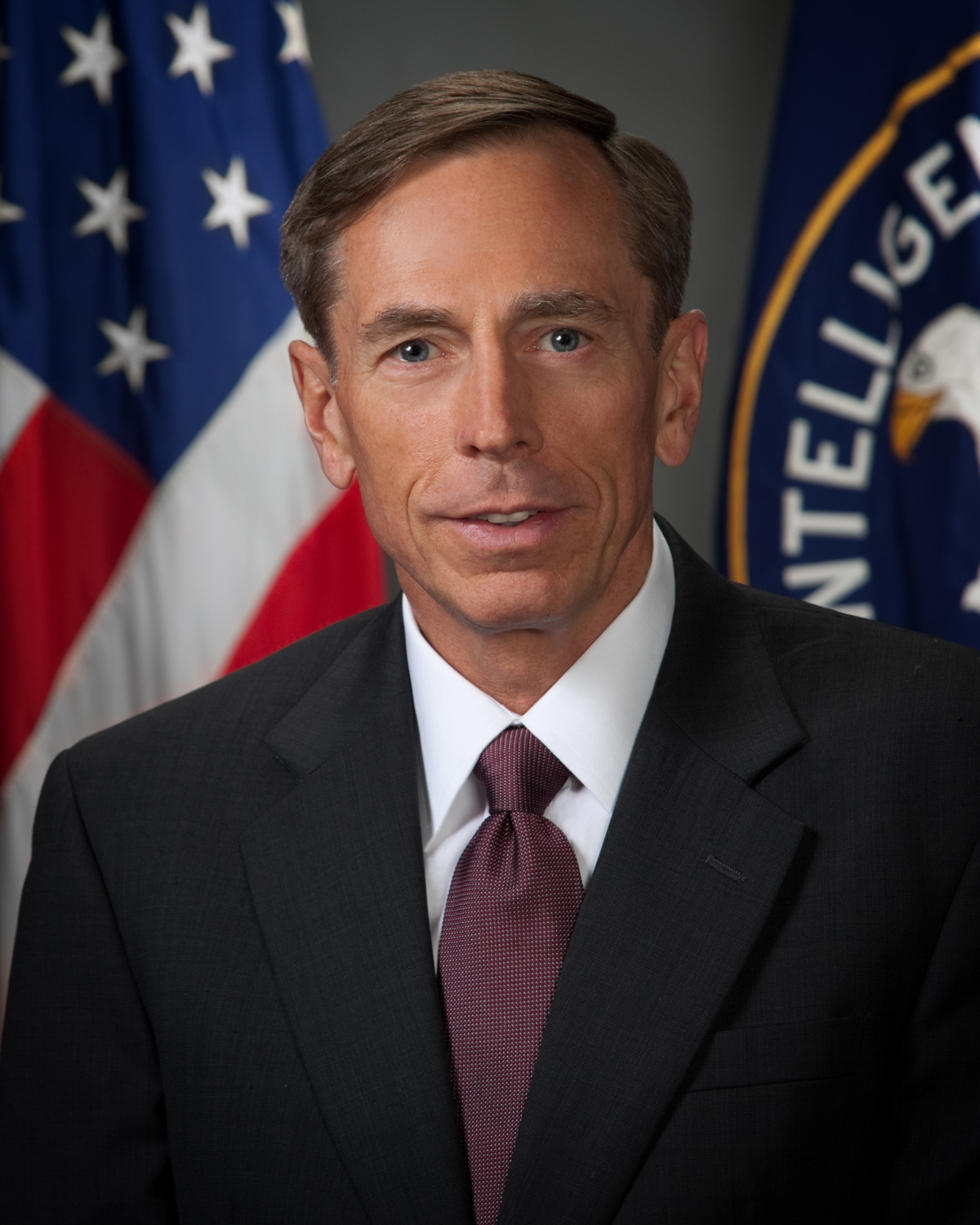
who want to understand and implement the lessons of the war here in Ukraine to be ready for the threats and challenges to all of our security in the future. Hello, my name is Sam Cook, and I'm the founder and executive director of the Borderlands Foundation, a nonprofit dedicated to telling the story of Ukraine's struggle for freedom in its war against Russia. And I'm excited to launch our first Ukraine history podcast with General Retired David Petraeus and the former CIA director. Sir, you commanded the 101st Airborne Division during the invasion of Iraq,
then went on to command the Multi-National Security Transition Command in Iraq. Transition Command. Sorry, Transition Command.
MNSTC-I in short.
I never really knew the acronym. But MNSTC-I Commander, that's actually when I first met you when I was working for Colonel McMaster. Then you went on to come back and command forces, coalition forces in Iraq. And after that, commanded Central Command, which was in charge of the wars in Iraq and Afghanistan. Then finally, you got asked to take over Afghanistan as the commander of COMISAF when General McChrystal left early. And then finally, you went on to become the director of the CIA. So your book wanted to give you a chance to tell us why you wrote it, Conflict, The Evolution of Warfare from 1945 to Ukraine.
Why did you write it? And why now? And thanks.
Well, thanks for joining us. Sure. No, it's great to be with you. And I admire the cause that you're supporting. And obviously the cause of Ukraine in the face of a brutal and unprovoked invasion. A truly seismic action in Europe, unprecedented since World War II. I wrote the book because my co-author, Andrew Roberts, a brilliant British historian and biographer with whom I've done a number of events over the years. I've interviewed him multiple times at the New-York Historical Society on his book on Churchill and then on King George.
He's interviewed me a bunch of times at the Cliveden Literary Festival, even though I hadn't written a book yet, twice there. And then on various other stages in London, one of those was particularly enjoyable. The question before the audience for me was, could the British have won the American Revolution? And the answer, of course, is yes, if they had a better... counterinsurgency campaign. So he and I have had a wonderful friendship over the years and a lot of activities and events together, and he came up with the idea of writing this book,
and it seemed to be very intellectually stimulating to me. Several of the chapters were ones that I obviously had a degree of involvement in, particularly the Iraq and Afghanistan chapters, and in fact, we wrote those. I wrote those in the first person. I also narrated them for the audiobook, which is another interesting experience. I also led on the Vietnam chapter, which was the subject of my dissertation at Princeton when I did my PhD there. And then we collaborated on the rest. He'd take the lead on some. But there's a chapter in there,
of course, on Ukraine, and then a chapter on the future of warfare. But again, it just struck me that this would be a very intellectually stimulating endeavor. I've often sought what might be termed action-forcing mechanisms in my life, where you commit to do something and it forces you to do it. And it's worthy. I know whether it's, you know, I'm going to run a marathon or I'm going to do a PhD at Princeton, even though they just give me two years or whatever it is. So in this case, that's the way it struck me. We knocked it out fairly quickly. And it comes out now in
early October in the UK and mid-October in the United States. And this is, I read the book, I got an advanced copy, and I must say, from a former West Point history professor to a Sosh professor. Not bad for a Sosh professor. Sir, it was actually, I actually really appreciate history written by people who studied in the social sciences, because there's a certain rigor to your analysis that sometimes historians lack. And then sometimes there's a certain storytelling that a social scientist might lack that you managed to keep in the book. And maybe that was Andrew Roberts, but it's interesting
you mentioned that because I have never embraced the idea of a political science department. I think there's some degree of science, if you will, but it's a bit of a stretch. In fact, I was always happy that the department at Princeton is just a department of politics. They don't have pretensions about being scientists or social scientists or what have you. In fact, I studied then the Woodrow Wilson School of Public and International Affairs, which, because again, it forced you to do not just international relations and politics
and government, if you will, but also economics, which was a bit of a heavy lift for somebody who had never even taken a basic econ course in his undergraduate years.
And that is called, what is it, the dismal or dreadful science?
Something like that, yeah. And then I taught it at West Point, which was great fun. That also taught international relations.
I'm going to let you talk about the big idea and the intellectual framework that you use throughout the book, but what I really appreciated was the framework for thinking about how to win war at a strategic level. And talk about that framework before we dive in.
Well, I don't know that when we went into it that we had as explicitly in mind employing this intellectual construct that we developed for strategic leadership while I was a fellow. I've had a number of academic endeavors. I'm obviously a partner at KKR, one of the world's biggest investment firms, about $520 billion under management, own 120 companies, minority investments, another 100. And I chair the Global Institute there, which is assessing geopolitical and other risks to potential investments and determining if you can sufficiently mitigate them to make the investment.
And then obviously helping the companies once we buy them and also helping our investors understand the world in which we're all investing together. But along the way, I've had these academic appointments. They're always a non-resident, but I was a non-resident senior fellow at Harvard for six years at the Belfer Center. I actually did teach once a week at the City University of New York Honors College, of course, called the North American Decades. I looked at North America as an economic unit and the prospects for the future. I had a chair at the University of Southern California.
It was a one-week-a-semester concentrated one-week endeavor. I'm teaching up at Yale now. I'm the Kissinger Fellow there this year. I co-teach a course on great power competition. At Harvard, we developed this intellectual framework for strategic leadership. And the students in the graduate programs there, most of them who were involved in this had worked for me in Iraq or Afghanistan. And they wanted to help me distill this and to capture it. And there is a website at belfercenter.org if you search for Petraeus and strategic leadership, it lays this out.
And essentially, it is that a strategic leader, and again, in war, strategic leadership is absolutely critical. And it's crucial that strategic leaders perform the four tasks of a strategic leader properly, ideally brilliantly. The first task being the most important. And if you don't get that right, it doesn't matter how good you are at the other tasks. You're building on a shaky foundation. And that first task is to get the big ideas right.
So you have to understand the strategic context, the various dynamics, all the elements that are present in a particular conflict, and then craft the right strategic approach. Of course, this has to be done really by the civilian leadership. It has to be done crucially by the military leadership of that overall theater of war. So the strategic leader has to get the big ideas right. You have to communicate them effectively through the breadth and depth of the organization, the military organization, the country, the world, all the stakeholders. But the communication task is crucial.
So step two is communication.
Step two is communicate the big ideas. Get the big ideas right is number one. Number two is communicate the big ideas effectively. Number three is oversee the implementation of the big ideas, which is really what we normally think of as leadership. We sort of skip over these others and we jump to the idea that the example, the energy, the inspiration, the getting great people and keeping them, developing them, allowing those that are measuring up to move on. How you spend your time. Literally, there's a whole.
And by the way, each of these tasks has subtasks. And in this website, we go into this in considerable detail about how do you get the big ideas right? How do you communicate effectively? How do you oversee the implementation? And again, the battle rhythm is crucial. You know, how do you spend your time? This isn't, you know, as a commander in Iraq or Afghanistan or these other senior positions, we had a huge butcher block piece of paper that laid out what we did every single day of the week. Because, as you know, combat's a seven-day-a-week endeavor, and there were certain things we did every single day.
And then it's what do you do after those things that you start the day with, which, by the way, include just, you know, a cup of coffee at 530, quick scan of the security email, you know, for 15 minutes.
that you're going to run.
Well, we did do that. We had that on the battle rhythm. We only had three days a week for that, actually, in in Iraq during the surge. It was hard to carve that out. But we did. Yeah, we did. And it was a six-mile run, by the way. It was a 10K. And we would import officers that were young enough to keep up. And I had specifically an aide and a couple others that could hang. So you're multitasking even during the run. So I'm getting a workout. out. We actually took a couple of journalists once or twice or very few that made it past that.
Because what we'd do is we'd talk for the first two miles or three miles, and then we'd start to pick up the pace and then he'd see who was still around. But the point is you have this rhythm. And again, I remember one of, in fact, a classmate of mine who had replaced me in that three-star job in Iraq when I came and I asked, what do I need to do to help you be successful? And he said, I need to see you on a regular basis. And so we set up, he got one hour a week and we had a rhythm within that. One week would be the army, another week would be the other services, another week
would be the police, another would be the others within the ministry of interior. And you just rotate and we built, you know, then there was rigorous analysis in that. So again, how do you do that? Is it literally everything from what you do every single day of the week to what you do a few times a week. We would go out on patrol with soldiers at least twice a week and then meet with captains afterwards and so forth. Once a week was the president of the United States, Washington time, 7:30 on a Monday morning to 8.30, video conference with him and the ambassador and myself and the whole
national security team. Tuesday, Washington time, 7:30 to 8.30, Secretary of Defense, Chairman of the Joint Chiefs and a select group of people. So again, it's all in the president of Iraq's national security meeting, the president of Iraq, we had an hour of his time once a week. So again, that's really, this is something you have to do in real rigor. And then you have to get into the metrics. What are they? What's the definition? Ratchet them down. How do you know if you're winning or losing? This kind of stuff. And then there's a fourth task that is often
overlooked and you have to do it formally. And there were events on the battle rhythm that enabled us, forced me actually to do this. And that's to sit down and determine how you need to refine the big ideas, how you need to adjust the strategy, how you need to make adaptations, add new big ideas, reject old ideas, and then do it all over again and again. So in this book, as we look at some of these different wars, all of a sudden, you know, it just jumped out at us again in that in... trying to capture the history, what we realized was that strategic leadership is crucial.
Which is frustrating to a social scientist a lot of times because leadership is so hard to measure. But it's also... Yeah, I mean, it's intangible, except that you can, if you use this construct, you can ask,
do they have the big ideas right? I think one of the fascinations about Ukraine, frankly, is that it has been a case of an example of extraordinary strategic leadership. I mean, President Zelensky, from the very beginning, I don't want a ride, I want ammunition. How's that for a big idea? You know, I'm not going to Lviv, I'm going to stay here in Kyiv, and my family is staying. So again, and then you get into the more, if you will, substantive big ideas, of course, his communication skills are extraordinary given his background, obviously, as an actor
and so forth. Truly Churchillian in that regard. And then the oversight of the implementation has been very impressive as well. All of his activities, his battle with them, you drive the campaign plan. The campaign plan captures the big ideas, you communicate them in a whole bunch bunch of different ways. He does speeches, actual plans, mission statements, orders, going to the front of uncertainty guidance. That's one of the, oversee the implementation. That's the example. You know, where's Putin? He's at the big long table, you know, in front of the cameras. Where's President Zelensky? He's at Bakhmut.
So again, yes, all of that, just again, sheer brilliant. I mean, even the uniform, even the attire, even the, all of this. he's done — the rest of the
whole country.
Demonstrates sheer brilliance. It is. And everyone's proud to wear some. They all have their own variation. I didn't know there's not exactly the standardization that you and I knew. And then, you know, there's a constant examination of, if you will, the big ideas. And some of this, by the way, involves asking for new capabilities, a recognition that you need more air defense in more places. You know, so again, okay, you know, a new big idea. And of course, he's got a brilliant set of military leaders, starting with General Zaluzhnyi, but then Syrskyi and all the others.
And then in different other places, and they're exercising strategic leadership over the military aspect of this, the intelligence aspect and so forth. So I find it really a very interesting case study of brilliant strategic leadership, but noting that the war is not over and this is still very much a work in progress. And so, you know, you come back also, why'd you write the book? Well, you know, as I thought about it, I'm a student of the world. This is a major event in the world.
This is, you know, we talk about an evolution in global affairs from, say, 10 years ago or more that was an era of benign globalization in which barriers to trade investment and capital flows were all being reduced and global trade was going like this to an era of renewed great power rivalries in which those barriers are going back up. global trade has become slowbalization. It's still increasing slightly, but there's also a bit more regional. This is what we do at the KKR Global Institute, by the way. Again, this is what we do
is distill trends. By the way, we also have several thousand employees still here of companies that we own that are in Europe or elsewhere, working remotely in most cases, but not all. We had thousands in Russia, actually. So we actually did a de-risking and we had an exit plan and we executed the contingencies that we developed for those who were in places like Kharkiv and elsewhere. I mean, we gave quite direct guidance to different companies that we knew had people in different places of Ukraine. And even though some of those were in denial about what was going to happen,
we said, you don't have an option here. You can be in denial, but the car still has to be packed. I went through the same thing with my team. Yes, sure. So you have to have, but in any event, again, to come back, you know, I'm a student of history also. And then I'm a student of leadership. So this book provided an opportunity to get into all of those to do that. And again, it was very intellectually stimulating to do it. But one of the recurring themes, perhaps the most important, is the critical aspect of strategic leadership.
And if you don't get the big ideas right, and we didn't, as we'll discuss for nine years in Afghanistan, we sort of had them right in Iraq. We had some pretty bad big ideas, too, like firing the Iraqi military without telling them what their future was and how they're going to provide for their families. De-Ba'athification without reconciliation. an agreed reconciliation program, all of this. But eventually we got, you know, the surge really, I think, came together. So again, it shows the importance of strategic leadership. And if you don't have it and if you don't get it right,
I don't care how good the other qualities are in a leader, a national leader, a military leader, what have you. I wouldn't say it doesn't matter, But if you don't have the big ideas right, you're building on a foundation of sand as opposed to a solid foundation.
It's a bridge to nowhere.
I mean, you can build as much as you want. You can be as energetic and charismatic and inspirational and attractive and all the other great communication skills. But if you don't get the big ideas right, it's generally going to be for naught.
So what I wanted to do with you is I read an advanced copy of the book. This is before it came out. We're filming this about a month and a half before the release. And I'm convinced that this is going to be very attractive to people in business who understand.
The strategic leadership aspect, this model applies in business. In fact, in that website at Harvard, I go through a case study of Netflix. Because Reed Hastings is one of the great strategic leaders of the world. And people like Jeff Bezos, Jack Ma, others that you can identify who have not just gotten the big ideas right once and communicate them effectively and overseen their implementation, but have done it repeatedly. And then also we hold up the case of Kodak, which was the dominant force in film photography and services associated with film photography.
It had over 2,000 patents reportedly on digital photography, but it failed to do task four swiftly enough to turn those patents into the new big ideas and to transform the company from film photography to digital photography. and it's never been the same since then. Or you have Netflix again, which goes through at least four or five incarnations. You know, the four we identify are putting movies in the hands of customers without brick and mortar, so you're going to undercut Blockbuster. Number two is you allow them to download content because broadband speed then became fast enough, so it's a new context,
and the strategic context changed because all of a sudden broadband speeds were rapid enough to allow that downloading. Number three is they produce their own content, $100 million on House of Cards alone, a massive overbet, again, by Reed Hastings. And then number four was we're going to make major motion pictures, and then go out and buy a couple of major studios and get more Academy Award nominations a couple years ago than any other major motion picture studio that's been around for decades. So quite extraordinary. There's also a global aspect to this.
There's some other aspects. There's some new big ideas that he's incorporating, even though he's now obviously stepped down as CEO and become the chairman. So they've also had a successful leadership transition so far. But again, this applies very much in the business world. We've discussed this, you know, a considerable length at KKR in various moments and various times. and again, one of the distinguishing features of KKR is that we are constantly developing new big ideas, new products, if you will, new endeavors. You know, go out and buy an entire insurance company with $90 billion in assets.
So again, it's quite, this is very, I think, helpful as a construct, whether you're talking about a nation at war, a military organization or a major business or by the way, a startup. A startup. Because a CEO of a startup, as you know, you have to get the big ideas right. Or you're out of business. Or you're out of business. You then have to communicate them. And you know, whether it's to, again, clients, customers, what have you.
All of the above. Yep. You have to oversee the implementation, whether it's, you know,
you and two other people or 200 or whatever. And then you have to constantly adapt and refine and so forth. And I know that you've had some experiences where this worked pretty well for a cycle or two, but then the context changes. It happened to you sometimes. It happened to our startup right before, ironically, or right before the war started,
the war just helped accelerate the downfall. So I've been through that in business. So The beautiful thing about reading history as any kind of leader is we're all watching it play out. Ukraine, I think the most striking example of clear good versus evil fight and brilliant. Yeah, I think you're exactly right. I think
in our lifetime, I can't think of anything that is more black and white, clear cut, good versus evil than what is going on right here in Ukraine against its neighbor that denies its right to exist. Yeah. And we're going to go into that in detail in part two of this, which we'll talk about
at the end. But so let's go through the major wars in America, because I know you cover a broad of war — that, because again, we think we have to have... Yeah, there's global aspects to all of this,
and we look at various of the u.s and the post post world war ii decolonization all the rest of this and they're instructive but the but the u.s wars are obviously a particular focus yeah there's
there's the israeli conflicts the british and french but but I want to surf on the high highways of American history here for our audience so you can get an idea of all the other wars you cover in the framework and how to apply it because we're familiar with these. So let's start with Korea.
Talk about how that plays out. Again, we have to simplify this greatly. We will do justice to the leaders that were there, but MacArthur, for all of his genius, has a strategic leader with with the island hopping campaign, after leaving the Philippines, of course, in the Southwest Pacific, who is then the commander. He's in Japan. He's commanding those forces in the Far East. And again, genius to have the Inchon landing, but then doesn't exactly get the big idea right when it comes to whether China might enter the war. And of course, our forces rapidly advance the Yalu.
that precipitates the Chinese decision to enter, and all of a sudden we're in retreat. And really the strategic leader most impressive in the Korean War and the leader who really achieves the ultimate outcome there, stabilizing the front lines, getting back to what is now the demilitarized zone, the 38th parallel, was of course Matthew Ridgway. and who took over after MacArthur was fired for, I think, real and perceived insubordination to President Truman and a loss of confidence in him. He was actually advocating the use of nuclear weapons and so forth and publicly making statements
that were a bit more aggressive, shall we say, than what the administration and the Joint Chiefs actually were willing to pursue. And so Ridgway ends up taking over. Of course, he was an incredible battlefield general in World War II, commander of the 82nd Airborne Division, Sicily, then Normandy invasion, two distinguished service crosses.
So an extraordinary leader at the, if you will, the tactical level, then operational level at 18th Airborne Corps, in particular the actions of the Corps during the bulge, and eventually then is out in the Far East replacing the commander below MacArthur and then steps up when MacArthur is relieved. and I think demonstrates extraordinary strategic leadership. He gets the big ideas right about what needs to be done. He communicates them very effectively. He oversees the implementation brilliantly in all different aspects. I mean, even whether it's communication or the example, the implementation,
the two grenades on the load-bearing equipment, he drives forward and flies back so they never see him retreating, all of these aspects that he... By the way, I interviewed him for my dissertation, which was a real thrill, about some later aspects of his advice to President Eisenhower and the use of force around Dien Bien Phu. So, he really is the one I think most of all, who is the, is responsible for an outcome that's not total victory to be sure, but is a good outcome, and has really been stable, ever since, despite the repeated threats and provocations and so forth.
Well, the difference between North and South Korea as, as countries and economies is just striking. It is. And of course, over time, then successive leaders would help to contribute and
ambassadors in the U.S. and all the rest of this. But again, during that war, the outstanding strategic leader was Ridgway. And for what it's worth, Ridgway, I'm actually thinking about a follow-on book, which is titled From Battlefield to High Command. And it's about the very, very small number of individuals in American military history who were brilliant on the battlefield, but then were also brilliant as strategic leaders.
This is one of your next books.
It's great fun. And actually, this is where you look at someone like Wellington. You look at Grant, the only U.S. military leader in history, in my view, who was brilliant tactically, operationally, and strategically. So not just battlefield and high command, but even that in-between, that so-called operational level, if you think about it. But Ridgway is very, very close to that. And so again, one of the very few, and there are very, very few, that, that make that get over that hurdle. And obviously Napoleon does not, you know, he ends up losing. Bad big idea to invade Russia and be there during the winter.
Yeah, bad, big idea to take on the unified forces, that Wellington is able to pull together, et cetera. So for all of, again, the battlefield brilliance in other cases, obviously Robert E. Lee did. He lost. Yeah. Got the big ideas wrong. Yeah. The big idea he should have had was to do everything humanly possible to contribute to the defeat of Lincoln in the election of November 1864. So it's beyond the battlefield. It's how do you bring about the defeat of Lincoln? And you do that by not losing in Atlanta, not losing in the Valley, not casting, not rolling the dice at Gettysburg and so forth,
but by conducting operations that contribute to growing frustration in the North about the uncertain outcome of the war. And instead, he gambled a couple of times and lost, and Grant out- generaled him. Grant developed the strategic campaign plan that included the victories, ultimately, of Atlanta, Savannah, the Valley, and then, of course, just going after Lee until Appomattox. Appomattox. But the key event in the Civil War was not actually on the battlefield. It was at the ballot box, and it was Lincoln winning the second term, continuing the war, as opposed to,
again, a peace candidate who would have sued for peace, and we wouldn't have the union that we
have now. And of course, it was Grant's plan that ensured that, that enabled that. So again, And Ridgway, of that level, in my view, you know, Korea is not the American Civil War, perhaps, but it was an extraordinary event in world history coming right after World War II. And it also set, I think, the new paradigm of what's acceptable around nuclear weapons, which it started, you know, this whole idea of limited warfare, of warfare that takes place sort of under the shadow or under the umbrella or within whatever the context that...
nuclear weapons are hanging over, but they're not used. And of course, we're seeing it here as well. And they cast the shadow, the nuclear saber rattling, and all the rest of that. And yet, this, so really every war since World War II, every war has had some limits. The most important limit being that nuclear weapons have not been used. And of course, what we need to do is get the big ideas right about deterrence continually, repeatedly, to make sure that we're never in a position where that happens. Yeah. And that's definitely hanging over that. We'll get into
the more detail in Ukraine. So that's Korea. And again, I think, a great case of great
strategic leadership on our side, in the form of Matthew B. Ridgway. Yeah. And Vietnam, you,
you wrote your dissertation. I, I admit when I read the book, it's certainly, it's sometimes it's hard to tell in co-authors, but I could definitely see your influence on the writing there. Well, that one we did in the third person still, but at the end of the, I was the lead,
certainly I'm the vast majority of that. But what was interesting is that, you know, my dissertation was at the 10 year mark after Vietnam. This is 25 years later and the additional scholarship, the additional declassification has been dramatic. And you think of the contributions by a number of different, first of all, the participants themselves that were, a lot of those were not even out at that time. Some were, but then the major works after that, you know, if you think of, again, A Bright Shining Lie, and again, we'll get into all the
the bibliography here. But then Bob Sorley is actually, it's Lewis Sorley is his name, but Bob Sorley is his nickname. Some of the — his family and I know well. His, again, scholarship on Abrams and on Westmoreland and then defenders of Westmoreland, all the rest of this, it's quite fascinating. And I think the conclusion here is that the great strategic leader of the Vietnam War. was not American. It was actually the North Vietnamese military leader who was also one of those who was brilliant in the battlefield, Dien Bien Phu, and then later on as the overall
commander during a lot of the U.S. period, the U.S.-Vietnam War. And of course, that's General Giap. In the U.S. side, a succession of leaders, several, culminating with the four years that Westmoreland commanded, didn't get the big ideas right. Even though the South Vietnamese leaders early in the war wanted to focus on what was an insurgency, and needed to structure their forces for that. And instead, the U.S. wanted to model it on what had won the war and stabilize the war, achieve the outcome in Korea to build divisions, modeled on our divisions.
And the small war, the village war and so forth, was a bit of an afterthought. And then of course u.s forces end up coming in huge numbers eventually in a way, over 500,000 And it's a big war, and we turn, and our focus is on the big war, and ignoring — or as a secondary effort, certainly an economy of force — what's going on in the villages and hamlets. By and large. Not to say there wasn't a strategic hamlet program, there were a variety of initiatives pursued, but they were never the big priority. They weren't the big war. They weren't the- They were lower level.
101st, 1st, you know, that was the focus. And it's very interesting. Actually, one of my fellow Princeton PhD and military PhDs, eventually Brigadier General Retired Pete Dawkins, of course, you know, Heisman Trophy, wrote a scholar, wrote a dissertation at Princeton. I think he was the last one that did a PhD before I did at the Woodrow Wilson School as it was called then. And it was titled The U.S. Army and the Other War in Vietnam. And it was about the advisory effort, which was the other, you know, it was very much disconnected.
It wasn't where you went to die, but it was, you know, it was not what you wanted to do. You wanted to command a company, a battalion, a brigade, and fight the big war. And the advisory effort, hugely important, was not recognized as being, again, the equivalent in some respects. And his is quite rigorous, by the way. He does a lot of survey work to establish the point that he makes. So again, we just didn't get the big ideas right until Creighton Abrams comes in. And as we lay out in that chapter, he gets the big ideas right for the first time. But this is 1968. We've already been in there.
You know, there's a debate about whether Vietnam or Afghanistan is the longest war. Afghanistan is 20 years. Vietnam, if you really start with right after Dien Bien Phu, let's say 1955 or so, you can get a bit longer or even earlier because we actually had some forces on the ground even during the French period of Indochina. Dauphin. So again, we didn't get the big ideas right until 1968, well, way over a decade after we'd really taken over the support for the South Vietnamese. And the problem then was that we had so much muscle memory, so much just inertia, momentum, and so forth in the big war that,
yes, you can try to turn it into smaller operations and smaller actions, and you can prioritize the efforts in the villages. You can, integrate much better with what the CIA was doing. Of course, they have a very good program, somewhat controversial, but certainly, I think, arguably quite important. And then the efforts for the regional forces, the, the local forces and so forth, the rough puffs. But it's all too late, and we're already drawing down. There's already the pressure to begin the withdrawal, not conditions-based. It's based really on domestic conditions in the United States.
Nixon and Kissinger are trying to achieve all that they can to negotiate from the position of greatest leverage possible, and they take actions in some cases. that were quite forceful, of course. But in many cases, it's too little, too late. And then, frankly, you have a situation here as well that I do have a question that sort of haunts examination of Vietnam, and that is, were our partners at various levels so flawed that it wouldn't matter if we'd gotten it all right on our side because of the corruption, because of the disconnect between these
French-speaking Catholic, well-educated elite leaders and the peasants of, again, different religions, different education levels, and so forth. So again, And that's one of those, you can't obviously answer that question. There were, to be sure, many, many fine Vietnamese leaders, many courageous, great integrity and so forth, selfless. But there were obviously some imperfections. And then, of course, there was also a bit of the assassination of the early leader, and which we were a party to in certain respects and then a bit of a revolving door for the leadership,
you finally settle on the two that take it through for a period of time. But again, there are questions I think about were they sufficient strategic leaders? And then also, did we even get the architecture right and the rest of that? Because as we'll discuss in Afghanistan, where it took us nine years to get the inputs right, The inputs include the big ideas, they include the right level of resources, they include the right organizational architecture, they include the right preparation of forces, the right tour length of, you know, all these aspects.
And again, by and large, there were enormous failures on the U.S. side, including, of course, just tour lengths of commanders six months at most, and then you rotate to the rear or to another job. So you have a churning constantly, many, many other deficiencies, and then again the focus on body count, which then became suspect in many cases, integrity issues, and subsequent studies that examined so many of the shortcomings of how we conducted the war beyond just the big ideas, but now into how do you actually implement all of this.
So again, the strategic leader of note is not an American, although Creighton Abrams does indeed, I think, deserve enormous credit for understanding the nature of the war, for again, crafting the right big ideas, certainly seeking to communicate them, seeking to oversee their implementation.
But I think the obstacles by that point in time, the challenges at that point in time, given the situation in the U.S. domestically, were so great that it was just not possible to turn around an effort that had been based, frankly, on flawed big ideas and also a variety of flawed metrics and flawed oversight and flawed personnel practices and all the rest of it. And of course, it was also a drafty army, and you had issues related to that as well.
And this is a perfect segue because you were a student of this Vietnam War, and my old boss, General McMaster — his book Dereliction of Duty contributed greatly to understanding this war. also the genius to get a book title, you know, in three words that expresses the theme of
a book. That's, that's quite extraordinary. And that's getting the big idea right on the book title. You know, you think of Doris Kearns Goodwin's team of rivals about Lincoln's cabinet. Do you think of some of these others that just capture the, the book, you know, A Bright Shining Lie, the story of John Paul Vann, it has a metaphor for Vietnam actually. Right. So, yes, again, and HR is a genius at that and many other things, frankly. And then the follow-on is go ahead and give the rest of the title because it-
Dereliction of Duty: Lyndon Johnson, the Joint Chiefs of Staff, I think it was National Security Council and the lies that led to Vietnam. It was brilliant branding. But what strikes me is how much that war, and you studied it, and General McMaster studied it, and that directly leads into the next war, Iraq, big, obviously, endeavor.
Well, certainly, first the Gulf War, and then you had two Iraq wars, if you will.
So the Army in particular, the Marine Corps in particular, but really all of our military go through this incredible transformation process from the draftee to a professional army.
really rigorous training. And a lot of that based around what leaders from Vietnam saw as, again, flawed practices, as inadequate training and leadership and personnel policies and tour lengths and all of this. And so you see that all come to fruition. It was interesting because I happened to be the aide of the chief of staff of the army at the time and also as assistant executive officer. when we had the invasion of Panama, which we covered briefly here as well, and of course quite a really impressive operation. And then also, of course, the response to the Iraqi invasion of Kuwait
with Desert Shield and Desert Storm. Again, I think good strategic leadership, but the biggest of the big ideas is put enough forces on the ground to destroy the Iraqi army in Kuwait, and then double it.
Yeah.
And then pound them for 39 days mercilessly. And then, of course, that's not to say there weren't some very stiff exchanges. H.R. mcMaster, in fact, earned a Silver Star in one of those, Battle of 73 Easting, and a number of other individual cases. But by and large, again, the big idea there was just have so much force and then even more and then set the conditions for, again, 39 days and then just demolish them. Yes, there was a left hook, but we also just went right through them, as you know. And they were a force that was dramatically depleted by the time that we closed with
and destroyed that particular enemy.
A little bit of controversy at the end as to if we could have destroyed the entire Republican Guard. Yeah, there are questions.
No, there are questions that will haunt that. Should it have been continued further? Should it have... And then there's some questions about why did we allow them to have the helicopters? There's a bunch of issues.
And again, I remember I had a pretty good vantage point for that as, again, the aid to a member of the Joint Chiefs.
But because it was a bunch of times.
Because Saddam remained in power, there was a long-term no-fly zone.
Then you have the southern no-fly zones and northern no-fly zones. Sort of the frustration with all of that as well, which is another contributing factor to the ultimate decision. And of course, to invade Iraq, obviously based on a flawed intelligence assessment as well about the possession of weapons of mass destruction.
And the continued basing of American forces there because of that threat leading to Al-Qaeda.
Sure.
So it brings us to the conclusion of the Iraq war, if we're even there yet.
Yeah. Well, of course, again, there's various phases of the Iraq war. And the interesting thing here and the reason we decided to do this in the first person is that I was there as a two-star, then as a three-star. And even when I was back in the States during the three-star tour, the headquarters at Fort Leavenworth still completely focused on Iraq and Afghanistan to get the big ideas right, get the doctrine right, to communicate that effectively, all the leader development courses. You've got the commissioned, non-commissioned, and warrant officers. And we oversaw, you know,
I had six different hats at Fort Leavenworth. And in each one of those, you could pull a different lever of what was called the engine of change for Army. And the chief of staff of the Army said, shake up the Army, Dave, when I asked him for guidance. I said, okay, I can do that, Chief. You have my back. So we produced a field manual in less than a year. Together with Jim Mattis, we made it Army and Marine for all ground forces. Again, overhaul all the leader development courses, overhaul every aspect of the road to deployment,
the preparation of our forces, the exercise out in the Nevada desert, in particular Fort Irwin, which had already begun transformation, but continued to make it as realistic as we could about what you're going to see in Iraq or Afghanistan rather than big force on force, which was the big dominant theme of those exercises prior to that and prior to the original deployment, of course, as well, where there were some force on force to be sure. And, and then various other aspects, the material requirements, of this organizational design, all of these
different pieces, even the pre-command courses that we would put, the exercises for the headquarters, which we also control the battle command training program for the division corps headquarters. Cause of course you could only put about a brigade out at Fort Irwin. We overhauled those as well and started it all with a counterinsurgency seminar instead of a military operations in urban terrain, which is still what it was when I took command at the Combined Arms Center in, I think it was September or October of 2005. Even there, we're thinking about this and preparing, frankly, to go back.
And then a recognition, increasingly over the course of 2006, that it's not working. And then President Bush steps in, replaces his Secretary of Defense, the commander on the ground, the ambassador, Central Command commander.
It took him about almost three years. And he then takes over the Washington piece of the war in a way that he had not before. It largely had been allowing Secretary Rumsfeld, Secretary of Defense to do that. So he becomes this extraordinary strategic leader in Washington. Not that he wasn't before, but now he's once a week running a National Security Council meeting at Washington time, 7:30 on a Monday morning.
I mean, how do you show what's important? More than start a meeting at 730 at all in Washington, but on a Monday morning with the whole national security team around the table and the ambassador and me and the other end of the...
Makes for a long week for the rest of us.
Well, I mean, this is...
Well, you were out all the time.
And I would send a memo back on a Sunday afternoon from Baghdad, by the way, to the secretary, the chairman, and the CENTCOM commander with a weekly update. And I knew that weekly update was being fed around and would end up across the Potomac and the White House as well and be highlighted for some of the participants at that table. So, again, that was one of the ways we communicated our big ideas. But so he takes it over. And then you have, I think, a real case of strategic leadership because the big ideas are not working.
The idea of transitioning tasks to Iraqi security forces and withdrawing from the neighborhoods to big bases and then driving around a couple times a day, clearly the security situation, it was a Sunni-Shia civil war. You can talk about what stage it was, but it was a full-on Sunni-Shia civil war in Baghdad and various other places. When you have 53 dead bodies every 24 hours of civilians due to violence, not natural causes, not the military, not the police, not criminals, that's out of control. And so task one of the strategic leader, big ideas, right?
They're 180 degrees different from what we were doing before. We're going back into the neighborhoods. We're going to take back the control of security from the Iraqi security forces who we then have to reconstitute. That's another whole big idea about how do we get them back up to strength and effectiveness and all the rest of that. We are going to pursue reconciliation for the first time on a large scale. There were small cases before we did it up in Mosul. When I was the commander in the very beginning, when they had de- Ba'athification, there was another instance.
Actually, General McMaster did some, the Marines did some in the West. And then right before the surge, there was a very good case out at Ramadi that we built on. And I went out, saw, the, Colonel MacFarland, who was the brigade commander who had initiated that. And, and I knew we needed to do reconciliation because the big idea was you can't kill or capture your way out of an industrial strength insurgency.
You have to reconcile with as many of the rank and file as you can.
But then there's a corollary, and that was the third big idea, which is to intensify, pursue even more relentlessly the irreconcilable leaders. Yeah, that's right. This was our special mission units every single night, 12 to 15 targeted operations, taking the top as we're trying to get as many of the bottom to come over to our side.
We started paying them.
Well, we didn't actually. And that's actually one of the mythology, the myths of this particular war. We didn't have the authority to pay them. We started this immediately. I started it. I embraced it. It was already going on. Colonel MacFarland had it going on. He then handed it off to his successor, did the Battle of Ramadi and so forth. But we didn't have the legal authority yet to pay them until about June. My general counsel finally got the authority to treat sheikhs as contractors. Yeah.
And then to have their men, their tribal members, perform security, fixed site security duties for which we could pay the contractor.
Best site. Best money we ever spent.
It was, but it took us. So initially, they turned to support us for two reasons. In a lot of cases, they were frustrated with Al-Qaeda, which is blowing up their villages and doing horrible things and practices that were reprehensible and abhorrent to them. But also you had, a realization that if they stay with the bad guys, we're going to come after them. Yeah. So, you know, you have a choice, come with us and then eventually come with Iraq, which was the other, that then the end of transition, to Iraq taking over, if you will, the various programs that we established.
But eventually, I mean, this is huge. It was 103,000 combatants, 80,000 Sunni insurgents, 23,000 Shia militia members that we stripped out from underneath their leaders, even as we went after. First, the Sunni extremist al-Qaeda and insurgent leaders, and then over time to the Shia leaders. very intensely with the Shia uprising, March and April of 2008, March Madness, in the Battle of Basra and Sadr City and all these others. So again, big ideas, huge, huge. Again, change management is no bigger than 180 degrees, and what we did was completely reverse what we've been doing.
Over the objections of the prime minister, I might add, the Iraqi prime minister did not support what we intended to do. I was confronted by his national security advisor and basically politely said that the prime minister wanted to do what he wanted to do. If he chose to do that, then I'd be on the next plane to Baghdad or next plane. I'd be on the next plane to Washington. And I intended to take the policy with me. And I had a sleepless night as I waited to see how he responded to that. I never heard anything. But again, we went out and did what we needed to do. So he got the big ideas right.
We communicated in all kinds of different ways. Everything from change the mission statement very quickly to change the base.
I was a commander, and I remember the first tour, how despondent I was with the big idea was wrong. The focus was killing our way out of this.
Yes. It never was going to work.
Second tour, I could see it.
You had to do killing without question. We dropped more bombs too during that time. But yeah.
And the second tour, we got your memos, and we all read them, and it was clear at the lowest level.
We tried to do that. Again, I personally developed counter-insurgency guidance, as you'll recall, and I'd hit the send key about every month and a half or so with the latest version. And, you know, I'd find a new quote that would capture some. Remember, it was a series of admonitions. Yes. Secure and serve the people. And then we'd explain you can only do that by living with the people. So we're going back downtown. 77 additional locations just in the Baghdad area alone. Promote reconciliation. Explain what that is. Pursue the irreconcilables even more relentlessly. More integration of civil and military.
the ambassador and I, you know, we built on the campaign plan predecessors had done where they both signed it and, but made it even more so, of course, with the new big ideas, promote initiative. It's a small unit war as you knew. And, and that one said in the absence of orders, figure out what they should have been and execute aggressively. And we, so again, it was, but, but again, also the major op operations plan, the annexes, all of the, you know, then the details of all of these different huge efforts to rebuild the Iraqi Ministry of Defense and
all of its military forces and institutions and depots and bases and forts and all the rest of that. Same with the Ministry of Interior, ultimately nearly a million security forces in those two ministries if you're very all-encompassing with your accounting rules. So that's to the communication. And of course, then the oversight of the implementation, as I described, we had a very rigorous battle rhythm and metrics that I brought a PhD Rhodes Scholar from the Air Force Academy out
to ratchet these down. Yeah, it wasn't body count. I mean, we did keep track, but that was not a big,
didn't become the be all and end all that it was in Vietnam, where there was a sense that you could win a war of attrition. Remember, the big idea in Vietnam was that we can kill more of them than they can provide. Even if it was 10 to 1, which it may have been, it didn't matter. Exactly. I mean, that one in Washington was pretty substantial. And again, there were, it was hundreds in a week. And so again, it was unsustainable and it was the wrong big idea. So in Iraq, again, during the surge, I'd like to think we, I believe we had the right big ideas.
And then the metrics show because you drive violence down by nearly 90%. It's sort of indisputable. We'd ratcheted these numbers. We stood by them, presented them to Congress, and then a host of other. We didn't get all of the achievements, certainly, that we would have liked to have had in certain political aspects, which ultimately would undermine three and a half years later, when the prime minister took some very highly sectarian actions that undid what we'd worked so hard to achieve. But it did endure for a good three and a half years or so.
And also when Iraq struggled with the ISIS bursting out of Syria, to the credit of the Iraqi government and security forces with a very small re-injection of forces, we managed to get the country back.
know, 5,500 US forces to enable them. And there was enough institutional, there was, there were enough aspects of their institutional elements, forces and infrastructure and chain, all the equipment and everything else that despite poor performance initially, they could regroup. They could with us providing basically advice, assistance and enabling, not fighting into the front lines, although certainly we did a number of counterterrorism operations. But so yes, that did endure in that respect. It's tragic to see that happen. Inarguably,
I wish we'd kept forces on the ground, frankly, instead of pulling all our combat forces. We did have trainers still in there and a three-star, but if we'd had the base structure, we could have reinserted that much more rapidly. But to be fair, this is not something that you would... That decision you can lay at the feet of the administration, but it was the prime minister who undid. It was his action that really undid the situation in Iraq, not the withdrawal of the forces, even though it would have been nice to have kept them there. And then, of course,
the decision was made to reintroduce them. The problem was that the prime minister and his forces took their eye off ISIS. They were allowed to reconstitute, drift into Syria, gain a lot of additional force, and then came back in and established the caliphate, It then took a couple of years and terrible loss of life and damage to eliminate. But eventually that did. But of course, to be fair to the reader, they should know we sort of stop history with the end of, really the end of the three and a half years after the surge. We note what happens, but we don't go into that in great detail.
And finally, Afghanistan, which you, you know, this is a tale of two wars, Korea, Vietnam, and Iraq in Afghanistan. What was different about Afghanistan?
It's a great question because I laid that out for Secretary Rumsfeld at one time. So when I was at the end of the three-star tour in Iraq, which was a 15 and a half months tour, you know, the division command was about a 12-month tour there. Then we had a 15-month tour. Then eventually the surge was 19 and a half or more. And then there were some other visits and other assessment. I did an assessment actually as a two-star before going back as a three-star. and then Central Command. But in Afghanistan, on the way home from the three-star tour in Iraq, Secretary Rumsfeld asked that I come home
through Afghanistan and to do an assessment and to focus on the Security Force Assistance Program, again, the train and equip that had been MNSTC-A of Afghanistan.
So it was in 2005.
This is in September of 2005.
And Afghanistan seemed to be going well.
The violence level was way below that in Afghanistan. And I drove around Baghdad with, you know, a fellow officer who was driving himself in a thin-skinned vehicle. It was much more relaxed. But you could sense that there's something happening. And I did sense that. And then, but I looked in particular at the security program. But then I had to look at the context in which this was playing out. So when I came back and briefed him, the first slide of that briefing was titled, Afghanistan does not equal Iraq. And I laid out all the compare and contrast.
And what I realized was Afghanistan is vastly more difficult than Iraq. And I laid out why I felt that was the case, even though, again, the level of violence was much, much less than Iraq at that time. And the level of problems seemed much, much less. You had this charismatic Karzai, and it seemed to be going reasonably well. But I realized that the sanctuaries that the Taliban and Haqqani and IMU and others had in Pakistan, and Pakistan wasn't doing anything and would never do anything adequately, the lack of money, no real economy there. In fact, the major export crop is illegal.
It's the poppy and opium and so forth. And it's hard to have a rule of law if your major export crop is illegal. Lack of infrastructure compared to Iraq. All these are compared to Iraq. Lack of literacy, lack of any history of strong central government, just many feature after feature, real terrain, real mountains, real deserts, rugged weather, and so forth. Again, all of this, in contrast to Iraq, much more difficult, even though Iraq seemed to be and was the main effort because it was not going well. And I came back and I said, I fear that Afghanistan is going to be the longest of the long wars.
Then I looked at the security assistance and we had some, there were some real mistakes being made there. The focus of the metrics was on the number trained, not the number actually in the ranks. It turned out our mission was training fewer than we were losing.
Yeah.
So we're actually going downhill.
Yeah.
The police training was all contractor driven, six weeks. They never shot a weapon.
Yeah.
They marched for two hours a day, or in the morning, an hour. They said it was physical training. I said, you know, we're not trying to produce the old guard here.
Yeah.
Or ceremonial unit. These are police that are going to go out and engage in a counterinsurgency campaign. So again, there was a whole bunch of issues like that that jumped off the page at us. I had a team with me that had been involved in this stuff. Beyond that, it was sort of clear to me we didn't quite have the inputs right, shall we say. and just to jump a little further forward. So anyway, of course, then I go to Leavenworth and the surge in Iraq, then Central Command, I'm refocused on Afghanistan pretty intently because we go through the whole period.
General McChrystal takes over the Afghan assessment review led by the president, the additional forces. General McChrystal's starting to get things right, gets it all in the right trajectory. but then and then I take take over command from him after he's been there about a year And we still didn't actually have inputs right, because we didn't have all the forces on the ground yet. He'd gotten most of the big ideas right, he'd gotten the organizational architecture. so when I talk about inputs so think this is nine years into the or late 2010 we finally
get the inputs right in Afghanistan because it's always been the supporting effort and by the inputs. I'm talking about the right big ideas first and foremost, but then almost the right level of resources, military, civilian, diplomats, spies, development workers, rule of law, you name it. The right organizational architecture for the first time. It was a much more complex structure because you had a line that went to NATO, COMISAF. You also had a line that went to CENTCOM, U.S. forces, there were differences. And there were special elements that were under U.S.,
not under NATO. You had to get this crafted right and then get it all coordinated. You had to have the right preparation of the forces. You had to have the right material, as you would call them. Some of the material that was good in Iraq wasn't good in Afghanistan. The mine-resistant and armor-protective vehicles that were fine on the roads in Iraq were too large and not sufficiently stable, if you will. So we had an MRAP all-terrain vehicle version. So again, a lot of other adaptations. And then we didn't have any infrastructure there. So as you bring in new
forces, you have to create, build new infrastructure from scratch to accommodate them. Then you have to do it for their Afghan counterparts. So again, the effort just to get the inputs right was enormous. And again, we didn't get that right until, again, late 2010. And then, unfortunately, we really only kept them right for about six or seven months because there was a determination made and announced during the speech at West Point, which I attended as Central Command Commander, that announced the buildup of forces also announced that we would
begin drawing down in the summer of 2011. So again, you have another, you know, series, if you will, of examinations of strategic leadership. How did we do? Did we have the big ideas right? Did we have all these other elements? And again, I argue that we didn't have the inputs over all right for nine years of that war. And then we never really had commitment within an administration, if you think about it, we invade in late 2001 in the wake of 9-11 to eliminate the al-Qaeda sanctuary in Afghanistan in which the attacks were planned,
but then very quickly shift to a focus on Iraq, the invasion of Iraq. And then as Admiral Mullen used to say when he was chairman of the Joint Chiefs in Iraq, we do what we must in Afghanistan. we do what we can. So you then move along, and by the time we do get it right, so that administration does refocus at the end of its time on Afghanistan, but again, only after the surge has succeeded and makes some changes. The new administration makes significant changes in the first four years, first term, but then is determined to draw down. And so there's
an inconsistent. Then the next administration, Trump is in hard for two years and then of course does the same thing. And actually the negotiation of the agreement that I think is one of the worst diplomatic agreements in our history, where we give the enemy what they want, get virtually nothing for it, and force our own partners, the Afghan government that's not at the table to release 5,500 or so Taliban detainees that go right back to fighting and help take down the country, of course, when we finally do leave. The argument that they didn't kill us doesn't hold that well because we weren't on the front lines.
So, again, you see this inconsistency, a lack of strategic commitment, not just from administration to administration, but within administrations.
And you may recall at the one-year mark, I wrote a piece in The Atlantic that laid out essentially our shortcomings over the course of the 20 years in Afghanistan, and including some very significant design failures, if you will, when it comes to the only idea for the Afghan security forces that was possible was that you had to have a number of them. out in the villages protecting, population centers and critical infrastructure lines of communication. And then you have a central reserve that's very high quality. These are okay.
The, the, the real fighters are the 35,000 commandos that you can then ferry out there
on. We forced Black Hawk helicopters on them, which they couldn't maintain. I was advocate, I advocated for a continued purchase of Russian helicopters, which is still what we were doing when I was there. because they could maintain them. They were analog, they were basic, they could work in high altitude and so forth. So the worn out, but let me finish that. But the Achilles heel then of the entire defense concept becomes the operational readiness of the U.S.-provided helicopters, the U.S.-provided C-130 transport aircraft, which also take troops out to bases, and then the U.S. provided close air support.
And when the operational readiness of that declined, when we pulled out not just our remaining troops on the ground, the 3,500 or so that were in advise, assist, and enable missions, but the 17,000 Western contractors, the defense concept was it took a shot below the waterline, metaphorically speaking, and it was a matter of time before the troops realized realized that there's nobody coming to the rescue with, again, reinforcements, emergency resupply, aerial medevac, and close air support. And at that point in time, I think it was predictable.
And I did actually say on Fox News some weeks prior that I feared a psychological collapse of the Afghan security forces. And that's exactly what happened. And of course, it was exacerbated because you had very flawed strategic leadership by the Afghan president. And then also, he talked about an example, he leaves. And again, that's why it's interesting to compare and contrast the strategic leadership by our partners in Afghanistan with the strategic leadership of our partners here in Ukraine.
It's the best and the worst on full display. Right. Well, sir, the high, you know, surfing the high waves of American history here is just, I can assure you from having read the book, all the wars you go into, just a taste of really the breadth and depths that you go into. So I wanted to thank you for that. And then on Ukraine, you covered it a little bit at the beginning, and I'm going to save the next part on Ukraine for our second. We are doing two of these because of you. So, you know, we're sitting here in Kyiv. You're on one of your visits here and you've agreed to join us for a golf tournament
to raise money for the Borderlands Fund.
Where would that be?
In the United States, that will be not in Ukraine.
Yeah, no, that's going to be in Miami, Florida, 10 January, 2024. And it would be an amazing event for, you know, bringing over a bunch of Ukraine veterans, some of whom you've already met, to meet American political leaders and business leaders that we will bring to the event. So if you're watching this and you'd like to see part two of this, an in-depth, hour-long discussion in the same format on stage at the awards gala, you can sign up for that event, see it in person, get a signed copy of the General's book, which he's going to sign for
everyone who attends. Now, if you can't come, but you still want a signed copy of the book, the General has also agreed to sign some if you buy it only from us right below this video.
Anything to help you.
Yeah, well, anything to help.
Got to communicate the big ideas here. Yeah, exactly. The marketing is part of communication.
Well, the foundation is proud to have you as the first participant on our podcast, where we interview the history makers in Ukraine and the historians, the people like you are writing. And, sir, you're also making history here because you're the only retired general I've seen who's talking about this, who's actually shown up on the ground in public.
And sort of helps to see at least something for yourself.
Well, you're leading by example. And I've seen you in many, many forums here with senior leaders. And I'll tell you that your presence here inspires Ukrainian. And the help I know you're providing behind the scenes is going to make a difference and already has.
It's a privilege to do it.
All right. Well, sir, thank you. Looking forward to the next one, Miami, Florida, and I hope to see you there. Thanks, Sam. Hi, it's Sam Cook. Thank you for listening to another episode of the Ukraine Military History Podcast. I hope that you found this information informative, and it's something that will help increase your understanding of warfare and however you are participating in the national defense of the United States or another hopefully friendly country that is supporting Ukraine in the West. And whether you're a military professional and want to learn these lessons
to become a better professional soldier or you're in the defense industry or you're a government official who deals with defense policy, or you're an investor in defense industry companies or considering that, I hope you share this with other people that would find this information useful. If you like this, please subscribe to it so you get notified on YouTube or your podcast app, however you listen to or watch this podcast. If you're listening to this podcast, you can go watch the videos on YouTube and vice versa.
If you're watching this on YouTube, the links to subscribe to this podcast and get it downloaded to your favorite podcast app are also in the show notes below. And finally, if you enjoy what we're talking about here and you'd like to learn more, if you're a defense industry founder, I've actually produced a free video series called Ukraine for Founders. The first part of that talk is absolutely free. It's called Why War Matters. And it's my introduction to a little bit of theory and things that you should be thinking about as a founder getting into the defense industry if you're serious about being successful.
And then finally, if you want to go to Ukraine and work here, you can sign up for the second and third parts of our talk and get a lot more information from me and my team about how you can work more deeply inside of Ukraine. So if you enjoyed this podcast, please go check out that free talk, Why War Matters, if you're in the defense industry and you think that would be useful for you. I'd love to get your feedback on that. Then finally, the Ukraine Freedom Summit, March of 2027 in Dallas. Myself, our co-host, Rob Lee, Dima Putiata, a lot of the guests that are on this podcast.
We're going to invite a lot of active duty soldiers, which we pay to get their American visa and bring them over to the United States to experience American culture, hospitality, Texas style, meet with defense industry executives, military leaders, governmental policy leaders, journalists in the field of defense and national security. and have a four-day summit discussing what this war means for the future of warfare and defense policy and our industry and our innovation. So tickets for that are already going to be on sale, early bird tickets.
Please go to our website and check that out if you're interested in joining or if you're a defense industry company that would like to sponsor an exhibit at our defense industry exhibit at the Texas Frontiers of Flight Museum and actually show your technology off to members who are joining the summit and we're going to make a free entrance to this exhibit for all the members of the Dallas community on the day of the exhibit. Please go and get more information on that on our website, ukrainefreedomsummit.org. So again, if you like what we're doing, you want to support us,
you can also go to theborderlandsfoundation.org. Please donate to support the Ukraine Center for Traumatic Stress and our initiatives there of helping Ukrainian veterans recover from the psychological cost of war and get all the information on that website on our podcast that we published, including transcripts, notifications of future episodes. You can sign up for our email list at ukrainemilitaryhistory.org. So thanks again for watching another episode of the Ukraine Military History Podcast. Subscribe, like, share, review us on your favorite apps, and we'll see you on the next one.
Get an email when a new episode drops. No spam, unsubscribe anytime.
 Ukraine Military History Institute