 Samuel P.N. Cook
 Rob Lee
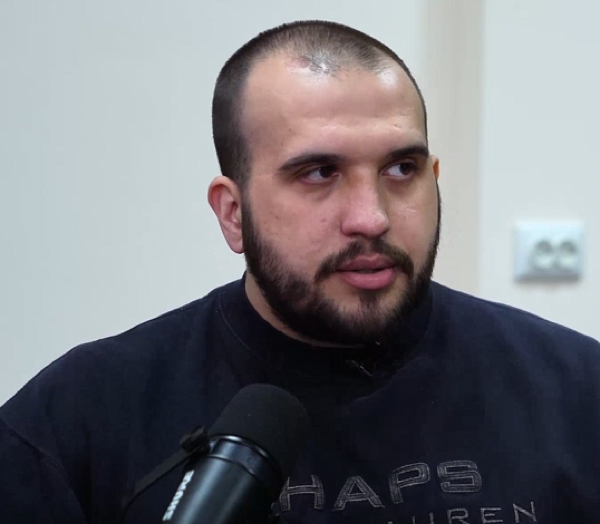 Dmytro Putiata
“We kinda manage to find a solution how to deal with these infiltrations that took part in 2025. I think they won't have this kind of success they had last year.”
Dmytro Putiata
“These are not particularly physically fit guys in many cases. Doing this when the weather is warm is much easier than when it was zero degrees Fahrenheit — infiltration was much more difficult.”
Rob Lee
“We had literally horrible weather conditions. It was all the time foggy. It was impossible for any kind of drone to fly.”
Dmytro Putiata
“The situation is better today than maybe a year ago. We're in the country where it has the most experience on modern warfare — it's a great opportunity to learn.”
Rob Lee
Hello. Welcome to this first episode of the Ukraine Military History Podcast, which goes into the current situation, uh, in this war with our lead analyst, uh, writing the first draft of history, uh, on this podcast, Rob Lee, and his analytical colleague, uh, Dmytro Pudiata. These guys are the ones that go to the frontline, have, have deep access, I think more, more than anyone in the community, uh, to the frontlines in Ukraine. And Rob is, is a worldwide, uh, expert on this field. Lives in Ukraine, uh, with me here. And obviously, Dima lives here, just, just left active service, is continuing to, uh, serve as an analyst, uh, supporting, uh, the, the war effort here. So their conversation goes over why is, uh... This is part one of a two-part conversation. We split, uh, due to length of, uh, recording they made in the middle of May 2026 about the current situation on the frontline. So, uh, if you're listening to this later, uh, keep in mind, this is, uh, recorded, uh, around May of 2026. So Rob and Dima talk about, uh, why is 2026, uh, much better picture than, uh, last year? Uh, what are the major reforms that the military has made, uh, related to the core structure, uh, countering infiltration? They talk about the drone line concept and how Ukraine, uh, has implemented this, uh, to counter, uh, infiltration tactics and stabilize the line. They, finally, they also talk about the growing effectiveness of Ukraine's deep and middle strike, uh, campaigns on logistics, especially in the southern part of Ukraine, but also, uh, deeper and deeper inside of Russia. So this is the first in a two-part conversation. Uh, we're gonna continue this in a couple episodes, the second part of this conversation. Be watching for that. So in the meantime, enjoy this first draft of history with the two top mil analysts of this war, Rob Lee and Dima, uh, on this episode of the Ukraine Military History Podcast. Before we start this episode, I just wanted to make a quick word to mention our sponsors. I'm gonna give you a brief introduction for our sponsors, and then at the end of the show, we'll do a longer discussion about each sponsor and what we're offering so that you can get right into the content. So this podcast is funded by the Borderlands Foundation. The Borderlands Foundation is a foundation that I established to make sure Ukraine's heroes are never forgotten. And we have two main centers that are, uh, in effect, the sponsor for this podcast. The first center is the Ukraine Military History Institute. It's an -speaking, uh, and , uh, speaking, uh, center, which is our mission is to translate Ukraine's history from , uh, into for the world, uh, to consume and learn from. Ukraine has a lot of allies who've supported it, almost all of them, the common language of military officers, military historians and professionals is . So the Ukraine Military History Institute created and sponsors this. And I'll tell you all about our programs and how you can support the Institute at the end of the episode. The second sponsor for this podcast is the Ukraine Center for Traumatic Stress. This is also part of the Borderlands Foundation. It's a center dedicated to research and raising awareness and, uh, helping to bring in to Ukraine, uh, cutting edge, uh, therapies, treatments, uh, protocols and education related to post-traumatic stress disorder. Uh, the heroes of Ukraine that are fighting this war, whether they're Ukrainians or foreigners who've come in to fight side by side with Ukrainians, they're writing this history, which creates the stories, which creates a strong future country, and those memories have costs, so we're dedicated to helping advance the research treatment and, uh, and, uh, breakthrough, uh, that all soldiers, veterans can have dealing with and overcoming post-traumatic stress disorder and mental health that arises from their service. And then finally, our last sponsor is the Borderlands Group. This is a, uh, for-profit company that donates the money to fund the Borderlands Foundation and all of our programs. I'm also the founder and president of that organization, and we do military advisory, advisory for, uh, defense companies working inside Ukraine, and consulting and software development and technical work, uh, for both governments and, uh, military defense companies. So with that, that's our sponsors. At the end of the podcast, I'm gonna tell you a lot more about each sponsor if you're, if you're looking for ways that you can contribute to the Borderlands Foundation, our two centers, or if you'd like to work with myself, Rob, and other contributors for this podcast, I'll talk to you about how you can get in touch with us through the Borderlands Group for that.
Hi, uh, I'm Rob Lee. I'm a senior fellow at the Foreign Policy Research Institute and, uh, you know, working together with, uh, Dmytro, both on the Ukraine Military History Podcast, as well as the 2Marines Substack, which we set up together, and we'll continue working on analyzing the military, analyzing the war, and talking about modern warfare in general. So, Dima.
Yeah.
Uh, current situation, um, I mean, lots to talk about, but how would you assess maybe the current situation in the war?
Yeah, absolutely. I think it's even uncomparable to what we had, for example, for the last year.
Mm-hmm.
And, uh, I don't wanna be that much optimistic, but as I said, situation, it's much better in a lot of cases in rural per- uh, areas of the frontline. Uh, frontline is stabilized, maybe temporary, I understand this, but, uh, I think it happens because of different, uh, things. The first one, maybe, maybe, uh, we have this army reform in terms of army corps.
Mm-hmm.
And the second one, we kinda seems like, in most cases, um, manage to find a way how to deal with so-called infiltration, and, uh, maybe for the said reason, we also know...... at least partly, how to deal with drone attacks, how to deal with, uh, with ou- with ou- with their new tactics. And, um, uh, a big also thing is that we are finally conducting the so-called middle strike, uh, operations. And, um, I need to say that usually Russians start attacking, you know, like, since April til late October. This is their, like, you know, spring/summer offensive campaign. But this is the end of spring and we saw nothing extraordinary from the side. And this is not about that they plan something bigger. On the contrary, they kind of decrease their appetite in terms of, uh, encircling and destroying our forces that they had, like, for years.
Mm-hmm.
And, uh, right now, they did a couple of big regrouping of their forces. They had to react to our counteroffensive operations, especially that one that took place in Alexander ƒ direction near to ǩĭĭpolė. And, um, it definitely changed their plans. They had to, uh, send two marine divisions there, uh, and, uh, it was like the reserve before that because they use it, uh, in the popular direction. They kind of, need to say that they failed to achieve something after they deployed the group of, uh, marine group of forces. Uh, and they also sent, uh, troops from Pokrovsk direction to Ochereton direction. This is so-called kind of also related to the ƒėpėla direction. And, uh, took, uh, some forces from the Lepelika direction to Pokrovsk.
Mm-hmm.
So I think it will be the next main focus. We still have some problems, uh, in, uh, Slaviansk area because the 11th Army Corps unfortunately didn't manage to deal with different kind of, type of, uh, issues. And, uh, is... I want to say that in this case, Russia has now managed to advance not because they, you know, like, created something new.
Mm-hmm.
Their battles ɛɛɛ or they have more drone operator drones. Unfortunately, damage to that because of some kind of inner problems that we have, frankly speaking, since the beginning of the war, because some army corps are capable of doing that even if they do not operate with their, um, own brigades because it usually happens, for example, at Pokrovsk direction, you know, uh, that the 7th, uh, rapid, uh, uh, Forces Corps is dealing with manure brigades from, I mean, mm, motorized brigades. So it's... But still they are capable of doing this as they should be, uh, in a good way. So I think a big part, uh, of what's going on right now, it's about so-called middle strikes or strikes on operational deaths.
Mm-hmm.
You can call them whatever you want. Uh, and I think that before talking about that, I'm sure that we need to divide these kind of strikes into two parts. The first part is like, let's be 25 or 30 kilometers, uh, from 25 to 55 to 60-
Mm-hmm.
... where we're usually striking the trucks, maybe some kind of radar systems, uh, maybe air defense systems.
Mm-hmm.
That's one thing. And another thing is like a little bit deeper where we're striking the ammunition depots-
(laughs)
... uh, fuel depots, HQs, mm, kind of positions, uh, sort of buildings that are occupied by Russians that live there-
Mm-hmm.
... like drone operators, the reserves. So, um, yeah, in general, it creates much, much better, mu- m- much better situation for us. And I said it as, uh, in the beginning is that we kinda manage to find a solution how to deal with these infiltrations that took part in 2025. Of course, it's mostly will be related right now and tested during summer while, uh, you will have natural cover, uh, by tree lines.
Mm-hmm.
But I think they don't, they won't have this kind of success they had it, for example, last year.
Yeah. So like, I mean, I think, um, there's a general sense of, like, optimism, I'd say-
Yeah.
... you know, in Ukraine, where, you know, the war is still very difficult. You know, n- no one's under any illusions it's gonna end, I think, in the near future. But there's legitimate reasons to think the situation is better today than maybe a year ago.
And, and I think when we explore what happened in 2025, I think we can kind of get into this. Um, but, you know, I think first is, it was a very cold winter. It was, like, the coldest winter in Ukraine in, like, I think, you know, over a decade.
Um, Russia was effective at, at targeting Ukraine's energy infrastructure. Um, looks like they knocked out something like 60% of the, the gas storage back in, like, October. Um, and, you know, just s- just speaking about Kiev, I mean, in my apartment in Kiev, maybe 12 hours of energy, o- of power a day, maybe less than that. Depends. Like, sometimes there are multiple days of no power. And I live in the city center. And so, you know, it wasn't particularly bad for me 'cause my, my building at least had water and some heat without power, whereas a lot of buildings in Kiev, if you lose, uh, power, you lose, you know, water and heat altogether.
Yeah, especially on the left bank.
Exactly. On, on the other bank of the river. And it, then it becomes just, you know, living and surviving becomes very, very difficult. Um, and so there's a very cold winter that was very difficult all winter long. Uh, I would say for the last maybe two months, it, you know, electricity has been basically constant. Haven't had any issues. Um, but that is one of the big concerns next winter, also the summer, that the summer when the energy grid gets taxed again, you know, Russia did inflict some kind of permanent damage on the energy grid. So some of those power plants have not been restored. And it is a concern when the, when the energy consumption increases again, that Russia will go after this again, they could create blackouts once again. Uh, and of course, there is a risk if, you know, this war continues in 2027, that next winter, if it's a cold winter again, you know, people who made it through this last winter-... many of them may, may try and go somewhere else, right? If, if they think it's going to be another c- cold winter just like we had last winter. So, that is still, kind of, one of the, the big concerns. But I would say, you know, just in this, kind of, temporary phase, right, it's, it's, you know, late spring, it's the weather's nice, um, you know, the situation is much better, I think, uh, just in, at least in Kiev and other places. Um, and so there is a seasonal dimension to it. One other part of the seasonal aspect of fighting is that the seasons and weather affects also, kind of, the front line too. And so, um, one thing that was difficult over the winter as well, you know, so Russia's sheer campaign of going after energy grid, many of the countermeasures are affected by weather conditions too, right? So, last year, uh, helicopters shot down, I think, more than 5,000 one-way attack drones.
Mm-hmm. Yep.
So they were really, you know, key, uh, really key com- part of, uh, of Ukraine's, kind of, defenses there. And over the winter, when there's very low cloud cover, it is, it's much more difficult for helicopters to do this. So they were much less effective. There were some days where F-16s could not fly, you know, and, and, and other, kind of, fighters couldn't fly, which are also a key part of shooting down, uh, Shaheds as well as cruise missiles. Um, and then interceptors, right? Your interceptors are, kind of, the, the big folks the last c- couple months because of what happened in Iran. But even these interceptors like Sting, P-1 Sun, Mirro, so on, they, they all require some kind of visual navigation, right? Some kind of optical guidance, and if the, if the cloud cover is too low, they simply are less effective. And so, um, for some reasons, you know, over the winter, the, the, the shoot down rate of Shahed's Грани was lower, and right now it's higher, m- mostly because the weather has gotten better, right?
Yep. Yep.
And so that, that, that's a key part of it. Um, but on the front line, uh, uh, there's another aspect to it too where, um, you know, Russia's preferred tactic is infiltration. Infiltration, you know, it generally involves maybe one, two, three soldiers, depends on the brigade. The brigades have different, kind of, of ways of doing it. But, you know, to get to the front line, you probably have to walk 10 or 15 kilometers. And then, they try and walk, you know, several kilometers past the front line. And so these are not, you know, particularly physically fit guys in many cases. Um, doing this when the, you know, weather is warm, like it is right now, it's much easier than when it was, like, zero degrees over the winter. And it's, I'm saying zero degrees Fahrenheit because it was, it was that, you know, very, very cold. Um, and so infiltration was much more difficult for a few reasons. One was, uh, the tree lines go away, right? So, deciduous trees, the, the leaves are not there, there's much less camouflage. The high grass is also gone in some places. So it's, it's harder to kind of conceal yourself. Um, thermal optics are better in winter as well, and so locating people with thermal optics is often easier when it's, when it's cold weather. Um, it's harder to survive, the, the, just from exposure. And also, a lot of times infiltration, the guys trying to get past the front line and they try and dig in a tree line somewhere. Well, if the ground is frozen-
Yeah.
... it's much, much tougher-
It's much harder.
... to do that. And again, these are not necessarily guys who are physically fit. They're already tired, and so th- their ability to survive in those conditions is, is much more difficult. Whereas, you know, you, you can, you can survive without maybe food and water a little bit more effectively when it's warmer out, um, but over the winter it's much more difficult.
If you don't mind, I will add something from my experience.
Of course.
Uh, since November 25 till February 26, uh, because then I was in Лиман direction, we had literally hor- horrible weather conditions. It was all the time foggy.
Mm-hmm.
It was impossible for any kind of drone to, to fly. Of course, we kinda, you know, used some heavy bombers, I don't want to specify which one, not a vampire, uh, to do our reconnaissance, uh, during, during the night-
Mm-hmm.
... because it, it has a better thermal camera, and at least we were able to s- to see something. For fiber drone optics, well, because of, uh, um, bad temperature, n- which is not acceptable for them, low temperature, they didn't manage, in a lot of cases, to reach the target, do proper reconnaissance.
Mm-hmm.
So we mostly, you know, like, reli- relied on Сигнет.
Mm-hmm.
And it was very interesting to see how Russians were trying to infiltrate, uh, using this weather. In some cases the- they managed to, to do it up to 12, 13 kilometers, and only after that they've been, uh, killed by our infantry.
Mm-hmm.
Uh, so, um... And you mentioned that they need to infiltrate and they prepare new positions.
Mm-hmm.
I need to say that in these cases, none of them had any kind of shovel. They, they literally tried to use abandoned ...
Mm-hmm.
... years ago made positions-
Mm-hmm. Yep.
... uh, where they've been killed by drones after that, or just reached some kind of buildings or villages.
Mm-hmm.
And you are absolutely right, it's very hard to, to go during the winter because in a lot of cases, uh, I mean, it... Of course it depends on the terrain, the part of the front line, but if you talk about, for example, in the Лиман direction, their logistic is, is quite bad for them-
Mm-hmm.
... because they have this, uh, natural, uh, obstacle, which is river.
Right.
And, uh, it's hard for them to cross it.
Mm-hmm.
Then they need to walk, like, up to 12 kilometers on foot. Uh, of course they have some checkpoints where they can have a rest-
Mm-hmm.
... but in general, it's, it's, it's literally quite hard for them to go. I mean, for everyone. And, uh, it's, it... By the way, it's very, uh... It was one of the big advantages, uh, from Koreans during the cruise operation because they were physically fit, right?
Right.
They managed to do what didn't manage to do. They, uh, walked on foot, like, for, for a lot of kilometers, uh, during winter with a lot of gear-
Mm-hmm.
... like dozens of, uh, kilos. So yeah, I mean, it's just, you know, like, a short remark about, uh, those people who are saying, "Oh, you're in the war, so called drone warfare, you don't need to be physically fit."
Oh, yeah?
Yeah, which is ab- ab-
It, it still matters, huh? (laughs)
Yeah, it seems like, which is absolutely ridiculous and, uh, from my own experience, I mean, dude, just take an EcoFlow, take a shovel, take-... ammo.
Mm-hmm.
Take drones, take Starlink and go on foot like... Even if it's summer or if it's winter, it's still hard. Go like 10 kilometers a- and you will see whether you want to be physically fit or not.
(clears throat) In- in particular, (clears throat) and- and it is hard to describe, I think, sometimes you have to walk through it, but, um, mud is always, like, ubiquitous, right?
Yeah.
For- for a lo-... I mean, and it's not just spring and fall, but even like winter when you... when- when- I mean, the day when it gets above freezing, it becomes mud very, very quickly-
... and then it freezes again.
But you- when you walk through mud like this, um, even... Like, I remember going to some of the command posts, and I'm not wearing any gear, right? So, I've- I'm not wearing any kind of weight. It's very easy. You're still slipping around in the mud, right?
Yeah.
Almost falling over. And if you throw on, like, a pack, gear, so on, it becomes exhausting. And I remember, like, when I was in Afghanistan, (clears throat) um, we had to walk through, like, fields where it was like the- the bi- i- i- the basically it was- it was, um, it was like agriculture, it was like farm fields, but, like, flooded k- like- like, uh, mud basically. Uh, and it's just... Your- your legs get very tired very, very quickly.
Especially when you're wearing gear. You're kind of slipping around all over the place. You're trying not to fall. Uh, it's very easy to get focused on just walking and not, like, what else is going around you.
Sure.
Which is a big problem.
Yeah.
And if you're i- in... as is always the case, if you're physically fit, you can still mentally focus on other things. If you are not physically fit, once you get exhausted, you just kind of go internal, you stop focusing on what you should be focusing on.
Yeah. You lose attention.
You lose attention, and then you might w- w- run into a mine. You might not choose your- your route very, you know, properly. You might not- not look for UAVs. Uh, and then all sorts of kind of problems come about this, but-
Yeah. Yeah, please.
So, so one- one added is that, you know, with the kind of kill zone... Uh, we'll talk kill zone kind of later because the term is-
Mm-hmm.
... the term is a bit problematic. I- it's kind of-
Absolutely.
... undefined. (clears throat) Um, but as- as the kill zone has expanded, as, as, right, FPVs and artillery have made it more dangerous f- behind the zero line, behind the- the frontline of any- of- of- of, uh, troops, um, you know, usually infantry on either side have to walk maybe 10 kilometers or more to get to the frontline.
Mm-hmm. Yeah.
Um, and that means, again, y- you're doing it on your own. And even before you get to the zero line, you're gonna be tired. And- and this- i- this can often involve maybe days of movement, right?
Where it's like, "Hey, you move-"
"... very deliberately, only at nighttime, only when the- the weather conditions are- are allowing."
Yeah, for example, during the rain.
Right.
And if you go during the rain, heavy rain, of course, you don't have other clothes to change, you don't have... Right? I mean, normal apartment is a warm- a warm shelter and it's like that. So, it's... People virtually, unfortunately, don't understand this. And, uh, even if in- even if you wasn't, I don't know, like, stricken by a FPV drone or any drops from drones.
Mm-hmm.
For example, both sides, they have drone detections.
Right.
And, uh, you can s- you can detect a drone or you can hear r- r- I mean, with your ears and you need to move, you need to hide. And those 10 kilometers, it's... Sorry, it's like pain in the ass. You will be absolutely tired. And if after that you've been ordered to advance-
Right.
... to storm positions-
... to infiltrate, that's... You need to have enormous amount of energy to do that.
Yeah.
I mean, both sides, they don't have it literally.
No, and- and again, it's (clears throat) the effect of drones has almost been the opposite where i- infantry have to walk further on foot without vehicles, because they cannot rely on vehicles to get them there. Casualty evacuation, you cannot rely on helicopters coming to get you.
Or, yeah.
Right? Maybe UGVs, but UGVs often get destroyed by the frontline too.
In some cases.
Exactly, in some cases. And so now, I mean, again, casualty evacuation often is basically, like, y- you need to get yourself out of there, or someone needs to kind of drag you, carry you, some kind of other kind of sling to get you out of there. But again, all this is- is physically, like, exhausting.
Absolutely.
Um, and, you know, it... Basically, I think the development of UAVs, at least for the time being, have actually made physical requirements more important.
Because, yes-
... you know, you... there are guys... There are... Like, you have some guys who are operating UGVs or UAVs w- via Starlink in, like, a basement somewhere here in Kyiv, but, like, in, like, the laser group. But you have other people on position, and to get to the position, to lead position, it's a very dangerous thing to do. And you said, you've got to physically bring a lot of, uh, equipment. And I- I remember I talked to a battalion commander who's in Konstaha, and Konstaha is maybe the most difficult logistics base in almost anywhere in the frontline, because Russians are- are kind of, uh, you know, impinging on the sides. And the main road that leads from Druzhkivka to Konstaha, um, just FPVs are constantly hitting anything there, UGVs, vehicles, or... And he was saying that i- it got so bad that his Mavic teams often had to carry, like, Mavics with them, their gear with them, because UGVs are... cannot always make it to their positions.
Mm-hmm. Yeah.
It's usually kind of where logistics works is UGVs resupply vampire teams-
Mm-hmm. Yeah.
... and then vampire teams will resupply infantry.
'Cause UGVs typically cannot make it to the zero line with gear. They can only do it for casualty evacuation missions usually.
In ver- unfortunately, in very rare, rare cases.
Right.
I mean, usually if you're being injured in the position, I mean, if- if talking about side, um, you can... But also you can be evacuated during the bad weather.
Mm-hmm.
You... For example, uh, a comrade in the position m- can bring you, uh, I mean, to a couple of kilometers away from- from the position, like, two, three, four kilometers.
Mm-hmm.
And, uh, then you might be evacuated by UGV. So, it's also quite an operation at- at- at- at the position to be evacuated if you're injured. And if you're talking about side, of course, we're not talking about any kind of evacuation.
Right.
If you go before the flat, I mean, so-called, and, uh, you do this infiltration, if being injured, it's instant death. So, in general, all this tactics that was caused not only by drones, by the way, as- as people may think-
Mm-hmm.
... but also by the artillery-
Right.
... because in 2024, it used to be, like, seven, 10 - stormtroopers, sometimes it was infantry fighting vehicle or on their foot, they stormed, they literally stormed the positions of army. They didn't try to avoid. They stormed.
Mm-hmm.
And, uh, of course, they were suppressed and killed by artillery and by drones.
Right.
But mostly, I- I n- undecide by mostly suppressed, injured, killed by artillery back then.
Yeah.
And it co- it, it led them to, it led to change the tactics to this infiltration because it's very hard to kill one dude with artillery rounds.
Right.
So they, they, they need to adapt. I don't want to say that this adaptation is the right way of doing. It's literally you're vanishing your capabilities as, as a brigade. So they did it and, uh, right now I, I saw the report from Russia's side maybe two months ago, sorry, maybe less, that, uh, the 55th Marine Division that was redeployed from the propeller to Alexander direction, they, uh, they made conclusions that this infiltration is not effective. We are losing too many people. We achieving barely nothing, in most cases at least. So we need to... So the, the conclusion was that we need to wait a little bit till the bad weather. I mean, during summer it will be much harder-
Right.
... to fight when the bad weather will, will be. And, uh, need to wait to the bad weather and, uh, you know, like, use more vehicles. Because yeah, during the assault right now with so-called drone warfare, you may use vehicles, but in most cases you will lose it.
Right.
But the point is that during this operation with vehicles, survivability of your assault troops is higher than they are doing this kind of infiltration. Because, I mean, honestly, naturally, most of drone operators, they focusing when they see a tank, especially right now, in fact, a fighting vehicle, they're paying a lot of attention to, to it.
Yeah. And so... And you make a good point about the role of artillery and, and drones together, because some people have come to different conclusions about this war, right? Some would think that armor is now obsolete, some would think artillery is kind of like not that important, because we... Like, we know that majority of casualties are caused by drones on both sides, right? And different estimates, but, you know, usually hear like more than 80%. And, you know, last summer, last fall, I talked to a bunch of brigade battalion commanders in parts of front, and that was generally the view. It was like 75% or higher of the casualties. Also on the side too, according to their own, like, kind of internal calculators. Um, but it's important to keep in mind the r- the reason we see infiltration tactics is that, as you said, if you do a squad or platoon dismounted infantry assaults, if, if a UAV locates them, artillery very quickly can destroy these kinds of things.
Yeah.
Right? And again, espe- especially with DPICM, with cluster munitions, you only need a couple of rounds and you can really effectively suppress and then destroy these troops.
And it's something they don't care about. It wasn't the wind, uh, fog. Artillery opened fire immediately and kills.
Exactly. And so, again, my view of infil- infiltration, reason... And this segues into kind of talking about 2025, but... Infiltration is a response to both Ukraine's strengths and weaknesses. So the strength being UAS compa- combined with artillery, right? Reconnaissance and the artillery is a very potent combination. And, you know, you talk about the North Koreans, I talked to some of the guys who fought the North Koreans in the beginning, and basically the first week, the North Koreans made pretty, you know, significant advances, you know, relative to this war, which is, you know, not, not very far.
Yes, yes.
But the first week, there was really bad weather. But basically, the Russians put up a lot of ISR UAVs. So they put up a bunch of Orlans, Super Cams, so on, and there's so many of them at the time that basically Ukraine could not... The units there could not intercept them, which meant essentially artillery would refuse to open up. So like if we, if we open fire, the Orlanos will locate us and we'll get targeted very quickly. And so they're, they're essentially like effectively suppressed by the presence of ISR overhead. And so for the first couple of days, artillery did very little to kind of go after North Koreans. North Koreans were assaulting in like platoon, company-sized kind of formations, which, you know, you'd not seen in a long time. And, um, it was a big problem because ultimately they just overwhelmed the . So there... Because, you know, again, the density of terrain on the frontline is not that great, and North Koreans were assaulting in large numbers. And sure, they were losing guys, but, you know, most of casualties the first couple of days, it was by like FPVs, maybe AGS-17s, right? Um, but it was not significant enough to kind of hold them back given the disparity in infantry. And then after a few days, uh, when they... You know, the ISR was not such a problem, artillery started opening up and the North Koreans took very heavy casualties very quickly because, you know, there's, there's mass together and DPICM, other munitions can just do a lot of damage.
Absolutely.
And so even, you know, the first couple of days, I think most casualties are caused by Mavic drops, FPVs, you know, AGS-17s. But then a few days later, as artillery is doing most of the killing, and then the North Koreans had to adjust their tactics because they had to go away from, you know, platoon, company-sized assaults to, you know, squad or smaller essentially. They didn't go to infiltration the same way, but they, they definitely decreased the size. And as you said, like, you know, for, for them, uh, all the guys I talked to fought against North Koreans came away thinking these guys are, are quite impressive people because, okay, tactics were not ready for the type of warfare they're facing, but they adapted quite quickly. Uh, they're very, very brave. I mean, only two guys were captured, and my understanding is that they, they were captured kind of by accident. They thought-
Yeah, they definitely didn't want them to be captured.
I think, I think, I think... I was told, maybe I'm wrong, the, the two guys who were captured thought they were... It was Russians who came up on them and not Ukrainians and they didn't-
Could be.
Yeah. They didn't-
I can easily believe in this.
They didn't realize that. Um, but I mean, many cases of them committing suicide, e- even, even when they were not even that badly wounded, it was just... But this kind of ideological, uh, commitment was just very, very impressive. And, uh, as you said, like they're very physically fit, so they're carrying full rucksacks into combat. When they do, when they do CASEVAC, they just... They literally, they put a guy over their back and just run them out of there. And again, with, with, with the snow, with everything else, incredibly difficult moving with weight, and these guys are carrying other guys out of there pretty much every time. So, um, these guys are very tough fighters. Uh, they did adapt pretty quickly. Uh, and fortunately they've not come into Ukraine because they were like a real potent force. Um, but that was a, you know, a kind of important takeaway. And one thing I could get back to... So it's important you mentioned, you know, the cold weather. So in the summertime, if you infiltrate, you can kind of either find a basement somewhere or you can just dig in a position yourself.... in the winter time, you pretty much have to find a already prepared position, right? And so, you know, i- i- in some cases, infiltration, the guys will only look to villages, and only try and g- find a village where you can, you can kind of like survive. Uh, summer time, you can go to a forest or tree line and just survive in that tree line.
So, th- there's more opportunities for guys to infiltrate past the front line and kind of, you know, create positions elsewhere, and typically the tactic is one or two at a time who kind of go forward, uh, and, and often they might have a Mavic following them and the, and the, the commanders kind of watching through a Mavic telling them where to go. If they get engaged by infantry, typically, the guy, the next guy will be sent, and it'll be sent to go around them, so that he, he doesn't run into the same position, and then, depending on the terrain, they'll infiltrate a certain number of kilometers past the front line, and then once they can build up a force there, like not just one but you send like four or five, six guys, then they'll try and keep moving forward or they'll try and find like a Mavic position and, or, or something like that. Um, but that's still, still kind of the basic tactic and it was developed in 2025 but it's just, it's easier to do that when you've got vegetation, when you, when it's warmer and it's easier to resupply. All those kind of things are just easier at, at this kind of time, and so that's one reason why, you know, for seasonal reasons, while the battlefield may become more difficult this summer, although it's hard, as you, you said though, it's hard to kind of be specific of the timing here because it's, it's already spring, right? We're well into spring. The, the, the tree lines have already come back to some extent.
(clears throat) And we haven't seen significant advances, right? And depending on the mappers you, you, you look at, the, the advances have been like, I think, you know, deep state is saying I think like 140 kilometers, square kilometers with gains last month for, for Russia, which is not that significant.
Yeah, but at the same amount of this, uh, territory was taken back.
Mm-hmm.
It's not like 10 or 15 kilometers, square kilometers, much more, like dozens. So in general, they took not 140, less.
Mm-hmm.
So because we do some small country attacks, I mean, they're not that significant, uh, but we continue doing that. And, uh, you mentioned one thing that, uh, I kind of witnessed, uh, when I was in one direction. It was ex- exactly during the summer. Uh, there were two tree lines and a field between them.
Mm-hmm.
So they had to leave the tree line and walk, you know, like, uh, on the open field and, uh, firstly they sent one literally just to jump into the tree line and-
Mm-hmm.
... but he found, uh, land mines that they placed and he, he was killed.
Mm-hmm.
The second one was ordered to go like maybe 50, 50 meters away from that place and also to do that, he also found a mine.
Mm-hmm.
It was on, on the next day. The third one was ordered to go like directly from one tree line to another one through the field and he entered the tree line 'cause in that case he literally, it's kinda impossible how, to understand how they're gonna work for this day.
Right.
Of course, with the help of (...), with the help of understanding what kind of application do they use, this Alpina you, you mentioned.
Mm-hmm.
Because they, uh, tell him by, by radio or maybe by a microphone o- on the M- Mavic.
Mm-hmm.
It also happens, that you need to go from the point five five six to point six seven eight, for example. And that dude, he's literally walking like that and Russians are observing wh- what's happening to them, to him.
Mm-hmm.
If he had been killed, okay, they're trying to, to change a little bit. Of course, it sounds definitely n- not like your, any kind of military should act.
Mm-hmm.
But right now, they're doing this in thi- in this way and I think that they, they realized, they fully understand that it's not efficient, that they need to come back to manual warfare.
Mm-hmm.
In which I believe it, it is possible during this, um, again, so-called drone warfare w- was, uh, um, so all the time, you know, like that you can observe the front line. It's possible, but you need to do some preparations before that. And, uh, that's why all of this that we discussed, I believe that I'm, I'm... That's why I'm positive I believe that for this year, we will be able to do some, uh, operations.
Mm-hmm.
Of course, it's not gonna be like, uh, 2023 type of operation, but much smaller one, maybe a couple of them. But I think that we will show that you can do maneuvers and not just during the fog.
Mm-hmm.
Like in November.
Yeah.
So I think that infiltration for this year won't be as efficient as it used to be because in general, you don't need to panic if it happens.
Mm-hmm.
If Russians manage to so-called break through, it doesn't mean that they control the area. Uh, I mean, our commanders, most of them, uh, found a way how to deal with that.
Mm-hmm.
We also have some small reserves, some reconnaissance teams, for example.
Mm-hmm.
With support, with support of our SOF/Rangers, those drone teams who are literally have this task to clear the buildings, clear the basements, clear the, part of the, of tree line.
Mm-hmm.
And kill those, uh, Russians who managed to, to infiltrate. Firstly, it was like, absolutely it was like a panic.
Mm-hmm.
Because they, sometimes also they use like ATVs to manage to break through ASAP. Of course, we didn't know how to deal with that and it caused a lot of problems, especially I remember in 2020 for ............................ They managed to, to advance quite a lot.
Mm-hmm.
All right, now it's, it will be harder and harder, so I think they will need to find a way how to adapt, especially after our, this, uh, missile strike campaign, where we are targeting their logistics.
Right.
And their capabilities literally to fight.
Yeah, and s- so, I'll, I'll take, let's take a step back and kind of go through how they develop.
Yeah, sure.
So, um, you know, Russia's been o- on the... They had, they've had the strategic initiative since like October 2023, right? When Avdiivka, Battle of Avdiivka began again.
Yep. Yep.
(clears throat) Um, back in Avdiivka, it began, Russia conducted like battalion-sized mechanized assaults, right? The last time we saw this. We have multiple companies trying to, trying to maneuver at the same time. Uh, that didn't succeed, right? They did advance, but you know, it was, it was costly and, and, and they totally like-
And, and did it, sort of, and they didn't manage to succeed, uh, and we didn't have...... that much drones back then.
Right.
It was stopped by remotely placed mines.
Mm-hmm.
Okay. It was held up drones, by artillery, and by ATGMS. Also important to notice.
The, the Lazar group did, did destroy-
Sure.
... almost a full battalion in one night.
I, I know, but-
But, yes, i- i- i-
... it, it took part in, uh, as far as I remember during February-
Yes. Yes.
... or something like that.
Mm-hmm.
But before that?
Yeah, absolutely. And so we go back three years ago. Well, I, well, less than that, um, so Russia's conducting battalion-sized mechanized assaults. Then as 2024 progressed, right, we continue to see company-sized mechanized assaults bu- pretty commonly, but then they all started doing more dismounted things, right? So dismounted platoon, maybe squad, right?
Yeah.
And so maybe platoon early 2024, by the end of, you know, 2024 is more like squad size, fire team size, right? And this is kind of also what Ukraine did in the summer of 2023, where initially it was, it was mechanized assaults when it was failed, and then when... they would kind of, uh, adjust it with like platoon, squad-sized infantry assaults, and then kind of went back to vehicle and so on. Um, so when you get to 2025, basically Russia's typically operating a squad size or smaller, usually as a fire team size, like four, six to four, you know, something like that, assault groups. And then, you know, I, I think the big story of 2025 is that Russia had a couple of adaptations, but really two kind of adaptations that are important, right? First is infiltration, where... And you, we already kind of talked about what this, what this looks like. Um, instead of sending, you know, a platoon assault, where we have all 30, 40 guys at once, send 30, 40 guys at one day, one at a time or two at a time. And then many of them will get killed, but some of them will get through. And then if you... you know, a- after three or four days, you might have, you know, a squad or whatever, of guys who've made it past the front line-
That's right.
... and they're now somewhere behind the forward line of, of troops. Um, as you said, when that was used initially, if you're not prepared for those kind of things, it's quite concerning, 'cause you have-
Sure.
... 'cause if you're, if you're the infantryman on the front line, you have Russians behind you, you might now feel that you, you're being encircled-
Sure.
... that you're being abandoned, right? And you, and you might think, "How am I going to be resupplied? How, how am I going to survive?" Um, and as you said, Ukraine brigades adapted to this where they basically said, "Okay. Just 'cause there's presence of Russians behind your, your infantry does, does not mean these positions are, are unsustainable." And as long as you can basically resupply them with logistics by UAVs, um, you can actually continue to hold it. And you said, kind of Ukraine developed, uh, you know, ada- they kind of a- adapted to this adaptation over, over 2025, reconnaissance battalions within brigades or, or elsewhere, SSO assault units.
So you, you create these units as, as kind of dedicated counter-infiltration groups, right? And so... And these are often better trained than regular infantry, so infantry are holding their positions, and these guys will come up just to clear out, you know, positions behind. So like Azov brigade had very good, you know, success with this. Third, Third Corps is doing the same thing. Um, and basically, you know, that's... reconnaissance units became not reconnaissance units, they became counter-infiltration essentially.
Yeah. That's cool.
And so, and so that was a quite kind of important development. Uh, as you said also, UAV teams had to start focusing on things behind the front line. So you're not, you're not just killing, trying to kill soldiers in front of the front line, but how do you, how do you make it, uh, unsustainable for Russians behind you? And I think one thing that happened with infiltration, so the front line stopped being a real front line 'cause you, you, you always have Russians kind of behind, you know, positions to some, some extent. Um, what becomes important though is, it becomes like a clinch kind of. Like, that's how it was described to me by, by one brigade S2 is kind of like two, two boxers in a clinch, and you're kind of wrestling for, for position, but it really becomes a question of who can sustain your infantry. So, so I mean, again, the Russians when they infiltrate behind the line, they sustain them with molniya, with UAVs or drop kind of supplies to them. Uh, infantry are also resupplied by vampires. Now, if one side can knock out the other side's UAVs, then your infantry become, you know, unsustainable 'cause they're not getting resupplied. And that can be one way they kind of move forward. Um, but ultimately, you know, the presence of Russians behind your position is not, uh, is not critical necessarily, as long as you kind of can c- conceptualize this and, and realize how to deal with it. And that's something that kind of developed across 2025. Um, there's still problems. So in, in Huliaipole when the Russians went back on the offensive in January, there were some TDF brigades in that direction who had not seen much kind of fighting recently, had not kind of been, you know, had seen the latest-
Yeah, they had s- uh, stagnation-
Right.
... for years.
And, and that, and that's something that happens on the front line where you have some brigades that are constantly fighting, so they're constantly innovating, seeing new TTPs, you know, responding to it. When, when you're on a kind of less active part of the front line, you may not, you know, know the, the most recent TTPs are, and you might not be ready for them. And the way it was described to me when I went down there was, um, when the first infiltration groups kind of got behind the TDF like infantry, some of the infantry didn't know how to respond to it. They had not... they did not have a kind of, a, a- as well developed system to kind of deal with this, and that's why they kind of got pushed back quite quickly. But then the assault regions got deployed down there and they kind of, you know, stabilized the situation, and it's been kind of, you know, it's fine ever since then. Um, but this is one of the big developments of 2025 is that right when it began, uh, a lot of brigades did not know how to handle it initially, and then Russia was able to kind of, I think, you know, advance faster in 2025 than 2024 because they had kind of innovated in this respect. And so I think infiltration was part of it. Um, and the second one I, I would kind of emphasize is that employment of, of, y- of drones improved in 2025. So-
Yeah. It's not comparable to what they had in 2024. It's... it b- sorry, it became just more... it looks like, at least '24, it looked like more like Ukraine has. So they really adopted. They, they made some changes. And it's not only Rubicon related, it is also about their maneuver brigades like marine VDV brigades. They did a lot of kind of, you know, homework, uh, to change it. And, um, in some cases, I need to say is that in 2025, some of the ideas were... unfortunately were much more smarter than, than ones.
Mm-hmm.
But thanks to God they're not scaling this. So just they... you know, like, different...... battalion regiment commander, they are trying to test something there often, I mean, from both sides.
And, uh, we... Both sides don't have this kind of doctrine still.
Mm-hmm.
We... Both sides don't really understand fully how to implement different type of drones.
Like A1 drones, uh, copter tribe, FPD drones, uh, different kind of, um, flying capabilities.
So, uh, yeah, but as you said, in 2025, they did a big move, uh, that's definitely not comparable to what they had in 2024.
And, and that's, you know... Th- This became kind of clear right in there in Kursk, right? So-
Yeah.
... beginning of 2025, um, you know, again, seasonal dimensions into fighting, so Russia typically advances slower in the winter because different reasons, and can't always spring. Um, last February, basically, you know, Russia developed the Rubicon Center, so that was under the initiative of Minister Belousov. He came in in May 2024. Rubicon was officially created in August 2024 but really got kind of scaled in the fall. And Kursk was kind of its, its, like, first real combat experience, right? And so they had three detachments that were operating there, um, and, you know, a big part of, like, what happened in Kursk is that they deployed this kind of new concept where we're going to use our, you know, strike junior units, we're gonna use the elite ones, we're gonna reinforce kind of one part of the front line, and we're gonna deliberately go after logistics. So we're gonna make logistics as difficult as possible, and if you can do that, that was their kind of theory of, of, of ex- how to advance on a tactical level, essentially. And, you know, it's just to Suja, there's one main road. There are kind of two roads. There's r- one main road that led to Suja to Sumy, and basically, Rubicon just... They just, you know, would just, you know, look at one part of the, of the road, like 300 meters long, basically, and say, "We're gonna basically knock out any vehicle that tries to come along this road." And, uh, quite successful in this, and again, this is... A significant number of fiber optic FPVs, so that was also early when, when fiber optic FPVs were in use. Um, and, and basically, this kind of way of reinforcing drone units, strike drone units in one part of the front line proved to be kind of decisive at the tactical level, where basically, it made logistics so difficult for Ukraine. Rotations became very difficult. They couldn't resupply as effectively, and then it became much more difficult to hold back infantry as they tried to push forward.
Yeah, I mean, during the Kursk-
... it's interesting to notice, uh, that, uh, we had awful weather conditions.
Not for ISR drones. I mean, Mavericks and, uh, Altays, they've been flying. I think... Okay, not everything, but it was acceptable for them.
Right.
Uh, but no ISR drones. So the point is that, as you said, they just chose the part of front line, the main logistic road.
Mm-hmm.
And it's... Honestly, it was very bad from our side to have maybe one or two roads.
Right.
Because in my case, in the case of my company, we didn't use that road much because it was used by tanks, artillery, trucks. First of all, it became really bad road.
Right.
No one fix it, so it, it took us much more time to get to the position.
Mm-hmm.
And secondly, it just was dangerous because they... Back then, they had Tornado S.
Right.
And honestly, I all the time expected that during... Seeing all those convoys, you just... I can... I never seen anything like that before and after.
So much tanks, so much SPGs.
Right.
Trucks w- we're driving on daily b- on daily and nightly basis and were not hit at all.
So they chose this part of the... of the road, like maybe 300 meters, maybe a couple kilometers, and what really helps them that they had, um, enormous financial support by MOD and their sponsors.
Right.
Like, in our case, uh, I was told that, okay, if I want to strike a BMD, I need to have, um, a video from a DJI that is confirming that I managed to hit it. And it was like, dude, I, I need to do reconnaissance better instead of filming that I managed to strike it.
Right.
I... If, if, if it's burning up, okay, I'm fine. If it's not, I will send maybe a couple another one.
So I was forced... All of us have been forced to do that. Uh, but in their case, they didn't care about that because ISR were not flying. They just had, seems like, enormous amount of drones.
Yeah.
They were hitting literally everything. And the, the thing is that they didn't create anything new as to that. Okay, fiber drones, fine, acceptable. But, uh, Russians were suffering from these kind of attacks by radio drones from our side, like, for more than a year.
Right.
And, uh, for me, it was... I, I just didn't... wasn't able to understand how is it possible that everyone right now is so surprised by what Rubicon is doing.
Mm-hmm.
They literally... I didn't want to say copy-paste it because this is what should be done-
Right.
... to cut the logistics, but they literally did the same. And like 90% of the u- uh, brigades and commanders were like, "Oh, wow, look what they are doing. We are not able to, to move anymore." And while using this one or maybe two roads, logistic roads.
Mm-hmm.
So that's, uh, kind of one thing, and, uh, and the other thing that before Rubicon arrived, honestly, we almost maybe in nine out of ten cases, we were fine using these, these roads.
And it also was surprisingly, for me, I didn't understand why VDV divisions and marine brigade, they didn't strike it.
Right.
I don't know. Why do you need, like, to create a... some kind of separate detachment who will be responsible for that? And same with the drone operator positions. They man- they tried to launch those fiber drones. I don't know who, maybe VDV, maybe Rubicon against other operators.
Mm-hmm.
But we literally just had nets around the position, and uh, they managed... They didn't manage to, to kill, injure or destroy anything there. So yeah, but as you said, this kind of development, they achieved a lot from that, and, uh, unfortunately, it was successful for them.
And so, if you go back to 2025, right, Kursk is kind of the template they applied, right? So you have Rubicon-
Yeah.
... which is very new. You have Grom-K cascade. You have, of course, VDV infantry typically have better kind of strike drone capabilities internally. And so you had a very small part of the front line, this- this really significant focus of strike drone capabilities, where also has soldiers there, FSB, you know, alpha units. Um, and so they take back Kursk, like basically end of February, early March. Then a bunch of the Rubicon units redeployed to Donetsk region, and then that's when a lot of units there started g- really feeling pressure, right, in Konstaha area, other parts of the front line. Um, but this- this became, at least the way I kind of viewed it, is that the way Russia looked at brigades and their kind of theory of how to- how to advance, it was, their view was the center of gravity for Ukraine was UAV teams, right? And it's not surprising because at this point, you know, UAS is responsible for maybe 80% of mortalities, right? We know that most vehicle losses also come from drones. And so it basically became, for Russia to advance, they have to either sufficiently suppress or degrade UAV teams in order to advance, right? So that became the priority. The other one was logistics, where it's like, okay, we can also advance by cutting off logistics and then, you know, sometimes Ukraine can't hold, you know, certain positions. And so that, I remember I talked to some brigades in July 2025 who were in these areas, and like in some cases, like, you know, I asked like, "Why is Russia advancing?" In some cases, it literally was like Rubicon showed up, our previous way of doing logistics became like impossible, and we had to kind of adapt. But initially, you know, they- they kind of would- would, uh, advance because Ukraine couldn't sustain positions in some- some areas. And then it really became this new system of how to do logistics at the front line, right? And so we said before, right, UGVs have been scaled dramatically, and so now normal Ukraine brigade has probably a UGV company, usually in the UAV battalion, um, although, you know, it kind of varies. Uh, some cases, regular infantry battalions will have UGV platoons too, and so you have these kind of organic logistics kind of capabilities at battalion or brigade level. And then, uh, typically, the UGVs are used to resupply the UAV positions, so, you know, heavy bomber drone positions like vampires, FPV, Mavic, so on. Most logistics is then moved to UAV positions, and then again, UAVs are doing most of the killing, and so they need more- more munitions themselves, because infantry are not really, for the most part, they're not fighting that much. They do get into firefights, but for the most part, most soldiers are killed by UAV drones instead. So munitions really need to go to the UAV positions, not the infantry positions. And then for infantry, you need to get them food, water, you know, whatever the kind of basic supplies, right, you know, batteries and so on. Um, and so logistics is trying to change, but now the system that Ukraine has where vampires drop infantry, you know, UGVs get to vampire positions, um, you have a- a good number of UGVs now, so the- the plan for the first- first six months of this year is to- is to contract 25,000 UGVs. Another 25,000 for the second half. And then vampires are also just huge numbers of vampires, they're- they're quite cheap as well, and so the- the cost ratio here is kind of makes sense, where you can do logistics because the drones you're using are much cheaper than they used to be. And so I think these kind of two things is kind of how Ukraine has adapted to what Russia, uh, did in 2025, right? One with the infiltration, the second with kind of these UAV capabilities, improved UAV capa- capabilities. And now, you know, Ukraine has kind of adapted and figured a way of- of- of handling that. Um, and so- so I'd say, you know, last summer, this was still a really difficult situation. The combination of these two things was difficult. Um, when we talk about Russia for- for the UAS development, so part of it was Rubicon, right? Rubicon got a lot of attention, um, because they were, they were quite, you know, good, they were quite elite. Uh, initially, they certainly had very high quality people, right? They- they brought in, like, high quality people. You had to be under the age of 40. They were going after, like, you know, guys who were gamers and- and, you know, other guys ƒwho- who were background in VDV, soft, so on.
Yeah, they, sort- sort of, they did interview a lot of people and, uh, they have a lot of open vacancies and they had a lot of opportunities from whom to- to decide to choose. And, uh, yeah, they had this ability to- to choose the best one from the- from the- from their opinion, and they did it.
And you also, they get paid more too.
Sure.
So- so like, you know, Grom-K cascade, Rubicon, they're getting paid like what SO specialists gets paid, which is far more than a regular soldier. And so they had very good selection criteria. So it was like, we're not, we're not taking anyone, we're going to tr- only take the best people. Um, as you said, the funding was very substantial, because again, it was administered by ƒalso, this is his creation. And so it- it, you know, the Minister of Defense himself realizes a good, uh, area of kind of, you know, uh, direction of funding of support. And so, you know, one thing that separated them is- is the same thing I heard too, is that they have so many UAVs where if they're, if they're given a task to cut off like this road, they have enough FPVs to just keep flying them. And okay, even if they're missing, even if the weather's bad, because in many cases when the weather's really bad, a normal unit will say, "Look, we can't, we can't afford to use FPVs today or- or that many of them because we only have a certain amount," and so on. Rubicon can just send as many as they want to because they have just a almost unlimited supply. Um, and so that was a really important development. What they did in 2025 too, and tim- and usually is they deployed kind of one part of the front line, they might operate for five or seven days, then move somewhere else. And I remember I talked to two brigades who faced them, and they basically said when they showed up, uh, one brigade lost 70% of their UAV positions within a week, um, because Rubicon has located them and- and kind of knocked these positions out. Didn't kill or wounded all the soldiers, but they- they basically made the positions untenable. So not that the antennas, the- the bunkers, the blind dodge, so on. Um, and it- and it, another brigade says like 40% over like the span of a week. Um, and that's really what the main focus that I think I would say last year was that the Rubicon would go after logistics at greater depth from the front line or UAV positions. Those are the two main priorities initially, but it didn't, it didn't ultimately lead to a breakthrough. And I think this is kind of the big thing to keep in mind, is like it- it was a big problem. Like if you talk to the Ukraine brigades that all say, "Yes, it's a problem," like so on, but ultimately it didn't enable a breakthrough and it didn't enable Russia to use armor effectively again. And this is really what comes back to. And we're still talking it's a positional fight.Both sides believe armor is important. Like n- no one, no one I talk to thinks, you know, armor is obsolete. They think this is, this is how you do offensive operations. Uh, how you set conditions to use armor again effectively is the question. How do you do this? It's going to take more effort. Um, Rubicon was, I think part of this, where w- Russia's kind of view is, okay, in order to use armor again, we need Rubicon to set conditions, to maybe suppress, degrade UAV positions, and then we can bring up armor on this one part of the front line. It didn't succeed, at least th- thus far. Um, but th- but I think the concept made sense, right? I think the execution was maybe th- was th- the flawed part. And I know that, you know, w- people I talk to say that (clears throat) when y- Russia would do mechanized assaults, so Rubicon would put liaison officers in the brigade headquarters to then kind of coordinate, you know... they'd see what, what reconnaissance a brigade is doing, and they'll see wh- well, how we can support them and so on. They would support offensive operations, but clearly it was not, it was not sufficient to, you know, sufficiently degrade, suppress UAV positions to prevent them from stopping these assaults.
Yeah, I fully agree, and, uh, I need to s- I need to add one unpleasant thing.
Mm-hmm.
Just say that, unfortunately, uh, I like what, what they are doing, because for me, Rubicon, it's first of all, it's not about striking, uh, crews, which it definitely used to be, skillful.
(clears throat) Mm-hmm. Yeah.
They had a lot of, uh, financial support. This is absolutely right. But for me, first of all, Rubicon, it's R&D center.
Mm-hmm.
Not just for hardware or software, but also for probation of different kind of tactics. Russians suffering, still suffering, and will continue suffering a lot from our heavy bombers.
Mm-hmm.
It was a very big problem for them.
Mm-hmm.
And, uh, they didn't know how to deal with that. Of course, they firstly, they used, you know... I remember during Crimea operation, they used a lot th- uh, their APCs with thermal.
Mm-hmm.
And they saw that this so-called Baba Yaga is flying, uh, through the ruins, so they were shooting and destroying it. Not that often, but they've been.
(clears throat).
Uh, later, they tried to use the, uh, sniper, uh, platoon.
Mm-hmm.
Also with thermals.
Yeah.
They've been covering some kind of logistic roads-
Mm-hmm.
... some, uh, important positions. So if they hear, they're looking over the thermal and also trying to shoot it.
Mm-hmm.
After that, they increased the amount of those observation posts with machine guns, with maybe some drone warfare, s- stuff like that. Of course, it was, it also was kind of a little bit painful for us. But it still wasn't enough at all. So they did this probation of tactics, which was right now is commonly used, how they, where they are putting a small radio station-
Right.
... which is capable of tracking, uh, flying objects, and then they send a interceptor drone.
Mm-hmm.
Just regular FPV.
Right.
Like Boomerang or VT40 with thermal vision, and destroying, uh, this Baba Yaga type drone in the air.
Mm-hmm.
Because they know that because of lack of accuracy from these drones, when you drop ammunitions under 200 meters-
Mm-hmm.
... and they're literally flying i- in some kind of area, uh, like 220 meters, and they are able to, to see literally everything what's going, uh, beneath them, and that's why they managed to, to destroy a big amount with th- that type of drones. Right now, this tac- tactic has been probated and approved-
Mm-hmm.
... and right now scaled. Another thing is countering, uh, fixed-wing ISR drones, because they remember how it was f- for, for our side in 2023 while we were advancing, and the Russians literally saw everything.
Right.
All our mechanized companies-
Right.
... battalions, like dozen kilometers before the front line. So they understood that it's also a threat for them.
Mm-hmm.
Uh, and they saw how Ukrainians are countering them, because it was a big threat for us, like Geran type drones and ISR that led to Iskander strikes-
Mm-hmm.
... and, uh, KapStrikes and et cetera. So they also did a probation of this. Well, they copy-pasted, but still, they did a probation of these tactics. Right now, it's scaled. Right now, u- as you know, Russians are putting a lot of attention to, uh, to counter-measuring drones. It's gonna be a top priority for 2026. They want to definitely decrease the amount of, uh, heavy bomber drones and the fixed-wing kamikaze drones.
Mm-hmm.
They're building a couple of, at least three, trying to build at least three echelons of this interceptor systems, uh, with, uh, which requires to have a lot of, a big amount of, uh, small, uh, radar systems. Mostly it's, like, um, Chinese, uh, AU-80 or some R- -made stuff. But right now, they also do a probation of much smaller, uh, radar systems that will be placed not, like, 20 kilometers from the front line, but maybe, like three, five-
Yeah.
... six kilometers from the front line that will be able to track drones up to eight kilometers. So the point is, for them to create this counter-field of detection and, uh, well, kind of protection of their troops who are advancing or in defense. So it's gonna be an issue for us. I don't want to say that they are doing this, mm, in a good pace-
Mm-hmm.
... but still they're doing this. And, uh, as I mentioned the day before, in some cases they have much better point of view about that. For example, they are creating this (inaudible) battery under every regiment or brigade-
Mm-hmm.
... uh, that will consist of 52 or 53 personnel, and they will have, like, as far as I remember, from four to six small radar stations. We don't have this kind of capabilities.
Right.
And you literally can detach these crews with, with kind of radar-type-
Mm-hmm.
... uh, radars-
Right.
... to your battalions and flag them. And if your battalion will be able to have these smaller, uh, detection systems, radars-
Mm-hmm.
... so it's gonna be much harder for us. And if you, like...... combine this with electronic warfare, with observation posts. So, yeah, they're trying to create this big protection system. And about Rubicon, yeah, they scaled a lot this year, you know, and, uh, they lose their quality.
Right.
That's what happens-
(clears throat)
... when you're scaling.
Mm-hmm.
Mm, frankly speaking, I don't really see the value of scaling Rubicon exactly. I mean, in my, from my point of view, I would rather have this small center with, uh, a couple of detachments-
Right.
... who will do operational tactics and different drone software, hardware.
Mm-hmm.
And then we'll kind of have this unlimited financial support and, uh, do something bigger for the whole, the army. But instead of that, the Ukraine did dozens of detachments.
(laughs)
So that, it seems like that in the future, we'll become just like UAV battalions under this unmanned system forces that they created this year.
So, I think what, you know, in 2025, it was an important development because... So, Russia typically has been less innovative than Ukraine, right? military is, is, is generally less innovative than military. It's much more top-down, it's much more centralized, so on, and bottom-up kind of ideas do not get latched onto by senior officers at nearly as fast as they should. Um, and the military, there's, there's still a military culture that is, that is, uh, detrimental to innovation, I'd say, right? So, um, Rubicon was kind of... And, and I, I, I'll somewhat compare it to drone units because many of the top drone units that developed in Ukraine were not... They're, these are all new units, but these are not, these are not part of the Ukraine military. It was things where you had individuals who saw a kind of need and sought, you know, what, let, let's, let's kind of provide some new capability, and it was usually people who are not serving the military on February 24th, right? It was, it was Magyar, it was Pavel Vyrizhalov from Lazur Group. It was, uh, a variety of the people. I mean, mo- most of the drone kind of unit commanders-
Yeah.
... were not military officers. They were guys who were civilians. And the, the units they started... I mean, Lazur Group is, like, 98% are, are people who were not serving the military when the war began. And so... And, and there's, there's, there's pros and cons. There's pros to having a military background, like understanding how militaries think. There's also cons to that, right? For any military, where you get kind of indoctrinated into, into military doctrine, and that can-
Yeah.
... sometimes, you know, m- m- make you think a certain way. And so, I-I certainly think that some of these drone units that they developed and were very effective, they benefited from having civilian kind of expertise, right? Guys who are civilians, who are, you know, in their 40s, 50s, who, you know, spent their, their time learning as businessmen, as IT specialists.
Yeah, program managers essentially.
Right. And they brought that, um, different mindset to create a drone unit.
Mm-hmm.
And I think there's a lot of value there.
Sure.
Um, Ru- Rubicon is also... is similar in that respect, whereas CMZO is more of a... different to the military. Were gonna prov- provide more of a kind of civilian-style mindset to operations, away from the way the military typically operates. I think that was one of the initial kind of benefits. Um, one of the things that was beneficial is obviously, they had very good funding. They had their own rules, could kind of do things separately to the military, and they're also directly connected to the, uh, the industrial kind of companies, right? The UAV producers.
Mm-hmm.
And so for Molniya, right, they'd go and test something, and they'd immediately call the producer and say, "I want you to make this change." And they produced-
Yeah, this is what we are doing.
Right. Ukraine does that very well. There are a lot of defense companies who immediately take feedback and-
Yeah.
... update them very quickly. In Russia, the- that was not nearly as effective usually. With Rubicon, they actually had the authority to kind of say, "I want you to change these three things," and then the companies actually listened to them and they'd test them, and then they would then spread it across military, right? So, okay, we develop a new TTP, uh, we do R&D ourselves. We have... They had their own R&D in, within the center, and then they were tasked with spreading that across the front line. And so basically, it is a positive externality here, where they, they could innovate very quickly. They had the funding to innovate very quickly. And then when they actually developed new, new useful SOP or TTP, they can then take... They're, they're responsible for, for training the rest of the military on it-
Yeah.
... and spreading those kind of TTPs. And so it led to a qualitative improvement in regular brigades, the UAV units they had there. Um, that was, that was important. Th- that was part of the dynamic of last year. Obviously, it didn't lead to a breakthrough, but it did improve their kind of capabilities. I think they narrowed the gap with Ukraine on UAV employment last year. Now, we're seeing, I think, Ukraine breaking away again, where we're seeing, in a variety of respects, where Ukraine has, has an advantage, I think, in employment, but in innovation, uh, qualitative employment, uh, uh, kind of, uh, um, advantage. And, um, as you said with Rubicon, when they stood up initially, so they had six main attachments, right, one for each group of forces, uh, and you had a reserve attachment, right? Each of these attachments would be... It was like TO is 150 personnel, roughly, but in reality, it's like 120 to 150 personnel, right? So they're small, they're kind of very focused, and they're very narrowly focused on certain things, right? So as you said, the strike capabilities was, "We're gonna knock out logistics here, we're gonna knock out UAV teams here at greater depths than what regular brigades can do." They also had the air defense component. So, "We're gonna knock out fixed-wing drones, we're gonna knock out bomber drones," and they were the ones to do that-
Fixed-wing kamikaze drones also is-
Yeah.
... important for them to... especially right now, yeah.
And, and regular brigades were way too slow about this. They're way too slow to develop countermeasures here, whereas Rubicon essentially did it, and then they kind of started spreading that across. So now, regiments, brigades, are supposed to have their own... Like, their air defense guys, you know, transitioned from just being, just operating Streltum to operating FPV interceptors too, right? And they've, they've kind of increased that, but the system of counter-UAS is, is very much behind Ukraine, right? Ukraine has a much more sophisticated, I'd say echeloned counter-UAS capability, but going from countering, you know, Geran/Shahed-type drones, which we can see right now, where, you know, Ukraine is shooting down, uh, uh, a very high percentage of these things, both at a strategic level and operation level. Russia's having a lot of issues on operational depth, you know, counting them.
Yup, later.
But also just ISR. And one of the big developments for techn- technologically this war, as you said, Russia in 2024, the combination of Orlan with Lancet and Iskander was a huge problem. Like, like winter, spring of 2024, Kharkiv offensive, Ukraine lost a lot of artillery to these systems. It was a really big problem. And then Ukraine was able to scale, you know, radar, radar with FPV interceptors, and this, this system they created-... really change the battlefield, like significantly. Um, and so I think Ukraine still has a really significant advantage there. Russia is struggling in this respect. But in 2025, they're really depending on Rubicon to fix these issues, right? Because-
Yeah.
... the broader military is not innovating fast though. Rubicon is kind of separate to the military in that respect, where it's kind of a, you know, different organization, it's like civilian kind of i- idea. They're well-funded, and they could come in and fix these things, but the extent to which you could scale it was still a problem, because you cannot scale high-quality unit, right? It's, it's impossible to, to scale eliteness because again, if it's elite, by definition, it has to be kind of small. And you know, last year, you had seven attachments initially. Then they had Rubicon distance mining, Rubicon 7, Rubicon 8, and now Rubicon has 17 attachments, plus, like, uh, two batons, six companies, and, and other kind of capabilities.
Yeah.
And detachments last year, they were supposed to be like, you know, 149 personnel. Now they're 474 personnel. And so they've, they've ma- massively increased the size, but they've done that also by poaching, right, UAV teams from the brigades. And so-
Uh, yeah, that's another big issue, and I'm very glad that it's happening, but I will come back to, to this, uh, country measuring, uh, system. I think that the big advantage from our side, it's not radar, Poltava, or any type of drone. It's not Stink, uh, Tank Hopteros or any other type of drone.
Mm-hmm.
It's not drone operated. First of all, it's software that we have.
Mm-hmm.
And decentral- decentralization of data.
Yeah.
Uh, R- Russia is... seems like full okay of, in terms of decentralization of, of data, because they definitely don't want to copy-paste what we have in terms of delta and version. They're totally fine with that.
Mm-hmm.
And this is what, uh, NATO countries don't really understand. While you have this, um, problem with classified, classified, classified, Russia is quite open to that. And, uh, right now, they are developing different type of software for their army level.
Mm-hmm.
That will be also implemented in battalion, regiment, brigade level, and higher of course. And, uh, they are trying to copy-paste what we did. They will succeed in that. Maybe it's not gonna be that smart, maybe that user-friendly, but it will be at least something.
Mm-hmm.
That most of countries, apart from Ukraine and Russia, do not have. It's gonna be a huge advantage from them, uh, against NATO countries, for example. And you mentioned that Rubicon is scaling.
Mm-hmm.
And they started taking people from maneuver brigades. Unfortunately, that's what we do, did, uh, years ago. I... unfortunately, my company and I, we did this mistake.
Mm-hmm.
Because you should... we should have stayed in maneuver brigade, because right now I have this understanding. Uh, because maneuver brigades, they are, have responsibility, first of all, for the infantry.
Mm-hmm.
And secondly, for the part of frontline they're holding. And, uh, while those unmanned system forces from both sides right now, they're responsible for, for striking, for literally just for striking. But no one in, in asking themselves whether it's okay to strike this type of targets here and right now. But yeah, it's definitely another topic. So they're taking, uh, drone crews from maneuver brigades, and those maneuver brigades, regiments, division in general, they're losing their capabilities of doing reconnaissance and striking.
Mm-hmm.
But if you have, for example, your division has tasks to advance, to capture this village, this part of tree line, uh, this area, forest or whatever, you need to rely on your own crews, on your own-
Right.
... infantry.
Mm-hmm.
Rubicon is not gonna, uh, send a Mavic and, uh, to make... and follow your infantry go advancing kind of.
Right, right.
Uh, they will be busy with doing something else.
Mm-hmm.
And the thing is that those maneuver forces are losing their capabilities. And, uh, I'm very glad that they're making the same mistake we did, because it, it also shows that both sides, seems like, don't really understand, at least till the end, how to do it properly, how to integrate drones into this, you know, like daily war routine.
Mm-hmm.
Which is absolutely fine because it's something new. And, uh, of course, in Ukraine, you may ask different people and hear different opinions, uh, about of how to, how to use it properly.
Yeah.
Yeah, how to divide responsibilities. Yeah, but they're, they're doing this. 17 detachments requires a lot of personnel.
Mm-hmm.
And, uh, right now, they have severe problems in terms of rec- recruiting people-
Mm-hmm.
... because they had a plan. Okay, they have a plan to recruit a lot of young students.
Is for, unmanned forces in general?
In, in general, yes. But I, I mean, Rubicon will be part of it.
Yeah.
I mean, we'll be transforming to just better talents or whatever, uh, to recruit young students like 19, 20, 22.
Mm-hmm.
Yeah, all because they are... they have decent motorics with their hands. They understand they can adapt quickly. I mean, it's, this is what you need for, at least right now-
Mm-hmm.
... for drone operators.
Right.
Uh, but they are failing. Uh, for four months, they manage, they managed to re- recruit only 16% of what is needed.
Mm-hmm.
I mean, basic maths tells us that they're gonna lack a lot of, uh, personnel from this.
I think it was... So unmanned forces for Russia was 87,000 by the end of 2025. The plan is to get to 168,000 by the end of this year. Um, the plan for April 1st was to be 100,000. I think they've still missed that though. Um, and as you said, I mean, this is... this is kind of their theory of success, right? Is they've, they've, they're slower to adopt drones. They're slower to, to, to scale them. Um, Belousov certainly sees this as a priority, but I think Russia still looks at this too much in a quantitative way and not a qualitative way.
Yeah, absolutely.
(clears throat)
I mean, uh, um, I'm not sure what the... If- if- if you take some personnel from a maneuver brigade and then you send them to a unmanned system-
Mm-hmm.
... you can say that UK, you fulfilled, uh, the plan.
Right, right, right.
Because you literally using the same resources.
But you're just transferring cape guys around.
Yes, yes.
And- and- and look at this as y- y- you hinted at this before, but one of the controversies about Ukraine's unmanned forces is that, okay, u- Ukraine- Ukraine has new structure, but to- to scale these new... And again, the- the initial idea was line of drones, you set up five, you know, of the- the best kind of most efficient drone units in the military, um, and you try and scale them by additional funding, by increasing their size. They can operate at greater depths in the frontline, right? And so instead, right, at the... 2024, you have almost all maneuver brigades have a UAS battalion. And then, um, some of these you wanted to make into regiments or brigades, right? And so the idea was you create a structure above the maneuver brigade, and of course Ukraine lacked the core system it has now, so you had to lack this kind of like something above a brigade. And that they- they were supposed to increase the size of the kill zone from 10 kilometers pas- past, beyond the flat, the four line of any troops to 15 kilometers, right?
Yeah.
Um, the problem though, as you said, is that if you pull from the maneuver brigades for this new formation, well, the maneuver brigades are just weaker, and the maneuver brigades cannot handle the frontline themselves as well as they could before. And then the unmanned sources forces, units that are supposed to operate at like 15 kilometers from the frontline are actually operating right in front of the battalions because the brigades cannot, you know, basically hold the, hold the line themselves. And- and so that- that was the kind of this, you know, the- the- the theory and kind of execution didn't work out initially. Of course, it's in a war, there's always a lack of manpower. Everything is scarce. And so you've got to decide where's the best place for these people. Um, I think the theory behind it, m- like, it made sense. Um, I think the execution became part of an issue.
Yeah.
But on the side, the same thing applies, right? Where basically the idea with Rubicon is you fund them properly, you- you- you have elite guys, they can now hit things further from the frontline than a regular brigade can. And when it worked out well, right, i- you'd have newer brigades maybe, and again, we can talk about the drone line kind of concept where she came up with, but the Rubicon guys are operating more than 10 kilometers past the frontline. Newer brigade is going to struggle to do that with FPVs typically. And now this new capability means you have more, I mean, better echelon kind of fires that creates problems for Ukraine but that's the frontline. And so w- we might as well get in the drone line concept, right? So last year, and we- we wrote, we wrote an article on Subsec about this. Um, last year, , different units came up with a, you know, a- a response to Ukraine's drone line initiative, and they literally copied the same word. So they called it the drone line themselves. Um, and basically the... You had Second Combined Arms Army and Sixth Combined Arms Army both developed their own drone line concept. For Second Combined Arms Army, it was, they had like 32 kilometers frontage last summer. They divided up basically into three echelons, and they divided up within each echelon, like, you know, 10, eight different kind of sectors, right? The first one was from zero to five kilometers past the four, the four line enemy troops, right? Were behind lines. Then from... That was mostly maneuver brigade FPV teams operating there. Five to ten kilometers past the frontline, it was mostly Spetsnaz, artillery, reconnaissance units kind of operating there, and then anything beyond ten kilometers past the frontline, it was Rubicon, basically. And this was Second Combined Arms Army's concept initially. Um, Six Combined Arms Army instead had zero to five kilometers, and then the next sector was five to 25 kilometers, which is probably too big, but that's where they went with it. And the last one was like 25 to 35 kilometers past the frontline. And they- they- they divvied up a certain number of UAVs and type of- type of UAVs for each sector, right? So Orlan, Lancet for like 25, you know, plus, and other kind of UAVs for- for closer ranges. Um, and then Center Group of Forces, after Second Combined Arms Army tried this in early summer, so the whole group of forces scaled this too. I think they're actually still being employed to- to this extent. And so they adopt the same idea, zero to five, five, ten, ten and beyond, except that for more than ten kilometers past the frontline, it was Rubicon attachments, and then it was the Vega detachments from 3rd and 24th Spetsnaz Brigades, right? So they're kind of more elite units that can focus further from past the frontline. Uh, and they had different priority targets at different areas, right? So, you know, c- certain things you wanna h- you wanna hit at two kilometers past the frontline, certain things at 20 kilometers, so on. Um, so they came up with this last summer. They've been using it since last summer. Um, it is an interesting way of approaching how to echelon and how to- how to kind of employ fires most effectively. Um, we've seen at brigade level kind of how brigades try and do this. So they also have their own sectors with themselves. They try and find their own targets. Um, so it's- it's interesting. It's a very kind of early attempt of how do you employ, you know, drones effectively, strike, reconnaissance, and so on. Um, but, and I- I- I think the concept actually was not a bad idea. And, you know, I talked to-
I agree.
... I talked to, uh, some people from X Corps who are facing Six Combined Arms Army who thought, you know, their empl- Russia's employment of drones was quite effective. Um, but I think it's worth ki- you know, putting key in mind, uh, in Kupiansk, right, army got pushed back there. Their- their drone line-
Yeah.
... initiative did not succeed, obviously.
Not at all.
Um, and, you know, you actually, you had opportunities where Code 9.2 kind of, you know, achieved a kind of dominant, you know, position with- with- with- with drones.
Absolutely dominant, yeah.
And so the concept did not, you know, was not able to kind of over- overwhelm that. And then in, with certain group of forces, right, they had responsibility for Pokrovsk, 'cause ****** that whole sector. This was a real priority last fall. And Russia did not achieve breakthrough, right? And so even though they had this new kind of concept, when Ukraine deployed their best, many of their best drone units there too, they reinforced it, they were able to hold and kind of, you know, push back in some directions.
So thank you for listening to this episode of the Ukraine Military History Podcast. I promised you at the beginning that I'd tell you more about our sponsors. If you'd like to find a way to support the Ukraine Military History Podcast, the Borderlands Foundation more broadly, or if you'd like to work with myself...... and the contributors, the editors, and the guests, uh, that come on this show. So, this podcast is produced by the Borderlands Foundation. The Borderlands Foundation has two main initiatives. Our mission at the Borderlands Foundation, uh, it was founded right after the war started in 2022, is to make sure that Ukraine's heroes are never forgotten, and there's two things that I'm passionate about helping Ukraine do. Number one is build a strong future for Ukraine for my family that I'm raising here in Ukraine, uh, through national, uh, military history study and education. I believe that nations, great nations, are founded and sustained and grow in strength based on the stories that those nations believe together about their history, and Ukraine has had a very complicated history. Uh, it's a very old country. A lot of people don't understand that Ukraine's 500 years older than actually Russia, a- as, uh, Ukraine was around before Russia. Ukraine, uh, was founded by Vikings that moved to this part of the world in the, uh, eighth and ninth century and were traders and, and became, uh, you know, rulers of the local Slavic peoples. So, Ukraine, Kyiv and Rus', was w- was an ancient and the most powerful empire in Europe, and Ukraine's history is very controversial. Through the years, Russia has appropriated it, stolen it, called it their own, and then tried to change history to make it their own, this great rich heritage that Ukraine has. So, our mission at the Ukraine Military History Institute is go back through history and reclaim Ukraine's great military history tradition, because Ukraine's military history tradition, uh, encompasses, uh, almost all the great military traditions in the world. It started out interfacing and competing with the Vikings as well as Constantinople, absorbed those traditions over the years. It became part of the military history tradition, the great Polish-Lithuanian Commonwealth, and then the Ottoman-Mongol, kind of Crimean Tartar, uh, heritage of Genghis Khan's great military tradition all fused, competed, and created this unique military history tradition inside Ukraine, which I call the Cossack military history tradition, which takes from Western military history, the German, uh, , uh, American mission command, NATO mission command school, uh, as well as, uh, the good things hopefully and leaves the bad from the school, deep battle in a lot of the positive things that have come out of the military history tradition. And our mission is to help with the world's best military history center studying the current war, going all the way back into history throughout Ukraine's history, uh, starting with battles from World War II that were fought in Ukraine, uh, you know, World War I, the, the , the first independence period from 1917 through the Civil War in 1921, back to the, the Cossack period, uh, all the way back. Uh, Ukraine has a great and unique style of fighting and tradition, uh, of fighting. The first written constitution was written by Cossack class. The warrior class wrote down the first declaration of rights in history, in modern history, which founded the enlightenment led to the American, uh, Declaration of Bill of Rights, the Polish Constitution, and a number of other declarations of rights and constitutions since then were all inspired first by Ukraine's declaration of, of the rights, uh, with Pep Orlok after the defeat at Poltava, uh, at the hands of Peter the Great. So, understanding Ukraine's military history tradition is a passion of ours, and every author who comes on this, uh, episode who publishes, uh, a written work, we're actually paying those authors. So, if you wanna donate to support the authors, you can donate, uh, to get access to anything that's been published in the Ukraine Military History membership site, which we're gonna be releasing soon, where people who write about the current war or things from the past, uh, in military history, um, or, or some military historical case study that can help Ukraine think about how to fight and win and innovate in the current war, all those authors are getting paid by the center. I wanna encourage great, uh, scholarship by, by paying Ukrainians to write their own history and other people who wanna contribute to pay them to, uh, build this body of work and knowledge, uh, at the Ukraine Military History Institute. So, when you donate to support this podcast, we have production costs. It helps us pay the author that we come on and interview about what they've written or what they've done, uh, and then also just pays for all the c- uh, production costs, the social media, the distribution, and everything that you enjoy about this podcast. So, that's the first way you can support the center. The second big way you can support the center is we have a, and w- we're building a Heroes of Ukraine tour, uh, which is gonna be a, uh, custom program that we're developing, uh, which takes people who wanna come in and see the battlefields of Ukraine from the current war that have been liberated. We can take you to different battlefield sites, uh, the Battle of Kiev, uh, which we've studied very well and have a lot of material who people who've studied that and can show that to you. Or if you wanna go out to other sites, uh, battles that have i- in territory that's been liberated in Kherson or, or Zaporizhia, uh, or other places, uh, uh, out in Sumy or, or, uh, Kharkiv province, uh, we can take you around to those sites. This is something we're developing. We wanna launch this if and when, uh, the, the full-scale fighting, uh, with Russia pauses. We, we believe this could be a, a much bigger tour that people can come and come on a, a tour just buying individual seats and over a couple weeks meet people from all over the world who wanna see Ukraine. But before we do that public version of the tour where anyone can book any number of seats at scheduled times, if any of you would like to have a tour of the battlefields of Ukraine that have already been liberated and are safe.Uh, we don't do war tourism to active parts of the fighting, but we do do tours, historical staff ride battlefield tours for military professionals, government officials, and/or business leaders that would like to understand what has happened here. You can contact us about the Heroes of Ukraine Tour. So that's the Ukraine Military History Institute, which pays for and produces this podcast. The next sponsor I'd like to discuss is the Ukraine Center for Traumatic Stress. This is a center that is near and dear to my heart because of my past service in, in combat as a soldier, my study of history and the history of psychological, uh, trauma that comes from serving in combat, personal experience of my own, overcoming my own struggles with it. Uh, is, is a center dedicated to helping advance the research conversation and, uh, funding of breakthrough, uh, technologies and treatments for, uh, post-traumatic stress disorder, uh, which ef- affects a number of soldiers who've served in Ukraine, uh, and, and we wanna make sure that they recover psychologically to become productive, vibrant leaders in, in the future of Ukraine. This is headed by Major General Vladyslav Klyuchkov, retired, the former commander, the first commander of the Moral-Psychological Support Forces of Ukraine under the Commander-in-chief President Volodymyr Zelensky. It was a new position that he created right before the full-scale invasion. And General Klyuchkov has written his PhD on, uh, military psychology of, of a f- of a soldier and is passionate about, um, advancing the, the, the study and the treatment of, of this disorder for veterans. This is a podcast that we're gonna be releasing very soon in , translated into for those who are not that want to listen in on the conversation and comment on it, uh, on our social media. Uh, but the interviews will be conducted in to advance and start the conversation for veterans, mental health professionals, and government officials who are working on this problem, which we believe, uh, is, is critical, uh, to, to solve, uh, for the future of Ukraine. So if you'd like to donate to support that podcast to help us produce and start that conversation, or if you'd like to inquire about donating to supporting specific veterans going through, uh, different treatments, workshops, uh, for, uh, treatment of PTSD, uh, you're welcome to reach out to us. The, the center also has a rehabilitation through golf program where we pay for veterans to play golf and go play in our annual, uh, Heroes of Ukraine Freedom Summit Golf Tournament, uh, which will be held next year in Dallas in the United States in March. And this is a very, uh, important program that you can also take a look at sponsoring veterans in their journey to mental health recovering. So that's the Ukraine Center for Traumatic Stress. And then finally, uh, for those of you who watch this podcast, they, that you see our co-host, some of the guests that come on there, um, all of our podcasts are filmed in Ukraine. The reason we do this is I, I believe in talking to Ukrainians, uh, and people who w- will actually come to Ukraine that want to speak about military history, analysis of the current war, uh, defense industry issues, um, all the things that we need to learn in, uh, Ukraine and our allies in NATO who've supported Ukraine, uh, to fight and win the next war against our adversaries. Russia, China, Iran, all of the people that support, uh, Vladimir Putin, um, are learning from this war the lessons that Russia's learning. We need to make sure that we learn the, the war... the lessons from the war that Ukrainians are learning better and implement those across the force for our partner forces, Americans, British, all the other European NATO forces, uh, partners out east, uh, Japan, South Korea, Australia, all the c- all the countries that are supporting Ukraine, we wanna make sure that we create a community that, that disseminates those lessons. And we get contacted by different groups, sometimes governments, foreign militaries that would like advisory services to help them learn and implement the lessons of this war for their armed forces, defense companies who reach out and would like to get help developing, testing their product, selling their product inside Ukraine, uh, that, that may be helpful on the battlefield. Uh, that's what the Borderlands Group does. We advise defense tech companies. We even do forward support engineering for defense tech companies, software development, hardware, uh, you know, hiring and staffing a forward deployed engineering shop for Western defense companies. Uh, so all those services, if you're looking for advisory services, custom, uh, analytical studies by Rob Lee and his team, uh, defense advisory services, uh, for defense companies or foreign militaries, we can put together a package for you, give you a proposal and, and help you, uh, with that. So to get in touch with us, just go to the website for the borderlandsgroup.com. Uh, fill out our contact us form. Uh, we'll evaluate your request and get back to you in the appropriate secure communication channel if that's what you'd like to do. So thank you for watching (laughs) the sponsor reads here. Uh, it's important, uh, to, to me that we provide value to you in every podcast episode and these are the ways that you can support us so we can con- continue to afford to produce and expand and increase the frequency of our content production for the benefit of Ukraine and its allies fighting this war, winning this war, and the next. (Music)
Complete Episode Package
Download the complete show notes package with everything you need
100% Free • Instant Download
Never Miss an Episode
Get an email when a new episode drops. No spam — unsubscribe anytime.
 Ukraine Military History Institute