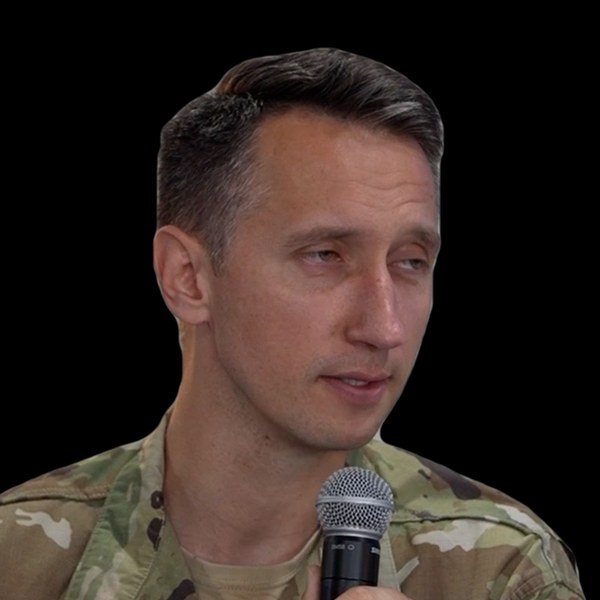
At one in the morning on 27 February 2022, every car at the Slovak border was leaving Ukraine. One man walked in with a backpack and a Kevlar vest. After 20 years representing Ukraine at tennis, he now serves in the SBU's Special Operations Center Alpha.
“I was the only person actually crossing in at that time.”
 11:02
“My logic of the 21st century was that it's impossible for Russia to invade Ukraine. It just makes no sense.”
8:27“I just didn't feel that the ex-tennis player can associate himself with an extremely high elite unit as it is.”
19:37“You have this feeling that this cannot go unpunished.”
25:26“We also need to tell our enemy that they will not know where the next blow is going to come from.”
30:35“We became some sort of a scalpel when it was needed.”
36:07“There's no extreme oversight from the headquarters on how you produce your operations unless you fail to do them.”
40:20“Ukrainian soldiers, I believe, are like modern day Renaissance men on the battlefield.”
 42:11
“All we do is just buy time. We buy time for that next generation to be able to be stronger.”
47:43
It was one in the morning on the 27th of February in 2022. Two degrees at the Slovak-Ukrainian border. Cars jammed solid, all of them leaving Ukraine. And one man with a backpack and a Kevlar vest walking in. The only person crossing that way. Two weeks before the invasion, he'd signed up for the territorial defense in Kyiv. They wanted his children's birth certificates. He said he'd bring them after his holiday. The war started during that holiday.
Spent 20 years representing Ukraine as a professional tennis player. When we sat down with him, he was an operator in SBU's Special Operations Center Alpha, the unit behind Operation Spiderweb. The unit that never shows its faces had decided one of its operators should be seen and heard. He is that operator. One date before we start. We recorded this in Washington in the summer of 2025, in front of an audience at a pre-launch of our institute, just weeks after Operation Spiderweb. The war has moved since then.
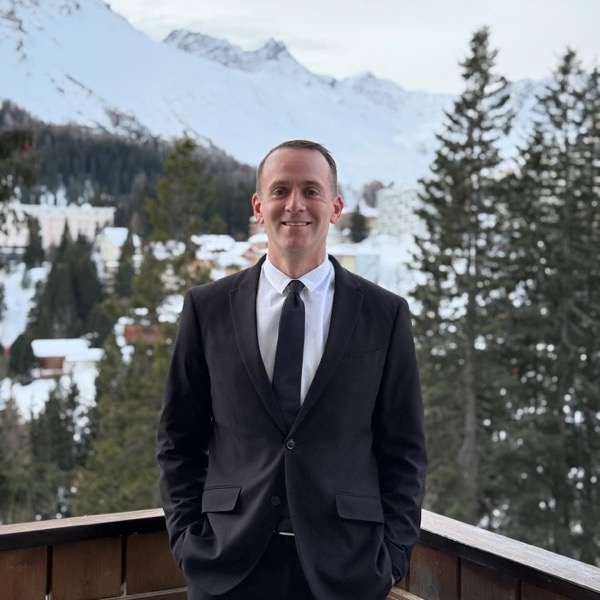
His story remains. Welcome to the Ukraine Military History Podcast. I'm Sam Cook. I'm a West Point graduate, Army veteran, and later an assistant professor of history at West Point, where I studied European and German military history and went on to teach European and Russian history. I founded the Borderlands Foundation. I came to Kyiv in 2018, and I've stayed here with my family through this war. This show is for the people who need to know.
Military professionals, government officials, defense tech executives and founders, and the investors backing them. Everyone working to win this war and secure the Western security order. And Ukraine's, of course. Ukraine is the most experienced army in the world in modern war, and the lessons are being written right now under fire. We bring them straight to you from the people writing them in the history. And those lessons run deeper than this war.
For 3,000 years, the great armies of history have marched through this land. Scythians, Greeks, Romans, Persians, Slavs, Mongols, the armies of the Sultans, and armies of the West and Russia. War runs through Ukraine. We are building the world's best military history center on the ground where it's happened. One word from our sponsors before the show. The full story at the end. This podcast is made by the Borderlands Foundation through its two centers.
The Ukraine Military History Institute preserves and translates the lessons of Ukraine's wars. This show is its work. The Ukraine Center for Traumatic Stress heals the men and women who fight them. And this March, both come together in Dallas. March 15th to 18th, 2027, Ukraine Freedom Summit in cooperation with the George W. Bush Institute at SMU's Cox School of Business. The people you hear on this show in one room. On the golf course, a team of wounded Ukrainian combat veterans brought over by the center.
$5,000 puts one of them on the first tee. Links are below. If you build defense technology, I gave a free talk on why war matters and why Ukraine matters. It was made for you. The link to that is below too. Now today's episode. Stay for May 2022 when Alpha offered him a place and he said no, because he thought an ex-tennis player would dishonor the unit. Then the Oskil River, September 2022, wrong intelligence, four wounded, four hours
hiding from artillery. The moment he says the father of three should have gone home, he went the other way. Stay for the scalpel, how a counterterror unit turned its snipers and assault teams into drone operators. Reaching 70 kilometers deep with him as the engineer, arming the drones, from old Soviet bombs and why he believes his center does the most damage for the fewest losses in Ukraine. Educated officers trusted to do it their way, nobody over their shoulder unless they fail.
That is mission command. We told its history in episode three with Lieutenant General Mykhailo Zabrodskyi. Go listen to it after this one and stay to the very end for the two words he uses for everything his unit does. Three minutes and the best thing in the episode. And when the conversation ends, give me two more minutes for the reads at the end. That is where you can find out how you can help us and how we can help you. Serhiy Stakhovskyi, let's get into it.
Welcome to another episode of the Ukraine Military History Podcast. Thank you everyone for joining us for this launch of or pre-launch of the Ukraine Military History Institute. I'm going to share at the end here just briefly the vision behind the center and what you can expect coming up and what you can access today. But I wanted to, one of the things I'd like to do is do a live podcast interview for our center to let you experience, as we're doing one, what we want to create.
And I'm privileged to be sitting here today with Serhiy Stakhovskyi, who's a star tennis player who was actually in Dubai when the war started. And while a bunch of people were leaving Ukraine. He was coming back into the country, leaving behind a very, I think, what could have been very comfortable life during the war to come fight for his country. And I want to have him share really on a personal side, his thought process, decision
making behind that very important decision, and then go from there and just talk about he served in multiple different units since the beginning of the war and now is in the very famous in the international news SBU Alpha, which just pulled off Operation Spiderweb. We're not going to go deeply into that. I don't want to get him in trouble. We can talk about a few of the publicly available things that have already been put out. But just more broadly, I've known SBU Alpha guys for a couple years now.
We took one of their colonels to the last summit and just been incredibly impressed with the professionalism and dedication of their unit to Ukraine's fight for freedom. So, Serhiy, thanks for joining us today. And I really look forward to this conversation.
Thanks for having me. Good day, everyone. You want me to first start?
Yeah, well, we were talking before, so I'll give you a very specific question. What inspired you at the beginning of the war to come back while so many people were leaving Ukraine? And you tell me this story about when you're crossing the border, seeing the line of cars and no one going in. Tell me about that decision and what made you do that. And the beginning of the war and your experience for that?
Well, I think there's a lot to say, and I try to be as short and brief as possible. For me, the war started in 2014. Prior to that time, I was also grown up and raised in post-Soviet Union, Ukraine, and the history books which told us what was really not. So for me, Russians at that time were friends. Really friends when I spent 20 years on tour and while on tour of course you also connect with the Russian speaking tennis players and you kind of you know live with them. I played multiple times in Moscow and St.
Petersburg, I won St. Petersburg and Moscow tournaments and occasions and everything was in place and then 2014 happened I was partially involved in the Revolution of Dignity well I mean I visited and I supported it in the ways I could. And everything what unfolded after changed my perspective on history completely. My family turned to Ukrainian language prior to that. We were a Russian-speaking family. So I think that decision which I did in 2022 actually came from 2014 because I started
to support voluntarily the Ukrainian army, international battalion, which was there. So the war which started caught me in Dubai I was there on vacation with my family I left Kyiv on 15th of February and I was supposed to come back on 1st of March
so you went to you went to Dubai 15 February did you did you believe that the war was gonna start or you just thought it was all did you believe what was being said at that point?
Well, you have multiple outlets saying different things. Let's say Americans say, oh, they're going to invade tomorrow, you know, evacuating embassies. And, well, Ukrainian media was saying, you know, it's not going to happen. My logic of the 21st century was that it's impossible for Russia to invade Ukraine. It just makes no sense. It's absolutely abnormal and absurd. So I did sign up for a territorial defense on the 12th of February.
But for me it was more of a thought that the Russian intelligence is working and the more people will sign up for the territorial defense the less appetite they will have to invade so it was not really out of you know expecting the war but the amount of documents needed to sign to get into the territorial defense was just significantly higher than I had on me and you need the birth certificates of your kids and and all the other stuff so they
took my application and then I said when I'm gonna come back after the vacation I'm gonna bring all the other stuff. But unfortunately the war broke out during the vacation. I had to wait a couple of days in Dubai just to see. As a non-military person, all my life I was civilian. Yes, I took part in some of the supporting roles in the Ukrainian army from 2014 once it was an Anti-Terrorist Operation, but I did not know what is a full- scale invasion.
I didn't know whether Kyiv will stand because everybody give us three days, that Ukraine will fall in three days and my perspective was that Russia is never gonna stop on a Hungarian or Slovakian or Polish border that they're gonna continue on until some force will stop them at that time I was living with my family in Budapest which means basically 200 kilometers from the Ukrainian border so I didn't feel safe bringing my kids back to Budapest so I
had to actually sit out two days in Dubai and realize what next I do with my family where I put them where they stay And then I saw the amount of resistance Ukrainian army and Ukrainian armed forces shown and that we are fighting on multiple fronts. Of course, very heavy and very big losses, but we are fighting and we're standing and I have a window of opportunity to come back to Ukraine. I flew them back to Budapest. I took a small backpack. I drove all the way to Bratislava first to finish some family
businesses and transferring all the accounts to my ex-wife. And then I have friends who drove me, gave me some gear. I had no idea what to buy, so they took me to the shop to get first boots, survival kit. I had a great friend who's producing Kevlar West's Bulletproof West, so they gave me a couple of those, a couple of helmets, and they basically sent me over the bridge. They drove me to the border, and I remember clearly crossing the border on the night of
the 26th to the 27th of February into Ukraine, about 1 a.m. It was pretty cold. It was, I think, around 2 degrees. I was the only person actually crossing in at that time. But what really surprised me was the amount of Slovakian people at the border with blankets, with food, with tea, with anything expecting Ukrainians to cross and then take them to the nearest shelters or nearest towns, to their homes, just to shelter them somewhere.
And there was no Red Cross, there was no international organization to do that in the first days. There were just pure people trying to support Ukrainians. Well, then I eventually crossed the border, had to walk for 15 kilometers because the road was jammed one way. You couldn't really, nobody was really going towards Ukraine. And then made myself way to Kyiv. It took me really almost a day to get to Kyiv. And eventually came to Kyiv, joined the SBU Alpha for the first three months because I had
some friends who used to be officers of this unit and they came back on the 24th of February. And from there, I guess, my military career started.
So first three months, you're in the Kyiv region without violating any classification or anything. What can you say about your impressions and experiences from the Battle of Kyiv? I know you participated in some different operations with SBU Alpha. First of all, you get back on the 27th. Did you have this feeling that Kyiv is going to hold, or did you feel like it's going to be surrounded? What was your personal, let's say, evaluation of the situation and your psychological, emotional assessment of things?
Well, I didn't come to any conclusion what was going to happen. My first goal and the foremost goal was to reach Kyiv. My parents were in Kyiv and, you know, try to defend Kyiv in a way I can. But once you get there, then you start to think what actually you can do and what is proper. But thank God that people around me, they knew what to do. They gave me a place. They gave me the reason. And I was doing what I was told because I'm not, at that time, I'm a complete civilian. So I actually have no idea what to do.
But of course, you have all this information. And I remember, I think it was the beginning of March. I was standing in the middle of the street, which is Velyka Vasylkivska, which is the really frequent road these days. And it was absolutely deserted. There was nobody. There was not a single person not a single car and it was just air raid sirens going off and it felt like apocalyptic and you know watch all these movies The Day After Tomorrow and that exactly the feeling you got and it
was shocking to me that you know I am from Kyiv I'm I lived in Kyiv from when I was young I moved out to down the countries when I was a bit bigger but I always come back and i remember the feeling in the vibe of the city and then suddenly it's gone this nothing and he's scared I mean I was scared as hell but thankfully and luckily that I'm still here that my exposure to the war was you know it was graduated slowly first you had some missiles coming into Kyiv in different directions then a bit
distant artillery fights then the closer to the fights and tanks and gunfights so I was not thrown out and exposed to the war on the trenches like you know without experience so it was slowly graduating and I guess my mentality just stayed in place.
So you I think at the beginning you were working mainly inside Kyiv on internal security with SBU Alpha what was the threat or the sense like because there were a lot of stories about potentially assassins coming into Kyiv and or targeting the president. What was the internal security situation like from your perspective where you were serving?
Well the squad was part of we were tasked with a perimeter protection of our base. So we had in the beginning we had a three over three hour shifts. So you patrol for three, you rest three, patrol for three and then eventually we gradually expand but there was a lot of tension inside Ukraine, inside Kyiv as well. There was a lot of checkpoints and block posts. Everybody was scared and anxious to do something. But what on the other hand was extremely powerful, I remember, I think on the third or
fourth day, I went to the territorial defense officer, which I write a letter of intent to, just to tell him, you know, I'm fine. You know, I already have a unit, you know, just don't worry. And I remember hundreds and hundreds of Ukrainians standing out of those recruiting centers trying to apply trying to be part of the resistance and I remember that you know those officers going like you know what we have no place you know just just get a group of 20
give us a phone number and you know leave the phone number when we have some space free up we will call you the amount of resistance the amount of will of Ukrainian people it was it was immense another note I remember I have a picture in my phone we were driving down the city on 8th of march which is International Women's Day and you had Ukrainian soldiers on the block post giving roses to ladies. If they saw any lady passing by the checkpoint, they would give her a rose.
And I make a picture of the soldiers and said, this is insane. I mean, we're in the middle of war. I mean, Russian rockets are flying around and you're giving roses. It's just small stories like this. They were really, really incredible. Ukrainian women, they don't care if it's a war. They're going to get there. They're beautiful.
Yeah, we know that. So at the beginning, as I recall, when we were talking, you were doing internal security and then the liberation of Kyiv and the outskirts of Hostomel and Bucha and Irpin started. I believe you participated in some of those actions. Is that when you started to get into more direct combat experience?
Well, I did not get any combat experience in Kyiv region. We were tasked to get retrieve documents from the Hostomel airport with one of the prosecutors they were trying to figure out why the An-225 didn't fly out of Kyiv so they were trying to retrieve some documents so we escorted them I think it was the second day of liberation so we still unfortunately saw all the mass and all the destruction that Russia brought into Bucha and Hostomel and Irpin and that was really distressful.
I mean for the... I've been in Bucha and Irpin, my parents live on that side of the city. So witnessing what it was like after they left or what they left behind was just incredible mental shock I would say. You see the bodies on the streets, you see different very disturbing images which they left behind and you just start to feel extremely, extreme amount of hatred towards Russians and it just doesn't dissolve it continues to be there
so we did what we were tasked with we came back and basically my first more as combat experience was in Kharkiv region later in April
so the battle of Kyiv ended and there was a lot of activity outside of Kharkiv I think there was a lot of that was the first major actually Ukrainian counter offensive was to try and push the Russians back from the Kharkiv region and you participated in that. Were you still with SBU Alpha?
Well, firstly we went in April to Kharkiv region. It was a Barvinkove. It was not the counteroffensive. It was trying to stop their offensive onto Kharkiv and encircling Kharkiv as it is. We actually took part in that up alongside with Dmytro Kotsiubailo, with his Da Vinci, but with his Da Vinci Wolves. At the time they were operating three D-30 howitzers. We were kind of supporting personnel of their MEDEVAC, and so it was nothing big, nothing major, but at least I got the feeling of the battlefield as it is.
And then in May I got offered to be actually a part of SBU Alpha that I could enroll. But I don't know how many of you know what is a special operations center in Ukraine, but it's basically a top-tier SEAL team. There's a very few, very limited amount of people who actually can be part of that unit. And I just didn't feel that the ex-tennis player can associate himself with an extremely high elite unit as it is. And I feel that I would be a person who is kind of dishonoring
the status of the Alpha. So I thankfully thanked them and I said, guys, I mean, I'm not really thinking it's serious for me to be part of something as special as you are. And at that time I was still trying to save family and three kids. Unfortunately, that didn't work. But I think that, you know, if I have freedom to travel and it would be a bit easier. So we did some fundraisers alongside with Elina Svitolina. We did a big charity event in Poland. We traveled to Paris for Roland Garros.
I think throughout that year we gathered about 12 million dollars for different Ukrainian charities.
Was this part of the armed forces or you went out?
I was a volunteer. I went out. So basically, the moment they asked me to join or offered me to join, they didn't ask me, they offered me that I can. When I declined, I said, well, in this case, you have to give up your weapon, you know, back. Goodbye. Yeah. Sorry. So for the next three months, I was actually volunteer, raising money, buying equipment because I had the ability to travel abroad and bring it back. We brought 500 ceramic plates for National Guard, we brought night visions for SBU Alpha, we
brought a lot of different stuff to anybody, Da Vinci Wolves, International Battalion, and because throughout these eight years prior to the war I had many friends which I was trying to help during the Anti-Terrorist Operation, I got to participate in the things they were doing while I was a volunteer. So I get a gun on myself so I could do some stuff. And eventually on 20th of September 2022, when it was almost the last days of Ukrainian
counteroffensive, I took part in one of the operations alongside the International Battalion of HUR. It was a small group of people and the 95th Brigade, I think. We crossed the river of Oskil just out of Izium. We were supposed to pass the small village of Yatskivka and take stronghold of Rubtsi. Of course, the op didn't went as it was planned and the intel on that situation in that village was completely wrong. Unfortunately, I think the 95th Brigade lost about two battalions in that fight.
Our group lost, well, we didn't have it in KIAs, we have four wounded. So we retreated on the way we were retreating our armored vehicle got blown by the artillery rocket of Grad most likely and then we were hiding with the 80th Brigade in a hideout from the artillery for another 4 hours and eventually at that time I thought you know you're getting close enough to death I think you have 3 kids to take care of you should go back home and forget about it but something other clicked and I decided
that I actually want to join officially to the military Unfortunately, at that time, it was not so easy anymore to join the SBU Alpha, because they suddenly decided that it is, after all, a very elite unit. So you have to go elsewhere. And I joined National Guard. I knew the commander of National Guard very well, General Lebid. He gave me a very reasonable and very high status. I was an advisor to the commander of National Guard for about six months.
That status give me the possibility to join any force I wanted within the National Guard or I could be transferred to the SBU Alpha as the part, as an aid to them. And that's basically what I did. I traveled with my unit, which I started with throughout Ukraine, Bakhmut, Soledar, and then onwards. And while I was serving with my unit, while I give them actually cover because SBU Alpha is never on the front line. You will never see our patches, you will never see our faces exposed,
because the operators of the Special Operations Center is high targets for Russians, and they would love to kill some of us. So I give them cover by National Guard. So, you know, we would always roll out on a mission. I would say we are the 3rd Brigade of National Guard, 2nd Battalion, or we are 4th Brigade, 1st Battalion, doesn't matter, but the cover always was solid. I took care of that, and that was my mission. And while I was there serving we met with the current commander in charge of Special Operations
Center General Yevhenii Khmara, Lieutenant General sorry Major General and once he became the chief of Special Operations Center he reached out and said listen if you still want to enroll into the Alpha I will sign the papers for you if you still if you're gonna pass all the security checks and And in March 2023, I signed the papers and basically took me about four to six months to transfer, I remember, into the Special Operations Center. And I started to serve there since then.
I want to rewind to something you said, which I think is pretty interesting. Your first major brush with death was a turning point where you could have just gone back and said, OK, I want to be safe for my children. But then you took the opposite approach, which was trying to join and eventually getting into SBU Alpha. What do you think drove that decision or that shift in your psychology for service?
Well, I guess it's a lot of things that happened throughout my life before. But predominantly, I would say it's when you see the destruction they leave behind. Because when we entered Yatskivka, we basically were first unit to enter during the counteroffensive. And again, you see the same pictures you see in Bucha. It doesn't change much. You have this feeling that this cannot go unpunished. Like you literally want to do something. So it is fair that justice is served in some way.
And unfortunately, there's no other way to serve justice unless being part of the armed forces and, you know, do the justice on your land. So I think it's a complex of things. The way I was raised, the way I represented my country for 20 years while I was a tennis player, it has a different attachment for me. And Ukraine has a different meaning for me than maybe for the others. But I am what I am and my decisions are solely mine and I own them. I have to be responsible for them.
So you brought up another point which was interesting. We actually did come with someone last year from SBU Alpha, but we decided to not put his footage online. You being public for SBU Alpha obviously is a greater risk to you how does that sit with you sometimes and your family and why do you do what you're doing right now
well divorced from the first marriage so I guess I put my first three kids safer safer at least hopefully so but you never know I didn't have much to lose because I think in 2014 when Russia invaded Crimea and Donetsk and Luhansk, I was already in the mouths of Russian parliamentarians. They wanted to sanction me on an Interpol red notice for, how to translate it, for creating an international hatred. So I guess there was nothing new to me.
I knew that if Russians are going to come to Ukraine, eventually I have not much place to live in. So it was nothing new. But it was a problem for the Special Operations Center because it's a security organization. The members of the unit are not disclosed. The pictures are not shared. The quantity of the operators is not known, etc. But unfortunately, this war in Ukraine, they showed us a different way of waging war. And it is also a media war.
And I think as our center also is quite okay to have somebody vocal and somebody they can attach the special operations center to. But there's not only the commander of the unit is public, but they also have a member on the lower ranking of the chain or the bottom of the food chain, I would say, who can actually be vocal and visible and they can rely on him.
Yeah, I think it's a smart decision from the public relations standpoint. And I've watched SBU Alpha through the course of the war. I think really work on the public image and the psychological, I think, impact of what they do. When you're, I think a lot of people are shocked and we'll get to it or let's jump into it now. The Operation Spiderweb was not so much that what was done, but how public, it's almost like the American intelligence before the war publicly putting out all their information,
which is counter to what all intelligence secretive organizations do, which is don't ever talk about your methods. Why is SBU Alpha being so public about Operation Spiderweb and what impact do you think that's having? Because you've obviously traveled since that's happened, you've been here in America, you've had a few interviews on that, public and private, you know, off the record and on the record. What do you think is the reason for that and what impact do you think this is having on Russia?
Well, there's multiple layers to that. Firstly, of course, it was a fantastic and incredible operation that the center and security service of Ukraine could pull out. To put into context, so security service of Ukraine is a kind of CIA, I would say, level of organization, which is responsible for internal security and external as well. Ukraine, again, proved that there's a different way of waging war. And because we're a smaller country, because our enemy is significantly higher and more
resourceful we have to make our little wins count and not only in terms of our internal morale but in a global scale. That operation proved that you know Ukraine still has a lot of fighting chances of winning this war a lot of different options of hurting our enemy what is most important is to hurt them on the lethal targets, which are legit war targets, not civilian, not critical infrastructure, but the military targets, and that we can do those strikes with a surgical precision. I think it was outstanding.
I think it would be a shame if some other Ukrainian units would credit themselves for this. So I think it was the right decision to make to show the world what we did. We understand that we compromised maybe some of the security of that operation in terms of how we executed it. But on the other hand, we also need to tell our enemy that they will not know where the next blow is going to come from. If you take it into context, after we publiced that imagery, the amount of blockage on
the roads with the trucks that they were trying to check for any other drones or any other explosives. It basically paralyzed Russia for next week. Logistics cut, production plan stops. And all of that is a part of a greater goal of economical war against Russia.
I think one of the things that Russia, your greatest advantage is also your greatest disadvantage. Russia's greatest advantage to many people, the sheer size of it, the fact that it has more population, it has a huge amount of territory from which they can retreat and try and evade Ukrainian attacks. But at the same time, you can't defend such large amounts of territory with air defense, with counter, let's say, counter intelligence operations is a lot harder, the greater the distances are.
So what I think SBU Alpha has been so good at throughout this war is exploiting that vulnerability of Russia, which is it is so big. There are so many different ethnic divisions inside the country. There's so much to protect critical infrastructure, oil, all those things. They have a real vulnerability compared to what I think SBU's job is to protect Ukraine from the same kind of threats. Why has Russia not been able to pull off those kind of attacks inside Ukraine?
Well, I'm going to be on a really tight and light ice here. But we would love to credit this operation to the Special Operations Center wholly. But the fact is that I think it's somewhere around 70 to 80 percent of our job. And the rest was still done by the Security Service of Ukraine. So we still have another department which are doing immense amount of work in terms of externally. And as you said, yes, you could see a lot of footages of blown colonels, you
know, generals in Russia. Yet you don't see this imagery in Ukraine. And that's a massive, massive work, which is done internally by security service and the police of Ukraine to prevent those things from happening. It's not like they're not trying to do that. It just is not happening because it's prevented.
Yeah. And a lot of people say to me, I'm American living in Kyiv. And they say, do you feel safe in Ukraine? And well, yeah, sometimes it's loud at night. But also you walk down any street in America, especially Los Angeles right now or Washington, D.C. I feel safer in Ukraine, aside from during very specific loud moments. Sometimes you might not feel safe. But Kyiv is an incredibly safe city for every other measure, aside from Shaheds and rockets.
And that is a credit to the national police and the security services of Ukraine, which I think we almost just take it for granted. But my wife doesn't feel safe walking around after dark in our neighborhood in Washington, D.C. And we feel completely safe in Kyiv, aside from during certain loud moments. So you're right, there's a whole other war that we never hear about, which is from an intelligence service, no one ever notices the CIA unless there's an intelligence failure.
No one's ever seen or will ever hear about all the things they prevented, and I'm sure the same thing's going on in Ukraine. So you've been serving in SBU Alpha since early 2023 and you've evolved quite a bit what what can you share I don't want to ask things you shouldn't talk about but what is the SBU Alpha story of your service since early 2023 that you think would be relevant for people to understand the nature of the job the different units that you've progressed through
well I mean I'm being part of the same unit since the start, since day one. So the Special Operations Center is directly involved. We became a direct element action. We are deployed throughout the whole frontline.
So you became a direct element action. So before the full-scale invasion, did SBU Alpha do any direct action?
So the main tasks of the Special Operations Center Alpha was anti-terror. Preventing any terroristic organizations or any mob organizations inside Ukraine to reaching any goals or being able to implement any kind of danger to the Ukraine national security or Ukraine citizens.
So that's internal security.
Internal security, yes. Starting 2014, there was a separate unit which became a part of the Anti-Terrorist Operation, which is a direct element. But it was a separate unit which was solely responsible for that area and then the center was still carrying on the main purposes of our deployment. Starting 2022 we became a direct element action because we have very knowledgeable officers with extreme amount of bullets shot, targets hit and they are extremely precise and extremely dangerous so we became some some sort of
a scalpel when it was needed in terms of rescue in terms of other stuff which happened we grew up a bit and my road went through let's say starting on a more as a mortar unit we were a I would say mobile mortar unit which was supporting any direction which was failing in terms of defense or advance. We have 82 mortar which is ranging from 900 meters well that's the closest we were using it was 800 meters to up to 1.5 kilometers and then we had 120 mortar depending on which shells we got but from 4 to 7 kilometers.
And that was basically our first I would say first three or four rotations it was a mortar of course we had drones but drones we used as a reconnaissance not as hit targets and then eventually the war evolved, everything changed with FPV drones coming in and we had to adjust so we started to have our own FPV teams inside our unit and we started to implement those more efficiently than the mortar. Mortar was still with us, but it was kind of a second piano in a play.
I was basically as a part of a mortar unit and a part of a FPV team unit. I was engineer. I was actually putting the bomb and electronic detonator inside the drone and sending it out. I was also a co-pilot because that's what I trained for. So we had a team where every individual could do anything. So our ops ranged from one to six days at a time when we were on a base we prepared all the drones check them if they are how to say it if
they're on the right frequency so we basically run them off they are working prepare the bombs dismantle old Russian old Soviet anti-tank aerial bombs and make small improvised explosive devices out of them to be more efficient so that was my life it was harsh it was interesting that's for sure
so this is a special unit that was was doing direct action and SBU Alpha as I understand doesn't ever hold parts of the front line so how would you be deployed would you go to trouble spots would you have specific missions that are based on high value intelligence
so we work right now predominantly different units have different tasks. So I can say that we have ranging from sniper to the CQB units to everything. But every of those units, which were hardcore military assets, direct action, they all became as drone operators because that's the most efficient way to hit your target and to destroy the enemy. We're deployed. So every unit have a different line of responsibility. Of course, Special Operations Center does not have a line on the front line, which we're
responsible for in terms of the first line of defense, which means zero line. But we are operating from within, let's say, 1,500 meters from the zero line and all the way as deep as 70 kilometers, depending on the mission what you are deploying. There is sniper groups, FPV groups in any way, close, well, short range, operational range drones, deep strike drones, recon in the units. We grow up as a very efficient and very effective element.
I'm not going to lie if I'm going to say that I think that special operation forces in terms of... Damage done to the enemy versus personnel loss, we are in a top spot in Ukraine. And the reason is because the officers, which are the part of the unit, they're extremely educated, they're well-trained, and they can execute their operation the way they see fit. And there's no extreme oversight from the headquarters on how you produce your operations unless you fail to do them.
So the secret to, you believe, the low casualty rate, high enemy effectiveness is decentralization and lack of micromanagement. And that's a very hard thing in the military to pull off because a lot of people who are not micromanaged, sometimes the reason for micromanagement is sometimes people make a lot of mistakes. So how does SBU Alpha insulate itself from the thing that everyone hates, but everyone seems to fall into that trap?
That's people, that's members of the unit. They are extremely well educated and organized. They know how to do their job and basically they rely on each other. So you don't need that oversight. In many places in the Ukrainian army, unfortunately, you have up to 70% of people who serve in that unit, they are mobilized, which means they never experience war like me. So I'm not running any unit. I'm being run by, but I know for 100% what I'm doing and why I'm doing it and I'm explaining
why. So if there is a need for me to do something with another group of people by ourselves, we are capable of doing it because we explain the way we need to do it. But I think the core heart of why we are so successful is the right leadership and the people who are serving there.
Yeah, that's the core of special units is selection of personnel and making sure that they're trained so they can operate independently. Serhiy, just before we close out here, I think you brought up a point which I heard in our conversations with some elite American units that you were sharing with here on our trip. But something that a lot of soldiers in the American army may not understand is Ukrainian soldiers, I believe, are like modern day Renaissance men on the battlefield
where you have to learn chemistry to build explosives. I mean, a former tennis player here putting together explosives as a chemist. You have to know software development. You need to know hardware for electronics. You need to understand military theory, tactics, leadership, orders process. Are you surprised at the level of things that you've had to learn to operate on this battlefield and do you see it simplifying or you're just going to get more complicated as we go forward
well I would say that there's more and more information that the soldier actually needs to learn in order to be effective but it also a great way that you have those opportunities to learn because again I'm not gonna say we are so successful as well because we are not holding that frontline or zero line because that's the most hard job to do because there you really feel intense fighting and you don't have time to learn anything and you don't
have that time off whether we are kind of an extreme tool to be very useful to hit targets which will change economical I I would say shape of Russia and they're very privileged to have the opportunity to work this way We are not failing that and that give us the The solid grounds to to do to continue to do this work because if we wouldn't be able to reach the targets that we are tasked with reaching Then of course they will say well, you know, they're nothing special you
go to the zero line go to the zero line so but we have been extremely successful throughout the last year was a hit of Toropets storage facility for the I don't know, it was GRAU, it was 76 GRAU I think, where you had around 60 thousand tons of explosive, or not explosive, but different rockets and munition which exploded
Oh, that was your unit?
That was our unit, yeah so we hit Engels multiple times, now with the spiderweb operation, I mean, we just prove time over time that we are capable of doing these things. We are doing them right. And for that, we got the trust of the head of the security service and, I guess, the president in charge of continuing doing this work.
So, Serhiy, to close this out, I want to reflect on a few things that I think is important. Before the war started, I had a tech startup, and I had a bunch of team members, and I thought I had a lot of good friends here in Kyiv. Everyone that I knew before the war has left. And you brought up something. I think if I heard you right, you had a relationship breakup during that point at the beginning of the war. And my wife and I decided to come back in because our calculus
in July when we came back was we don't want to wait until the war ends to go back and rebuild. Who knows when it's going to be. We want to be part of this effort in some way. That we can contribute. And you talk about your friends and SBU Alpha. I found that I think it's harder and harder as you get older to make new friends, but I found the friends I now have in Ukraine that I've made during this period are the best I've probably had in my life.
And I look forward to hopefully long and happy, healthy lives with all of them. Unfortunately, this war is not making that easy. What do you want for the future of those people that you've now worked with and and and all the people you're serving with how do you you're very informed on history we've had a lot of good conversations about Ukraine and and the reclaiming its history why is history so important to you both of your unit of of what you're doing but but more broadly
what do we need to do to make this all worth it?
Well, I think it's, we're all trying to do whatever we're capable of doing and I'm really grateful for the job you do within the foundation and, you know, the history of Ukrainian armed forces and the military success of Ukraine. But in general, we don't need to invent our history. It's there. We just need to actually teach it right in the schools. And I think, unfortunately, for Ukraine, it's going to take a bit of time. So the kids are going to school now.
They'll be taught that, you know, Russian Empire always trying to suppress Ukraine, that there was a whole lot more, Holodomor in 1933, famine. So these things, once the younger generation go through the process and they will understand why this war is happening, it will be much easier for them to speak Ukrainian language instead of Russian, to listen to Ukrainian artists, to think about Ukraine as a country, not as a place they live now, but they want to leave.
And it's a very long war. We cannot just dismantle all the Soviet Union out of us within a couple of years during the war. It's just physically impossible. It takes time. We only are 35 years of independence. It's not that much. It's nothing. How long is the Constitution of the United States? It just takes time. And whatever we do on the battlefield with my fellow countrymen, we're just buying this time. We understand that it's not easy to beat our adversary.
It's way too big. We need them to start to have some problems inside their country for us to be successful. But all we do is just buy time. We buy time for that next generation to be able to be stronger and to implement things that will work in the future.
We had a conversation before about the political start of Ukraine. It was actually founded by a historian. Hrushevsky was a historian who had the time and space to write in Lviv under the Austrian Empire. He had the time to write this history of Ukraine that became part of the political imagination of what became independent Ukraine in 1917. And modern Ukraine was founded by history. And then through the Soviet period, history was stolen again. And let's say incorporated.
And Putin, right before the war, writes his wonderful historical essay on the relationship between Ukraine and Russian people. And strong voices, articulate voices like yours who are creating this history, writing history with SBU Alpha is what our children need. And I really thank you for all that you've done, are doing, and continue to do for our safety in Ukraine. I do not take my wife and our future child's safety and security for granted. And it's a privilege to know you and all the people at SBU Alpha.
I have the privilege of knowing and look forward to continuing the conversation and seeing your work in the future.
Thank you. Thank you. Thank you.
That was Serhiy Stakhovskyi, an operator inside SBU Special Operations Center Alpha. 45 minutes recording in Washington in the summer of 2025 on how a tennis player ended up arming drones for Ukraine's special operations unit. The short version, he had every reason to get out and use none of them. His unit wins, he says, not on equipment, but on trust. Educated people allowed to do the job the way they judge it, and all of it is to buy time for generation that will finally be taught its own history right.
Serhiy, thank you. Russia's parliament wanted you on an Interpol notice back in 2014, and you still put your face to a unit that hides its faces. Stay safe. Before the ads, one ask. Help people find us. If this episode taught you something, share it. Send it to an officer, a founder, an investor who needs it. Subscribe on YouTube, Apple Podcasts, Spotify, Amazon Music, and Apple. Leave a five-star review. The honest reason we're competing with organizations that have huge marketing budgets,
and we don't have one. The reviews are a budget. And a share from you is how the next Serhiy finds this show. Now, our sponsors. Starting with the one thing I want you to act on. March 15th to 18th in 2027 in Dallas, the Ukraine Freedom Summit, in cooperation with the George W. Bush Institute at SMU's Cox School of Business. Four days, a defense technology exhibit of real Ukrainian battlefield systems, open for defense companies to sponsor an exhibit with the U.S. Premiere of Drone War I and a charity dinner.
The Ukraine Freedom Golf Tournament, the Defense Innovation Forum, government, military, policy, defense tech founders and investors, hearing directly from Ukrainian soldiers, officials and industry leaders. And the future of Ukraine Day. The full schedule is on the site. This is where we let you meet the people writing history now. Attend, sponsor or both. The link is in the description. And the team on that golf course is the point.
The Ukraine Center for Traumatic Stress is the foundation's second center, led by Major General Vladyslav Klochkov, the man who ran the moral and psychological support forces for the entire armed forces of Ukraine under General Zaluzhnyi. His vision is to turn trauma of this war into strength with world- class care built by Ukrainians for Ukrainians. The first program is the Rehabilitation Through Golf, a team of wounded combat veterans training for Dallas. $5,000 will put one of them on the first tee.
Flights, training, their place in the tournament. Donate to the center to back Klochkov's team. Link is in the description. That is a tangible thing you can do today. Ukraine Military History Institute makes this podcast free with full transcripts at ukrainemilitaryhistory.org . If you're serving military or veteran, register on the site. Everything we publish is free to you. The university course, the journal, and the officer workshops are coming soon.
The Borderlands Group, the defense consultancy I run that funds the foundation. We work with Western defense and technology companies here in Ukraine, and units like Serhiy's flying FPV and deep-strike drones are the battlefield those companies have to understand. If that is your world too, watch my free talk on Why War Matters. It was made for the defense tech founders and it shows you how we work with and how you could work with us. The link is below.
And finally, StoryFunnels, a serving alpha operator on record explaining how his unit fights is not something that should be gone from the feed in a week. This is a problem we built StoryFunnels to solve and is how this episode reaches you for a month after it airs. Articles, clips, posts in your own voice, put where search engines and AI systems actually surface it. One episode in and you get a month of content out. It is live at storyfunnels.ai.
My name is Sam Cook. Thanks for listening to the Ukraine Military History Podcast, where we make sure Ukraine's heroes are never forgotten.
Get an email when a new episode drops. No spam, unsubscribe anytime.
 Ukraine Military History Institute