“When we entered the direction in 2024, in two months the enemy’s losses were up to 2,000 personnel. The units that had stood there were reduced to zero.”
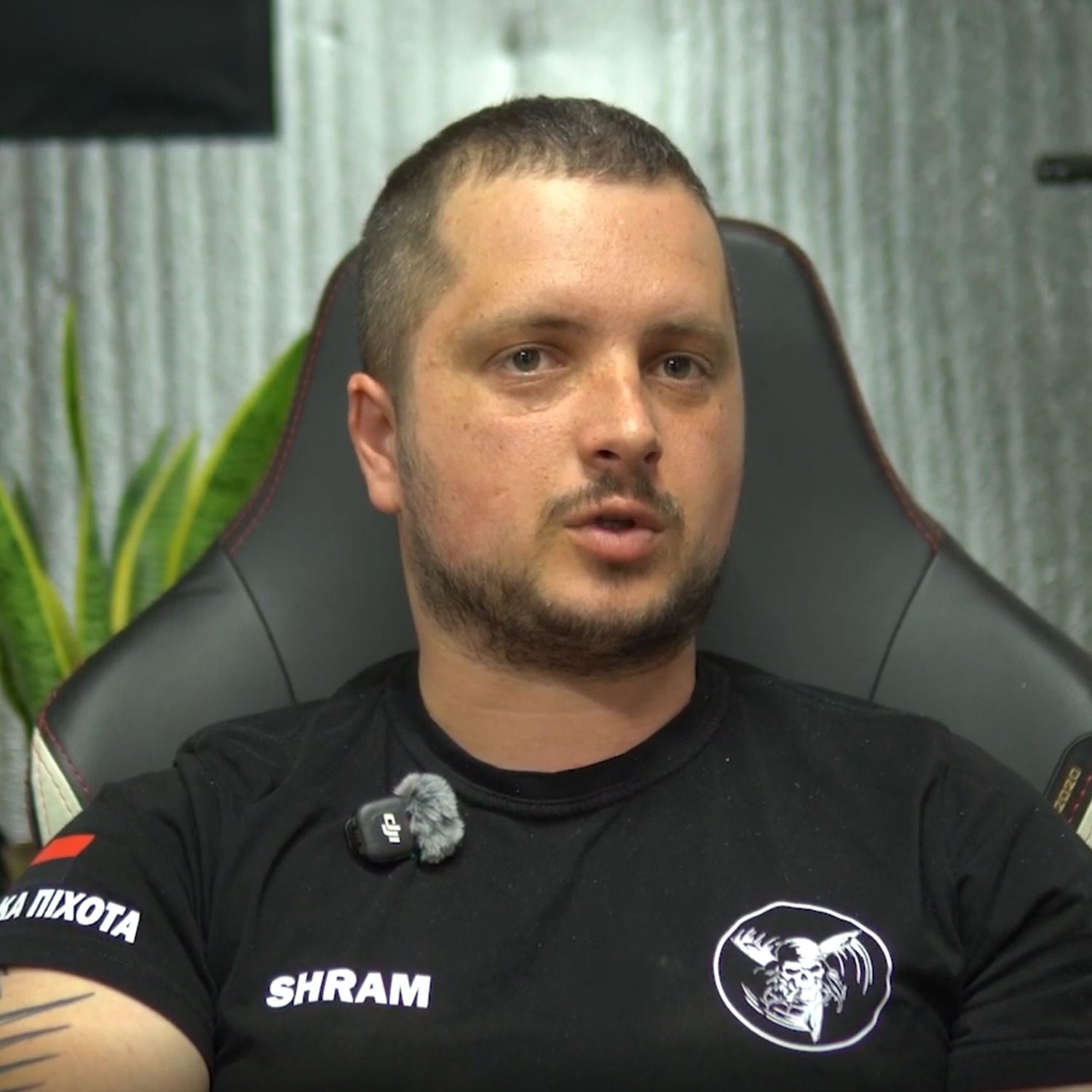 Colonel “Shram” Tovstyi
“There are already trained specialists who teach. They go to a district and teach the units there. They’re not just doing their own job — they’re teaching others. That gives more problems on the front.”
Colonel “Shram” Tovstyi — on Rubicon
“Fiber optic is not a panacea that only flies on it. It has become more of a situational tool — for more accurate strikes or certain conditions — and it’s possible to work better on the radio.”
Colonel “Shram” Tovstyi
“The main recommendation is to get away from bureaucracy. War is a situation. Choose motivated people who react fast — not old officers who see nothing but history, that someone once did it this way.”
Colonel “Shram” Tovstyi — lessons for foreign militaries

Hi, it's Sam Cooke, the founder and co-host of the Ukraine Military History Podcast. Welcome to another episode of the Ukraine Military History Podcast with Ukraine military analyst Rob Lee, who's the world's foremost expert on Russian and Ukrainian military as it pertains to how they fight. Before we start this episode, I just wanted to make a quick word to mention our sponsors. I'm going to give you a brief introduction for our sponsors, and then at the end of the
show we'll do a longer discussion about each sponsor and what we're offering so that you can get right into the content. So this podcast is funded by the Borderlands Foundation. The Borderlands Foundation is a foundation that I established to make sure Ukraine's heroes are never forgotten. And we have two main centers that are in effect the sponsor of this podcast.
The first center is the Ukraine Military History Institute. It's an English speaking and Ukrainian speaking center. Which is Our mission is to translate Ukraine's history from Ukrainian into English for the world to consume and learn from. Ukraine has a lot of allies who've supported it. Almost all of them The common language of military officers, military historians and professionals is English.
So the Ukraine Military History Institute created and sponsors this. And I'll tell you all about our programs and how you can support the Institute at the end of the episode The second sponsor for this podcast is the Ukraine Center for Traumatic Stress. This is also part of the Borderlands Foundation. It's a center dedicated to research and raising awareness and helping to bring in to Ukraine cutting edge therapies, treatments, protocols and education related to post-traumatic stress
disorder The heroes of Ukraine that are fighting this war, whether they're Ukrainians or foreigners who've come in to fight side by side with Ukrainians, they're writing this history, which creates the stories, which creates a strong future country. And those memories have costs. So we're dedicated to helping advance the research, treatment and breakthrough that all soldiers, veterans can have dealing with and overcoming post-traumatic stress disorder
and mental health that arises from their service. And then finally, our last sponsor is the Borderlands Group. This is a for-profit company that donates the money to fund the Borderlands Foundation, all of our programs I'm also the founder. I'm the founder and president of that organization. And we do military advisory, advisory for defense companies working inside Ukraine and
consulting and software development and technical work for both governments and military defense companies So with that, that's our sponsors. At the end of the podcast, I'm going to tell you a lot more about each sponsor. If you're looking for ways that you can contribute to the Borderlands Foundation, our two centers, or if you'd like to work with myself, Rob and other contributors for the Borderlands Group, I'll talk to you about how you can get in touch with us through the Borderlands
Group for that Hi, everyone.
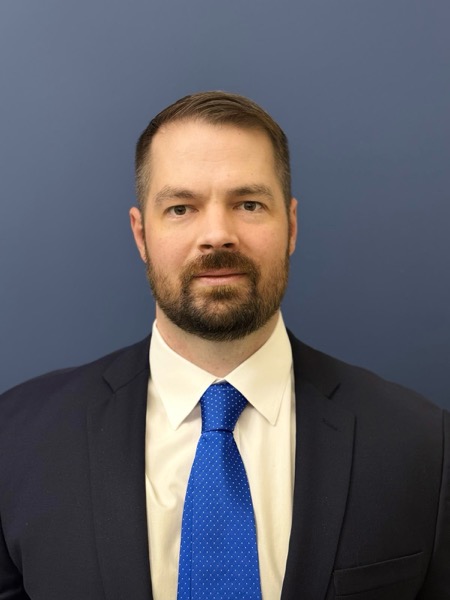
It's Rob Lee I'm a senior fellow at the Foreign Policy Research Institute. Today, I've got another interview about the military situation in Ukraine with the commander of the UAV battalion for 38th Marine Brigade. Great Thank you very much for talking to me with me. You're welcome Thank you.
Could you introduce yourself and maybe talk a little about your background?
I'm Colonel Tolstoi Vladyslav Yurievich, commander of the UAV battalion, Corsair. I've been in the military for about 20 years.
From the age of 22, as the leader of the reconnaissance group, we created our own UAV crew. I began gaining experience operating UAVs like the Mavic 2 and Mavic 3 We began to show our effectiveness and after that to increase our efforts. We started small, working with just a couple of guys. From that point, we began to formalize the process.
They operated, created their own mini unit and began to expand it. I was then in the battalion management, but I worked in the battalion management as a paratrooper, well, as an airborne soldier, but I performed tasks beyond my official role — we all fought.
Can you tell us about the current situation?
Technological war, where the maximum number of personnel was reduced in positions and the number of equipment was increased, this is UAVs, this is ground robotic systems. Well, the war is now more hidden, no one is running on the fields openly, it is not moving, it is hidden and more for technological development. What about this particular part of the front line, what is the current situation
and how has it changed as the season has kind of changed and it's becoming summer? Winter, autumn for us is always...
...the best weather that can be in the order of the enemy's destruction. So, as we think in defense, the enemy is always moving, and its movement is in the conditions when there is no foliage, when the ground is cold and we can see it in thermal images from drones, it is easier to find it, to kill it, that is, this is an increase in the number of dead Russians. Now the greenery has come, that is, I have... I have a identified enemy, I work on the damage, but due to the complexity of the foliage,
I can not always see the destruction, confirmation of the destroyed enemy, that is, there are difficulties in its detection. If earlier we could see the movement in 5-10 kilometers at once, now we need to increase the range of reconnaissance, increase the number of drones per square meter to spot the enemy hiding in the greenery. Fog can happen in winter too, depending on the temperature, but...
the work always continues — regardless, fiber optic drones allow us to fly at low altitude even in fog, set up ambushes, detect and strike the enemy. Has the intensity of the fighting increased now that the weather has changed?
Usually the intensity of fighting increases during spring.
But because the enemy has conducted a very long period of offensive operations, he is now running out of steam. There is activity, it is trying to get through, it is trying to climb, but not as active as it was, for example, last year. The amount of equipment is already less, the number of personnel is less, we have them by the throat, but this is managed within our resources — it's not like what it was before. I can say that in my area, in which I worked, it decreased by 60%, as for me. Are Russian tactics still primarily infiltration tactics? And maybe you can speak about how Russia uses drones and what are the tactics of employment of drones?
The tactics of infiltration are the same, small infantry groups are moving through, trying to get through, but it didn't work out.
The next group, and so they keep going until they get through to the area. The problem is that they have more manpower — cannon fodder, as I call it — than we have people, whom we value and try to keep alive. That's why they manage to move a little. I would say that the 38th brigade is always in the hottest areas, not only in Myrnograd and Pokrovsk, so it is one of the famous brigades. Yes, we always stood at the beginning, as we stood in the 24th year. We stood in the area of defense of Myrnograd, and so we remain in one of the hottest areas.
We hold the strike When we entered the direction in 2024, in two months, the losses of the enemy were up to 2,000 personnel. And the units that stood were reduced to zero. We actively entered, kept the defense. And they, roughly speaking, for a year and a half, tried to push. And the only thing, as they say, the infantry held the concrete fortifications. But the concrete did not hold.
Because the number of KABs per square meter, the FABs that collapsed 9-storey buildings with one flight, unfortunately, no matter how hard it was, it was very difficult to hold. Is Rubicon operating here?
And how would you describe their tactics? Yes, we collided with Rubicon last year, somewhere at the beginning of the summer.
As they say, a powerful unit that we were familiar with, trained pilots. And they approached this issue in a planned manner. They were very well prepared to build this organization. There are difficulties with them. Because it's not just that the monkey took the drone in its hands and flew away. There are already trained specialists who teach.
They go to the district and teach the units that are in this district. They tell how to do it Thus, they are not just doing their job. They are also teaching others. This is what gives more problems on the front. That the unit that stood could not do anything, begins to develop. That is, they are the main base.
And they planned, elaborately built their work. There is a struggle with them. Their activity has now fallen. Plus, as far as I know, the forces of the unmanned systems are also working on destroying Rubicon.
And they are trying to scale that quite significantly this year. To double in size Have you noticed any kind of change in the increased number of Russian drone teams? Use of FPVs? Other UAVs this year so far? The creation of unmanned systems.
Well, as I understand, I understand that Rubicon is the very beginning of their forces of the unmanned systems. There is definitely an improvement in their work. In any case, five years, five years, there is already a war. Even a monkey can be taught to shoot at will. They, yes, they are developing. The difference is that if there were chaotic flights and chaotic attacks before,
then now they have switched to echeloned FPVs in different directions. Accordingly, these are interceptors, this is the interceptors. Miners Attackers. Lighters. There are different echelons, different units that are responsible for the course of the attack, as they say.
Starlink was cut off In the end of January, early February. It appeared it had quite significant effect on the Russian forces. We know they are using them on Molniya and other kind of systems. What effect has happened on the war since Russia lost access to Starlink?
On the depth of the Middle Strike, of course, it has become better. That is, they do not fly in without seeing such a quality picture of how they started working using Starlink. There are certain problems in connection, but the connection that they have there, the alternative, they develop it, improve it. It is just that they cannot come to the drones en masse with this connection. That is why we have now taken over this initiative and are working on their logistics more actively and better. There is definitely an improvement.
It is just a matter of time before the Russians make their alternative and whether they will do it.
We have seen recently that Ukraine has a successful Middle Strike campaign occurring. It has been going on for a few months now. Can you see any kind of effect on the front line in terms of, you know, the fuel, FPVs, the ammunition, infantry, that it is becoming more difficult for Russia to fight the war on the front line because of this Middle Strike campaign? So far, we do not see any significant changes.
We understand that this is a long-term perspective. We have just started cutting their logistics for the Middle Strike. Accordingly, with time, if it will continue and how long it will continue, it will be better. So far, they still have reserves that they provide for the continuation of the war. When this reserve is over and there will be no transport of others, then there may already be improvements. So far, we have not seen anything significant.
Well, let's put it this way. Those far-rear targets — that's already a deep strike. That is, they are from the occupied territories, such as Luhansk, Donetsk. They are pulling here to the front. They have at the front, near the front, there are resources, there is a personnel depot that they are pulling to the line. We are now cutting it.
This gives problems with logistics, with the provision of the front line. But when they run out of reserves that they will not be able to supply the front line, then there will be an improvement. The point of a deep strike, a middle strike and a close strike is to get as few enemies as possible to our positions. That's how it works. Their control points are damaged. Their points of dislocation of the personnel are damaged.
Over deep strikes, middle strikes. They move, transport fuel, ammunition, personnel to the front. The infantry, which has to go to one position, is already being destroyed by the nearby attacks. Now all these components. The first component, that is, the close strike, worked constantly and effectively. But simply because of the number of the enemy, which arrived on our positions.
We didn't always manage to destroy everyone. Now in the component with the middle strike, with the deep strike, with these attacks. I think that the enemy will have to go to negotiations, to a defense fight, to a stop on the line of contact, because he simply will not be able to bring the personnel to our positions. So, your brigade was fighting in Myrnograd for a long time. Can you maybe talk about the difference between urban warfare and fighting out in the tree lines in terms of drone employment? Sure, we can talk about that. When we were defending Myrnograd, we also had positions in field areas, in the tree lines.
The only advantage was that we had 9-storey buildings, which gave us additional armor. That is, our pilots had hubs that were better protected, under better cover. In general, we had better protected positions, that is, it allowed us to hold positions longer in the tree lines in front of Myrnograd, to help the infantry until the enemy finally decided on the main direction and began to use all the KABs on these multi-storey buildings. When 50 KABs and FABs arrive in a day, it becomes very difficult to keep the defense. In terms of defense, it is very difficult to keep the defense. It is very difficult to keep the defense.
In field, depending on the weather conditions. When it's autumn or winter, as I said, it's equally hard to covertly bring personnel to positions, rotate them, bring in supplies, ensure enough FPV drones — striking targets in the tree lines becomes much more difficult for us. However, the enemy also has to move towards us using the same routes — they are detected early, and they also face difficulties. Here the bigger factor comes into play — whoever can sustain positions longer with ammunition, provisions, support these positions in field conditions, and hit the enemy. If we have a normal line of defense behind us, where we can reach the enemy, their crews, their infantry, and the enemy will not reach our equipment and will not be able to hit, then we will have a priority. It all depends on who has the best distribution.
If in the urban area there are more shelters, more places to hide, it will be more difficult for the enemy to detect us. And in the field, in a tree line, you can't hide well and the enemy finds your positions very quickly. Therefore, for the infantry, the urban area is much better. For fiber optic FPVs, what percentage of FPVs you use are fiber optic cable or not fiber optic cable?
And how much would you estimate on the Russian side it is too? Look, this is situational.
Look, fiber optic is not a panacea — we don't fly exclusively on it. Because there are certain moments when it breaks off, when there are distances where you can not reach with optics, and it is more difficult to deliver it to the positions. It all depends on how we are at the built positions, logistics at these positions, the supply of this fiber optic, because the kill zone increases,
to deliver a large number of fiber optic to the front positions, so that it does not fly further. Therefore, we pull back. If the optics are pulled back and it seems that the optics are being delivered, then you need more coil, more mileage, which will increase the volume of this drone,
that the range of flight, the further the flight with optics, the greater the risk of artillery fire hitting it, that some animal will run over this optics, that someone will run over from neighbors, from enemies, some bird. The saturation of the sky with large drones, even another drone can tear this optics.
And all this in the complex, the percentage of damage to fiber optic drones decreases. But situationally, we use it for certain tasks. Now we use about 40% of fiber optic drones, but we also improve our technical skills, technical development and improvement of radio drones, so that we do not hold on to pure optics,
as the prices of fiber optic cables rose. Russia is in contact with China, China raised prices, transferred factories to Russia, limited supply, and that's it, we won't do anything. Therefore, optics has now become more of a situational tool
for more precise strikes or setting up ambushes, and it is possible to work better on the radio. On the part of the Russians, depending on their positions, if last year they had about 50-60% of fiber optic drones, they used them, because they used them actively on the site,
they had no obstacles along the route, they had priority heights, more positions, and they effectively worked only on optics. Now it's 50-50, they can't always fly with optics, there are breaks, we knock them down,
so 50-50, 50 optics, 50 radio. I think it can be put into practice in the summer, only the price. If it gets more expensive, there will be alternative means, much better, for example, the same Starlink,
if you install it on a drone, the price of Starlink will be cheaper, you can install Starlink on a drone, you can fly and the range is not limited, you don't have the risk of breaking an optical fiber, of breaking someone,
and then we can get away from it.
Are you using Starlink on FPVs? And what about for the heavy bomber drones?
Look, we use Starlink on bombers, they are being supplied, we use it, it improves some moments, but we have to understand, as I said, for optics so, there will be cheaper analogues,
it can be Starlink but not necessarily. There is a problem with Starlink that it can also be jammed, satellites can also be damaged, there can be a delay in connection, loss of control something else, and
this leads to the fact that we have to understand that it has to be situational, means for a certain situation. If in our direction the enemy actively uses satellite jamming, the distance of Starlink and this Starlink becomes,
where there is an error, and it becomes uncontrolled it does not give the opportunity to work, there must be analogues which will work on this area, in a sense If there is a area, where there is no such delay and Starlink works effectively there, they will work there.
On FPV, we do not use it yet. There are forces of unmanned systems, which work with Starlink, there is a middle strike drones are used, which, unfortunately I do not know yet.
Will you say the accuracy is for,
radio signal FPVs fiber optic FPVs, and how many FPVs do you typically use per day?
This is also a question. Looking at the purpose of work, we model the situation. I work on enemy artillery pieces at a distance of 30 kilometers. Accordingly to fly to enemy artillery pieces
30 kilometers there may be a problem with optics. I have to use, for example, 20 drones Of these 20 drones, I have 5 drones 5 optics, while it was flying to the artillery piece, there were attacks KABs,
artillery fire something ran over, tore 5 optics. For example, there are 5 optics or shot drones near the target That is,
the enemy is not a fool either he understands that optics is a drone you saw, it is voluminous. There are groups echeloned for example, to their borders where in certain areas
they shoot all the drones that fly. To fly there to break through this artillery piece, you need to clear the route and there, near the artillery piece there are those who shoot the drones That is, 5 drones can still be lost on approaching the artillery piece
and go straight into the artillery piece. It is necessary to bring this drone so that they there the skill of the operator, the fear of being killed well, 8 drones can be shot at targets, at artillery pieces to fly.
We see out of 20 drones, 8 hit their targets — the success rate is less than 50%. If these are close targets, where I use optics 15 kilometers, and the drone is much smaller it is mobile, it is 15 kilometers easier to pass it,
it is shorter then there can be 70% of the damage That is, everything depends on the target and the range of the coil the percentage of damage depends on the percentage of damage by fiber optic drones. In terms of radio,
in principle radio, it is usually used for radio radio, it has always been 50 to 50, because the activity of the enemy EW in the enemy,
in general EW is a strong side they always had a powerful development of anti-action means and, accordingly drones are very actively jammed.
This is a constant technical development on our side on their side, where we jump on the frequencies, on the control so that the enemy does not jam it, and accordingly which drones
will be from which frequencies, well basically, it is 50 to 50 but, again the closer the enemy to us the smaller the distance that we need to overcome the better our connection,
the further to the enemy the worse the connection, because there is already their EW. The distance to the enemy, to put the FPV pilot close to the enemy we can not, because logistics,
logistics kill zone, all the moments that is, 40-50 FPV are used per day, and this is on one position, you have to understand that you need to bring a certain number of drones there,
and that they were there were kept together with the BK prepared for the attack, and therefore there are certain echelons, certain problems well, 50 percent let's take radio, and 30-40 percent
optics but, depending on the target I've heard that the quality of the fiber optic cables
that that are being procured now are lower quality and they're breaking more often. Is that becoming a problem? Well, so far we haven't encountered this issue.
We buy fiber optic cables from a verified manufacturer in bulk. We haven't seen a critical problem with quality declining. There have always been some issues with optics. Well, this is a general problem in Ukraine — we don't have a standardized solution, a single certified piece of equipment that just works. On the one hand yes,
and on the other hand it may not be better, because there is competition and the monopoly decreases. That is different manufacturers are trying to improve and they compete with each other who has better equipment
and something else But through this big kitchen come different drones, and someone has bad optics, someone has better but we try to collect something that suits us, with which we work So,
the Russians have taken much of Myrnograd, and now they have some tall buildings Has that made it more difficult fighting them against because they can put antennas on top of tall buildings?
Yes, when they took over these buildings, they used all their KABs and FABs to collapse them while we were inside. And they demolished those buildings. Now, if we see them using our captured buildings — unfortunately, we don't have the same number of FABs. If we see, unfortunately, we don't have such a number of KABs, and we have to work skillfully prepare FPVs,
set up an ambush, wait for the pilot until he comes out put the drone, hit him go into these windows, work on enemy antennas and press the enemy as much as possible
so that he could not use all his resources This is also used by the forces of unmanned systems Alpha, complex and this is a complex approach
of all units that stand in the zone, because we understand the danger, and if we let the enemy work calmly from these high-rises, we won't have a life There are
conditions and difficulties in logistics, because the enemy has FPVs but for now we control the enemy.
Can you talk a little about the logistics? Because we know now that now much logistics is moved by UAVs and heavy bomber drones. Can you talk about maybe how you maintain
logistics and how much of logistics for the brigade
is moved through your battalion itself? Well, logistics is a complex approach. It is also shaloned, divided into certain shalons.
I will not explain in detail, but there are resources of close logistics, which we can provide to the military to fire FPVs.
There are medium-range, where the NRK is going to, or large-range or relief where there are bombers, which can be delivered to the NRK from the bombers,
and then these resources that the NRK has brought can be sent to the bombers. And there are long-range, long-range if the enemy has a very dense a very large
enemy who can shoot somewhere on the route, then the long-range logistics is provided with FPVs. That is FPVs in one end are the most expensive head,
but life and provision of personnel is always a priority In them, what we see in the main logistics is FPVs and drones but
according to the rumors we read they don't always It happens very rarely. When the enemy is captured, they are thin, weak, and can only be normal, those who have just arrived. And so they don't care much about people. Unfortunately, there are moments from our side when logistics are complicated, but it is more connected with technical equipment, with the inability to deliver to the enemy, and the enemy is over-caught. I can then include a few of you to listen to. They just don't value people.
We value the lives of every person and animal, but not the Russians. And the Russians don't care about anyone.
For your heavy bombers, how many do you lose per week, per month? And what percentage of missions are for strike, logistics, or for mining?
Look, per day, up to 20 bomber flights can be my unit. Up to 20 flights for logistics, plus additional flights for damage. The percentage of logistics, well, let's put it this way. 80-90% are successful logistics missions, we take per month. In terms of damage, well, 80-90% are successful logistics missions, we take per month. In terms of damage, well, let's put it this way. 80-90% are successful logistics missions, we take per month. The percentage is smaller, but the problem is more about about...
60-70% is related to the fact that it's not all about hitting targets because the height of work is a little wider and Sometimes when you work on the enemy who can shoot and angry, and his put out FPVs work there. And accordingly, you don't hit it, because you can repeat the damage, or something else. And you can't always beat it, because you can repeat the damage, or something else. Of course, the number of bombers is higher, because of the FPV, the shooting weapon, the percent of the loss of bombers is higher.
Well, let's put it this way. Right now, maybe 25%. But I'm saying this for my battalion. On average, up to 15 kg.
How many UGV missions do you do per day and how often do you lose UGVs?
War is such a situational thing. Again, it all depends on the number of available resources. Because the brigade has been on a hot direction for quite a long time, the number of available assets has decreased significantly. What I can deploy — we plan our runs: certain times of day for long-range trips, certain times for short-range trips. I can do 5 short-range UGV missions per day. For long-range, I can do 3 missions per day. This is all situational.
NRK can live very differently. It is from one month to one day. It depends on randomness, on the length of the route, on the complexity of the route. We also consider that there may be a crater on the route. Just some kind of mess, some kind of net, wire. That is, NRK may simply not arrive, because it is stuck and it was not able to be evacuated, it was damaged. Or some Zhdun, or some FPV was drawn, it was damaged.
That is, in the last week, I was hit by one NRK. In a week, I moved the property there. Let's not lie, up to 200 kg for one NRK. In a week, we take 5 trips. Well, let's take 3, so as not to lie, per day. Such 200 kg.
What do you think about the ePoint system? Is it effective? And how does it kind of affect how you operate? ePoint? eBali.
Well, on the one hand, it's very cool. Because our team scored 4,500 points last month. This is about 30 million hryvnias. With which we can buy the equipment that we will use next month. This is cool The bad thing is that through the rating system, sometimes the units chase points. And instead of attacking the enemy in cover, not everyone always flies to this cover, because it will not score points.
You use the equipment that costs money. But you will not have confirmation. And in order to get this point, or you will get less points, and everyone chases these points. I would just take this rating. I would just calculate the number of points for each unit individually. And everyone knew what he scored for himself in a month.
What he got for himself Then he bought the equipment and works. Also, the problem of integration, as for me, with underdeveloped units, which is difficult to score a certain number of points. There is a problem He does not receive those costs. So that if he is transferred to a non-hot unit, where he needs the number of equipment,
but he does not have as many points and as many equipment to work there. We have, so to speak, such top dogs. SBU Alpha, which is always taken by the leader of the rating. And they participate in this rating. Well, this is a different caste in general. Different number of equipment, number of people, number of cells.
They are professionals in their business. I would remove them from the rating table. In terms of scoring points. Well, this is useful. This is effective But the purpose of this rating. I would be interested.
Could you explain what the structure of the UAV battalion is?
And does this make sense for other militaries to adopt a similar structure?
Well, let's do it this way. Our battalion was such an experimental project. First, we created it as a guided battalion. It showed its effectiveness. Then we officially introduced it into the state. We introduced an official structure.
We divided the structure into five main directions. This is the wing, bombers, FPV, reconnaissance, and NRC. This gave us the opportunity to control the equipment in different directions. And the commanders of the units that are responsible for this direction study this topic more deeply. Based on our unit. I know that they made a similar structure in other brigades of the Marine Corps.
This shows the effectiveness. Something like that.
Last question. What should foreign militaries learn about this war? About drone warfare from you? And what recommendations do you have for other militaries? The main recommendation is to withdraw from bureaucracy.
To simplify certain processes of operational use of troops and resources on the battlefield. This is like in history books. We saw Napoleon. He did not think in a standard way. This is situational War is a situation. Each situation, each direction, each area has to adapt to its situation,
its resources, its technology, etc. That is, I cannot advise you to use what works here. No Each army has to have its own critical thinking. Its own officer's department, staff department, which should not just take a sample of how it works. It must understand that in an emergency situation,
it is necessary to quickly adapt to the course of military actions and make decisions about what will be effective for them at that time, in that direction. Because to advise, here it works for us. Yes, you can take our military equipment, close, medium, and long range. But the question of financing, resources, and equipment. Technology development, technology specialists.
Maybe in another army it will be something better, something else will come in. In our case, in connection with the fact that we are fighting against a larger army, a more financed army, we have come to cheaper solutions in our situation, strike solutions, with which we cause more damage to the enemy. That is, we have adapted, we have come to this.
So, that's what I wish. Reduce bureaucracy, simplify certain processes for faster response, and adapt to the situation, think critically. Especially to choose a good, motivated personnel, who will react quickly to the situation. And not old officers who are already old and do not see anything else but history,
that someone once did this. I hope I will answer your questions. I have an additional question for you. Go ahead. There is a story in Russia about mobilization. It is not fully clear, but such an option as in the 23rd part of the mobilization,
to grab an additional 300,000 people in an uneven place and repeat the same trick as it was. What are your impressions, not impressions, but your thoughts about this approach? Here and now, when there is such a line, we are trying to increase our opportunities for mid-strikes.
What will be the result of such an action? Will it be effective? To what extent? This is not the first time they are mobilizing. They can carry out mobilization. They can again suppress the number of victims
per square meter they capture. That is, yes, we can lose certain territories. But how much are they ready to put on these people? Objectively, now our ability to target enemy manpower has increased. The number of dead enemies has increased. That is, what the Minister of Defense Fyodorov said,
that 50,000 per month. The number of means has increased. We are trying to kill more of the enemy that enters our land. They can mobilize. How many they mobilize, how many they can take.
How many they can take. How many they can take How many they can take. Yes, it hurts us. We don't want this We want to stop on the line of action, negotiations, and then we will think about something. Because I am very worried about my people.
I consider myself one of the best specialists. They work. And every loss of my military service is a very painful process. Therefore, I am ready to fight, not to let it into our land. But it is better to stop,
to agree, and then we will communicate with our territory through political decisions. But if they insist, OK, let's do it. I always fight for justice. Therefore, we will fight.
Is Molniya still a big issue? This is a problem, but we have increased the counteract against Molniya. Our interceptors are also working. Plus, given that the old ones were blocked, they are not such a threat anymore.
But it is still noticeable. How many Molniya FPVs does a brigade face per day? I will not tell you the total number, because it is more for the EW Service, which fixes What I heard, there are 200-300 FPVs in our direction, they fix Half of them are suppressed,
half of them are working, half of them are attacking. What I heard from my guys, they feel the work of FPVs. This is what I heard but I will not say that it is true. This is what I heard maybe it was one of the intensive days.
This is not a question for me, I do not look at the number of enemy FPVs.
OK, great Thanks so much. Really appreciate it.
So, thank you for listening to this episode of the Ukraine Military History Podcast.
I promised you at the beginning that I would tell you more about our sponsors. If you would like to find a way to support the Ukraine Military History Podcast, the Borderlands Foundation more broadly, or if you would like to work with myself and the contributors, the editors,
and the guests that come on this show. So, this podcast is produced by the Borderlands Foundation. The Borderlands Foundation has two main initiatives. Our mission at the Borderlands Foundation, it was founded right after the war started in 2022, is to make sure that Ukraine's heroes are never forgotten.
And there's two things that I'm passionate about helping Ukraine do. Number one is build a strong future for Ukraine, for my family that I'm raising here in Ukraine, through national military history study and education. I believe that nations, great nations, are founded and sustained and grow in strength
based on the stories that those nations believe in. Those nations believe together about their history.
And Ukraine has had a very complicated history. It's a very old country. A lot of people don't understand that Ukraine's 500 years older than actually Russia, as Ukraine was around before Russia. Ukraine was founded by Vikings that moved to this part of the world in the 8th and 9th century and were traders
and became rulers of the local Slavic people. So, Ukraine, Kievan Rus', was an ancient and the most powerful empire in Europe. And Ukraine's history is very controversial. Through the years, Russia has appropriated it, stolen it, called it their own,
and then tried to change Ukrainian history to make it their own, this great rich heritage that Ukraine has. So, our mission at the Ukraine Military History Institute is go back through history and reclaim Ukraine's great military history tradition. Because Ukraine's military history tradition
encompasses almost all of the great military traditions in the world. It started out interfacing and competing with the Vikings as well as Constantinople, absorbed those traditions over the years. It became part of the Russian military history tradition, the great Polish-Lithuanian Commonwealth,
and then the Ottoman, Mongol, kind of Crimean Tartar heritage of Genghis Khan's great military tradition. All fused, competed, and created this unique military history tradition inside Ukraine, which I call the Ukrainian Cossack military history tradition, which takes from Western military history, the German, English, American mission command,
NATO mission command school, as well as the good things, hopefully, and leaves the bad from the Russian school, deep battle and a lot of the positive things that have come out of the Russian military history tradition. And our mission is to help with the world's best military history center, studying the current world history,
going all the way back into history throughout Ukraine's history, starting battles from World War II that were fought in Ukraine, World War I, the first Ukrainian independence period from 1917 through the Russian Civil War in 1921, back to the Cossack period.
All the way back, Ukraine has a great and unique style of fighting and tradition of fighting. The first written constitution was written by Ukrainian Cossack class, the Russian warrior class wrote down the first declaration of rights in history, in modern history which founded the Enlightenment,
led to the American Declaration of Bill of Rights, the Polish Constitution and a number of other declarations of rights and constitution. Since then we're all inspired first by Ukraine's declaration of the rights with Pep Orlok after the defeat at Potava at the hands of Peter the Great. So, understanding Ukraine's military history tradition is a passion of ours.
And every author, who comes on this episode, who publishes a written work, we're actually paying those authors. So, if you want to donate to support the authors, you can donate to get access to anything that's been published
in the Ukraine Military History membership site, which we're going to be releasing soon, where people who write about the current war or things from the past in Ukrainian military history or some military historical case study
that can help Ukraine think about how to fight and win and innovate in the current war, all those authors are getting paid by the Center. I want to encourage great scholarship by paying Ukrainians to write their own history and other people who want to contribute
to pay them to build this body of work and knowledge at the Ukraine Military History Institute. So, when you donate to support this podcast, we have production costs. It helps us pay the offer that we come on and interview about what they've written
or what they've done and then also just pays for all the production costs, the social media, the distribution, and everything that you enjoy about this podcast. So, that's the first way you can support the Center. The second big way you can support the Center is
we have and are building a Heroes of Ukraine tour, which is going to be a custom program that we're developing which takes people who want to come in and see the battlefields of Ukraine from the current war that have been liberated. We can take you to different battlefield sites,
the Battle of Kiev, which we've studied very well and have a lot of material, people who've studied that and can show that to you. Or if you want to go out to other sites, battles in territory that's been liberated
in Kherson or Zaporizhia or other places out in Sumy or Kharkiv Province, we can take you around to those sites. This is something we're developing. We want to launch this if and when
the full-scale funding for fighting with Russia pauses. We believe this could be a much bigger tour that people can come and come on a tour just by an individual seat and over a couple of weeks meet people from all over the world who want to see Ukraine.
But before we do that public version of the tour where anyone can book any number of seats at scheduled times if any of you would like to have a tour of the battlefields of Ukraine that have already been liberated and are safe, we don't do war tourism to active parts of the fighting, but we do do tours,
staff-ride battlefield tours for military professionals government officials, and or business leaders that would like to understand what has happened here You can contact us about the Heroes of Ukraine tour. So that's the Ukraine Military History Institute which pays for and produces this podcast.
The next sponsor I'd like to discuss is the Ukraine Center for Traumatic Stress. This is a center that is near and dear to my heart because of my past service in combat as a soldier my study of history and the history of psychological trauma
that comes from serving in combat. Personal experience of my own, overcoming my own struggles with it, is a center dedicated to helping advance the research conversation and funding of breakthrough technologies and treatments for post-traumatic stress disorder,
which affects a number of soldiers who've served in Ukraine. And we want to make sure that they recover psychologically to become productive, vibrant leaders in the future of Ukraine This is headed by Major General Vladislav Kluchkov, retired, the former commander,
the first commander of the Moral Psychological Support Forces of Ukraine under the Commander-in-Chief General Valeriy Zaluzhnyi. It was a new position that he created right before the full-scale invasion. And General Kluchkov has written his PhD on military psychology of a soldier
and is passionate about advancing the study and the treatment of this disorder for Ukrainian veterans. This is a podcast that we're going to be releasing very soon in Ukrainian, translated into English for those who are not Ukrainian
that want to listen in on the conversation and comment on it on our social media. But the interviews will be conducted in Ukrainian to advance and start the conversation for Ukrainian veterans mental health professionals, and government officials who are working on this problem,
which we believe is critical to solve for the future of Ukraine. So if you'd like to donate to support that podcast to help us produce and start that conversation, or if you'd like to inquire about donating to supporting specific veterans
going through different treatments, workshops for treatment of PTSD, you're welcome to reach out to us. The center also has a rehabilitation through golf program where we pay for Ukrainian veterans to play golf and go play in our annual
Heroes of Ukraine Freedom Summit Golf Tournament, which will be held next year in Dallas in the United States in March. And this is a very important program that you can also take a look at sponsoring veterans in their journey to mental health recovery.
So that's the Ukraine Center for Traumatic Stress. And then finally for those of you who watch this podcast, that you see our co-hosts some of the guests that come on there, all of our podcasts are filmed in Ukraine. The reason we do this is I believe in talking to Ukrainians and people who and people who will actually come to Ukraine
that want to speak about Ukrainian military history, analysis of the current war, defense industry issues, all the things that we need to learn in Ukraine and our allies in NATO who've supported Ukraine
to fight and win the next war against our adversaries, Russia, China, Iran, all of the people that support Vladimir Putin are learning from this war, the lessons that Russia's learning We need to make sure that we learn the war, the lessons from the war that Ukrainians are learning better
and implement those across the force for our partner forces Americans, British, all the other European NATO forces, partners out east Japan, South Korea, Australia, all the countries that are supporting Ukraine. We want to make sure that we create a community
that disseminates those lessons. And we get contacted by different groups, sometimes governments foreign militaries that would like advisory services to help them learn and implement the lessons of this war for their armed forces Defense companies would reach out
and would like to get help developing, testing their product, selling their product inside Ukraine that may be helpful on the battlefield. That's what the Borderlands Group does. We advise defense tech companies.
We even do forward support engineering for defense tech companies, software development, hardware, hiring and staffing a forward deployed engineering shop for Western defense companies.
So all those services if you're looking for advisory services, custom analytical studies by Rob Lee and his team, defense advisory services for defense companies or foreign militaries, we can put together a package for you, give you a proposal and help you with that.
So to get in touch with us just go to the website for theborderlandsgroup.com. Fill out our contact us form. We'll evaluate your request and get back to you in the appropriate secure communication. If that's what you'd like to do So thank you for watching
the sponsor reads here. It's important to me that we provide value to you in every podcast episode. And these are the ways that you can support us so we can continue to afford
to produce and expand and increase the frequency of our content production for the benefit of Ukraine and its allies fighting this war, winning this war and the next.
Get an email when a new episode drops. No spam, unsubscribe anytime.
 Ukraine Military History Institute