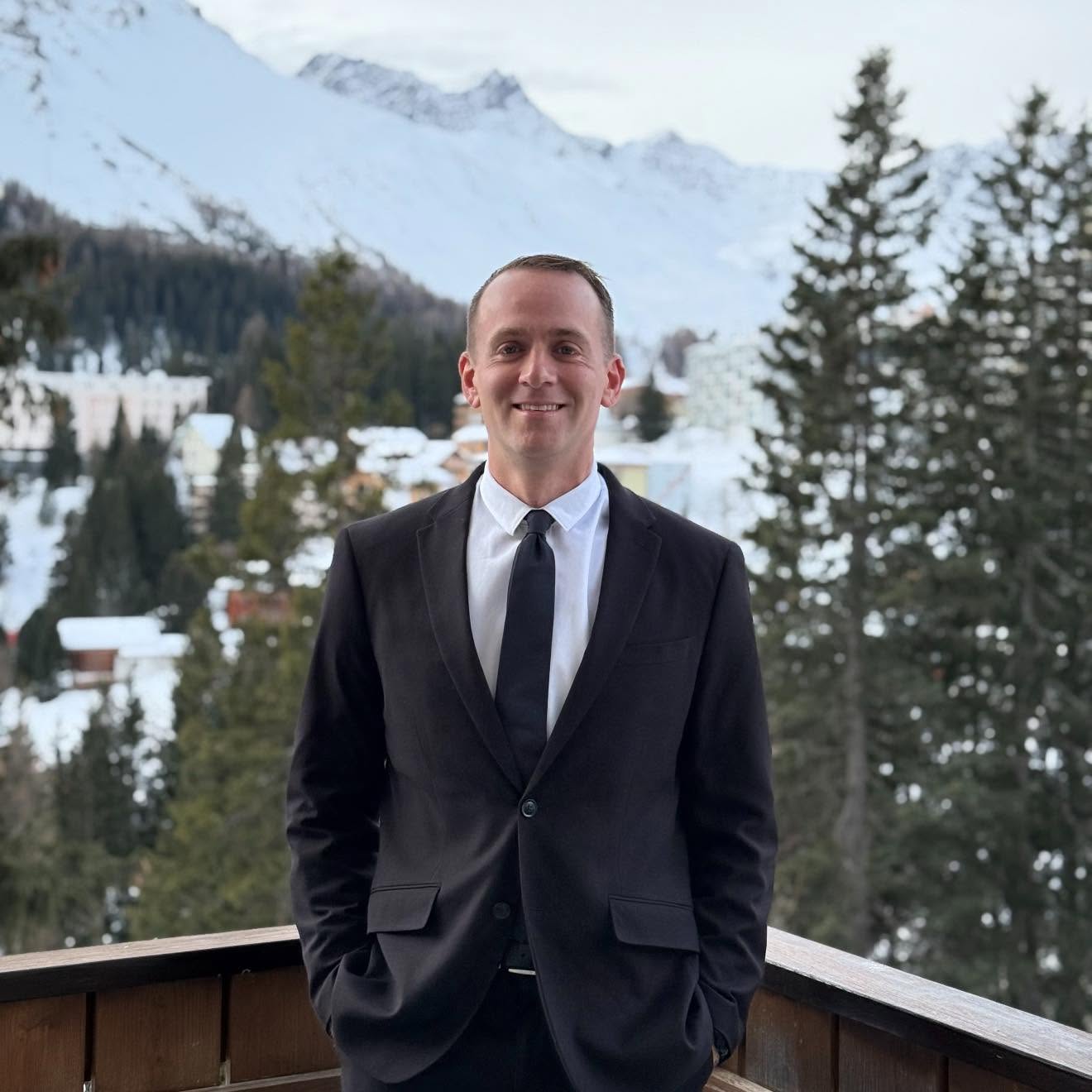
 Samuel P.N. Cook
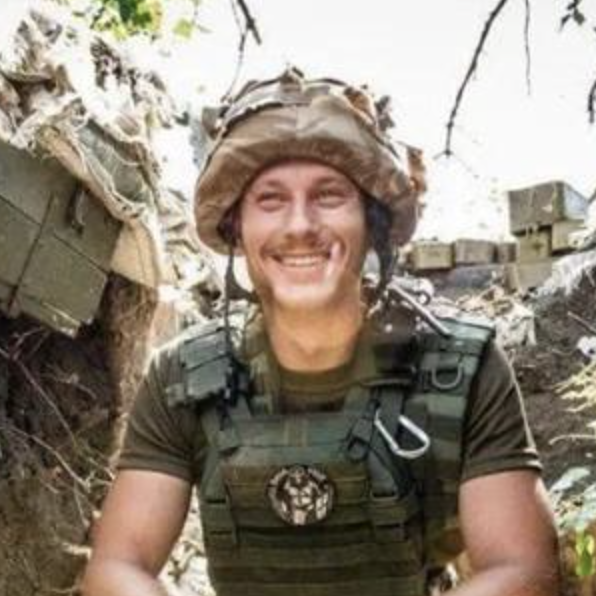 Ievgen Malik
Key takeaways
- 1Identity was forged in Poltava — a city where the statues of Peter the Great and Mazepa face each other across the same square, and where the 1709 battle ended the last independent Ukrainian hetmanate. Growing up there means growing up inside the argument.
- 2Crimea 2014 shattered the “brothers” illusion overnight. Watching from the Czech Republic, Malik tried to enlist — his parents stopped him. In 2018 he went to Mykolaiv, signed with the 1st Separate Marine Battalion, Ukraine’s oldest, and only then showed his parents the paper.
- 3Ukraine’s 2014 army was 138,000 soldiers on paper — the corrected number that explains why Donbas was one kind of war, and why the country that met the full-scale invasion in 2022 had to be built in between.
- 4Mariupol collapsed by stages: holding the city’s northeast with a platoon covering a kilometer of front, a 15-kilometer retreat on foot in 40 minutes, the 53rd Brigade breaking on the left flank — and by early March, complete encirclement with the sea at their backs.
- 5The Agla factory was a month with no way out: hand-picked men, night fights without night vision against conscripts sent in with cigarette lighters, no food, no resupply — and the knowledge, from the Neptune march onward, that the only outcomes were death or captivity. Nobody tried to escape.
Key quotes
“Well, probably with the aliens we’ll have the war faster than with Russians. Like, we are friends, we are brothers. And then — bam, Crimea.”
Ievgen Malik — on how 2014 felt
“Officially we got 138,000 soldiers in all armed forces of Ukraine. What is that?”
Ievgen Malik — on the army of 2014
“Listen, when you got these things behind you, you run so fast — like you have a T-Rex running for you.”
Ievgen Malik — on retreating 15 km on foot in 40 minutes
“We understood that we are done from the very beginning, when we were going to this Neptune march… But you cannot find any marine who would even try to escape. Everyone got to the position. We knew what was going to be the end of it.”
Ievgen Malik — on holding Mariupol anyway
Hi, it's Sam Cook, the founder and co-host of the Ukraine Military History Podcast. And I'd like to welcome you to my favorite type of episode, which is the story of regular soldiers that are fighting in this war. Ultimately, military history has a huge amount of stories, typically about politicians and military leaders and generals and commanders, but ultimately,
the hardest work is always done by the soldier on the ground. When I was a troop commander serving in the United States Army from 2000 to 2013. I got commissioned as an officer. And I was always amazed and humbled by the soldiers that came into my troop when I was preparing to go back and serve as a troop commander in Iraq from 2006 to seven.
I remember I would have this rule where I would meet with every single soldier who came and joined our cavalry troop. I just wanted to have a one-on-one conversation with them, get to know them, understand them personally, because I knew I'd be commanding these soldiers
in combat and if worse came to worst, I'd have to talk to their parents if we ended up losing them in combat. So I took that responsibility very seriously. And what always amazed me when I spoke to these soldiers coming into our office was they had knowingly signed up for being a soldier in the United States Army right after 9-11, after our country had been attacked. I always wondered myself what would I have done? I joined the army in
1996. We were at peace. I got commissioned as a United States Army officer and obviously after the war started I continued serving but I always asked myself what would I have done if our nation had been attacked because I just didn't know. I didn't know the answer to that question and what amazed me was that these soldiers were signing up knowing that things were getting worse in Iraq, that the country was having a really difficult time there and they
were going, running towards the sound of the guns. And that was always humbling to me as a commander to command the best that I think our nation had to offer. Whenever a country is invaded or goes to war or sends its sons and daughters to war, a certain amount of people are not
going to want to do that, right? And whether or not you sign up or not, you always have to admire and give, I think, the most respect to those who run to the sound of the guns. this next episode, literally that's the exact story that we're going to you're
going to hear a soldier, a sergeant at the time in the Marines called Ievgen Malik who is a good friend of the Military History Center here, is part of the center, has been instrumental in standing up the center and getting it going and he really represents to me the soldiers that do the hardest work in any War, which is the enlisted soldiers, the sergeants who lead those soldiers. And his story literally starts with him on a bus coming back from vacation.
He was on the way to vacation. The full-scale invasion happened. He could have stayed away. He could have been out of the country, left his unit and not done that, but that was something that he literally would not even think about doing.
He tells this vivid story about getting on a bus, seeing everyone else fleeing the country as he's literally going back on a bus from vacation to rejoin his unit in the city of Mariupol. We all, if you followed this war, know what happened. The Battle of Mariupol, he fought there. This episode talks about his story all the way from his childhood, going to study abroad
at an English-speaking university in the Czech Republic. He was born and raised actually in Poltava, which is a very famous town in Ukrainian military history, which we discuss in detail in this episode. But really, this story to me exemplifies the reason why Ukraine is still standing as a country because individual soldiers, sergeants,
volunteers at the beginning of the war decided to make a stand and fight for their country. So this really represents that. This is actually the first in a three-part series with Ievgen sharing his story. Rob Lee, our other co-host, he did a two-part interview. It was long enough where we decided to split it into two parts where Ievgen talks about
his experiences at the Battle of Mariupol going into captivity, and then he ends up detailing in excruciating and graphic detail what it was like to be in Russian captivity for two and a half years. So this is the first in a three-part series that I had the privilege of doing with Ievgen talking about his youth, really a microcosm of the history of independent Ukraine, which Ievgen grew up in, and how he made the decision to decide to join the military.
He was actually out of the country when the war started in 2014, decided it was his duty to come back and serve Ukraine. So that was his first commitment to service. And then finally going literally towards certain death and or captivity in the Battle of Mariupol, knowing that at the beginning of the war, making that decision to go anyway to rejoin
his unit and fight alongside them. So I really hope that you are impacted by this episode as much as I was giving the interview and the following episodes with Rob Lee talking about Ievgen's story through the Battle of Mariupol all the way to his release from and recovery from captivity at the hands of the Russians where he spent two and a half years.
Before we start this episode, I just wanted to make a quick word to mention our sponsors. I'm going to give you a brief introduction for our sponsors and then at the end of the show we'll do a longer discussion about each sponsor and what we're offering so that you can get right into the content. So this podcast is funded by the Borderlands Foundation. The Borderlands Foundation is a foundation that I established to make sure Ukraine's
heroes are never forgotten. And we have two main centers that are, in effect, the sponsor of this podcast. The first center is the Ukrainian Military History Institute. It's an English speaking and Ukrainian speaking center, which is our mission is to translate Ukraine's history from Ukrainian into English for the world to consume and learn from.
Ukraine has a lot of allies who've supported it. Almost all of them, the common language of military officers, military historians, and professionals is English. So the Ukraine Military History Institute created and sponsors this. And I'll tell you all about our programs and how you can support the Institute at the end of the episode.
The second sponsor for this podcast is the Ukraine Center for Traumatic Stress. This is also part of the Borderlands Foundation. It's a center dedicated to research and raising awareness and helping to bring in to Ukraine cutting edge therapies, treatments, protocols, and education related to post-traumatic stress disorder.
The heroes of Ukraine that are fighting this war, whether they're Ukrainians or foreigners who've come in to fight side by side with Ukrainians, they're writing this history, which creates the stories, which creates a strong future country. And those memories have costs, so we're dedicated to helping advance the research, treatment, and breakthrough that all soldiers, veterans can have dealing with and
overcoming post-traumatic stress disorder and mental health that arises from their service. And then finally, our last sponsor is the Borderlands Group. This is a for-profit company that donates the money to fund the Borderlands Foundation and all of our programs. I'm also the founder and president of that organization.
And we do military advisory, advisory for defense companies working in Ukraine and consulting and software development and technical work for both governments and military defense companies. So with that, that's our sponsors. At the end of the podcast,
I'm gonna tell you a lot more about each sponsor if you're looking for ways that you can contribute to the Borderlands Foundation, our two centers, or if you'd like to work with myself, Rob, and other contributors for this podcast. I'll talk to you about how you can get in touch with us
through the Borderlands group for that. So welcome to another episode of the Ukraine Military History Podcast. I'm here with our co-host, Ievgen Malik, who's a former senior sergeant of the Ukrainian Marine Corps.
And I wanna spend this episode, Ievgen, talking about your personal story up until captivity. We have a couple more episodes right after this about your time in captivity filmed with a senior researcher with the Borderlands Foundation, Rob Lee, a top Russian war military analyst. But I wanted to fill in the gaps for people who probably are going to watch that.
I think those are going to be very interesting for a lot of people to watch, but this is a bit of the backstory. like different seasons of Star Wars, I guess your story is so long and like you said, we could probably talk several hours just about this one topic. But you tell us a little bit about where you grew up in Ukraine. You grew up in the heart of Ukraine.
Tell us about your hometown and what brought you or what life was like before the army, where you grew up.
The time before army was casual, like all Ukrainian guys, school, university, abroad actually.
Oh, actually, where was your university? In Czech Republic.
Czech Republic. Yes. But then...
So you grew up in which town?
I grew up in Poltava city. That is the central part of Ukraine, eastern side of Dnipro, the river Dnipro. But still that is the center part and this Poltava region is truly old, the same like Kyiv. Yeah. It's Pereiaslav, even this city existed even in Kyiv. Kyiv and Rusyn.
So, Poltava has a very interesting history because it's very old. It's actually a smaller city that's Ukrainian speaking, whereas a lot of the bigger cities became Russian speaking during the Soviet period. And it also had a very famous battle there, which I studied. Yes, this battle with the Swedish troops. Yeah. I think it was the last battle Swedens ever fought. In our region, yes. Yeah, very famous.
and what is interesting about Poltava city, you got there two ancient manuals, statues. Statues. One statue is for Peter I, Peter the Great, who won this battle. And the second statue is about Mazepa, the Hetman, who was fighting against Peter the First. So, I don't think you can find something like that in any post-Soviet city.
Like two statues of generals and chiefs who were fighting each other. One second one was defeated and still he got the statue.
This was the last stand. Yeah, so those were both erected during the Soviet period Which is interesting to show the politics. So the Mazepa was the last Hetman I guess of Ukraine the last Independent. Yes. He was the last independent because
after that battle Moscow just They Created all this Hetmans
before that battle, Cossacks had the right to elect, actually, by democracy elections, to
elect this Hetman. But after Russians won in Poltava, everything began like in the kingdom, you know, they just sent the Hetman.
So Ukraine actually joined forces. They had an agreement with Russia, I guess, in 1654 where they kind of joined forces. Russia likes to make a lot more of this agreement. It's widely disputed, the actual terms of the agreement. But it was pretty clear by this period that the Ukrainians who actually had the first written constitution before, you know, 80 years before the Declaration of Independence
and our constitution, they were the ones who came up with this concept of democracy. It's actually first modern practice of democratically, well actually they were under the Polish-Lithuanian Commonwealth which also elected their kings, but the Ukrainians were fiercely protective of their rights within the Polish-Lithuanian Commonwealth to elect their own leader, and they were the ones who actually did the first written constitution or first declaration
of the rights of a people. And I think that was right after this battle. Pip Borlach wrote that down. I don't know if it was, I can't remember if it was right before or right after this battle, but it was a kind of a Ukrainian statement of what they believe their rights were.
And that documents, I think, in Sweden to this day where the Ukrainian Hetman did in Maserah, I think he went into exile after the battle and he became a fugitive from the Russian Empire. And this was the last Ukrainian free leader, duly elected free leader until Ukraine was subsumed in the Russian Empire. So I actually want to go to the town with you one of these days.
we need to go take a trip. My wife's from Poltava, or her grandmother is from the Poltava region before her family moved to Kruviti, where she grew up. And I remember they sent us some fruit from Poltava, like some tomatoes, and they were the tastiest,
like juiciest tomatoes I've ever eaten. I know, the pink color. Yeah.
Yeah, so just that black earth, that rich soil,
amazing produce that really you can only find in Ukraine. So it's the heart of Ukraine and also a hugely symbolic city from a historical standpoint. So you grew up there. I'm not sure how much you were into history growing up, but tell us about what it was like to grow up in Poltava. You grew up there, obviously after independence.
So what was Poltava like when you were growing up? And how did you view yourself, I guess, pre-Maidan and post-Maidan in terms of your identity?
Well, before Maidan, yeah, the year 2014, that was some special period of time in our country. Actually, I wasn't in Poltava. I wasn't in Ukraine at that period of time. I was in Czech Republic since the year 2010. Actually, what can I say?
When I was growing up, my father used to be in civilian army. We got some friends in Russia. Well, that was so usual and common, like Ukrainians, Belarusians, Russians, Georgians, no matter who is from where. was great, but then I was in Czech Republic at that time, and I got so many friends from Moldova, Azerbaijan, Russia as well.
But then this Maidan happened. And that Maidan was like totally policy, about policy against this Yanukovych, against the president. That was clear. And everyone was great. we won, Yanukovych retreated, but after that started the situation with the Crimea. And you know, I remember when I was a young guy, I was in high school, and we've seen some videos on YouTube with Ukrainian military
actors who said that Ukraine is going to have a war probably for sure soon. And when journalists asked, like, with whom, they said, with Russia, for sure. And we were like, what? Are you crazy? Like, what are you talking about? That is simply impossible.
Well, probably with the aliens, we'll have faster the war than with Russians. Like we are friends, we are brothers. And then bam, Crimea. And everyone knew, like, what is going on, that they are Russians. And that was so ridiculous, actually. was making a view like, well, no, this is not me, this is someone else. It's just people. Yeah, just green people.
But of course, that were Russians, that was obvious. But we just couldn't imagine that, we couldn't believe that that is true, that Russians are trying to occupy our territory. And since that time, everything started for me, because I used to study on the faculty of International Political and Economic Relationships. And I knew a little bit about policy, about government.
I started to study the situation in Ukraine and Russia. I started because I can speak Russian language fluently. And I've seen all these narratives on Russian TV, on the internet, etc. Well, Putin, actually, he's pretty much liberal in his speech to Ukraine. If you listen to people who are responsible for propaganda, for the history narratives and etc., they are much more radical than, rather than Putin.
So basically, when someone says that Putin is a good guy, well, maybe Putin is, but the The people who are working with him, they are pretty much horrible, according to Ukraine and actually other post-Soviet countries as well. For them that is no matter. And I discovered that what I haven't seen before, but that was true. And then we got this Donbass.
There was a war actually. Not like this, of course, not the full-scale invasion, but still, that was one way of war. Russia invaded to Ukraine. And I understood, I've seen, we still defeated them. Even at that period of time, we didn't have an army. That was so... Officially we got 138,000 soldiers in all armed forces of Ukraine.
Now we got something like almost 1 million, just armed forces. Plus we got National Guard, maybe 200,000, SBU, etc. But at that period time, we got like 138,000 at all. What is that? That is like one day reaction right now.
We got, I don't know, five, seven day reactions.
So we were not ready to protect our country, but still we did it with the help of volunteers.
This was in 2014 at the beginning.
Yeah, that was the period from 2014 to 2016. And then we got this political situation with the Minsk, and any smart person who can count simply on the school level could understand that the war will happen with Russia, that it's going to be full-scale invasion. Because...
And that was your assessment, looking at it.
Yeah, I was just, I knew that it's gonna happen like that. And when I came back to Ukraine, I...
When did you come back to Ukraine? In the year 2015. Okay, 2015.
I wanted to go to, I wanted to join the army at that period of time. But when my parents discovered that, that was so crazy, you know, that... We sent you abroad, you should be safe. I thought they will kill me before I will die in Donbass. So I thought like, and still that wasn't so bad in Ukraine in that period of time.
Yeah, I mean 2014 as you said, Ukrainians almost pushed Russia completely out of Ukraine. Then the Russian regular army invaded. And actually, there were some Ukraine was suffering a lot of defeats at the hands of
the Russian army in the August of 2014.
And then in the Battle of Debaltseve in 2015. So the Minsk Accords, as we were saying, were not incredibly favorable to Ukraine, but the political leadership at that time made the decision that it was better to stop the fighting with at least the large scale fighting at that time with the Russian army than to continue And the front lines didn't really change that much since January of 2015.
There were some movements and flare-ups over the years as you were coming in back to Ukraine in 2015. In 2016, obviously, there were moments and different battles like Avdiivka and other things. But mainly it was proxy forces supported by Russian special forces and FSB and whoever else that their defense intelligence they had in here.
So that's when you made the decision to join the military or that's when you came back and first tried to make the decision to join the military and your parents wouldn't let you. So continue with what you did until you joined the military.
Actually, I was thinking about it all the time. I love army. I respect it. I did it since I was a child. All my toys were things, soldiers, and guns, swords, and etc. I did this sport. I thought like, yeah, that army, for the first half of my life, army was plan B for me, but the older I grew up, the more I thought that
this is going to be plan A. And in the year 2018, I made a decision to join the army, but at that time I didn't help my parents. You didn't make the same mistake twice. Exactly, yeah. So that was a big surprise. I found as I...
What did you just quickly, you come back from university, you studied international affairs, what did you do for the two or three years before you joined the army?
I was working in my native city, Poltava, but that was not interesting. Civil job is horrible. I don't know how people would do it. This is something unbelievable. I lived like that two years, but till the very end, I didn't even know, is that two years or one year? Where is second year? That was lost.
I was working just since eight to five every day. Is that an advertising agency, right? Exactly. Yeah. So that was not interesting for me. And then I decided that that's it. That's enough. The war is going to happen. I like the army. What am I doing here? I have to make a decision.
And I spoke to my friend. I tried to find a truly combat battalion. And yeah, my friend said that, well, there is one, the special one, the first separate Marine battalion. And I was like, wow, Marines. In Ukraine everyone knows about airborne troops because
they are pretty much popular in Ukraine. But I didn't like airborne because you have to jump with this parachute. I don't really see... Even then I didn't see any reason to use this. How can you use it in the battlefield? Well Russians showed that.
That is not pretty much effective. And even then I knew that that is not effective. But I wanted to join some assault troops and marine troops. Exactly. That was the first separate battalion. That is the oldest battalion of marine infantry of Ukraine. So when I discovered that they exist, I didn't think a lot.
I just went to Mikolayev city and signed the contract. back home, just made my parents glad, like showed them this paper and that's it. So since July 2018, my army life started.
So what was that like for you, just going through basic training and getting into army life?
Well, that was interesting, of course, and not bad. I think, well, first of all, you have to understand when you join the army, you always, you're waiting for something special and unbelievable, as if you're gonna become like Rambo or what's from Commandos, but the truth is not... It's not the movies. Yes, yes.
That's not about the movies totally. But still, that is about discipline, that is about ruling your life and taking responsibility, and still that is much more interesting than the civil life. Because in army you have to take the responsibility which you would never have in your civil life.
Because no one will give to the 25 year old boy a BTR which costs like $150,000. And you have to be responsible for that and that can kill actually. That got a machine gun. So you have to take care about your team. You have to be responsible for all of that.
Your people and your equipment. Of course. Yes. I remember when I was a platoon leader signing for something like $10 million worth of equipment was I was responsible for. Yes, so that makes you like to be in all this situation,
to work, to make your brain work and etc. So that is much more interesting than the civil life for sure. And I got two months of basic trainings in a camp of Marines. It was not like a Marine Corps, but Navy SEAL. Yeah. Yeah. But after that, I got to my battalion. And I remember that first half here, I got just polygon, polygons, polygons,
shooting, fighting, rioting. So polygon is the range. Yes. Yes. So I got like... That was so funny because I got one friend, he got to Marine Brigade as well, but he was going to join the Marine Brigade, 36th Brigade, and I was going to join the first separate Marine battalion. And the battalion was like an infantry battalion. And the Marine Brigade, you got different kind of troops there.
And I don't remember where he joined, but not to Inventor. And in four months, we got a call to each other. I said like, hey, buddy, how are you? He said, oh, great, so perfect. And I'm serving in base. My flat is like five minutes from here. I just walk around and do nothing. So that is so perfect. And what about you?
And I'm on polygon with my machine gun, like sleeping together. Already there is a winter and we don't have any even fire. And you're thinking I joined the right unit and
he's obviously thinking the same thing. Exactly. Yes.
I was thinking like, oh my God, what have I done? Yeah.
It's difficult when you go out, when you're in those tough situations, really cold or tired or wet or whatever it's sometimes you're wondering why you chose it but um
yes that was but I did it because I wanted to prepare myself and I did it this battalion helped me yeah a lot I changed myself for sure I become much stronger and just because of that I survived mm-hmm that's 400% because you
chose the toughest unit you survived combat. Yeah, because if I, you know, if I
would got to this captivity, being mobilized civilian guy, I would kill myself. Yeah, yeah, a lot of people when they join the army, you know, I served in the
armored cavalry when it was, you know, elite armored formation and you always want to go to the best unit that's most challenging. Yeah, you're going to have the toughest fights, but a lot of times you think you have a better chance of fighting and winning and surviving if you're in a really good unit than one that's not quite as well trained and disciplined.
So that's why today even when a lot of people instead of getting mobilized, they'll volunteer so they can join some of the better units in the Ukrainian Armed Forces, which is an option. So when's the first time you went to the front lines as a Marine? I know that before 2022 there were tours of duty on the front.
What was your first? I got two rotations before the full
scale invasion in the year 2019 and in the year 2021. Yes, each of them was half a year. So half a year in the front line once and second time and the first time I was just mariner machine gunner second time I was a squad leader so I got my own position with the ten people. You were sergeant? Exactly. Yeah. So I developed each time I developed and that was great. Which part of the front line were you serving in
when you went there? Always that was sector M Mariupol direction. Okay. All the time.
That was a well-known place for Marines. Yeah. You could find there or Marines or these mountains, Mountain Riflemen. We got Brigade number 10 and Brigade number 128, actually Brigade number 128, this brigade from the Zakarpattia region, a very old ancient brigade and they were
truly strong. Yeah, so you'd rotated through Mariupol sector and we talked about this before coming into 2022, what was your battalion doing? Were they still, and at this point had you moved to the 36th Marines or you're still in the 1st Marine Battalion? The situation is that
1st Separate Battalion is one of infantry, but one of out of three, but infantry battalions of 36th Marine Brigade. Okay, so just one of the
battalion infantry battalion. We are separate because
we got a separate base. Yeah. That was the situation. So were you, was your battalion on
on the front lines at that point, or were they off the front lines leading up to the full-scale invasion? We were exactly on the front line, and the situation is that my battalion was on the front line from the very beginning of the year 2022.
So before the full-scale invasion, the guys were there approximately two or even three months. I was not on the front line because I got courses, special courses in Dysna. That is a study center, I think. Training center. Training center. And after that training center, I got a deal with my commander of my platoon that
I'm going to have a vacation. Yes, in February. February. This day, 24th of February, the year 2022, I have booked already a number in Sharm el-Sheikh, in Egypt. I had to be on the sea, actually lying somewhere there, having a rest. But there was everything clear, like we got all this news on TV, I was watching it. And I thought like, yeah, probably I'm not gonna go there.
And my commander, I just remember that was a Monday, my commander wrote a message texted on Telegram to me that do not hurry up with your vacation, with your trip. I said, yeah, of course I understand that. I just went to sleep. I got a dream. And I woke up on Tuesday morning and I understood that I'm not gonna go
to Sharm El Sheikh for sure. And in half an hour, my commander of my platoon wrote a message, just take your stuff and come to Mariupol. That's it. And where were you at that point? Again? Where were you at that time? Poltava. You were in Poltava. My native city. I visited my mom and I told her to get some stuff
some back for, you know, this 72 hours back. Yeah. and I went to Mariupol by bus. I bought the ticket and went to Mariupol, and I remember I was riding there to this city, and I read the news, and I seen that all these pro-Russian policymakers in Ukraine, they were escaping from Ukraine by their private planes
to Spain, to Italy, to Russia, whatever. This is on the 23rd or 24th? No, that was like one week before. One week before, okay. And I read this news and I was smiling. I thought like, who is this silly in this situation, me or them? You're driving to Mariupol and they're all flying out of the country. Exactly, yes.
Well, I came to Mariupol probably one week before the full scale invasion.
And we started to prepare. So you left your mom, is your father still in? My mom was in Poltava, father was in Kyiv. They are divorced. But still all of them were in Ukraine.
And my brother was in Kyiv as well. And what did your mother say? Was she worried that the war was going to start?
As I said, I knew that it's gonna start and I told that to all my friends, to all my relatives. They said, no, this is something. You are not the specialist. How can you know this?
You're just a dumb Marine Sergeant. Yes, exactly.
So when I went, well, I don't even remember what my mom said, but she was upset, of course, But she didn't show that because she is really strong. And she knew that, yeah, if your son is a mariner, then something like that can happen.
Whatever happens, marines and airborne, they are the first who go. So yeah. Yeah. So you get to Mariupol and actually you were in the same battalion as Shaun Pinner? Yes. Yeah.
airborne company I think and I was in the second inventor company. So Shaun
was in the double crazy. Yes, everyone knew that this airborne company is totally crazy
because they got the craziest surgeons there and I wanted to go to airborne company as well because you know everyone said that they are the best but then I discovered that they are the craziest because if you are marine and in airborne company of Marine Battalion, then you will simply... This is like a captivity, but in your own country.
So we're going to have Shaun on another episode and talk about his story because he's actually the one who introduced me to you actually right after you left captivity and really glad he did. So did you know Shaun well at that point?
No, I knew more Ridley because I was a translator when Ridley came as a volunteer. Daniel Ridley?
I think, yes, I don't know his second name. I know his first name.
I remember at that time my commander of my company was the main officer of base. He was on duty. Yeah. And he called me by radio station because I lived in the base territory at that time. I was a marina. didn't have apartments. And he said, like, come to me. I came like, and he said, like, look, there is some, some guy foreigner.
He's just he says something we don't understand what he wants.
He's speaking English with an English accent, which is impossible to understand.
That is impossible to understand. Go and speak to him what is going on. I came and he said, like, hey, hello, my name is Ridley. I want to join to your battalion. And I was like, Dude, where are you from? I'm from Britain. What? What are you doing here? Well, okay, but he's cool guy and Shaun, all of them, they were good. Yeah, there were, I guess, about 10 foreigners in the Marines or? Something like that.
There was one guy from Uzbekistan, another guy from Croatia, and others from Great Britain. Yeah.
Okay, so talk me through what happened when the war started. You get to Mariupol a few days before, when do you go out to the front lines?
I came from Mariupol, I came directly to the front line, to the position.
And you were in charge of 10 people at this point, or how big was your leadership? I joined the position of commander of my platoon.
So I just helped him, we got, our platoon was responsible for two positions.
And how big was the platoon? Approximately 20 people. 20 people. So you were like the platoon sergeant, you were like the...
Well I was squad leader because we got, technically we got three squads in the platoon. Oh, I'm sorry, we got three positions. Yeah, I see. Zlatan, Amazonka and Nepal probably. So three positions and the thing is that...
And these were like strong points or these were like each squad had their own? Yes, yes, we got one point and we got like approximately four,
five hundred meters between the points. Okay. I was with my platoon leader on one point.
So your platoon was guarding a sector that was about one and a half kilometers, one to one and a half kilometers.
Yeah, I think one kilometer approximately. One kilometer one and two hundred maximum. Yes, that was like that.
And how far away from Mariupol were you? You were what on the northeast or east side? Northeast?
Northeast, yeah, because we got, as I said before, in our brigade, we got three battalions. And our battalion was the north one, then goes battalion 501, and then battalion without the number that was like a line infantry battalion of brigade. So they were connected to Azov Sea.
And who was to the other side of your battalion? Was there any units? Brigade number 53. Brigade 53. Land forces. Got it. A mechanized brigade. Mechanized brigade. Exactly. So they were like going up towards?
To the north because the line was from this Azov Sea to the north.
To Avdivka area. Yeah, exactly.
to Donetsk and further to... then it turns to the eastern part to the Russian border. Got it. So your brigade sector was how big?
Approximately. Was it about 20 kilometers? 10, 15? Like 30 kilometers? Maybe 30, yes. 30 kilometers. So 30 kilometers from the Azov Sea all the way up to... to the north part, the last north point.
Okay. So how well did you understand the situation among the other units around you?
Or were you just really, really focused on your platoon? What was your understanding?
We understood everything. You don't need to be a, I don't know, a senior officer. Superman specialized to understand that you are in the S. I'm sorry, of course, but that was so obvious. And that is the minimum, how can I describe this situation? Because when, you know, there was only one road from this Donetsk Republic, Russian Federation, Donetsk Republic to Mariupol.
And that road was crossing our position. So you were defending the main road.
That was the only place where the Russian tanks could go. When we understood that the war was going to happen, and we were studying the map with the commander of my platoon, he understood what was going on, what was going to be. First of all, he became red, then he became blue, then gray, and then he got all the colors on his face. On the spectrum, yeah.
I just understood that we... Well, if we will survive, first two, three days, that's going to be a miracle.
So which highway was this that comes straight to Mariupol from Donetsk? People's Republic, as they called it?
I don't remember the name of this highway. So it's the major highway? Not the major, one of, but, you know, the battalion had a line And there was just one road. In the whole sector? Yes. And our platoon was like in front of this road. So if tanks are going, you know, tanks, they do not go across this land because it's too
hard, especially that was the end of February. So that was so wet and that was simply impossible.
The ground had not frozen over.
To move through the fields. So they needed some roles. And there was only one role. And we knew that. And yeah, so we got just one anti-tank rocket launcher. Just one? Just one. And which
make was it? Soviet one? Or? That was Ukrainian one.
Ukrainian one. Krasan. Pretty good actually.
And how many rounds did you have for it? Or how much ammunition? Is it just one shot? or how many for the croissant? I think I don't know for sure maybe six or eight
rockets. So you had about eight eight rockets with one launching system. Yes.
What other weapons did your platoon have? Probably four NLAVs or two or four. Four NLAVs, British NLAVs? Maximum four. On my position with the commander of
platoon we got two for sure then we got the sheka that is old very old civilian machine gun what's the caliber on that again 12 and 7 okay something like brown so kind of like a 50 cal yeah so big big machine gun that can take
out light armored vehicles yes like vehicles yeah this is not very not Armored or just light vehicles. 50 cal can sometimes. Yeah.
Because, you know, sometimes commanders, they give you this machine gun and they say, well... Take out that tank. Yes. You see, this is really good stuff. You can manage, but you can't. Then we got SPG-9. That is anti-tank grenade launcher. Sovnian as well.
And how many grenades for that?
A lot. A lot, okay. But you cannot stop modern Russian tank by that. Very old Slovenian or BMP. One second. Then we got RPG and PKM of course, but that is...
And how many PKMs? One, two, three. Three PKMs. So three crew-served
machine guns. Yes, and three grenade launchers, RPG-7. But that is the casual equipment of Infanter Squad. One machine gun, one grenade launcher. And also we had to have this BTR-80, three of them, or three or two, I don't remember exactly, but we didn't have it on our positions because due to this Minsk agreement. You weren't allowed. Yeah, we were not allowed.
That was so funny because they got things already in front of us and we are not allowed to have BTR 80.
Okay, so this is important. So before the war, Ukraine politically, militarily made the decision that we're not going to do anything to violate the Minsk agreements, but the Russian side is clearly violating it from what point did they start bringing up their armored vehicles?
I know for sure that on 22nd February we were bombed by mines and SPG-9 and the Shikhae, all of that. They started to work like daily and that was the first time we got this, such kind of experience That was the day, like, you know, we got this mine...
So this is two days before the full-scale?
Yes, two days before, so they started to work. And for us, they used like mines 82 millimeters, you know. And for us... Is that mortars?
Mortars, yeah, mortar rounds. Exactly.
And for us, that was something like, wow, wow... This is heavy stuff.
Because that was banned according to the Minsk agreements, right? Yes, of course.
But in Forza, you know, in one week we didn't even like, you know, what is it? 18 minutes? Go to sleep. Go to sleep. That was nothing. But at the first time we were like, wow, look at that. Yeah. How strong is that? Yes. So what happened? I remember that was like, you know, we were waiting and every night we got this and command that we had to go to the positions to prepare for the fight every night.
We didn't sleep maybe three hours per night every day. And then I remember that time. So you would go to the positions at night and they'd say, hey,
you need to be ready for the attack tonight. Yes, exactly. then maybe half of the soldiers could sleep at one time, right? No, if you got this... Or nobody was sleeping the whole night.
Because it's like this is command that is used in case the regiment... that the raccoon says that the enemy is prepared to attack right now. So nobody sleeps.
So this is what, three days before every night?
Every night, two, three nights before. And that was like the night, yeah, 24th, when we got an internet on the positions still. And my friend, he showed like, look, he showed on Telegram video with Putin, where he says like, like we recognize all these republics, we will help, we will fight and et cetera.
And we were like, well, here it is. And in maybe 20, 30 minutes, we got this command to be ready for attack. That was half past two a.m. at night, basically. Yeah. Basically. And we stand like we were watching into the field, to the enemy side. And that was the first time when we saw the
MLRS grad started to work everywhere, you know, from different points. We saw these clouds of... We didn't know what is it. Yeah. And then we heard like all this stuff, rockets through our heads. they started to bomb a position of our company, position of our battalion, exactly as staff company and staff battalion. The headquarters.
Yeah, they destroyed all our links, the phones did not work, we got this, the only radio station which worked were Harris.
Yeah, Harris, US. Exactly, yes.
And they started to bomb us by Gvozdica, that is 122 millimeters artillery system. And then I think Akatsya as well, that is 122 millimeters as well. Something like in Russia, in the United States. 152 or 100? 152 because the civilian enemy meters.
So that's heavy artillery. Yes, yes. And then what happened,
they bombed us approximately 4 hours I think. 4 hours. Was any of the artillery
directly on your position? No, I don't know.
I know that we got artillery in our brigade. We got 12 GVASDKA, as I said, 122 millimeters, and approximately 6 MLRS Grad.
So you guys were also shooting back at that point? I'm not sure. You're not sure? Yeah. So they were going mainly after the company and battalion points, or were they also hitting the frontline positions too? No,
behind, of course. Behind. Okay. artillery always stands behind you, because that's irrational.
No, no, but the Russian artillery was...
Ah, Russian artillery, yeah, 300 meters. Yeah. That was the minimal position. But they just, you know, got... It comes to the position, shot, and goes back in one, two minutes. Yeah. That's it. He doesn't need a lot. Yeah.
So you knew it was coming, you're on the main only avenue of approach that is mounted, meaning this is where all the armored vehicles are going to be coming and your platoon is waiting for that. What was your thought process at that point and how were the guys and the platoon reacting to all this? Because you're out of communication, aside from one radio. We didn't
no, we didn't understand. Because you cannot prepare all these military trainings you got, that doesn't prepare you to the real fight anyway.
Because you don't know what to do with the
thing. You got AK-74, what can you do to the thing? Like, what should you do? You can do anything you you want but you will not stop it. So that is as if like you go right now to fight with Klitschko in the boxing ground. What would you do? You can do anything you want but you will not win. Yeah. Of course. Yeah. So we were just... But we got the command to stand. Okay, no problems. Stand and fight. Yeah. Yes. And I
I remember the situation was like we get run out of energy in Harris. The batteries? Yeah, we needed to reload the batteries. But that was pretty much dangerous to go because Russian drones controlled the space. And if they saw anything, they used mortars and artillery systems to attack. No matter is it one soldier or is it like machine we kill someone. They use just mortars and artillery all the time.
So I took this radio station batteries and went to the left position of our company because they got the regenerator, which could work with the petrol. And that was the only position with the electricity.
So did you go by yourself to that position? Me and another mariner, two of us,
we took the batteries from all the three positions of our platoon and went to that position. And when I came there, there was my old friend, Sergeant as well, we spoke like, how is it going on? And he was more experienced than me because he used to serve in this third regiment of special force before.
And he was in the Lvovaisk as well.
And he said, well, man, we are done.
I don't even think about it. This is the end. But he told me that, you know, buy one buy, of course, not with the other marines, because you can't save them, such things. But to me he said, yeah, because we got good cooperation, he said that we are totally done, I'm telling you. That is even that is gonna be even worse than the low ice. Yeah
Eli advice was a battle where Ukraine Ukrainian forces were surrounded and then yes more than 600 casualties per one night. Yeah, so What was further I
Said like and I used to be on his position before that was my first rotation on this position And I said, like, let me go with you. I want just to see how does it change? How did it change? And he showed me all the positions and I saw, like, really good position, you know. And in some case he said, like, yeah, very good, but very close to Russians.
I said, yeah, I don't know. I remember 400 meters. He said, no, 300 meters. Here are their tanks. And I said, what? He said, yeah, Russian tanks, 300 meters. I said, like, no, this is a joke, that is impossible. He said, no, here's the hill, just go up and watch. And I said, like, what are you talking about?
You don't know how things does look like. I just went up to the hill. I just put up my head and three shots by tanks and I got down and I was like, what the hell? He said, tanks, like, bro. And that was the moment the Russian tank started,
because I heard Russian tanks started to shoot in the air of my platoon. And in radio stations, I heard my friend Yaroslav, he started screaming like, tanks are coming. And the fight started, actually, of all our company. Yeah. Yeah. And that was already half past 2 p.m.
So middle day approximately.
So the artillery barrage started at what, 4.30 a.m.? Yes. So they had...
Artillery started to work at 2.30 a.m. They finished at 6.30 a.m. approximately. And in six hours, they started to attack. Okay. land for separation by tanks and infantry.
So they lifted their artillery at that point? Yeah. Okay. So six hours, and it takes them six hours to reach the positions?
I think they were on the position as well already. But I think because they are Russians, you know, when they prepare some operation, at the last time they discovered that they didn't do something, something what they need. And that's like, oh my God, we forget this, we forget that. Yeah. Well, let's do it later.
Because in a classical military perfect scenario, your artillery is hitting all the way until your... But they had a big break between the artillery barrage ending.
Look, actually they used the hard artillery all the night. But when they started to attack us, they used mortars all the time. 120 millimeters already.
So they lifted their heavy artillery and switched to mortars.
The artillery got back and they started to attack us with the T-72 things and BMP-2 and mortars. 120mm, 82mm, basically that is classic. So that was a classical frontline attack by Russians.
But it took them six hours from when their ground assault started for their tanks to reach you. Yes, six hours. Got it. time period mortars were hitting? All the time. Interesting. So you're at the position, what happens next? We got the fight. Actually my platinum got the fight, but I wasn't there. I
wasn't on the left side of our company with these batteries. And I was like, what the hell? And then we got command to retreat approximately in
40 minutes after the fight. We lost five guys there.
They got to the captivity, injured, but we couldn't get them. That was simply impossible. That was like first casualties of our battalion.
Was it the platoon or from your platoon? From my platoon, yeah.
Because the main strike was to this platoon. And one position was completely destroyed in the first five minutes. That was a position with the anti-tank rocket launcher. The guy made the first shot and he shot the first thing, probably first thing in this war. That was the only thing he could do, because after that, the Russians used such an amount of military equipment.
I haven't even seen in my life before that it can be used in such an amount. They destroyed that position completely. And they... that position, called Pluton, they got this forest line. And actually we got one our platoon, our point, and other two points were by Russians. And there was a distance between them, 150 meters. So Russians, they just stand and they run. And that's it.
Like in one minute they were already there in our position, in our point. And that was the end for them, actually. Yeah.
So at that point when you lost that position, Pluton, then there was a call made for the whole battalion to move back?
Yes, because the plan was... I think our war chiefs, they understood the situation, and that line we hold, that was not the main defense line. we got much more better positions behind us, behind the river that was like 15 kilometers behind us,
15-20 kilometers, more like 20. And we got dots there or special positions
with the stones, with the iron, everything perfect. We were, we got there in, we retreated two times. First time we got behind the river, stopped them.
And so when you retreated to the river behind the river, that was what, 15 kilometer movement under fire?
I think yes, something like that, 15 kilometers. But that was like, you know, pretty much crazy when battalion retreats. That's like, you cannot shoot them correctly, you know. For artillery that is almost impossible. So we just ran, but I knew, I think Russians, they scared as well pretty much.
Because you know, this is so scary. You can sit here, speak about it and smile, laugh, but at that time nobody laughs, you know. We were crazy, we scared all of that. And Russians scared as well. And I remember when we were running like whole company,
maybe 40, 50 guys and I've seen the hill in the field. And we were running, that was like one kilometer and I thought, my God, two tanks, you need just two tanks here and you will destroy all this company and nobody will do anything. But they didn't come. I don't know. So what were they doing?
So we just retreated 15 kilometers approximately or we just run with all the equipment. And how long did that take your company to move? I don't know. A day? A day and a half?
No, just 40 minutes and we were there. Okay, so it was in vehicles? Was it in vehicles? No, that was by our legs. 15 kilometers in 40 minutes? Yes. Okay.
I think that was... Listen, when you got these things behind you, you run so fast, like you have T-Rex running for you. So you don't have a lot of chance, you don't have time to stand and smoke some cigarettes. So yes, we just ran across the river and got the new position. They were pretty much horrible positions, but the place was really good because behind the river,
and we got really huge hill there, really high. And that was so perfect for us, for our anti-tank teams to defend this position. And we got, one night we just stand, we were preparing, preparing that positions and we were reading the news. Some of us got that internet.
So this is the first night after the invasion started. You got back behind the river in your new defensive positions. Exactly.
Without any stuff. I didn't have anything. Yeah. Yeah. So but you know.
What about those Harris radio batteries? Forget about it.
I just threw them out and that's it because I didn't have any, even this Harris.
You just needed to get out. Yes.
I just got my AK-74 and that's it. When we were running, I even threw out my plate care, because that was too heavy. In this war, actually all this story, in Mariupol as well,
I was without plate care, because I discovered that
easy legs will save you much better than the plate care. Because, you know, at that period of time, the less what we got, 82 millimeters in our side. That was the less. But usually that was tank, aircraft, half-ton bombs. What played here against this half-ton bomb? You will be cut by molecules, atoms. like that doesn't make any sense. So I just threw it out. Yeah.
Then, so we got behind the river and we prepared to the next day.
Is this the river in Mariupol or? Or? Kalmius. Okay, Kalmius. So it's to the east of Mariupol still? Yeah. Okay. Exactly.
And I remember the time when, Because I lost my charge for my mobile phone. I've lost everything. All of us have lost everything. I switched off my phone because I knew that if it's going to be dead, then I will not call to my parents and I won't know anything about them. And next morning, after that, that was 25th of February,
I switched on my phone and I've seen the message, sound message from my mom. The first message was like, I heard like she was running with the bag and I heard like she was going down the stairs because her flat was on the second floor.
And I heard that she was going down and she said like, okay, I will go to Germany as we planned, as you told me. And then I saw the second audio message from my mom. I tried, I started to listen it. And I heard that she were running with this back, upstairs, back, and she said,
no, I changed my mind, I will not escape from my country. Please kick their asses. And I was like, God, okay, we'll try. Wow. Yes, that was something unbelievable, actually.
Nothing like your mom to motivate you.
Yes, she said that I will not run in my own country, as a rat, like that is impossible, like this is my country, we live here and that's it. So, and we started to fight because that day, the 21st, the 5th February, Russians tried to attack us, to assault us, and we got this anti-tank team, his nickname was Kiv. really well old you know this old mariner's yeah all his life since he got 18 years he was he became a marina yeah so high qualified man he got a true his
squad and to think squad and they were fighting just this one anti- tank rocket launcher. They injured two tanks and two BMP in this fight by their own because the rocket launcher was the only one who got enough range to fight with the tanks and they did it like they defended all the position we got 80 guys on that position. Russians again they started to assault us with mortars, artillery, Grad, Hurricane, Uragan, this MLRS 220 millimeters.
And then we got, I think the day 22nd, 26th of February, we got a command to get behind another five kilometers, I think. We got there and we got much better positions there. Actually, that was really good positions. the best one I got in my life. I didn't have to work there actually. So everything was prepared.
Good position, but... Where were those positions? Right outside of Mariupol? Outside. Yeah. The village
Orlovskaya. Orlovskaya. Yes. Then what happened,
we got, we discovered that Russians got through this Kherson region. They went from Crimea, saw our position, and they got inside to Ukraine. And we discovered that one division, whole division, is getting to our back. And that was unbelievable because we hold the line, we were fighting, everything was great, and now we got this division behind us.
So what should we do? And we got this command, And actually, moreover, we discovered that Russians, well, when they tried to attack our battalions this couple of days, and they didn't manage. And after that, they started to attack this 53rd Mechanized Brigade,
which was on the north part of our flank. And they assault them. And we got actually to one division behind us and another, I don't know, regiment, brigade, Russian, which were coming on the left flank. So that was really... So they broke through the 53rd?
Yes, yes. So they were getting behind us from two different sides. That was
truly dangerous situation. And we got command from our battalion commander, got to Mariupol. And we got there at night. We were there on the first march. That was the first... we went at night and I remember the time when we had to go there on 28th of February, but when commander of our companies said it by radio station, we
started to move to our BTRs, already we got them because Minsk didn't work. And we started to move to our BTRs. And at that time, exactly at that time, Russians started to cover us by their artillery like crazy. So we understood that they are listening to our harass. Yeah. Yes. And so we got command to move back to our positions.
And at night, commander of company, he sent just guys, marines, for the commanders of platoons to guard the command that we have to move. At night, maybe at 2-3 a.m., without light, without anything, we just got into our BTRs and moved to Mariupol.
And so you'd successfully defended from 26 till 28 February, you'd held the line, but because you found out... From 24th to 28th.
Well, yeah, from 24th you fell back twice, but the really good positions you want to
hold, you couldn't hold because from the north...
We could hold it forever, but we were there two days.
Yeah, you were getting surrounded from the north and you had troops in the back. Exactly, yeah.
north and from the west side. Yeah. So you had to,
the brigade made the decision because the 53rd had lost the line. Okay, we have to now fall back in as a brigade into Mariupol and defend the city. And when we got to Mariupol,
we knew that the Azov regiment is there already and they were preparing to fight, to defend the city as long as it possible. That was the plan for this Azov regiment from the very beginning as I knew even... I didn't know anyone from this regiment, but I knew some instructor who prepared the inventor. And he said that, Yes, this is the plan. Like, Azov will fight in Mariupol.
I knew that in the year 2021, actually.
So the Marines were out on the line of contact. Azov was back in the city preparing the defense of the city.
And then when your line was broken, the Marine Brigade went back to join the defense of the city. That is our story, story of our company, because our position, because there are different stories of guys, you know, Russians, they tried to assault not just our position, but other companies. We got casualties. There was a time when Russians tried to assault another
village with another our company. They tried to do that. They assault first village, and the second village, they got defeated and they start to attack it by aircraft and MLRS, artillery, like crazy. And there were like 35 guys in that village, our marines. And we got casualties, probably 30% by one artillery attack.
All got the concussions and other types of injuries. So that was really hard.
And this BMP, this Marine Battalion of Brigade, without number, as I said, they were defending the line as well. They got assaulted by probably 10 battalions, 15 tanks, and 10 BMPs too. So we were watching because, you know, there were a lot of hills that direction. And we've seen all the lines and we've seen, you know, this infantry battalion holds the line and from the forest you got this fighting vehicles,
they just make a line and started to shoot. And, you know, like 15 tanks and 10 BMP, that was crazy. And plus mine mortars, of course. Nothing goes without mortars. Yeah. Yeah.
So you get back into Mariupol and what happens then at that point? What does the mission become and where were you?
We got to the factory Ilychia.
So this is different factory than Azov? Yes.
Mariupol city is, look, there was approximately half a million citizens. And that was a huge industrial city because we got the two big factories, enormously big. These two factories were probably together were maybe even bigger than the city. Can you imagine that? Half a million city and we got two factories even bigger than the city. And we got just one regiment and one brigade there.
So Azovstal is the one that... Azov? The south part. And then you were in Ilyich, which was also... Yes, north part. North and south.
So we got to Ilyich on the north part and we were waiting for the command. No one understood anything. And first, well, we got to this factory early morning, approximately 6 a.m. Nobody slept. March 1st. Yes, that's like... We forgot what does it mean to sleep. And we were waiting for the order to move on to Zaporizhzhia city.
But approximately at 15 PM. So 3 PM. Yeah, 3 PM means 7 hours approximately after we got to the factory. got a command that we got new positions, we go there. So the thing is that we had to defend our positions as in circle because we were surrounded, till that day we were already surrounded from the west, east, north part. On the south there was a sea. We got Navy
Russian Navy SEALs there. So we were completely surrounded already. We got different opinion about that situation. Someone says that we could escape till 3rd March for sure. Yeah. Someone said that battalion of 17th attain brigade tried and they didn't manage. To break through from the north?
Yes. First days of March. Yeah. But... Did you know that Tank Brigade was trying to break through at that point?
No, we didn't. But I knew, you know, we are... We were not mobilized, we are contracts. Yeah. So we are a little bit more professional. And we knew that... Yeah, we got here one brigade, Marine Brigade and this National Guard Regiment. And we knew that, yeah, the command is to stay, but we know why, we understand why, because we are gathering such huge amount of Russian troops.
As I know, that is approximately three divisions.
Yeah, so if they're fixated on Mariupol, they can't go to Zaporizhzhia, to Dnipro.
So that was strategically, that was pretty much correct, I think. So that's why no one argued. We understood like, yeah, we are done, but this is the war, isn't it?
This is for the greater good of the country. Of course, exactly.
Because we knew that there were hard battlefields on Kyiv direction, Chernigov direction, Sumy Kharkiv direction, Mikolayev direction, Sokoryezhya. And everyone is fighting. That is hard because guys don't have any lines, any front, defense lines.
So that was on mobile war, like movement war. And we got the positions. We have just to hold, to clinch our enemy. So we did it. we understood that mission and we did our job, I think. Mm-hmm.
So you defended on the north side of Mariupol or where was your position? Yes.
I got two different positions. Till 17th, till 16th of March, I was on Neptune, position Neptune, and then I moved to Charlie. that was one of the most north positions, the last positions, you know. Basically, we got one line for our battalion,
and that two positions were out of line. And I was like... achieved one of that positions. Pretty interesting time of life. That was Aglafabrica, Agla Factory. So, Illichia Factory was a big one, enormously big factory. And Agla Factory, that was something much less,
maybe three kilometers long and two kilometers wide, something like that. But we got so many metal structures there, structures there. We got two nine floors buildings there. And enormously saw a lot of these parrots
and etc. You know, that was factory. Good fighting position. Old civilian factory, like
in the cinema, something like that. So that was very good to defend that position against machinized battalions companies, but so horrible to defend from raccoon.
So because you go there and you could be shot and no one would understand even
from where that was that happened. Like, you know, that that position, that factory, that was a dream for snipers. Yeah. Our snipers did a great job. I don't even know what would happen if we won't have them. There were three snipers from Brigade No. 35, the Marine Brigade.
So the 35th Marine Brigade was also in Mariupol too then? No, just these three sniper teams.
And the whole brigade was, I think, in the separation direction.
So they were outside of Mariupol? Yes, actually we got...
Look, Ukrainian Marine troops got pretty a lot in Ukraine. We got two brigades, two separate battalions, infantry battalions, artillery brigade, MLRS regiment, hurricane 220 millimeters, Rekun battalion and logistic. So that's pretty a lot, that's pretty strong troop. But we were anywhere, we didn't even know our brigade was in Mariupol, 36th Battalion 503 was in Lugansk region, 137th Battalion was in Crimea direction, Brigade
35 on Zaporizhzhya direction, artillery brigade no one even didn't know where are they. So we were like everywhere. Yeah.
So you had some snipers from the 35th Brigade helping you out and basically combination of snipers and really just good fighting positions. You were able to hold that for 15 days. Yes. Wow. And how many people were defending that factory?
We got two positions. Well, till 16th of March, there were approximately 100 guys there. But There were guys from Brigade No. 56, not a lot, because they got a base in Mariupol. The brigade was in the Donetsk direction. They left some kind of battalion with some people just to hold the base. When the war started, they just joined our brigade.
So we got, there were guys from 56th Brigade, Azov Regiment, and these three sniper teams. But then on 16th March the situation was horrible in the city because Russians started to assault the city on the 5th of March. And they destroyed it completely.
And the Azov guys got command to move to Azov style,
I think, to the city, to fight in the city. And Azov...
So they were defending to the west of your position on the other side.
They were defending like everywhere. Yeah. All over the city, yeah. Yes, exactly. So, actually, Azov, they controlled that agro factory. But after they get out from there, they just told to our commander of our brigade that please hold this position. And they made a decision that they have to send marines there. And they did it. After that, we got on Agua Factory two positions.
I'll tell you, 53, 54 guys there. Good God. That's it.
company plus some other people or was a mix of people?
It was mixed because in my position I got 30 guys but among 30 guys we got just 8 marines.
Yeah, so you had whoever was fighting.
Also you have to understand actually this is the funny story when in such situation when you have to you got the company for example, I don't know 50 guys and you got the command you have to send some part of your troops somewhere to do some job, you don't know what exactly. Who would be sent, who will be sent from your company to make this job by your commander?
Just the best guys, you know, just the best of the best. You know, first of all, and we knew what is, what are these positions, because in three, three, four days before Russians tried to assault that factory and they got casualties. Approximately half hundred soldiers were just killed, like more than 30 for sure. These snipers and Azov guys, they made this job, they just killed a lot of Russian soldiers there.
And then our commander, he said, like, he gathered all the surgeons and said, well, we got the command to move to this position. So I just asked you who is ready. And I was like, okay, whatever, let's do this. And then he said, well, okay, you are a nice guy. That's why I will let you to choose for your position seven other Marines to choose.
But to other position, I will send. And I said, well, okay, that's enough for me because now I know that I can get cool, guys for my position, but I knew that another position is crazy. Not going to have the best people. Exactly. Truly special force. Yeah.
So you took over that position from Azov, which had already inflicted a lot of casualties. And then on the 16th of March, why did you leave that position? Is that because they were?
Exactly from 16th of March I was on Aglafabra, Agla Factory till the very end. Okay. Till the 14th of April. Really? Okay, so you... One month.
Before the 16th of March, where were you?
Before 16th of March I was on Illichia Factory. Okay. Yeah.
So that's like the main... With my own company. Yeah, with your own company. So you went and held that strong point for almost a month then? Yes.
Wow, and how many times did the Russians assault that position?
Well, they didn't, after that time with the Azov, they didn't try to assault as usual,
but we got plenty of this TRG group. I don't know how is it in English. It's like Rekun groups.
Yes, we tried to get inside and just to... they did not try to assault, they
just tried to kill you, to destroy some infrastructure and etc. So we got a lot of night fights there with these guys. But that was so crazy, like, how they did it. Because we understood that they are totally like crazy idiots, actually. Because what they did, just try to imagine, they took like one guy, for example, mobilized guy from Donetsk, civil guy.
They said like, now you are special force, man, you are Rambo, you are the best one. Here's the light for you, lighter. Like, you know, civil lighter. And they said like, go there, you see this factory, agglom factory, there is no one there, and you just go and find some place for us to come and take a rest, okay? Good, good. And this guy goes during the night and he just goes with the lighter,
and just watching what is going on in this factory, we see this idiot, we start to... We try to capture him. He can understand that someone, that his commander lied and someone is here.
So you captured some of these guys. No, we tried, but we tried because, you know,
he's not empty, of course, he got some weapon also. So the fight starts and then we start to shoot him, try to shoot him, to destroy him. And at that period of time, we can discover that we got plenty of snipers, Russian snipers, and Russian truly special forces, a round of this idiot. And they just use him.
Oh, so he was like drawing you guys out.
We start to shoot, they can see the light and they start shoot us. And then you got this crazy fight at night, you don't see anything because that was the year 22. We didn't have anything. We didn't have archers. Didn't have night vision.
Yeah, we didn't have any night vision.
You just have this AK-74. That's it. So, and you got plenty iron structures, buildings. And that was pretty much crazy, you know.
So every night it was like probing attacks or some...
I would say that not every attack. A lot, but not for sure not every attack. Because again, what we have to understand, that was the very first month of war, and Russians, they truly believe that it's going to be like two, three weeks maximum. In that case, if they got some, well, they didn't, they used everything they could. So you just sent two mines from mortars to Russians,
and back you got something unbelievable. Iskander, like aircrafts.
They were shooting everything.
You got tank battalion attacking you. So because they truly believe that we don't have any army,
we will not try to defeat.
So everything would be pretty easy. That's why they used all the troops, all the equipment, all the ammunition they had. That's why we got the biggest problem was tanks, artillery and aircraft. So you held that position for a month? Yes. Until April
14th? Yes. And then what happened? Something happened on April 9th actually.
Look, at the end of March, well Russians captured the city approximately on 20th March, 23rd, 24th of March, something like that. And we understood that, you know, the end is coming. That is so close because we were running out of food already. We ran out of cigarettes and that is crisis. Catastrophe. Yes, this is even worse. We didn't have anti-aircraft systems, but that was okay.
But when we got run out of cigarettes, that was truly a catastrophe. So...
And there was no resupply. No. No resupply, yeah.
Yeah, so we got, we understood that, yes, that we had to do something because we cannot continue just sitting on the position because Russians were bombing. For them, that was so easy. they had just to discover our position. And use air force. Yes, and use air forces. Because the best one we got, Stingers,
Igla, that is, Savinian Stingers. And then we got, just try to imagine, to protect all the city, we got as anti-aircraft systems, three Strel'a, Strel'a 10, that is something like Chaparral, three. And we got just three Shilka, ZU-23-4.
That is something like M163 Vulcano. You know this? Three. So three Vulcano and three Chaparral. Yeah. That's it. And Russians, they used, as I know, approximately, well, not approximately, they used three aircraft regiments. One from Crimea, the second one from Novorossiysk,
and the third one from Taganrog. So that was like aircraft division. They were bombing the city like daily. I remember the situation for the first six days, we got the internet still. And my friend, he read the news and he started to laugh. I said, what happened?
And he said, listen, news from Kharkiv. The situation in Kharkiv is a catastrophe. Russians bombed the city 10 times during the day. And we started to laugh because Russians bombed Mariupol 10 times during... One hour. My friend read this statement. You live in Kyiv, you know what is going on here every night.
Can you imagine that in Mariupol that was like each 30 minutes? Yeah. that each 30 minutes during one and a half months.
Yeah, and they didn't have any air defense. So you guys ran out of, and I know that in your interview with Rob, you go into the breakout attempt and getting into captivity. So I'm going to end it here because we have to wrap up here. But, you know, April 9th kind of set the scene for the next episode where you and Rob start about, you know, how the battle for you started to end.
started to end and the period of breaking out and going into captivity.
For me that was maximum funny because, well, you know, when you are on out of way out, you start to do crazy things. Yeah. That is normal for people. When you don't see the way out, you start to do some stupid things. It's desperate. Exactly.
And that's all the story about the desperate.
When you, and this is where you pick it up with Rob, right? Okay. So you fought until April, I guess, 14th at your position. And you were in that position when you saw a huge breakout attempt, which you go into in detail with Rob. And then that was the beginning to the end
for your brigade leading to you going into captivity. So the next two episodes with Rob, who's a senior researcher, comes and does some podcasts from time to time with us at Borderlands Foundation. He goes into detail with you about the breakout attempt, the end of the Battle of Mariupol,
and going into captivity. So, Ievgen, I'd like to thank you for sharing your story. It's been hugely educational for me. I hope I was able to help you clarify some points and tell the story to everyone. But really appreciate your,
I think a lot of people forget when they are watching the war or even senior officers who might have been involved in this war from command posts, what it's like to be on the ground. And you really experienced that,
I think in one of the toughest battles of the war.
At that time, for sure, as I know, Mariupol was the hottest point on the planet at that time.
Yeah, and just to think about the significance of what you guys did and all of those in your unit, who knew that they were either going to get killed or go into captivity, which you're not sure which is worse. after being in captivity sometimes you wonder which one would have been better. But the fact that for one one and a half months you and your brigade fought
and tied down an entire basically a Russian army preventing them from going across the Dnipro River, preventing them from going to Zaporizhzhia, to Dnipro city behind the entire front line on the Donbas. I truly think that the Battle of Mariupol was a turning point in terms of the survival of the country. If you guys would not have accepted those orders and fought for a month and a half against
the Russians, I think the entire war could have been lost, honestly. So from just a cursory amateur, not fully researched military historical perspective on my side, and I think a lot of analysts would agree, what you guys decided to do for a month and a half, knowing that the best you could ever expect was a short quick death or a painful captivity.
We tried to not think about it. we tried to not speak about it. Everyone understood, like, this is the thing, this is the difference between contract, soldier, and this kind of... Mobilized. Mobilized. Well, no, actually mobilized guys,
they were fighting as well, but, you know, the heart of crew has to be professional, specialized contracts. And it doesn't even mean that you know how to fight, but it means like, you know, what doesn't mean the order that you have to make the order. And if the heart of combat brigade,
officers, surgeons understand this, they are really high qualified and disciplined. In that case, you can use with them mobilized guys and they will manage, they will make the order. So we got this order, we understood that we are done from the very beginning when we were going
to this Neptune first march, because we were waiting that they will tell us, go to Zaporizhzhia. After we got this order to get the position and to defend, we understood everything. No, but you cannot find any mariner who at least who could try even to escape.
Everyone got to the position and started to make orders. And we knew what's going to be the finish of it, the end. But we truly believed that we broke all Russian plans and we could feel that in the captivity. They hate us. Like guys from Mariupol, Azov and Mariners, marines that is the worst, like what can happen to you, like from the very beginning they
were so aggressive for us about because of that because they had to move further to Dnipro and they stuck in Mariupol.
Yeah, I mean you really changed I think the course of the war with your leadership, your Brigade, you know, Azov Regiment. The story of the Battle of Mariupol, I think, is a case study in courage and following orders. When you know that the best outcome for you is one of, you know, captivity or death,
and being in captivity, you said at some times, in the next episode, you probably wish it would have gone the different way. But I'm really thankful you're sitting here. It's a privilege to have you as part of our team at the Borderlands Foundation, directing our team and helping me find and recruit and manage a team of veterans
to go tell your story in America, in London, across the world, raise awareness about Ukrainian military history, not just this war but all the way back. the Zaporizhian tradition, the Hetmans, the Poltava, the ancient Kievan...
We have a lot to tell to this world. Yeah. Actually, everyone... I know that in Europe, especially a lot of military professional generals, they were wondering, like, how did we manage to stand, like, to defeat the Russian troops, but indeed Ukraine, Ukrainian nation has a really long military history. Just think about like all world wars were in Ukraine.
All Napoleonic war were in Ukraine. Yeah. Each war like Mongols came to the west of this territory. Attila came to the west through this territory. Like this is the territory of war. Yeah. Yeah, the people here have in their blood and genes and culture, I think, the greatest
warrior ethos in military history that the world deserves to know about outside of the lens of Russian Empire and Soviet historiography, which I think is completely wrong compared to what the real truth is. So look forward to many more episodes where you're going to host our Ukrainian soldiers on this podcast.
Let them tell their story in their native language and translate that to the world. Stories with you and Rob, which are in the next episodes about your time in captivity, which is really powerful story and I think shows the world exactly what the Russian world is like and what the consequences would mean if they're able to enslave a whole country, not just the people they've taken into captivity and the part of the country they occupy. So thank you again, Ievgen. It was a privilege
talking to you and sharing the story with the world on the Ukraine Military History Podcast. Thank you. Thank you. I hope you enjoyed this
episode with Ievgen Malik where he details his story leading up to going into captivity, which we're going to continue with Rob Lee, like I said at the beginning of the episode in the next two episodes. This episode is on YouTube. If you listen to this on the podcasting app, you can also go watch it again on YouTube. If you're on YouTube right now,
you can also remember to download our podcast app so you're always notified about new episodes that you can listen to on your phone. As always, you can go back to our website, download a PDF transcript of this. We have complete show notes where you can look at all the resources and links that we mentioned in the podcast.
So finally, if you enjoyed this, please like and share and comment on this on all of your favorite social media platforms. Leave a review. It really helps other people find our show. So thank you for listening to this episode of the Ukraine Military History Podcast. I promised you at the beginning
that I'd tell you more about our sponsors if you'd like to find a way to support the the Ukraine Military History Podcast, the Borderlands Foundation more broadly, or if you'd like to work with myself and the contributors, the editors, and the guests that come on this show. So this podcast is produced by the Borderlands Foundation. The Borderlands Foundation has two main initiatives.
Our mission at the Borderlands Foundation, it was founded right after the war started in 2022, is to make sure that Ukraine's heroes are never forgotten. And there's two things that I'm passionate about helping Ukraine do. Number one is build a strong future for Ukraine, for my family that I'm raising here in Ukraine, through national military history study and education.
I believe that nations, great nations are founded and sustained and grow in strength based on the stories that those nations believe together about their history. Ukraine has had a very complicated history. It's a very old country. of people don't understand that Ukraine's 500 years older than actually Russia as Ukraine was around before Russia. Ukraine was founded by Vikings that moved to this part of the world in the eighth and ninth century and were traders and
became, you know, rulers of the local Slavic people. So Ukraine, Kievan Rus, was was an ancient and the most powerful empire in Europe. And Ukraine's history is very controversial through the years Russia has appropriated it, stolen it, called it their own, and then tried to change Ukrainian history to make it their own, this great rich heritage that Ukraine has. So our mission at the Ukraine Military History Institute is go back through history and reclaim
Ukraine's great military history tradition because Ukraine's military history tradition encompasses almost all the great military traditions in the It started out interfacing and competing with the Vikings, as well as Constantinople, absorbed those traditions over the years. It became part of the Russian military history tradition,
the great Polish-Lithuanian Commonwealth, and then the Ottoman-Mongol kind of Crimean Tatar heritage of Genghis Khan's great military tradition, all fused, competed, and created this unique military history tradition inside Ukraine, Ukraine, which I call the Ukrainian Cossack military history tradition, which takes from Western military history, the German, English,
American mission command, NATO mission command school, as well as the good things, hopefully, and leaves the bad from the Russian school, deep battle, and a lot of the positive things that have come out of the Russian military history tradition. And our mission is to help with the world's best military history center studying the The current war going all the way back into history throughout Ukraine's history, starting
battles from World War II that were fought in Ukraine, World War I, the first Ukrainian independence period from 1917 through the Russian Civil War in 1921, back to the Cossack period. All the way back, Ukraine has a great and unique style of fighting and tradition of fighting. Constitution was written by Ukrainian Cossack class, the warrior class, wrote down the
first Declaration of Rights in modern history, which founded the Enlightenment, led to the American Declaration of Bill of Rights, the Polish Constitution, and a number of other Declarations of Rights and Constitutions. Since then, we're all inspired first by Ukraine's Declaration of the Rights with Pep Orlach after the defeat at Potava at the hands of Peter the Great.
So understanding Ukraine's military history tradition is a passion of ours. And every author who comes on this episode who publishes a written work, we actually paying those authors. So if you want to donate to support the authors, you can donate to get access to anything that's been published in the Ukraine military history membership site,
which we're going to be releasing soon, where people who write about the current war or things from the past in Ukrainian military history or some military historical case study that can help Ukraine think about how to fight and win and innovate in the current war. All those authors are getting paid by the center.
I want to encourage great scholarship by paying Ukrainians to write their own history and other people want to contribute to pay them to build this body of work and knowledge at the Ukraine Military History Institute. So when you donate to support this podcast, we have production costs.
It helps us pay the offer that we come on and interview about what they've written or what they've done. And then also just pays for all the production costs, the social media, the distribution, and everything that you enjoy about this podcast. So that's the first way you can support the Center. The second big way you can support the Center is
we have an earner building a Heroes of Ukraine tour, which is going to be a custom program that we're developing, which takes people who want to come in and see the battlefields of Ukraine from the current war that have been liberated. We can take you to different battlefield sites. The Battle of Kyiv, which we've studied very well and have a lot of material, people who've studied
that and can show that to you. Or if you want to go out to other sites, battles that have in territory that's been liberated in Kherson or Zaporizhzhia or other places out in Sumi or or Kharkiv province, we can take you around to those sites. This is something we're developing.
We want to launch this if and when the full-scale fighting with Russia pauses. We believe this could be a much bigger tour that people can come and come on a tour just by an individual seat and over a couple of weeks meet people from all over the world who want to see Ukraine. But before we do that public version of the tour
where anyone can book any number of seats at scheduled times, If any of you would like to have a tour of the battlefields of Ukraine that have already been liberated and are safe, we don't do war tourism to active parts of the fighting, but we do do tours, historical staff ride battlefield tours for military professionals, government officials, and or business leaders
that would like to understand what has happened here, you can contact us about the Heroes of Ukraine tour. So that's the Ukraine Military History Institute, which pays for and produces this podcast. The next sponsor I'd like to discuss is the Ukraine Center for Traumatic Stress. This is a center that is near and dear to my heart because of my past service in combat.
As a soldier, my study of history and the history of psychological trauma that comes from serving in combat, personal experience of my own overcoming my own struggles with it, is a center dedicated to helping advance the research conversation and funding of breakthrough technologies and treatments for post-traumatic stress disorder, which affects a number of soldiers who've served in Ukraine, and we want to
make sure that they recover psychologically to become productive, vibrant leaders in the future of Ukraine. This is headed by Major General Vladislav Klutchkov, retired the former commander, the first commander of the Moral Psychological Support Forces of Ukraine under the commander- chief Chief, President Valeriy Zaluzny. It was a new position that he created right before the full-scale invasion.
And General Klutchkov has written his PhD on military psychology of a soldier and is passionate about advancing the study and the treatment of this disorder for Ukrainian veterans. This is a podcast that we're going to be releasing very soon, In Ukrainian, translated into English. For those who are not Ukrainian that want to listen in on the conversation and comment
on it on our social media. But the interviews will be conducted in Ukrainian to advance and start the conversation for Ukrainian veterans, mental health professionals and government officials who are working on this problem, which we believe is critical to solve for the future of Ukraine. So if you'd like to donate to support
that podcast to help us produce and start that conversation, or if you'd like to inquire about donating to supporting specific veterans going through different treatments, workshops for treatment of PTSD, you're welcome to reach out to us. The center also has a rehabilitation through
golf program where we pay for Ukrainian veterans to play golf and go play in our annual Heroes of Ukraine Freedom Summit Golf Tournament, which will be held next year in Dallas in the United States in March. And this is a very important program that you can also take a look at sponsoring veterans in their journey to mental health recovery. So that's the Ukraine Center for Traumatic Stress.
And then finally, for those of you who watch this podcast, that you see our co-hosts, some of the guests that come on there, all of our podcasts are filmed in Ukraine. The reason we do this is I believe in talking to Ukrainians and people who will actually come to Ukraine
that wanna speak about Ukrainian military history, analysis of the current war, defense industry issues, all the things that we need to learn in Ukraine and our allies in NATO who've supported Ukraine to fight and win the next war against our adversaries, Russia, China, Iran, all of the people
that support Vladimir Putin are learning from this war, the lessons that Russia's learning, we need to make sure that we learn the war, the lessons from the war that Ukrainians are learning better and implement those across the force for our partner forces, Americans, British,
all the other European NATO forces, partners out East, Japan, South Korea, Australia, all the countries that are supporting Ukraine, we want to make sure that we create a community that disseminates those lessons. And we get contacted by different groups, sometimes governments, foreign militaries that would like advisory services to help them learn and implement the lessons of this war.
For their armed forces, defense companies reach out and would like to get help developing, testing their product, selling their product inside Ukraine that may be helpful in the battlefield. That's what the Borderlands group does. We advise defense tech companies. We even do forward support engineering for defense tech companies software development hardware
You know hiring and staffing for deployed engineering shop for Western defense companies So all those services if you're looking for advisory services custom analytical studies by Rob Lee and his team defense advisory services for defense companies or foreign militaries, we can put together a package for you,
give you a proposal and help you with that. So to get in touch with us, just go to the website for the borderlandsgroup.com, fill out our contact us form, we'll evaluate your request and get back to you in the appropriate secure communication channel
if that's what you'd like to do. So thank you for watching the sponsor reads here. It's important to me that we provide value to you every podcast episode and these are the ways that you can support us so we can continue to afford to produce and expand and increase the frequency of our content production for the benefit of Ukraine and its allies fighting this war,
winning this war, and the next.