 Ukraine Military History Institute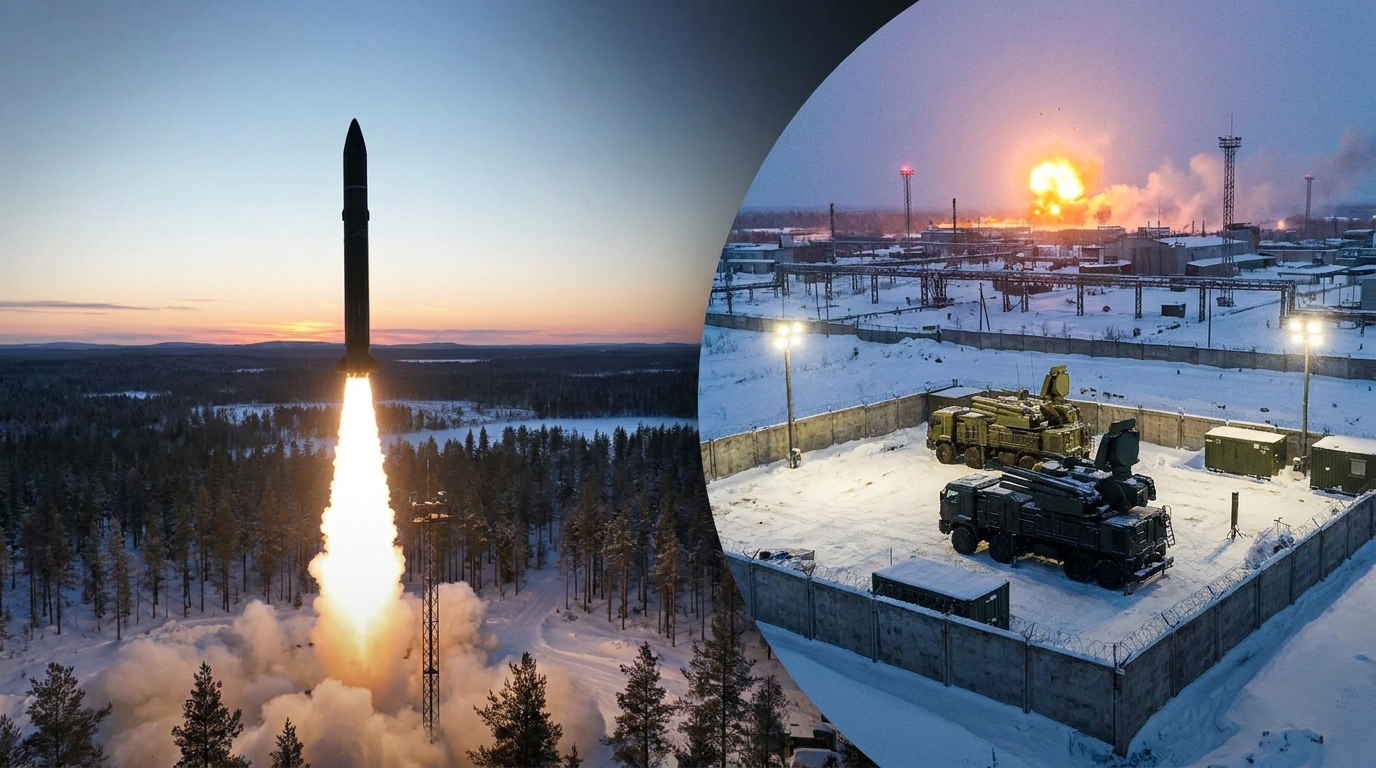
In Episode 17 of the podcast, "The Next Month Decides the Winter", analysts Rob Lee and Francis Farrell return fresh from the front lines to break down one of the most consequential developments of the war: Ukraine's expanding deep strike campaign against targets inside Russia. Their conversation cuts through the noise to examine what these strikes have genuinely accomplished, and just as importantly, how Russia has adapted in response.
This middle phase of the campaign has revealed a pattern that will shape the coming winter. Below, we unpack the key takeaways.
What the Deep Strike Campaign Set Out to Achieve
The logic behind Ukraine's long-range strike campaign is straightforward but layered. Rather than concentrating solely on the contact line, Ukrainian planners have increasingly targeted the infrastructure that sustains Russia's war machine deep behind the lines, refineries, fuel depots, ammunition storage, and energy nodes.
According to Rob Lee, the strategic value of these strikes lies in their ability to impose costs that ripple far beyond the battlefield. When a refinery goes offline, the effect isn't just military; it touches Russia's export revenue, domestic fuel supply, and ultimately the economic foundation underwriting the invasion.
Targeting the War Economy
One of the central themes Farrell emphasizes is that the deep strike campaign is fundamentally an economic weapon. Ukraine cannot match Russia soldier-for-soldier or shell-for-shell, so it seeks asymmetric leverage. By striking oil refineries and energy infrastructure, Kyiv aims to:
- Reduce Russia's fuel-processing capacity, creating shortages and price pressures.
- Disrupt logistics that feed frontline units.
- Erode export earnings that fund military procurement.
- Signal reach, demonstrating that no part of Russia is beyond consequence.
The cumulative effect, Lee argues, is more significant than any single spectacular strike. It's the sustained tempo, hitting the same categories of targets repeatedly, that gradually degrades Russia's capacity to absorb the damage.
Measuring the Impact
Assessing the real achievement of the campaign is difficult, and both guests are careful to avoid overstatement. Individual strikes generate dramatic footage, but the strategic picture is harder to read.
Farrell points out that refinery strikes have measurably affected Russia's fuel-processing throughput at various points, forcing Moscow to reroute production and, in some cases, import refined products, an awkward position for a major energy exporter. These effects are real, but they are also partial and often temporary.
The Attrition Question
A recurring theme in the episode is whether the deep strike campaign delivers strategic attrition or merely tactical inconvenience. Lee's assessment is nuanced: the strikes create genuine friction, but Russia's sheer scale and redundancy allow it to absorb losses that would cripple a smaller economy.
The key metric isn't whether a single facility is destroyed, but whether Ukraine can sustain enough pressure across enough targets to outpace Russia's repair and adaptation cycle. This is where the "next month decides the winter" framing becomes critical, the coming weeks will test whether the campaign can inflict cumulative damage faster than Russia can patch it.
How Russia Adapted
Perhaps the most instructive part of the discussion is how quickly and comprehensively Russia has responded. Adaptation, both guests stress, is not a sign that the campaign failed, it's evidence that the strikes forced a costly reallocation of resources.
Layered Air Defense and Dispersal
Russia has moved significant air defense assets to protect high-value infrastructure deep in its interior. This has several consequences:
- Air defense drawdown near the front, as systems are pulled rearward to guard refineries and depots.
- Hardening and dispersal of fuel and ammunition stocks to reduce the payoff of any single strike.
- Improved electronic warfare aimed at Ukraine's long-range drones.
Farrell notes that this redistribution creates its own opportunities. Every air defense battery guarding a refinery in the Russian heartland is a battery not defending frontline positions or Russian cities under other forms of pressure.
The Counter-Innovation Race
Both analysts describe the campaign as an ongoing innovation race. Ukraine improves the range, payload, and survivability of its strike drones and missiles; Russia responds with better detection, jamming, and physical protection. Neither side achieves a permanent advantage, and the tempo of adaptation on both sides has accelerated dramatically.
This dynamic explains why headline numbers can be misleading. A strike that succeeded easily six months ago may now require far more sophisticated planning to penetrate hardened defenses. Conversely, Ukraine's growing domestic production of long-range systems means it can keep testing Russian defenses at scale.
Why the Next Month Matters
The episode's central thesis, that the next month decides the winter, hinges directly on the deep strike campaign. As temperatures drop, energy infrastructure becomes both more valuable and more vulnerable. Damage to refineries and power systems compounds when demand peaks.
Lee frames the coming weeks as a decisive window: if Ukraine can sustain and intensify its strikes while Russia's adaptations remain incomplete, the winter could impose serious strain on the Russian economy and military logistics. If Russia's hardening measures take hold first, the campaign's returns may plateau.
Key Factors to Watch
- Strike tempo: Can Ukraine maintain a high operational rate through winter weather?
- Russian repair speed: How quickly can damaged facilities return to service?
- Air defense allocation: Will Russia keep pulling systems from the front?
- Weapons supply: Does Ukraine's domestic production keep pace with attrition?
Conclusion
The middle phase of Ukraine's deep strike campaign, as dissected by Rob Lee and Francis Farrell in Episode 17, reveals a war of adaptation rather than a single knockout blow. The strikes have imposed real economic and logistical costs, forced Russia into a costly defensive reshuffle, and opened new vulnerabilities, but Russia's scale and resilience mean the outcome remains contested.
What's clear is that this is a cumulative, tempo-driven contest, and the coming month may prove decisive. As both guests conclude, the winter will be shaped less by any single spectacular strike than by which side adapts faster.
Listen to the full discussion in Episode 17, "The Next Month Decides the Winter": Rob Lee & Francis Farrell Back From the Front for the complete analysis of the front line and the strategic picture heading into winter.