 Ukraine Military History Institute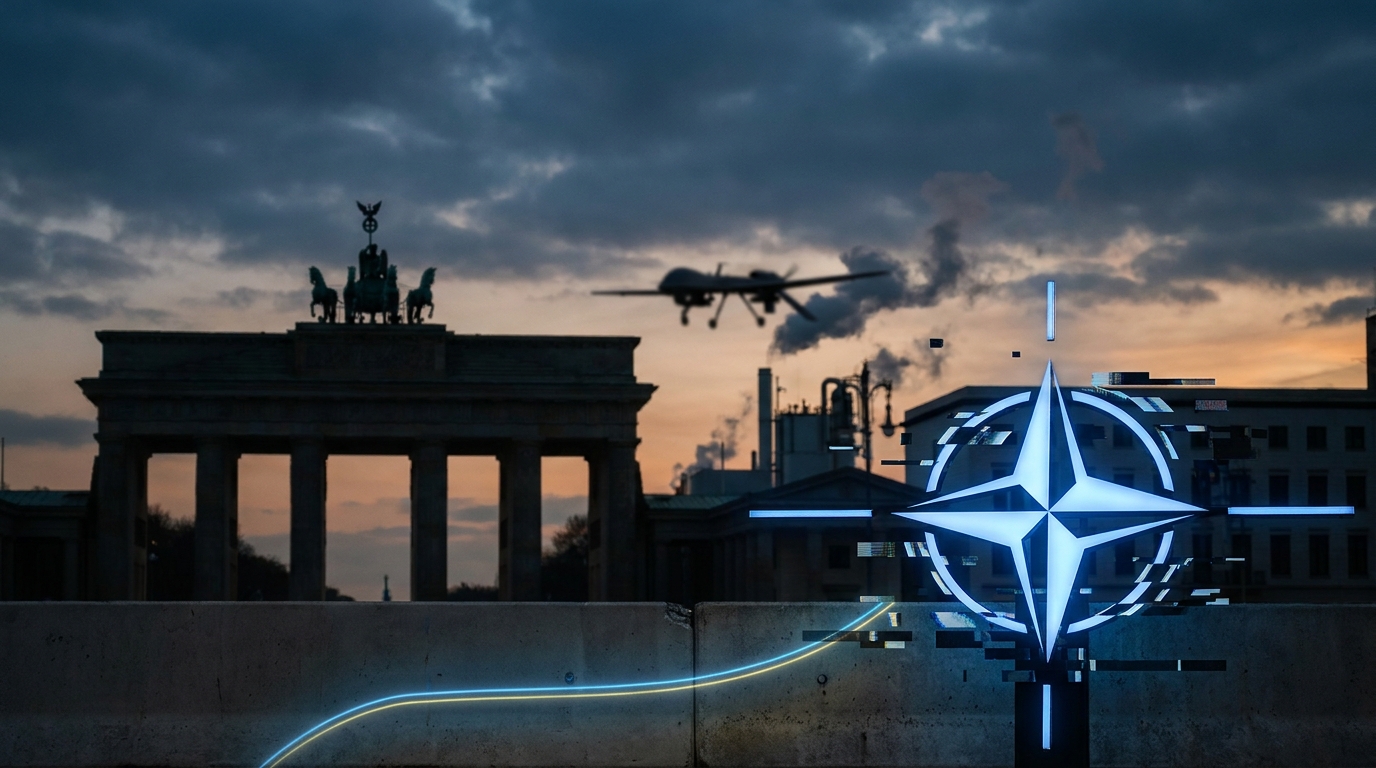
As Russia's war in Ukraine grinds on, a quieter but increasingly dangerous conflict is spilling across Europe's borders. Sabotage, drone incursions, and assassination attempts are testing the boundaries between open warfare and something just below that threshold. In Episode 17 of the podcast, "The Next Month Decides the Winter": Rob Lee & Francis Farrell Back From the Front, the conversation turns to how Russia's hybrid war is reaching countries like Germany, and what it means for NATO's strategy going forward.
This section of the discussion cuts to the heart of a difficult policy question: how should NATO respond when Russia keeps raising the stakes without crossing the line into full-scale war?
Russia Doesn't Want NATO as a Full Combatant
Strategically, Russia has strong reasons to avoid drawing NATO into the war as a direct participant. As the discussion makes clear, the Kremlin does not want NATO forces striking targets inside Russian-controlled territory or engaging in open conventional combat.
The reason is simple: Russia's best combat power is already committed to Ukraine. Forces from the Baltic Fleet and Kaliningrad have been deployed to the front, leaving the rest of Russia's borders thinly defended, often by conscripts rather than seasoned combat units. A conventional conflict with NATO, particularly if NATO air forces became involved, would pose a serious challenge Russia is poorly positioned to meet.
Yet there's an important nuance here. Russia may already treat NATO's material and intelligence support as something close to combatant involvement. That perception could be shaping, and even justifying, in the Kremlin's eyes, the hybrid campaign now unfolding across Europe.
Why Russia Feels Freer to Escalate
One of the most striking points raised is how Russia's calculus around escalation has shifted over time. For years, Moscow held back from more aggressive actions because it wanted to preserve economic ties with the West. Those links acted as a natural restraint.
That restraint has steadily eroded:
- 2014: Russia's first invasion of Ukraine triggered sanctions that froze or reduced many economic links.
- 2022: The full-scale invasion severed even more of those ties.
With each round of lost economic connection, Russia grew less concerned about "making the situation worse." Having already paid the price, the Kremlin now feels it has less to lose by escalating, a dynamic that helps explain the increasingly bold sabotage operations across Europe.
The Role of Drones and Plausible Deniability
Modern technology has expanded Russia's options for operating in the gray zone. Drones, in particular, offer a powerful tool for plausible deniability. They enable sabotage, assassinations, and infrastructure attacks that are difficult to definitively trace back to Moscow.
This ambiguity is part of the strategy. Many European countries have declined to publicly attribute incidents to Russia, though not all. Germany recently attributed sabotage activity directly to Russia, marking a notable shift toward public accountability.
At the same time, the discussion offers an honest caveat: not every incident blamed on Russia is necessarily Russian. In some cases, attribution may be mistaken. But the broader pattern is undeniable, Russia is clearly conducting a coordinated sabotage campaign across the continent.
Why NATO Support Is at the Center of Russia's Frustration
The core of Russia's frustration with NATO members comes down to one thing: NATO's support is helping Ukraine survive.
Waging and winning the war in Ukraine is central to Putin's ambitions. But NATO members are providing material and intelligence support that directly undermines that goal. As the conversation puts it bluntly, if we're being honest, NATO support is killing Russian soldiers. Intelligence is being used to target air defense systems, infrastructure, and other critical assets.
This creates a genuine risk. Inside the Kremlin, there may be a blurring of perspective, a growing sense that the line between "direct war with NATO" and "conflict below that threshold" is dissolving. How Russia interprets this distinction could shape its future decisions in dangerous ways.
How Should NATO Respond?
The policy question is genuinely difficult. But the discussion lands on a clear principle: the most effective response to Russian sabotage is to continue, and even increase, support for Ukraine.
The logic is straightforward. Supporting Ukraine is precisely what Russia does not want NATO to do. Therefore, responding to sabotage by expanding support sends a firm message:
- No equivocation about the commitment to Ukraine.
- No reduction in aid in response to intimidation.
- Continued material and intelligence support.
Dialogue still has a role to play, but it cannot come at the expense of resolve.
The Critical Importance of Unity
Beyond aid levels, NATO unity emerges as a decisive factor. European democracies hold elections every few years, and each cycle brings uncertainty about whether new leaders will remain committed to Ukraine.
Here the assessment is cautiously optimistic. Over the last four and a half years, European countries have remained remarkably consistent in their support for Ukraine, a level of durability few would have predicted. Maintaining that consistency is essential, both to sustain Ukraine's defense and to deny Russia the fractures it hopes to exploit.
A New Era of Competition
Perhaps the most sobering takeaway is that this hybrid conflict is not a passing phase. As the discussion notes, we are likely entering an era of ongoing competition between NATO members and Russia that will persist for some time.
This is a dangerous moment. Russia is doing things it wouldn't have dared before, precisely because the old restraints, economic and otherwise, have fallen away. Navigating this period will require a careful balance: keeping channels of dialogue open while refusing to be intimidated into abandoning Ukraine.
Final Thoughts
Russia's hybrid war reaching Germany is a symptom of a broader strategic reality. Moscow is willing to escalate below the threshold of open war, betting it can raise the stakes without triggering a full NATO response. The challenge for Western allies is to respond firmly without stumbling into the conventional conflict that Russia itself is not prepared to fight.
The answer, as this episode argues, lies in steadfast support for Ukraine and unwavering alliance unity.
For the full conversation, including Rob Lee and Francis Farrell's firsthand insights from the front, listen to Episode 17: "The Next Month Decides the Winter."