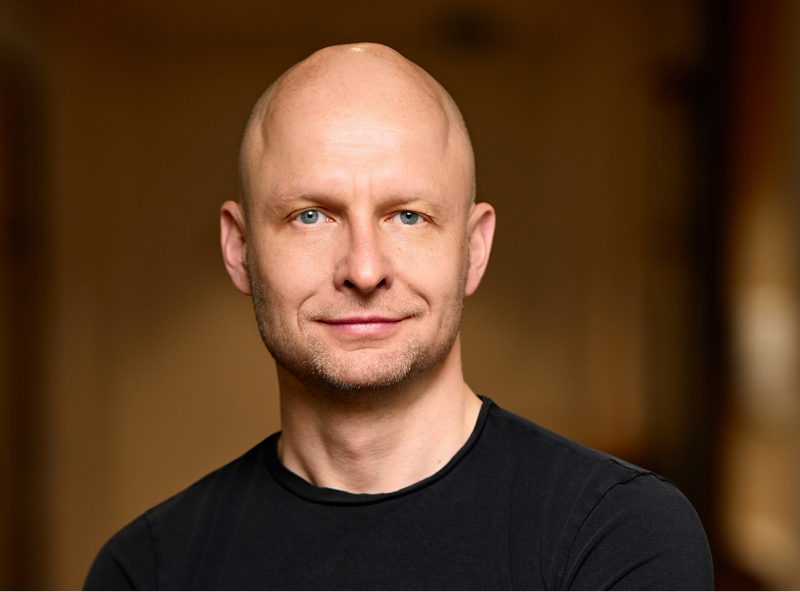
Andrii Hrytseniuk runs Brave1, the state platform Ukraine built in 2023 to put industry, combat units, ministries and universities in one room. He is a mathematician and a former bank CIO, not a soldier, and he says that is the point. His argument: wars are won by whoever fields technology fastest, and next year most of the fighting will be done by machines.
To get its drone units hitting deeper behind Russian lines, Ukraine did not issue an order: it borrowed a bank’s bonus scheme, paid points for hits beyond 20 kilometres, and watched the gray zone stretch from 10 kilometres to almost 70.
In 2022 Ukraine was short of tanks and had no fleet to speak of. A virtual project called Army of Drones answered with heavy-lift bombers, FPV drones and naval drones, built from whatever the commercial market had. A year later the government made the improvisation permanent: Brave1, established in 2023 as a separate legal entity owned 100% by the state, with one mission, to help the army win with new technology. Rob Lee and Sam Cook sat down with its CEO in Kyiv in the last week of August 2026.
Andrii Hrytseniuk is a mathematician who spent his career as chief information officer at Ukraine’s largest banks. Before the full-scale invasion he had no military experience, and neither did most of the people around him: scientists, teachers, manufacturing engineers, IT project managers. That is his case for how Brave1 works. It reuses civilian methods: a problem statement instead of a technical requirement document, agile iterations instead of the waterfall, and new processes built alongside the old ones rather than forced through against the people defending them.
Along the way: ePoints, a corporate bonus scheme moved into the army, which took Ukraine from a couple of hundred hits beyond 20 kilometres at the end of 2025 to a new 70-plus kilometre strike segment; a defence market that before 2022 was “the same closed club of a small number of companies”; radio links that worked fine at 30 kilometres two years ago and are useless now; ground robots that once followed the soldier “like a pony or horse” and now run more than 100,000 missions in seven months. And one statistic he does not celebrate: roughly 95% of drones on the front are Ukrainian-made, which he says is not good for Ukraine.
The argument underneath it is that the question was never who invents a weapon. Ukraine has already moved from human-in-the-loop to human-on-the-loop, where the AI flies and the human can cancel, and Hrytseniuk is “definitely sure” that next year most hits will be fully automatic. Russia is getting there by cutting corners, and hitting civilian objects. New technology works for three to six months before the enemy answers it. Hence his question to every Western procurement agency: where is the test report from Ukraine? Without one, you may be buying an illusion of defence.
Recorded in Kyiv, August 2026.
“If you are not in Ukraine, you are not in defense. And Brave1 is the easiest door to enter Ukraine.”
 23:27
23:27“I’m definitely sure that next year, the majority of hits will be done in fully automatic mode.”
31:42“Computer vision sees better than human. Artificial intelligence takes decisions faster than human.”
30:09“It’s scary when drones are taking decisions themselves, but this is the new reality.”
30:43“This is the result of too early implementation of AI.”
32:16“Do not think that you are defended enough.”
40:00“Real strength and defense, or illusion of defense?”
43:32“95% of drones on the front line are Ukrainian-made. And this is not good for us.”
24:58“Russia is bigger, has more people, has more resources. Ukraine has to out-innovate Russia.”
 7:40
7:40“Maybe the most significant thing we’ve heard on this podcast.”
33:53
Hi, it's Sam Cook, the founder of the Ukraine Military History Institute and the co-host of the Ukraine Military History Podcast. In 1940, France and Great Britain had more tanks and better technology than Germany and a bigger army. What it didn't have was a way to field that technology and fight and defeat the enemy. Every war has always asked that question, not who invents a weapon, but who uses it to fight and win. Ukraine's answer to that question has a name, and today you're going to meet the man who runs it. Andrii Hrytseniuk is the CEO of Brave1, the platform the Ukrainian government built in 2023 to connect industry, combat units, ministries, and universities into one innovation engine. He is not a career military man, and that is the point. He was a chief information officer at Ukraine's largest banks. When the full- scale invasion came, he and thousands like him, scientists, teachers, IT project managers, turned their civilian skills into weapons development. Shortage of tanks, they fielded heavy lift bombers and FPV drones. No Navy, they invented naval drones. That improvisation became an institution, and the institution is Brave1. Rob sat down with him and myself in Kyiv. Andrii is a man perpetually short on time, and you'll hear why. In 40 minutes, he lays out the whole machine. How Brave1 rewrote six laws and nearly 50 decrees of the Cabinet of Ministers to break open a closed defense market. How more than 600 products have been tested and codified to NATO standards, and how the ePoints system borrowed straight from a banker's bonus scheme pushed strike priorities from 10 kilometers behind the line to 70 plus, and how 400 venture funds now come to him asking which Ukrainian and international defense tech companies to back. And then he says the thing that I have not heard anyone say this directly on this podcast. On artificial intelligence, Ukraine has already moved from human in the loop to human on the loop. The AI flies, the human supervises. And next year, he claims the majority of strikes will be fully autonomous. Drone against drone, machine deciding faster than any pilot. He is telling you the future of warfare with a straight face, and he runs the organization driving that change. He closes with four lessons for every Western military, affordability, speed, scalability, and a culture of readiness. And one sentence that will follow this episode around. If you're not in Ukraine, you're not in defense. If you get value from the conversations on this podcast, please subscribe now. YouTube, Apple Podcasts, Spotify, Amazon Music, all the links are in the show notes on your podcast or below this video on YouTube.
Please also hit the bell. Before we get into it, a brief word about the people behind this podcast. This podcast is produced by the Borderlands Foundation, a nonprofit we established with a simple mission, make sure Ukraine's heroes are never forgotten. We run two centers. First, the Ukraine Military History Institute preserves the lessons of Ukraine's wars and translates them into English, audience, for soldiers, historians, and allied militaries worldwide supporting Ukraine.
Our main project is this podcast. We're also working on building a university course on Ukrainian military history. We are working on workshops for serving officers in allied militaries, and we'll build a professional journal in the future from Ukraine. We also organize Ukrainian soldier delegations to ally countries to share lessons learned, and we organize the annual Ukraine Freedom Summit and the Heroes of Ukraine Golf Tournament, which will take place next March of 2027 in Dallas, Texas.
The second program we are building is the Ukraine Center for Traumatic Stress, bringing cutting-edge research on PTSD and treatment to Ukrainian veterans and society at large. Behind every drone statistic, every story, historical vignette is a soldier that technology is trying to keep alive. And a soldier who will need this care. Finally, the foundation is sponsored and funded by the Borderlands Group, the company that I run that advises defense companies operating inside Ukraine, acting as a bridge between Western defense technology and Ukrainian battlefield proven validation.
More at the end. Before we start, I gave a talk in San Francisco this summer to a room of defense tech founders building defense technology on why war matters, the power law of war, and how nations actually pay for wars. What happened to the American defense industry after the Cold War? It's an hour, it's free, and it's the same history we do here. I'll leave a link in the description to this video.
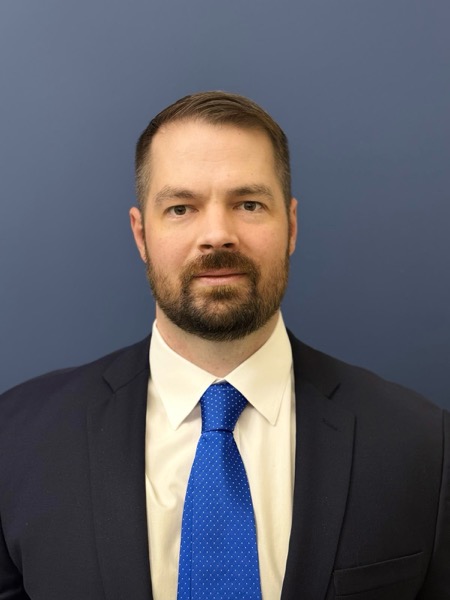
Okay, the engine of Ukrainian innovation. 600 codified products, fully autonomous strikes next year and the door every Western defense company has to walk through. Andrii Hrytseniuk, CEO of Brave1. This episode was filmed in Kyiv in the last week of August, 2026. Welcome to the Ukraine Military History Podcast. Welcome to another episode of Ukraine Military History Podcast with the Brave1 CEO Andrii Hrytseniuk. Someone Rob I know has wanted to talk to you for a long time. It's good to see you again, Andrii. Let's jump straight into this because I know that you're always short on time.
So let's go jump in.
Thank you for the invitation. Yeah, let's start.
So, Andrii, could you talk a little about the background of Brave1? What was the idea behind it? How did it kind of the genesis of what happened? And then maybe your background and the current structure.
Actually, Brave1 was established in 2023 by the decision of Ukrainian government, Armed Forces, Ministry of Economy, National Security Council, because it was clear that in the country we need to have a single platform that connects all stakeholders, industry, combat units, government institutions, universities and other players. And the main idea behind Brave1 is to achieve the maximum synergy from tight and direct cooperation between all these roles and categories of players.
And it was not built from scratch. In 2022 it was the virtual project called Army of Drones, when a lot of innovators and, if I may say, asymmetrically thinking people started to work and discuss and brainstorm what we can do with the new technologies, especially drones, and how we can make Ukraine much stronger. Because it was clear that we cannot compete with Russia with the amount, volume of resources, and we need to implement some asymmetrical answers.
And we had a shortage of tanks, we invented heavy lift bombers, FPV drones, we had a shortage of naval fleet and the naval drones were invented and started to widely use. And actually after one year of work of an army of drones, the results were obvious and the government decided to institutionalize this project and that's why Brave1 has been established. This is a separate legal entity that belongs to the government, to the country 100%.
Brave1 is playing a number of different roles and activities, but the idea and the mission is the same: to help Ukraine and Ukrainian army to win the war with the help of new technologies.
Yeah, I think that's something we've told before is that this war is an attritional war. Obviously, Russia is bigger, has more people, has more resources. Ukraine has to out-innovate Russia. And that's really kind of key way of explaining why the war has developed the way it has, why Russia has failed to achieve many objectives that Ukraine has just out- innovated and leveraged drones, commercial drones, naval drones, all these kind of new things. And that efficiency has
Really been quite important. Yeah, absolutely. You're absolutely right. And we had to not invent the bicycle from scratch. We started to use everything available on the market, and the commercial drones started to be used, some reusing of other components, civil components. And right now this is the adaptation of everything that can be what is ready it can be integrated and it's developing and progressing permanently and in every segment in case you take a look to drone two years ago and right now there is a very big difference and we use not only the and consolidated not all available technologies from Ukraine and and other countries also the The same for human capital, for people, because it was clear that only military army cannot win the war.
And the whole society of Ukraine started to think and to be involved in the process of increasing the strength of Ukraine. I was the banker, the CIO, the Chief Information Technology Officer in Banks. I worked for the largest Ukrainian banks and worked for IT companies from different countries. And a lot of my colleagues, some of them are scientists, some of them teachers, some of them professional military, some of them guys from manufacturing, project managers from IT.
So all of us, or majority of us, didn't have any previous experience in the army, but we started to learn and to focus all our activities, knowledge and energy for building the new technologies that allow Ukraine to effectively fight with Russia for more than four years.
And I think that's, you know, one of the reasons why Ukraine is, I think, held back Russia, too, is you had a very high-tech population. You have a big IT sector here. You have many people with really useful backgrounds. And then as it came in the military, you know, both into military units, you know, you created drone units, which often have many IT specialists. You have drone companies where you also have these kind of specialists, you know, take kind of commercial ideas, make them into military applications.
I think that's really been a key kind of component of why Ukraine has been able to hold back Russia. I guess, what lessons do you think other militaries, other countries should learn of how you've leveraged this kind of commercial civilian backgrounds into the military space? And what role do you think there is for civilian kind of thinking for applying into military issues?
We are implementing in the army and in technologies a lot of things from civil life. Just an example. One of the biggest reforms that we implemented in the army is called the ePoints system and the marketplace of drones. EPoints is absolutely the same as bonus schemas or incentive schemas in classical civil enterprises. People have salary and have a bonus that depends on the effectiveness and performance.
It was reused, not reinvented, it was reused and implemented in the army. The same for technologies, the same for the approach how to solve problems. We widely use design thinking methodology and we do not try to define the technical requirements for the new products. We are focusing on problem statement and after that we are consolidating the talents and brains to think together how to build the products that can address fully or partially the problem that was refined or stated.
And the same agile methodologies. Instead of the classical waterfall, when you can plan and define everything in the beginning of the project to the end, we use scalable agile methodologies. When we do not know what exactly will be designed and built. We are focusing on iterations, on achieving some goals for the iteration. And it's very short cycles. And we didn't invent it, but we reused from information technologies and software development.
One of the things I wanted to point out there, Rob, this is very different than the U.S. Army is... In the U.S. Army, there's always defined requirements from the government and the military, which to me creates really difficult technologies that are hard to change because the government has said, this is what will be in, you know, you're going to have this on this drone and this on this drone. And you talked about problem statements and not defining technology. So I think that's a really key difference the American defense industry needs
To understand. But we had the same in Ukraine. Before 2022, Ukrainian military and defense market it was the same closed club of a small number of companies. It was protected and there was a border and it was extremely difficult for civil companies to start producing weapons. A lot of legislation changes and regulations have been done and we just initiated changes in six laws and and nearly 50 decrees of the Cabinet of Ministers.
And everything about simplification, removing some barriers, speeding up the processes. And we very often do not try to tune or improve the old process. We are starting to build the new process in parallel with the previous one. Because in case you would like to change something was settled, you are facing the rejection from the people who are trying to defend everything that they built. But in case you are implementing in parallel some new process and in an organical manner, in case this process is better than previous, more and more percentage of of activities are done not using previous project process, but new process.
And this is like a version of the processes, not improving of something that is in place.
So let me talk a little about your current role in procurement innovation. So when the front line, Ukraine brigades will kind of identify a need, maybe the Russians have adapted maybe this some kind of new technological need how does this how does innovation occur and what role is Brave1 play do the brigades come to you and then you connect with industry or or the brigades going up the chain of command to the general staff the general staff comes you
Could you explain kind of how what role you play exactly in the cycle we do not formalize in the process and do not provide the rules that in case you have some feedback you should go to in your vertical or to someone else. We are providing possibility and we are open to discuss with industry, with experts, with military. And everyone sees that everyone is trying to help. And that's why more and more people are coming to us and sharing their thoughts, their vision, and everyone is consolidating such discussions.
And in this feedback loop we are playing the crucial role. We gather the feedback and the changes, innovations from Russia faster than in comparison with the classical hierarchical manner that exists in the army. And we are highlighting, escalating and starting discussions how this problem can be addressed. We are involved in a semi-formal manner a lot of participants from different parties of sites, from industry, from military, from government institutions, from universities, from international companies.
And together we are starting to think initially after that to prototype some solutions that can solve the problem. And we are doing it in a permanent manner in all domains. And Brave1 is... The government provided for Brave1 some budget that we are allowed to use for early funding on the promising solutions, like angel investors on the venture side. And the second, we are concentrated on the expertise, multi-domain expertise inside Brave1.
And we are managing the network with the experts outside of Brave1. And in case something is needed or there is some non-solved problem, we are very quickly collecting the people who can think and try to do something. And such facilitation provides very high speed and short duration for taking decisions and the fast track of funding promising developments on different stages. This is the instrument that allows us.
After that, we are supporting the companies when they are building the solutions in case they are facing with some technical problems, we know the market. We understand who can help them. And the matchmaking between different players, this is a very important part of our work. And we see the results. Because in case the industry, the companies or military are alone, they do not see the full picture.
And for them, it's much harder to find the right partner or the right person who can solve the problem. And after that, the fast track and support with codification, with testing and codification of the products. More than 600 different military products that are used right now widely on the front line. It was tested and codified according to the NATO standards using the new process defined in our legislation, where Brave1 is helping the companies to quickly test and codify the products.
And right now it's very difficult to find the drones or some technology that exist on the front line where Brave1 hasn't been involved. For some companies we provided the funding for to continue and to experiment when nobody trusts in this idea. For some companies we We support it with looking for investors because on certain stages of growing of the companies, the investments are needed.
And in Brave1, we have more than 400 VCs who are permanently asking us, can you please suggest, recommend the companies? And the companies coming to us and asking, can you find the proper investor for us? Because we need to grow. But this is more on technical level. On a strategic level, we are analyzing and working with the analysts and experts and strategists to define what are the products that will be needed next year.
And every nine months, we are reviewing the list of the categories where the new products are needed. Previous time we did it in autumn of 2025 and one month ago the majority of the categories that was defined in 2025 sorry autumn of 2025 last year are already full with the products and we removed from the categories where we provide funding and the new categories that will be actual next year were defined together with the Ministry of Defense and the Ministry of Defense and the Armed Forces and right now this is like a guideline for the companies who would like to work on these solutions that will be needed during the next period.
And this is a regular process. When on a technical level, we are supporting on a daily basis and helping companies to build solutions not in years, months, but in weeks. And in parallel, we are initiating the thinking, designing, prototyping and implementing solutions that will be actual during the next periods.
For foreign companies, Are they playing a bigger role in this ecosystem now? And I think I've seen a lot of interest in America and Europe, understand that Ukraine, this is the laboratory of modern warfare, that you need to demonstrate success here. And many Western drones we know have not done that very well here. Have you seen a kind of new focus of foreign companies playing a bigger role here, more interested in helping?
And what kind of recommendations might you have in foreign companies that want to come back?
Definitely, yes. We started to work actively with international partners and companies in the beginning of the previous year. And we launched a couple of programs. The program number one called Test in Ukraine. This is the program when international companies can submit the application and bring the products here to Ukraine test on the test ranges to get the feedback from technical experts and to test in combat conditions and to be battle-proofed.
The second program called Brave International and we signed already the documents that are initiating these programs with the European Commission and this is an ongoing project. Already the second phase of this project is finishing Brave NATO, Brave Germany, Brave Norway, Brave France, Brave Lithuania and more and more companies, countries are joining Brave1 and Brave1 is helping these companies to transform the industry in the same manner that we did here in Ukraine to make it more flexible, faster, more innovative and cheaper.
And this third program that we have launched last year called Brave Prime because not only startups from other countries are interested for us and we are interested for them. Also big primes, the global giants in the defense industry, understood that they need to use the feedback from the Ukrainian front line. They need to use the experience that was collected here because for everyone is clear that if you are not in Ukraine, you are not in defense and Brave1 is the easiest door how to enter Ukraine and we have the programs with a number of global companies and a lot of ongoing projects for them and we are providing feedback and discussing with them the product portfolio and product roadmap we are helping them to prioritize the most promising solutions we are helping global companies to find partners here and to test their solutions and it works and we see that this is mutually beneficial for both sides because international companies need our assistance to build better products and make a better business.
And for Ukraine, it's also a win-win because in case international companies are building better products, for us it's better to use on the front line. It will be more effective. And that's why it's a true win-win. And we are continuing and expanding the list of similar projects. But still, in Ukraine, roughly 95% of drones that are working on the front line are Ukrainian-made.
And this is not good for us because we would like to have a better percentage and more involved international products.
Interesting. What would you say your current priorities are? And you said before you do a forward-looking view of what's going to be needed next year. Can you maybe talk about some of the things you think would be necessary next year? Understand there's operational security issues, but yeah, I guess what are the priorities right now? And what things do you think are going to be important next year on the battlefield?
Actually, and you do this through, you create demand signals for the market by saying, hey, here's a grant. And I saw that I got introduced to you not by the general staff but a corps R&D center that works with you directly on their priorities. So it's very interesting to watch. But what are the grants
Saying that are your priorities right now? As we discussed before we are starting to think about the problems that are not solved yet or where we understand that the problems will not be organically solved by the growing of the market itself. And let's start, let's go domain by domain. Air domain. In air domain, in offensive sub-segment, this is effective and cheap deep strikes and middle strikes.
We successfully, for last half a year, we extended the gray zone from 10 to almost 70 kilometers on Russia territory and it's growing more and more. Just an example, we had just a couple hundreds of hits in the end of 2025 on the distance more than 20 kilometers. We started to focus and use ePoints system to prioritize the hitting of the targets on the distance more than 20 kilometers and right now one and a half months ago we implemented the new segment 70 plus kilometers so we have military strategy how to stop and win in the war and we are working accordingly and the technologies are growing according to the plan so we discussed the middle strike and deep strike capabilities. For defense it's counter-UAS. Russia is widely the percentage of high-speed kamikaze from Russia is increasing and that's why we need to rebuild the drone interceptors and missiles and other counter-UAS segment and grow the new products. That's why why jet or other categories of high-speed drone interceptors are needed, because drone interceptors cost much cheaper than Shahed itself or Banderol or other jet Kamikaze from Russia.
And similar solutions are needed and funded, the development is funded. This program is actually already four months and we have already working solutions and very good results. Because the gray zone is extended, also the data links and radio technologies need to be improved. Because two years ago the radio link that works on 30 kilometers, it was fine. Right now it's absolutely not, it cannot be used on the front line. And the high distance radio links mesh networks this is what exactly is needed and this is the category for upcoming periods also artificial intelligence because more and more this war not a fight between human and human not between human and drone drone and human and this is drone versus drone and everywhere when technologies are fighting with technologies the automation is needed and the artificial intelligence helped to improve the products. We successfully moved the level of technologies from manually operated drones to human in the loop process, when some of the activities, mostly routine activities of the human soldiers automated by artificial intelligence and the artificial the solution intelligence is advising to take better decisions.
After that, we started the next level called human-on-the-loop. What does it mean? That there is no need to be an extremely effective and skilled pilot. You can just help the AI to be effective and skilled pilot. So the skills are already transferred to AI. Because computer vision sees better than human. Artificial intelligence takes decisions faster than human. In case you are working with a big amount of data.
Computer works better than human and what is needed is just to monitor and help and confirm or have the possibility to cancel the wrong decisions of artificial intelligence because AI is not perfect and I believe that next year from the both sides and defense industry the fully automated drones it will be the topic of of wide usage of course it's It's scary when drones are taking decisions themselves, but this is the new reality.
And we need to adopt legislations and acknowledge that you cannot avoid it. And the drones will be fighting with drones in fully automatic mode.
So in the explainance, that means the drone goes up, it can identify targets on its own, and it can engage a target that's on its own without a human being in the loop on this.
I'm definitely sure that next year, the majority of hits will be done in fully automatic mode. And in case Ukraine will not implement it, we will be late in this run.
So there's an article this week in New York Times talked about a Russian Molniya that used AI that was believed as artificial intelligence to do the strike. Are you seeing this a lot on the Russian side? They're using AI. There's not a human loop. And that basically you kind of have to respond to this as well.
We see a lot of experiments from Russia that they, even when they do not have good enough AI technologies and the decision making solutions, they start to close eyes on the rules that a human should confirm the target. And we have a lot of cases when fully automated drones from Russia are identifying wrong targets and destroying civil objects. And this is the result of too early implementation of AI.
We are much more respectful to legislation and we are using human to avoid such mistakes by AI. But I can confirm that you are absolutely right. Russia is more and more starting to play with fully automated drones. This is the reality where we need to find countermeasures and we are working on them. We have already implemented some countermeasures for such technologies. To have the parity or advanced technologies, of course, we have to work together with allied countries foreign companies on the right solutions that can take effective decisions in a fully automated mode.
So I think this is maybe the most significant thing we've heard on a podcast of the idea that majority of strikes next year you think are going to be fully automated. And just in terms of how warfare will change, it's probably difficult to grasp all the ways that will kind of change warfare. In terms of counter FPV, counter UAV turrets, I noticed another direction that Ukraine is focusing on the Sky Sentinel, there's the Hishak, there's other ones. How promising do you think those developments are right now and where do you think you're going to see this development six
Months or a year from now? It's absolutely a high priority and we have a huge potential in turrets and automated combat solutions. Sky Sentinel that you mentioned, this is one of examples where the process and the things that are done by Brave1 helped to build the best in class products. The company came to Brave1 with the idea to build such a solution and Brave1 funded this development on a very early stage. After that Brave1 helped the company to improve the solution and And turrets, this is an automatically managed turret.
This is a high priority category because it's impossible to scale people and scale soldiers. But turrets, this is maybe not perfect, but good enough substitution of soldiers on some level. And that's why, of course, it will be scaled and in parallel, the technologies will be improved and the cost will be pushing down.
Can you talk about the role of UGVs right now? So I think former Minister of Defense Fedorov mentioned that he wanted to contract 50,000 UGVs, I believe, this year. This is obviously a huge expansion from last year and the year before that. And right now, the Ukrainian military, every brigade has a UGV company or maybe a UGV battalion. It's become a really big structural change.
Can you talk about maybe the roles UGVs right now and what are the kind of priorities going
Forward in new developments yeah absolutely right UGV this is also high priority we discussed air domain but in land domain UGV this is and we need to kamikaze UGV logistic UGV evacuation UGV some hybrid UGV like like buggies that can be remotely controlled soldiers on the buggy can go to the position and after that in remote mode from the shelter the pilot is returning back the buggy.
The re-usage or implemented remote control for even classical weapons are also the high priority area. And really the plan for this year is to contract more than 50,000 UGVs. Already 22,000 were contracted and funded. Right now in the process of contracting also a very significant volume. And until the end of the year more than 50,000 will be contracted. And for measuring the effectiveness of the UGV, we have a few metrics.
The first metric corresponds with the goal that ground robots should risk, not soldiers. And for logistical missions, month by month, we have an increase of the number of missions. For this for first seven months of this year more than 100,000 missions has been done by UGV and every month we have roughly 30-40% of increase of number of missions and number of kilometers by these missions also we have metrics this is number of evacuation missions not only logistic missions because UGVs are widely used to evacuate soldiers.
And for Kamikaze, one time UGVs are also the trend, and we see that the evolution of UGV happened for this. It was significant when two years ago UGVs were like a pony or horse that followed the soldier. But now this is the drones like UAVs and they are managed in absolutely another manner and other level of technologies are used. And they became much more redundant. And artificial intelligence is also used already in UGVs.
And UGVs also use platforms for deployment of other categories of weapon.
So I know you've got to run in a little bit. I've got a lot of questions, but I'll keep it short.
We can have the second part of the interview. Of course, of course, absolutely.
I guess, you know, a question is, what lessons should other countries learn? And you can take this in multiple directions. One is, you know, Brave1 is this interesting space in procurement and innovation. How do militaries innovate properly? How do you streamline this? How do you improve procurement? Because I think most foreign militaries, Department of Defense, does standard kind of contracts.
It's a long program of record and it's not working nearly fast enough. And I guess also in terms of way warfare is changing, what do you think Western militaries need to learn about the technology changes and structural changes and what kind of recommendations do you have?
First recommendation is more philosophical. Do not think that you are defended enough. I'm a mathematician and in the mathematician we are testing the hypothesis using extremums. You can imagine that hopefully it will not happen, but in in case your country will be attacked by Russia. And 1000 of Shaheds and 10 of ballistic missiles on a daily basis will come to your country. What will you do?
You can think what were the metrics that were improved here in Ukraine. First, the weapons and defense industry should be much cheaper. So in case Russia is using thousands of drones, you need to have thousands of missiles or interceptors. How much it will cost for you? And the economics of the war is extremely important. And every country has to understand how and where they will buy the cheap weapon to fight in the long term against the enemy who scaled their production.
The second, this is speed of innovations. All these four years proved that the new technologies effectively work for the first three to six months. And in case you are deploying the new technologies faster than your enemy, you have a temporary advantage. But in case your enemy implemented something faster, you need to be even more fast to invent countermeasures. Number three is flexibility and scalability.
You don't need, you don't know in advance what products have to be scaled. And the speed of scaling is extremely important. And here you should analyze what are your dependencies on other countries, on some components, on some supply chain elements. And you need to be ready to scale. At least to have the plan B to understand what will you do in case you will have necessity to quickly scale.
And number four is you need to acknowledge and take as a rule for yourself that you will not know what will be the threats that you will be facing in the future. And that's why you should be ready for everything. And this is more about culture of readiness to fight with everything unknown and readiness and capability to invent, to produce and to be defended. And for me, still, I cannot understand how other countries are purchasing drones or other weapons that have not been tested here in Ukraine.
What they are doing? What they are buying? Real strength and defense or illusion of defense? As for me, everything that is in the consideration by the procurement agency, the first question is, is okay guys your drone is provide good results and have good characteristics please provide the test report or recommendation package from Ukraine, from Brave1, from the Ukrainian Armed Forces about is it really works on the front in the combat or it doesn't work
So Andrii, on that last point I think the quote of this episode that will definitely be a very very viral clip is if you're not in Ukraine, you're not in defense. I was in Silicon Valley last month and I tried to make that point and I got some pushback from people. Do you see that when you travel to America or are they a bit more polite to you on that point that if you're not in Ukraine, you're not in defense? Ladies and gentlemen, that was Andrii Hrytseniuk, the CEO of Brave1 with Rob Lee and myself here in Kyiv, Ukraine. Here is what he gave you. The blueprint of the fastest military innovation system in the world, built not by generals alone, but also by a banker and run like a startup portfolio. Problem statements instead of requirement documents, agile iterations instead of 10-year programs, six laws and 50 decrees rewritten so a civilian company can go from just an idea to a codified weapon deployed on the battlefield in mere weeks.
The numbers tell the story. More than 600 products codified to NATO standards, a gray zone pushed from 10 to 70 kilometers into Russian- held territory in half a year, 50,000 ground robots being contracted this year, 22,000 already funded, running 100,000 logistics missions in seven months so that machines take risks instead of soldiers. And the warning. Next year, he says, the majority of strikes will be fully autonomous, drone fighting drone on both sides.
Whether the legislation is ready or not, it's going to happen, according to him. Russia is already closing its eyes and letting the machines decide with deadly consequences. Ukraine's edge is that it automates with discipline, and that edge only holds if it keeps moving faster than Russia, which doesn't. His last question is the one I want to leave you with. He asks, as a mathematician testing a hypothesis, how any country buying weapons that have never been proven in Ukraine can know whether it's bought real defense or it's an illusion.
If you're not in Ukraine, you're not in defense. Andrii, thank you for making the time you never have. We'll hold you to the second part of that interview. If this conversation gave you something you didn't have 40 minutes ago, do two things. Please subscribe to our channel on YouTube, Apple Podcasts, Spotify, and Amazon Music. Share it with your friends. And also leave a five-star review on your favorite platform.
It genuinely changes how many people find these conversations. Now, the organizations behind this work. The Borderlands Foundation is making sure, the Borderlands Foundation, our mission is to make sure Ukraine's heroes are never forgotten. The Borderlands Group, the company that funds all of the above and the main thing I want to tell you about today. Andrii described the door into Ukraine's battlefield.
Tests in Ukraine, Brave International, Brave Prime. The Borderlands Group is a guide on the other side of that door. We help Western defense technology companies validate their products with Ukrainian frontline units under real combat conditions, and then assist them as they try to convert that battlefield demand into funded procurement in Ukraine or in their countries at home.
Letters of intent, letters of request, allied government funding contracts. That is what we help our companies with. Over $60 million in client sales closed, $150 million raised by our clients in venture capital world, and 15-plus companies served. If you build for defense and you want your system proven where it matters, not on a test range, but on a battlefield, that is what the Borderlands Group will help you do.
One more thing. I gave a talk this summer to a room of people building defense technology on why war matters and why Ukraine matters. The objections you hear every time somebody considers going, and what 15 companies on the ground actually have found. Part one is free. The link to it is in the description below. If you're running a military technology company, or you work for the government, or you're in service, this video is specifically useful for you.
And StoryFunnels. If you're not in Ukraine, you're not in defense, is going to be quoted in boardrooms and ministries for months. And the system behind it deserves more than one news cycle. StoryFunnels is the software we've built for our foundation that turns one episode into a month of content, articles, clips, posts in your own voice distributed where search engines and AI visibility will actually surface them.
It's live at storyfunnels.AI. Go check it out. I'm Sam Cook. Thanks for listening to the Ukraine Military History Podcast, where our mission is to make sure that Ukraine's heroes are never forgotten.
Get an email when a new episode drops. No spam, unsubscribe anytime.
 Ukraine Military History Institute