 Ukraine Military History Institute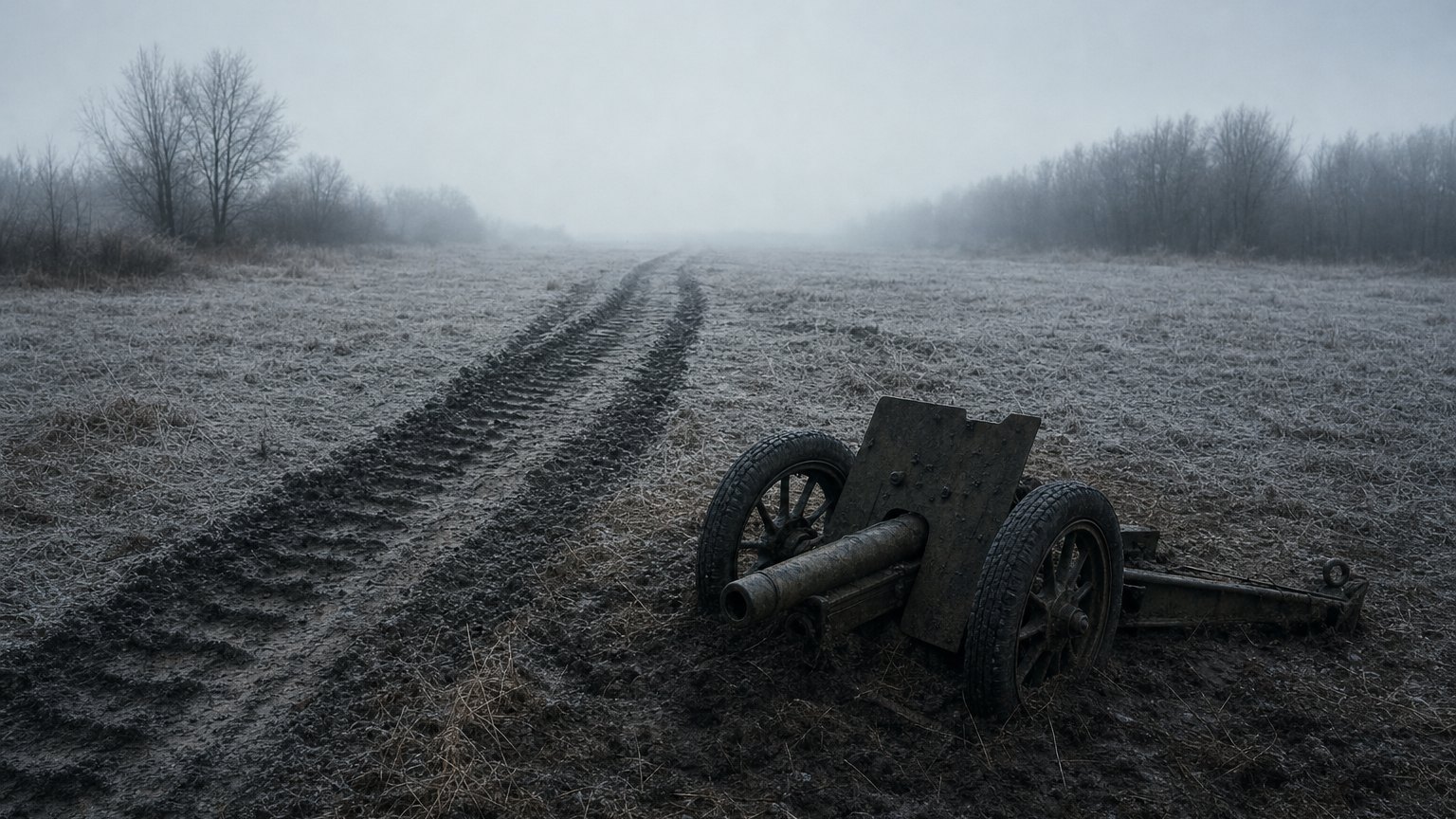
Russia's jet-powered Geran is not yet the flood it is billed as
Dmytro Putiata opens with a number that tempers the alarm around Russia's newer strike drones. At the end of May, he says, Russia was able to produce about 200 Geran per month. That is, in his words, definitely not 12,000 per year.
He does not treat that as reassurance. Russia is still working through approval of the design and has problems with the platform it is trying to fix, so scaling takes time. His expectation is plain: unfortunately, they will scale it.
The production gap is real today. It is a gap Putiata expects to close.
Ukraine's own deep strike runs almost entirely without jet engines
The more uncomfortable half of the comparison is about Ukraine. When Ukraine attacks Russia or the occupied territories, in what are called middle strikes and deep strikes, Putiata says 90% of those drones are not jet powered.
He calls it a very big problem, and the reason is direction of effort. Ukraine is spending a lot of thought on new interceptors and detection systems to deal with Russia's jet-powered drones, and he says some of those developments have succeeded. Ukraine is not developing jet engines for its own deep strikes to anything like the same degree.
He acknowledges there are reasons for that and sets them aside as a separate topic. The point he leaves standing is the asymmetry: Ukraine is adapting to the enemy's faster drone while not building one of its own at scale.
The counteroffensive many expected has not come
Putiata is frank that he shared a common expectation. After the middle strike campaign, when Ukraine destroyed Russian logistics and headquarters, he expected a counteroffensive to follow.
He says Oleksandr Syrskyi planned something of that kind for the end of August or mid-September, and notes that this was publicly announced by some people, so it is not a secret.
His current view is hedged twice. He is not sure it is going to happen right now, and he is not sure there is a point in doing it now, because it comes down to resources and Ukraine is strictly limited in terms of everything. That is a statement about capacity, not about will.
The turning point people missed was armoured, and it worked
What Putiata calls a turning point that people do not really know about is not a strike campaign at all. Since February and continuing to the present, the Airborne forces have conducted several successful counterattacks with armour.
The conditions varied. Some ran in foggy winter weather, others in late May and through summer. They used tanks and other armoured vehicles, and Putiata offers one vivid detail: tanks were literally crushing towed artillery.
The depth is the figure that matters. He says the Airborne broke through up to 12 kilometres with armour. Tanks supported with direct fire, not as artillery, alongside armoured personnel carriers and infantry fighting vehicles.
Asked which units, he answers with a hedge: as far as he remembers, the 95th Airborne Brigade and the 82nd Airborne Brigade. He adds that both, together with the 80th and 79th Airborne Brigades, are now conducting similar operations in quite sunny weather.
Tanks are not dead, but the battlefield has to be prepared for them
Samuel Cook, who came up through armoured cavalry, seizes on the point. He notes how many observers have declared that drones made tanks obsolete, and says he is not going to accept that.
He credits Rob Lee with the formulation that holds up: tanks are not dead unless you fail to work out how to protect them on the battlefield. The Airborne operations are an example of combined arms manoeuvre working, both in winter when fog provides natural cover and in good weather in May and June.
Putiata puts the condition in one sentence. Of course tanks are not dead; you just need to prepare the battlefield for tanks and other vehicles. He also points to Rob Lee's knowledge of recent attacks by the Central Military District in the Dnipro area as further detail on the same question.
The Airborne saved the front, and almost nobody heard about it
Putiata goes further than tactics. He says he is 100% sure that back then, and again a couple of months ago, the Airborne saved the front line and the state. People do not really understand how bad the situation was.
His advice to anyone visiting the front, even every four months, is to talk to the Airborne brigades. His explanation for why they are overlooked is blunt: visitors tend to go to the units that talk about themselves the most. That is how marketing works.
What you see online is what units choose to show
Rob Lee widens the point. A great deal of what happens in war is deliberately hidden, successes and failures alike, and only a small part appears on Twitter, Telegram or elsewhere. The videos are edited, so viewers see what units want them to see.
His example is the Lazar Group, which he says was initially completely secret until, he thinks, 2025. It eventually took on a public role because it needed recruits and was competing with other units for them.
The original reason for silence was operational. The unit did not want Russia to learn its tactics, techniques and procedures, because exposure invites countermeasures. Lee notes Russia went a long time without developing an answer to heavy bomber drones.
What to watch
- Geran output against the 200 per month baseline. Putiata expects Russia to scale; any credible production figure well above that number would confirm he was right to worry.
- Whether a Ukrainian counteroffensive materialises this autumn. He doubted it would, citing resources. A large offensive would contradict that reading.
- Jet-powered drones in Ukraine's own strike packages. With 90% not jet powered today, a visible shift toward jet engines is the test of whether the asymmetry he describes is being addressed.