“Tanks are not dead. You just need to prepare the battlefield for the tanks.”
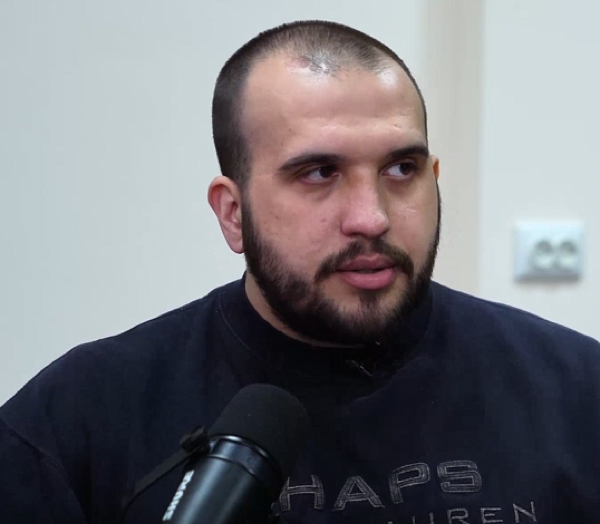 Dmytro Putiata — on combined arms in the drone era
“What I was told was that it took 10 to 20 FPVs to stop each tank.”
 Rob Lee — on Arena-M and the cost of a single kill
“The lying is maybe the biggest problem in the Russian military.”
Rob Lee — on what survives the war
“Starlink is a bit of a crutch for Ukraine.”
Rob Lee — on the single point of failure
“In Ukraine, you can only ask, not order.”
Dmytro Putiata — on the culture the new commander inherits
“I don’t think we’ve reached a turning point yet.”
Rob Lee — the bottom line

Welcome to episode number 14 of the Ukraine Military History Podcast. My name is Sam Cook, the founder of the Ukraine Military History Institute, where our mission is to provide the world's best military history instruction out of the country that has the world's most complicated and, I believe, insightful military history here in Ukraine, and also the co-host of the Ukraine Military History Podcast. This episode with Rob Lee and Dima Putiata that I hosted
Is a summary of where we find ourselves as of early August of 2026. After the relief of Mykhailo Fedorov, which we discussed at length, the defense minister in episodes 10 and 11, we came back with a sort of resolution of that situation where General Oleksandr Syrskyi was relieved by President Zelensky and a new commander-in-chief was appointed Major General Mykhailo Drapatyi, 43-year-old general. It's a generational change at the top of the Ukrainian leadership. A lot of
Hope and a lot of challenges ahead for the armed forces under new leadership. And we go through where we find ourselves on the front lines as of early August of 2026. And we start at the tactical level along the front line, reviewing the front line in detail. Then we move on to the operational level of mid-strike campaign, the status of that on both sides. And then finally, the strategic side of things, the deep strike campaign that Ukraine is inflicting inside of
Russia and Russia's unfortunately devastatingly effective ballistic missile strikes on Ukraine, the shortage of Patriot interceptors. And finally, we talk about the challenges and the opportunities for the new commander in chief, Major General Mykhailo Drapatyi, where we expect to see him making changes, what we expect his emphasis to be, and what are the challenges that he's facing. And there are a number of them. So this is a very important episode on the first draft of history
By our top military analysts here inside Ukraine, both Rob living in Ukraine and also Dima, who is a former service member of the Ukrainian Armed Forces and also top military analyst. So both of them are going to be with me discussing that. And before we go into the episode, I just want to take a moment to talk about our sponsors. This podcast is produced by the Borderlands Foundation. Borderlands Foundation is a foundation that I founded in 2022, right after the war started.
Our mission is to make sure Ukraine's heroes are never forgotten. And we do that in three main ways. First, the Ukraine Military History Institute, which produces this podcast. Our first main project is this podcast, but we're looking forward to generating the funding and the staffing for a number of other projects in the future, including a course on Ukrainian military history that we want to teach at the university level in English to the world.
Teach that locally here to Ukrainian students and broadcast it to the world. We're working on finding the home for that course at a Ukrainian university who will host that in English. Also, we do battlefield tours right now, private tours of the Battle of Kyiv for VIP political government, military delegations that come into Ukraine to understand the lessons of this battle in 2022, which is now firmly part of military history of this war. And then finally, we're working on other projects like a military history journal and other things we're recruiting people for.
So this podcast is the first main project of that, and we're very proud of the work that we're doing, and we'll continue to build that. Next, we have the Ukraine Center for Traumatic Stress. To find out all the information on the center, you can go to borderlands-foundations.org, where you can see what we're doing at the Ukraine Center for Traumatic Stress. History is built on memories of soldiers, and obviously those memories have consequences. Our mission is to help understand research, spread the word in Ukraine, and invite researchers from around the world to solve this problem for the large and continually growing veteran community here inside Ukraine and the society at large.
Many non-military members also are suffering for that inside Ukraine. And then finally, we have the Ukraine Freedom Summit. This is an annual event that we've done twice now. First year we did it in 2024 in Washington, D.C. Last year we did it in London. And this upcoming year in 2027, we're going to be doing it in Dallas, Texas in March of 2027. This is where we bring Rob, Dima, and a bunch of other Ukrainian veterans who fought in the war here to share their frontline experience with U.S. Defense industry leaders and also soldiers, active duty soldiers, veterans.
We have a four-day summit plan, which has a defense innovation day, talking about defense technology, but also broader issues related to defense on the battlefield. This goes along to doctrine, training, leadership, and defense technology. The second day is on recovery and veterans issues, where we talk about the economy and veterans issues, the future of Ukraine, if and when this war ever ends, how that's going to look, and who's going to take the leadership role in that.
And then we have a defense exhibit where we're going to show different defense technologies at the local Frontiers of Flight Museum in Dallas, Texas, among all these great historical aircrafts. We're going to be showing the future of warfare with drones and other technologies exhibited there. So if you'd like to get in touch and be part of that exhibit, whether a U.S. Company or Ukrainian company, please reach out and get in touch. And then finally, the Heroes of Ukraine Golf Tournament, where U.S. And Ukrainian veterans and veterans from around the world will get together and play each other in golf.
And people will donate to and buy tickets to that event to help raise money for the Ukraine Center for Traumatic Stress. So the tickets for that are actually on sale. You can go to UkraineFreedomSummit.org and register your interest or buy an advanced version of that ticket, an early bird version of that ticket for any of those events or the entire event. And then finally, the bill payer for this is the main donor for all of our work here is the Borderlands Group.
This is an advisory group that I have where we advise Western defense companies trying to work inside Ukraine. get product market fit with your products, understand if what you're building actually works on a modern battlefield, and bring that back and sell it confidently to your governments and allied governments around the world. We also work with some Ukrainian companies who are trying to obviously get more traction here in Ukraine, but also get ready for the ability to export their products around the world.
And we're also looking into doing advisory work for foreign governments and militaries who want to understand and implement the lessons of the war here in Ukraine to be ready for the threats and challenges to all of our security in the future. So that's a word from our sponsors. Please enjoy episode number 14 of the Ukraine Military History Podcast with myself, Rob Lee, and Dima Putiata. Okay, welcome back. I'm here with Dima and Rob. Sorry, Dima and Rob.
And we're early August. We want to sit here and review a lot of the big themes we've explored in past episodes together, your episode together in May where you talked about, have we reached a turning point. The last one you and I did together in June talking about the frontline situation. And then a couple weeks ago you guys were on right after Fedorov was relieved and talked about the situation which has now been somewhat resolved, but a lot of people would
Say not completely about the leadership at the Commander-in-Chief and the Ministry of Defense. And so a lot of ground to cover here, Rob. First thing we talked about is, have we reached a turning point? That's the big debate and question we want to answer. Starting on the front line, where do you guys see the situation across the front line at the, let's
Called tactical level? Sure. So, you know, I think the view that we reached a turning point is probably a bit premature. And again, the way I think I framed it when you asked me this in June is that, you know, the situation now is better than it was a year ago, right? So context-wise, like Russia was advancing faster a year ago than they are today. The front line is holding better right now than it was a year ago. But Russia still has a the initiative, right? They are still
Advancing. Right, last month DeepState still said like Russia had like 30 square kilometers of what they occupied of territory. Looks like Russia is still advancing in most record and sense some directions, and that's a net occupation minusing what Ukraine has regained, right? It's, it's hard to say. And this is, we can talk about mapping, and, and, and, you know, how much it's a useful metric at this point. Because so DeepState, for operational security regions, they do not update the maps
Based on Ukrainian advances in some cases. We know that Ukraine is conducting a counterattack north of Lyman. We know they've had some success. DeepState has not changed their map at all. Right? They also have some success in Geneva Petrov's direction too. How much has it achieved? I don't know, right? Clearly not a breakthrough, but I think there's probably some results. I think they updated the map this month to show some of the pushback in Geneva Petrov's direction,
Not so far in Lyman. And of course, how do you determine gray zone versus occupied area, it's completely subjective. So I think, again, it's hard to say. Some people, when some months happens, and it said that Ukraine advanced more than Russia did, they kind of had this big narrative shift. Then it's like, well, the actual way we use judgment of saying, where's the front line, where it's moving, is very subjective. It's not very clear. The main point I'd make is that Russia's advancing slower
Right now, I think, than they were a year ago. And that basically situation front line is better than it was a year ago. But there's still lots of issues, right? The situation is still quite difficult. We know that in Kramatorsk, Sloviansk direction, right? It's the most difficult direction right now. Kostiantynivka, I'm not sure what the current situation is. Kostiantynivka, Kostiantynivka is another name for it. Yes. Obviously, Russia has infiltrated deep into the city for some time.
I think the Ukrainian units are still in the center, but I think you probably have a situation where you have positions all intermixed and what does anyone control is unclear, right? We know that Russian forces have been seen infiltrating north into the next village northwest of Kostiantynivka. And so that's quite concerning that they continue to kind of move deeper and deeper. I think some of the maps are not updating fast enough. So I think DeepState is a little slow on this issue. I think the gray
Zone is larger than they're indicating right now. My understanding is that east of Kramatorsk, I think Russian groups have made it within five kilometers east of the airfield of Kramatorsk. I forget the name of the village there. And then east of Sloviansk, there's the one last kind of village where the power plant is. And the Russian infiltration groups have been seen there too. But again, what are the extent of infiltration? Does it mean they control this as a one-time thing?
It's hard to say. But I think clearly the dynamic on that part of the front line is getting worse. And the number of FPVs flying into cities is increasing. The Russians recently knocked out the bridge good between Sloviansk and Kramatorsk, the main road that you take. This is the same thing they do in all the battles before Pokrovsk, other directions. They'll hit the bridges with cabs. You'll start seeing more strikes on cities itself. We're seeing coffee shops close down.
And so we're seeing that kind of dynamic we've seen in previous battles for cities, which is a very negative trend. And we know what happens and it's always kind of a very negative direction. So, you know, how long will it take Russia to get to Kramatorsk or Sloviansk? impossible to kind of tell, right? You never know. Again, Ukraine is still in Chasiv Yar, I think to some extent that they May have to pull back soon. That battle's been gone for two years.
Tourette's going on for a year. You know, knowing how fast the front line will move is always about a year. I mean, of course, it was October when they had a couple hundred guys infiltrating to the city, right? Now they control the city itself. But Russian advances are slow. Determining how fast it'll happen is always really difficult. But certainly the situation there is getting worse. And, you know, these are the last two of the main cities in the region that Ukraine still holds.
And that could be something that Putin would use to potentially have a pretext if he if he captures these big cities for declaring victory and trying to get out.
Well, I can say that he won't stop in that point, to be honest. And I have this opinion that, yeah, in some cases they can take a city like for a year, for more, for one year and a half. It's quite hard for them, they lose a lot of men and equipment, but the point is, if they capture those cities, after that it will be a much easier situation for them, because the Nesk era is quite an urbanized area with a lot of small and larger cities. After that, we have literally empty fields.
For them, it will be much easier to have these maneuvers back and advancing much faster. That's why we are fighting so hard for those cities like for both sides, because we understand that after that we don't have this, you know, like let's say castles behind us where we can live during the winter. It's also important thing for soldiers on the ground. Yeah, because it's, it's absolutely different whether to live, whether to live during the winter in the city, even it's like abandoned one, than somewhere in the field. Because I remember
Myself being in Avdiivka, it wasn't that pleasant, but we have a lot of basements, so it was doable to live there and stay warm. But if you're staying on the field when it's like minus 20 degrees Celsius and you, back then it mostly it was artillery and drops from DJI's, it's not very pleasant, to be honest. And right now it's harder, much more harder. So if you talk about turning point, I think that the problem we are facing right now, and in general the people, when they hear turning point, they expect
Maybe way too much from that. Yeah, it's like, oh, it's an important, it means that one of the sides should collapse ASAP and proclaim victories that, oh, we we did it because it was a turning point. But in our case I can agree with Rob that turning point for Ukraine can be to stop or minimized Russian advance and minimized our losses. But the point is that so far we kind of only partly did it, because if you talk like about middle strikes, if we talk about isolation
Of the Crimea, it's it's very painful for Russia, but we cannot say that Crimea was fully isolated it's very harsh for people and for military men to live there, but I want to remember our audience that Ukrainians are living in this kind of case for years. We didn't have electricity for 15 hours all around the Ukraine. And somehow we didn't collapse as a society, as a country. Of course, there wasn't support, but still. So if we expect anything like that
From the Russian side in Crimea, maybe we're a little bit delusional. Because they are under constant pressure, but the point is that it's gonna be turning point from Russian side, unfortunately for us, because they are, of course it's different topic, but they are succeeded in jamming Starlink. We need to definitely have pulse-jet, kamikaze drones, because Russians, unfortunately, are much faster in that case. Right now they are using Shahed 4 and saving Shahed 2 for winter.
Because during the winter, of course, with thermal vision, you will see much better with a thermal camera a pulse-jet engine drone rather than a regular Shahed 2. And by the way, just a short remark talking about Shahed. They tried to do this approbation where they had the platform of Shahed 2 where they tried to put the pulse-jet engine on it. They failed. it's supposed to be a Shahed 3. They don't have Shahed 3, they have only Shahed 2 and Shahed 4, which is pulse-jet engine.
And they increase a lot of other capabilities like S-300, S-800 Banderol, which can be launched from the ground, from the helicopter, I suppose also from the aircraft in the future, from Orion UAV. So the point is that...
And the Banderol is a jet-powered, as I understand it, missile, that goes about 450 kilometers an hour with about 100 kilogram payload. It's kind of in between. Is it a missile? Is it a drone? It's jet powered, but it's, it's, it's a cheap kind of jet powered, you know. So again it's a cheap missile, but I mean we're seeing the development elsewhere. So the ERAM that some of the Ukrainians received from the US, it's also cheap to have a cruise missile.
There's other things like the, the Ruta from Destinus, also kind of jet powered drones. We know there are lots of bars and other things that Ukrainians use. But again it comes back to quantities and it comes back to speed. And as Dima was saying, Russians don't stand still. Right. So even again, I think like May, June timeframe, the situation is quite good for Ukraine relative to last few years, right, where the advances are slower, middle strike had progressed, a bunch of good things. The Russians will adapt, right? They have to get
Punched in the face a couple of times, but they do adapt. And we knew that there was going to be some adaptations, both to Ukraine's middle strike campaign, but also their own middle strike campaign. And Banderol has been mentioned for a couple of years now. Now we're seeing this being used in large numbers. Odesa, a lot of strikes are with Banderol. That's quite a big issue. Cherni of other places too. Was Banderol the missile that hit that crane ship that got sunk?
They are launching more Shahed 2, Shahed 4. That was a secret. Yes, secret that can be remotely operated by a parade. I mean, the two of the big developments this year in terms of Russia's deep strike campaign is that so they have the jet power Shaheds, which is now a, you know, a priority and a secret versions. And so jet powered, as Dima was saying, Shahed 4, Shahed 5. Shahed 5 is also is it a missile? Is it a drone? It's kind of in between. Shahed 4 is a drone, but a jet powered drone.
It's quite loud for those living in Kyiv. It's loud. It's fast. And as Dima was saying, Shahed 3, they put the Chinese jet engine on it, but the structural integrity wasn't ideal. So they had to change the actual structure itself. The plans for this year, initially for the State Defense Order, was I think 12,000 Shahed IV, 12,000 Shahed V. They entered the zero production, I think, in April. That was the plan for these. And then I think it was supposed to be 24,000 or so Shahed II
And also Seahawks.
If you talk about Shahed V, I'm not sure that they will be capable to produce that much because in the end of May, they were able to produce 200 Shahed V per month, which is definitely on 12k per year. But maybe it will be, maybe they will scale, because they also need to, to do this approbation. They have some problems with the platform they're trying to fix, so it takes some time. But well, unfortunately they will scale it. While Ukraine is attacking Russia or
Occupied territories, so-called middle strike, deep strikes, like I don't know, 90 percent of drones are not pulse-jet engine, right? We don't have this direction to be scaled, and that's a a very big problem. While we are trying to adapt and create new interceptors and other detection systems how to intercept the pulse-jet engines, we think about that a lot. In some cases we... made some successful developments, but in the same time somehow we are not
Developing that much these pulse-jet engines for our Deep Strikes. I know that there are, because of different kind of reasons that May be definitely a separate topic. But talking, if you don't mind, I'll come back to this turning point. Of course including me I'll be frank I also expected that after this middle strike campaign, when we destroyed their logistics, HQs and etc., we will launch some counter offensive. And I'm, I know that Syrskyi planned to do something like that in the end of August, mid- September.
It became publicly announced by some people, so it's not kind of secret. Not sure that's gonna happen right now, and also right now not sure that there is a point of doing this, because it's all about the resources and we are right now strictly limited in terms of everything. And there was one turning point that people don't really know. Right now Rob mentions that, what happened in Dnipro area. That just will add extra details. Ukrainian airborne, since February till
Literally right now, they conducted a couple of successful counter- attack operations with armor, like in, during, as I said, during foggy weather, during winter, and during late May and summer. They were successful, they used tanks, they used armor. Tanks literally were crushing Russian tower artillery. So tanks are not dead, we should retire? Of course they are not dead. And Rob will tell you in eastern details about recent attacks by Russian central military district that happened in the propeller,
But of course they are not. You just need to prepare the battlefield for the tanks and other
Type of vehicles. And so, so that's a really interesting point, that Rob, you've, you've been very vocal about this on X, that combined arms. And everyone, what's great about watching this war is everyone all of a sudden is a military expert in declaring because drones have made tanks obsolete, and as a former armored cavalry guy, I'm not going to accept that. But Rob says, and this is what we always find to be true, is tanks are not dead unless you don't figure out how to protect them
On the battlefield. But what you just mentioned is an example of combined arms maneuver conducted by Ukraine using tanks that were very successful, both in the winter when fog is a natural cover for that,
But also in very good weather in May and June. Yeah, I mean they, they successfully break through up to 12 kilometers with armor, as I said, tanks. They were supporting with direct fire, yeah, not as an artillery. And they used APCs, in 35 vehicles. Which unit was this? As far as I remember, 95th airborne brigade and 82nd airborne brigade. Right now both of them and a 80s and 79s airborne brigades are conducting kind of the same operations right now, during quite a sunny weather, but it's
Not publicly known. But I need to say that I'm 100 sure that back then, and a couple months ago go Ukrainian airborne, again, save the Ukrainian frontline and Ukrainian state. I'm not ashamed of saying this because they did it. People do not really understand how bad situation back then was. It's so I highly recommend to anyone who goes to the frontline, even if you go to the frontline every four months, to have a conversation with airborne because people usually go, well, this is how marketing works.
To those units who talked about themselves quite a lot. Yeah, but I highly recommend to have a conversation with airborne brigades. And I'd say this in the part is that a lot of things you don't
See on Twitter or Telegram, right? A lot of things deliberately are hidden, and include successes, successes, failures. And so, you know, again we see, we see a very small part of the war on Twitter, elsewhere. And you know, the videos they get edited, and so you see what units want you to see. And And again, like, you know, Aerosol, you know, some of the best, it's like Laza Group. Laza Group initially was completely secret until I think 2025. I think they finally went out.
And that's because they needed to recruit more people. And they had to have a public facing role or else they couldn't get, you know, recruits because they're competing with other units. But the initial reason why they're quiet is that they won. They didn't want Russians to learn about the TTPs, right, because you develop countermeasures. And the Russians didn't develop TTPs for a long time against heavy bomber drones. You are right. They didn't understand the capabilities of the drones.
And really, the main thing is something that Ilazada talked about is that he didn't want Russian generals seeing how effective they were. Right. Because he knew that Russians at tactical level will see innovations and they'll adapt. But if they don't have generals to buy in on those ideas, it doesn't get scaled. And it's just like it dies at the regiment level, brigade level. Whereas if a Russian general sees on video, like losing. And again, a larger group in the Battle of Avdiivka, there's one night that they destroyed
Almost like a Russian military battalion. destroyed like 30 armored vehicles, just like, I think just five drones. If a Russian general saw that, he'd immediately say, okay, we really need to go into heavy drones too. And again, to this day, the Russians now are adopting heavy drones, but they're so far behind Ukraine on this. And this is one area where Ukraine has a really dominant role. Russians just are too far behind for logistics, for mining, for all these kinds of things. And partially because the Ukrainian
Units that are doing this just stayed quiet. And they got actually upset when their article was written about them. But again, you know, for TTPs, a lot of the best Ukraine units do not want any TTPs to be understood because the Russians, when they see it once, they will adapt to it. And then the next time you do it, it will not succeed the same way. And so, you know, trying to be secret on a battlefield with, you know, with social media is a big issue. But that's
One thing to keep in mind. Always. There's a lot of things you just don't know. And it includes like for me too, right? We will go meet units. And sometimes you'll hear about something like, I had no clue this happened, right? A month ago, I just wanted that. And when I met lots of group the first time in 24, it was like an eye-opening experience. Like, I've missed a big part of the war. I just didn't know this was happening because it's not publicly known.
And I have to assume there's a lot of other things I don't know has also happened as well. And my kind of understanding of like how certain events went, it's like it's based on kind of limited information.
You're absolutely right. And if you want to know the real truth on the ground, you need to interview Russian battalion, regiment commander. They know literally everything about Russian forces and Ukraine. They know country measures, they understand this. The biggest lie starts at division level. Russian regiment commanders are lying to their division commanders, they believe in this, and it's like scaling to the, to the highest. Because right now, just for your understanding, the 20s combined arms saying
That they are fighting Lyman, that they occupied much more than in reality they did. That's why they withdraw even some troops, which is absolutely insane from that direction to Russia. But it's also because of different reasons. As far as I'm concerned, they withdrew approximately 300 trucks including infantry fighting vehicles and some wraps and etc. I also think it's because they might be preparing for the partly secret mobilization. Because I seen, what was the point of
Taking 300 vehicles from the combined arms that is fighting right now and trying to advance to Russia. You definitely don't want to just secure them because you need to have your logistics working with the help of trucks. So if you don't have trucks it seems like that you are fine with the situation the battlefield, because you're saying to your spear commands that you defended near the river, that you have like a natural block between you and your enemy, so you don't need to
That much troops. That's one thing. And secondly is that, maybe I can assume, is that they are sending those kind of reserves that are not reserves to Russia, to prepare for new division elements
That should would be formed during potentially mobilization. I want to get back to the tank issue because I mean we're talking about a lot of topics I want to get into. But so, you know, as is Dima was saying, so when we talk about armor, any kind of capability, a lot of times people jump to the wrong conclusions based on data issues or like understanding what's happening. Artillery, some people think artillery is not that important anymore. And one point that I made before is that, you know, Russia's using infiltration tactics.
Those tactics are not ideal. They're not the most effective, right? Because you can't really move that fast. You can't advance that quickly. They're using infiltration because if you send one, two, three guys, it doesn't make sense to fire artillery at them, right? It's a waste of artillery. You've got to fire multiple rounds. It's more effective to use a Mavic or an FPV to kill these guys. And so the ratio of casualty is mostly from drones. It's partially because of the character of the fighting right now here.
But artillery is still very, very important. And I think in the initial war period of any other war, it'll probably be the main casualty-producing weapon because it can kill people at scale in a certain way. So drones have not killed artillery? No. And again, I mean, drones, drones made artillery much more effective because the combination of. You know, constant reconnaissance with artillery, just especially with Vezha, with other apps, Delta that Ukraine has, it made artillery much, much more effective.
You can adjust fire much more effectively. Different units can cooperate much more effectively. You know, with all the drones on Vezha, you can see every UAV feed. So artillery units, you know, even if they don't have a drone up themselves, they gain from every drone that's on the battle space for them. They can see all of it. They can task UAV operators to look at something for them. if they see any kind of, like, you know, smoke that might be Russian artillery, they can engage
It based off that feed. So it's been the opposite. And again, you know, the Russians are using a relatively ineffective tactic. And again, like, it's, it's, it's good that they're doing this, but they they adopt this tactic because they were conducting squad and platoon size infantry amount of assaults in 2024, and they're losing too many people, and they came to the conclusion that was better to send a platoon of Russians forward each day, and ones and twos, than as an
Entire platoon. Because again, one platoon gets caught by, by, you know, drones, and in the open a couple of DPICM rounds, that platoon is done. Yeah, but because, but if you send a platoon molecular, this platoon with their small arms will shut down your drones, but they won't be able to shut down artillery shell. They will be surprised, they will have a KIA, wounded, and I like that they will retreat. While retreating they will be finished by drones. Plus also bad weather, we know
But in some cases, when the weather's really poor, drones won't fly. So different type of drones, you know, when it's very heavy rain, whether the cold weather is, obviously when the observation is poor because of the low cloud cover and the fog, drones are worse at reconnaissance. So then counter-batter radar is important again because you need to locate Russian artillery somehow. Radar is still important. acoustic sensors are still important. All those kind of traditional things are still important.
They still have a role. And artillery is still used, you know, to suppress targets because drones can't suppress the same way artillery can. And again, you know, a 155 round is a significant life experience, experiencing, you know, 152, 15 planning. Dima has far more experience than either of us do as GWOT veterans, you know, fighting in those interesting wars. But so it still is a really important role in the battlefield. But when I talk about tanks as well, you know, again, when people say they look at like vulnerabilities of tanks and like that's true.
Like drones made tanks more vulnerable. But of course, they made everything more vulnerable. Right. So if tanks are dying, well, what do you think IFVs are doing? Well, they're getting killed too, right? Or infantry. Or infantry. But again, we've seen the Russians try everything. They've tried tanks, IFVs, APCs, MRAPs, Ladas, like Bukhanka assaults, right? Horses, infantry, scooters, motorcycles. They've done everything. None of these things have enabled breakthroughs thus far.
But they're still using armor. And again, the assault they did two weeks ago, they still recognize that armor is the means to actually achieve a breakthrough. If it's possible, you're going to have to have armor as part of it. Because if you can't use armor, then, you know, there's other things that are just not significant enough.
Probably inspired by what Ukraine has done recently in the battlefield, which is they're still effectively using armor in Russia.
Yeah, I mean, definitely both sides, and I'm sure that not only Russia and Ukraine are looking for the possibility to use it. But it's a big question mark how to do this. Because we can talk a lot about that and propose something. But it definitely should be preparation of the battlefield. And for example about Russian Shahed drones. We, during the battle for Kyrikan, one of the Ukrainian units, they launched, I'm sure that Rob mentioned this during previous podcasts,
That they launched FPV drones like this large one against Russian artillery. They fully kind of destroyed. And from my experience I know that Soviet-taught artillery in general is quite hard to destroy. That's why cooperation between artillery and drones is crucial here because drones give you observation. Artillery can correct its fire, can use less ammo to suppress or to destroy the target, and you use drones and trying to hit, for example, a barrel, or like to make
It burn with a napalm or whatever you use. So it's, it's all about combination. And Russians right now are launching their seekers in Shaheds against Ukrainian artillery. So it's not like, oh, I'm gonna send fiber drone optics and see whether I will be able to, to hit the shelter, or even didn't manage to reach the target. They literally sent a seeker with a 50-kilo warhead against the artillery position. Well, if it's not destroyed, it's taken out. So both sides are looking
What they're doing, trying to copy-paste, to adapt, to create something from their own.
So one of the things you guys brought up, and I've heard different numbers batted about, the argument or the supposed argument between Syrskyi and Fedorov was over artillery versus drones procurement, and someone I know very deep inside the defense industry said, hey, this 90% of casualties caused by drones figures is very inflated. It's probably more like 60-40 on the battlefield between drones and artillery. What are your thoughts?
Well, that's surprisingly for me, to be honest, because commanders on the ground they say that, okay, yeah, in most cases we destroy Russian targets with drones. But yeah, but the point is that we destroy them with the drones because artillery led to that. Yeah, so we cannot say, oh, let's forget about the artillery. The problem with Ukraine until we have that, we have a short range ammo. That's true, and it's not very effective, because your artillery can be suppressed by guided bombs, I mean it ever does, but still the guided bombs
Fix within FPVs, loitering munition, just regular FPVs, radio, fiber drone optics. That's why you need to have longer distance. And longer distance also gives you surprisingly big opportunities to strike deeper. And if you build, for example, your defense line in the way is that you have different EW posts, you have observation posts with machine guns, you have some mobile groups, it's not going to be that easier for drones to, to reach the target, for example, at 15, 20 kilometers. It's, it's, it's all
About, like, counter measures and capabilities that you have. So drones and their kill, none of them is absolute. It's like fingers on your head, on your hand, but you need to have a fist to, to be more
Efficient that way. And tanks are still part of that fist. Yeah, look, I think everything is still part of it. I mean, like, helicopters have maybe been the most threatened by developments, but they still still see them out there, they still look, they still have a role, and they've been repurposed to have this counter garan rule, which is, you know, they took down one of 5,000 one attack drones last year. They can also launch long-range munitions, right? So I mean Banderol is being launched by Mi-
28s, but you can launch drones from helicopters, right? And again it still provides flexibility. Again, everything's going to be adapted. Everything, anytime you develop a new kind of advantage, the other side will come up with a countermeasure. And so every kind of traditional thing is so important. I would say for artillery, so our Ukrainian artillery units, they've adopted drones themselves, right? So often, like artillery brigades, you know, traditionally response for counter-batternary work, right?
And they received the 155 NATO howlers first, so they had better range, so on. And some of these brigades, every battery will have a darts team, fixed wing FPV team, and a fiber optic FPV team. Because sometimes the right target FPV or darts is better for going out to turn target than artillery. Sometimes if Russian ISR is overhead, you can launch a darts and not be located. If you fire artillery, you'll probably get located. So sometimes one thing makes more sense to the other.
Sorry, just a month, from my experience I cooperated with two artillery brigades for a year and we had a decent communication and cooperation. So all the time they used darts, as you mentioned, with different type of ammo. Like 80 percent of the launches were also supported by the artillery fire, because only in this darts is FX. When FPV drone literally... And what's the range on it right now? Up to 100 kilometers. It was still like though it was the help of Starlink, without
But the Starlink is absolutely different to be honest. So yeah, but for example, if it's summer, it's a perfect period of time to burn Russian artillery because of the hot weather. We place different type of ammo, but one of them is like, let's call it napalm. So you open fire for six, seven times with your 155. You can see incendiary or? Sorry, with what? Incendiary machine, you mean? Yeah. Napalm has some not great connotations. So that's why I thought so.
Okay, okay. Let me. Okay. Fine. Okay. I will have a diplomatic pause at this. So, yeah, only in this case, they become efficient. And apart from fiber optics, that are also good for, for example, former ATGM teams, because they're also flying like in this way. And apart from that and darts, some of those brigades, artillery brigades, they have heavy bombers with also the Starlink that you send them, and during the night, and you drop the ammo on the house, and this is also a counter battery. But this is like
Different type of targets. There's a target that urgent ones, that opens fire, okay, we need to take it out. Okay, we know there is a target here, but it's not firing right now, so we will have this target for our night mission, for example. So yeah, I mean, no one, no one is getting rid of harvats ammo and saying, oh, you need to have drones instead of that. It would be very Bad decision, I would say. And not efficient at all.
And so in North Koreans, I might have mentioned in the previous podcast, but when the North Koreans began their assaults in December 2024 in Kursk, they were initially conducting company battalion-sized operations, dismounted infantry assaults. And the first week they were doing this, the Russians sent up a bunch of ISR UAVs. And so the Ukrainian units that were there, their authority was essentially suppressed because they had ISR overhead, they didn't want to open up, they didn't want to get located and get targeted.
Do. And so the the Ukraine brigades and SO guys were there. They had very little artillery support the initial few days, and they got pushed back because the North Koreans could operate in large groups and the numbers and the mass was just too much to handle. And so in the first couple of days, it was FPVs, it was Mavic drops, it was maybe like, you know, Martin 19 doing most of the killing, but they got pushed back. And then after that week, once they were able to kind of handle the issue with ISR, when Ukraine artillery
Started opening up, the North Koreans took very heavy losses and they had to change their tactics. So it was no longer company-sized assaults. It went down the squad. Same thing the Russians did when they started losing too many people. And again, the threat from rapid dismounted movement, which is OK, can't be that fast, but pretty fast North Koreans because they're pretty good at shape. They can move a certain distance. If you have to do infiltration by one to two, everything's going to be much slower. And so again, Russia
Is using a tactic that is less concerning because of the threat from artillery. They're deterred from another tactic because of the presence of artillery. If you lose artillery, right, then you have that risk again. Because FPVs, look, one team could kill one guy at a time. FPV flies about one minute per kilometer, right? And so you'll have a certain number of FPVs, teams in a brigade, but they know they're only going to right now face, you know, not a certain limited number of Russian forces typically. Or if they have a bigger assault,
Ukraine units can kind of combine and come in. FPV teams, if they're facing too many infantry, they're going to struggle to go after them, right? It's just too many guys, and it usually takes multiple FPVs to kill one soldier, right? So again, there's a reason for artillery, a reason for everything. I think for tanks, you know, we saw this a couple weeks ago with the ASLV, so I'll maybe tell you some of the details. You know, both sides are trying to figure out
How can you reestablish maneuver in a drone environment, right? And I compare this to kind of World War I in that when machine guns became a big thing, artillery, so on, initially favored defense. It took some time to do new tactics, new task organization changes, new equipment to kind of reestablish being able to do offensive operations. And you had infiltration tactics, a variety of things that kind of came up. We're seeing both sides test this right now.
And more on the Russian side because Ukraine has fewer units doing offensive operations. It's air assault, it's assault regiments, some kind of units in limited ways. The Russians have been slow to adapt, so they often do the same thing over and over again and will lose people unnecessarily. But they had an assault two weeks ago in the Azov Corps direction. That was quite notable. And it was 90th Tank Division, but also had elements of 41st and, I think, 8th Combined Arms Armies.
And so what they did, which is unique, first off, they set up a bunch of Gerbera decoy drones. And they launched them like an hour and a half before the operation began. So they fly from Russia to the area. And the idea was essentially to overload the air defense component in that core area so that Russia could throw up other UAVs that would not get defeated. Ultimately, the Azov Corps was able to handle it, but it was a unique new thing, basically, trying to overload that area.
They threw up 28 Lancets at the same time, almost simultaneously. Typically, the Corps sees eight Lancets a day. And so this time it was four times the number. The Russians tested this a few days prior. They also launched a large number of Lancets. Apparently the Russians believed there would be some kind of Ukrainian counterattack with armor and the Lancets were designed to try and just, you know, knock out that counterattack, which is not really how the Ukrainians fight anymore.
So the Lancets are the Russian loitering?
It's a loitering mission and it's kind of expensive. I think it's like, you know, 30, 40,000 dollars. They have good range. You know, they can hit up to 100 kilometers in some cases. Usually they're used with a repeater with Zala drone in combination. And so right now also is Orion. that attack that was in Kyiv a couple of months ago. It was Lancet that had a repeater with the help of Orion.
But no munitions, I think, that time, right? So the Orion's very interesting because it's a huge problem that I'm hearing about in multiple locations is this very high reconnaissance drone. I think it goes out of the range of most air defense that's able, with very high-powered optics, to conduct very good reconnaissance. It's a huge problem out on the Black Sea. And I had not heard about it being used over Kyiv. That's interesting.
So, I mean, it's a UCAV. And so UCAVs had a big role with TB2s the first couple weeks of the war. And then the Russians got their act together and they started shooting down TB2s pretty easily because it's a big platform. Talking about the Bayraktar, right? The Bayraktar, the Ukrainian version. So, Orion or Inokhodets, the Russians use both names. The Inokhodets played a role in Mariupol because once the area was encircled, there was no Ukrainian air defense, so they played an active role there.
After that, they didn't play too much a role. They played a role in Kursk, then the Kursk Offensive, where they were used to kind of spot and to use munitions. As you were saying, in Black Sea, they do much of the reconnaissance there. Them and Merlin ISR platforms. But they also can drop munitions. They have an ATGM. I think they're being used to drop FPVs now too. And so it now is a good option for counter naval drones. So this is part of how Russia deals with them.
And it is also an interesting way to have UCAVs had a role in the beginning, then kind of no role for a couple of years, and now a role again. Coming back. So the Predator might have a future. Well, the Predator thing we're doing away with. They have to be cheap, right? That's what it comes back to. America doesn't do. As Dima was saying, the Inokhodets also use the launch of Banderol. And so it also now gives it much greater range. and with different types of munitions it can do unique things.
So I wasn't aware of that one.
And another remark, talking about Odesa. Those organs, they also, as I mentioned, become repeaters, but also for unmanned vessels. While Ukraine, I assume, most relies on Starlink for literally, unfortunately, everything. Big single point of failure. Yeah, Russians are capable of launching those unmanned vessels from Crimea to Odesa with a hell of a repeater of Zala. It's like they're building this mesh system that Zala is becoming the repeater also for unmanned
Vessels and Orion becomes the repeater for Zala and unmanned vessels also. So it's like a big huge system that is unfortunately absolutely freaking right to do.
That's kind of Russia's answer to the Starlink in terms of the middle strength.
That's a better answer to be honest. That's a long-term answer, I think, because Starlink is about right now. It's like, oh, what am I gonna do today? Oh, this one, nice. What am I gonna do tomorrow? I don't know. Russian is like, oh, I have like a chaos right now. It's like chaotic day, not well planned, but tomorrow is gonna be good. And in a week is gonna be perfect. This is what they're doing. This is their approach. And fortunately, they're capable of suffering right now.
I mean, they are more likely to suffer than the Ukrainian side, but they are building this much better system. And this is like, takes us to another topic about like, Russia's launching Iskander from Russian territory and Starlink doesn't work there. So where is Ukrainian technologies?
So wait, wait, go back to the Azov assault. And then we go to Starlink. Okay, sorry. It's very tricky, this topic for me. I mean, I didn't get through all of it. Then we get up to Starlink. Sorry, yeah. Yeah, nuts. How dare you?
So the lances are part of it. The Azov Corps took down 27 of the lances so that it didn't succeed. So it's a lot. It's a lot. Yeah, and it shows that they have a very sophisticated air defense component. Because again, how many NATO militaries have that capability right now? Not many do so cheaply, as we saw with Iran. You could just shoot Patriots at every lances. Yeah, like for a week. So as part of this also, the Russians, they fired a bunch of smoke with artillery.
So that was a big part of the Nishwe, a different sides of it. They employed tanks, so T-72B3As with Arena M active protection systems, right? So APS systems were designed to counter ATGMs. The Russians have a few different versions. Like one is to like, if you use a laser to kind of interfere with the beam. But you know, these railways have their own APS system. From what I saw, the videos of Hezbollah, It didn't seem as though it was in defeating
The fiber optic FPVs that Hezbollah used. These ones of the Arena M, they did have some success. And so what I was told was that it took 10 to 20 FPVs to stop each tank. It's a huge, I mean, that seems like this system works and people from internet, from Twitter who mocked Russians and this arena seems like. And again, it's because the video that was posted, right, it's edited to show the FPVs stopping. Everything is burning. Enemy is defeated. Victory.
Right. It's not showing the 20 FPV strikes before the tank stops. And so I think it was like 10 tanks in total. Again, how many NATO militaries have the number of FPVs and qualified pilots to take out an armored assault like that when it takes 20 to stop it?
It's not only qualified pilots. How to do this management during this high pressure?
Yeah. So the systems are not perfect. Right. So it's an early experiment with this. Right. They have like blind spots. I won't say where but the FPV guys learned how to deal these tanks But the tanks were taking 10 to 20 FPVs and again, you can talk if you talk about a battalion-sized armor assault right where it takes that many FPVs to stop each tank right and you all have other components that are successful, you can, this can be a big problem, right? Again, remember Avdiivka, because the last time
We saw like battalion size Russian assaults. And if they're doing it again and they fix some these other things, right, this can become a challenge. So the APS is part of it. They also had mine rollers that has some kind of demagnetizer. And so the PTM-3s, that, that are remote drop, that — The most common one. Most common, and tank mines. At least one of the tanks went through 16 of these things. And what's notable is the Russians usually do engineer reconnaissance.
They look at the routes ahead of time to figure out where mines are, where they have to do that. They didn't do it in this operation. And the reason, I think, why is that they knew their mine roles would be successful enough that it would not be the biggest challenge. And so, again, we had a conversation about this this week. PTM-3s are one of the main ways Ukraine mine trod, right, and tank mines. Well, Russia has ways of dealing with them, right?
You can spot them from UAVs. Maybe we need some other kind of ant tank mine where you can drop it in a different way and it's like an EFP or something else. So the additions to the tanks, they also brought up a Starlink jammer. And this is maybe the most interesting part of it, right? And it would come into the next kind of discussion. So they brought up one of the systems. I won't say which one, but it was a problem, right? And the Russians have identified kind of how Ukraine defends against their assaults.
And again, Russian thinking is not, their execution is often flawed, but the concepts are not wrong in many cases. They often do identify the real problems and they do come up with kind of solutions.
And so just also a remark, it's about general. They tested this arena and they see a lot of problems and they have this, they know how to come to that. They have this big idea. They prepare like literally huge reports, like 150 pages. For example, recently I saw this from Rubicon. It's like literally how to deploy your unmanned forces, troops with military ammunition, with ISR, and et cetera. So they literally prepared all of this documentation, which is absolutely right for every army.
And from my experience, serving at Brigade HQ of Unmanned System Forces, Brigade of this SBS forces in Ukraine, I've never ever seen anything like that from our side. For us, no one did any kind of, normal analysis, any documentation, any procedure, nothing. So that's a very big advantage, unfortunately, from Russian side that we don't have right now. It's like we have a lot of data from both sides. I mean, we understand different patterns, we see
What Russians are doing, we know what advantages and disadvantages we have. We kind of know this, but we don't have this, I would say, analytical center that would gather this data and will prepare some procedures, some documents. But Russia is doing that.
And so the Russians determined internally, they determined that 80% of their armor losses come from UAVs. So back to your account before, about 60-40, I don't think that's true. I think the percentage of casualties is plus 80%. It's probably an artillery-interested person who gave me that stat. It depends on the area of the front line because if you're a holding city, cabs will be a bigger part of it. The glide bombs will be a bigger part of casualties.
If you count TBIs, TBIs are the majority of casualties. But guys often aren't rooted off TBIs. And so what kind of casualties do you actually talk about? But UAVs are, you know, I asked everyone last year, every brigade I talked to, I asked the same question. The number was like 75 percent or higher pretty much every single time. So, you know, I'd say is the Russians are trying to figure out how to overcome Ukraine's defenses. It's not easy problem set because Ukraine has FBVs.
They've got heavy bombers. They've got obviously mid strike capabilities now. They've got artillery. You got ATGMs. You've got a bunch of different capabilities. Ukraine obviously is a very innovative military. You've got VEJA, you have Delta. It's a very good situational awareness. Tons of ISR and UAS, right? So it's a difficult problem set for anyone to deal with if you don't have air superiority. And the Russians have not been able to achieve that.
But they're trying to figure this out. And this is always interesting because again, the guy I talked to two weeks ago from this direction, guy who's been fighting since 2014, really serious guy. He says the most sophisticated assault he's seen by the Russians. And again, the Russians, it didn't, it did not succeed. It failed. The tanks did not make it to the FLOT, they got stopped well before the FLOT. But it shows the Russians are experimenting, they're learning, and there's a bunch of different innovations that were experimented
At the same time also. So Rubicon was operating, some of the Lancets were operated by Rubicon. We know they do the Drone Line initiative in that direction. So they have, they have different echelons of fires and echelons of responsibilities. Artillery was used to go after UAV teams. So again, the Russians, we mentioned this before, the Russians gonna last year determine Ukrainian UAV teams is really the center of gravity for the Ukrainian military. That if, if you can, if you can
Disrupt them, that's how you enable maneuver again. But if we can't, if we cannot handle Ukraine UAV teams, nothing we do is going to really succeed. We can kind of just move, not at all. And it's And it's completely true, right? Because again, Ukrainian UAV teams are responsible for most casualties disrupting armor assaults and all these kind of things and reconnaissance, right? And so as part of this operation, right? And they changed their kind of priority of fire.
So glide bomb strikes often go after UAV positions. Artillery focus on UAV positions. As part of this operation, suppression for Artillery was all on UAV teams. It was always trying to find out where do we think the UAV teams are, suppress them. That is the way to enable armor. The Starlink jammers also interfered, kind of suppressed essentially the heavy bombers that use Starlink. They know they use Starlink. And so there are different aspects of operation.
They also use smoke to try and disrupt this as well. But different aspects of operation to try and degrade Ukraine's UAV capabilities. It did not succeed, but it could succeed. Right. And again, that's one thing. Be ready for the next one. Well, it shows the learning. It shows also some of the ways in which, you know, you might be able to reestablish maneuver. when Ukraine has had success, sometimes they've done things similarly, right? The good thing is that Russian execution
Is still flawed, and they still have internal issues within their command and control and some bad incentives, right? But again, we should just not assume that they are unthinking and they cannot ever achieve anything. But again, also, there's one last before I let you, because then you want to say a million things. When we talk about the post-war Russian military, right? Russian military is responding to political demands. advance now I want you to get this village now because Putin wants to announce the capture of
Whatever right and so it creates tons of really problems in the Russian military because commanders told you need to be here in a week, so it's not doable, it's not doable. And so when they fail to meet that timeline, it's like, okay, let's send up a guy with a flag, and he's just gonna, you know, photograph him with a flag there, and then they lie, and it creates all sorts of problems. To succeed... So Putin's map, I heard, is about 15 to 20 kilometers far...
In some cases, yes. Further of reality. The lying is maybe the biggest problem in the Russian military. It's one of those. But the Russians do learn. But the problem is, when you talk about post-war, right now, there are really bad political incentives that create really big issues in Russian military. In order to overcome the defenses in this battlefield now, on either side, you need time to prepare. You need preparation on the battlefield. It can be done, but you have to give commanders
Time, you need to give them a clear objective, and you give them a bunch of assets underneath them, right? And it needs to be unit of commands. You are the commander in charge of this mission, all right? Everyone below you reports to you, all the SBS units, the assault units, artillery units, whatever they are, they report to you. And that's not only happening. And so when we talk about post-war Russian military, Russian military is not going to do infiltration if they invade the
Military, right? They're going to try and do what they did two weeks ago in the Azov direction. They're going to try and use armor. They're going to try and use different capabilities of UAS, counter UAS, EW, so on, all of it to enable maneuver. It might not succeed, right? It could fail. But, you know, they are trying to learn. And after the war, depending on who takes over the Russian military, if he, if this is a thinker who actually, you know, cares about developing,
The Russian military might draw the right lessons. And that could be a big challenge.
You're absolutely 100% right. I fully agree with all of your statements. That's unfortunately true. And from my experience, I remember a couple months ago, I had a conversation with a Swedish former general. And he became so, I don't know, let's say patriotic, that he told me that, oh, you know, I think that Swedish army is capable of defeating Russian army, just without any NATO support, etc. Because we see how they are fighting in Ukraine, etc. I was like, maybe I should stay silent right now.
I'm going to say literally nothing. I think it's okay, it's fine, it's up to you. If you believe in this sort of bullshit, I pity you. Because I'm sure that in a couple of years when Russian army will have this pause, they will arrest, let's say in this way, they will be able to defeat NATO countries if they don't have support from American army. Because the promise that NATO countries right now having is like, they're thinking that, oh, it's gonna be easy peasy to defeat Russian army.
Because they're not looking for what they're doing. This infiltration, dying for drones, this so-called, sorry, Yoblik's videos and et cetera. Oh, it's such an easy target. We will do the same. They can't even beat Ukraine. What are they gonna do? Yeah, yeah, if they can't beat Ukraine, what they can do with us? I mean, okay, fine. It's a different topic, but the point is that Russians, they prepare on daily basis, every day, the vision prepare this,
Some kind of list of targets, 90% of them are Ukrainian drone positions, of Ukrainian drone operators. So they're saying, okay, this drone operator position from an FPV, So we need to use five rounds of artillery, one guided bomb and two fiber drone optics to destroy, to suppress whatever. And they have like a list of 20-25 targets on daily basis. So they are fully focusing on taking out our, first of all, observation of the battlefield. But the point is that the problem they face is not going to be managed
Because they have different society. They have quite big problems with implementation at a quite micro tactical level. They don't have these small managers in the HQs, battalion, regiment HQ or division HQ that will be able to take the responsibility and who will be allowed. That's also important, to take responsibility and manage all this stuff. Because being a sergeant, I was allowed — which is also sad — I was allowed to do whatever I want, and I, I got all the power
Because I had knowledge, I had experience none of them had at the HQ. And SLI's that, unfortunately, literally a couple days ago they left training center, they knew nothing. So I, I did it and I was loved and that's horrible, but that's also great in the same time. No freaking way it's going to happen like this in Russia They have, like, okay, who's responsible for that comrade major Ivanchinkov, for example. So he's supposed to do this, not he's a sergeant, not he's
A lieutenant at HQ — he's supposed to do that. And if he fails, it's like, okay, comrade, well, it happens. So they have good way of thinking. They are definitely adopting, they're learning quite a lot. They have much better strategic vision of their future forces, and even current one, than Ukraine does, and even than any NATO country. Rob mentions that Ukraine has a lot of software capabilities, for example to detect drones, to gather data. Absolutely true, it saves us a lot. But Russia right now, they also
Have it. For example, if you use a sky map to detect, and to detect drones, like to see that, oh, this drone is flying approximately here, so we send an intercept and trying to destroy it. They had a system which is called Sprut PVO. It's like Sprut A-A, sorry, air defense, AD. And literally copy- pasted what Ukraine did. But none of the NATO countries did anything like that. Yeah, at this tactical level everything starts with division. So, but it's, again, it's a different topic. Let's go to
Starlink because yes so we just finished the the frontline situation let's go to middle strike which is where Starlink I think comes in we talked about Russia and Orion and the middle strike was all the rage when we talked back in May how's what's the situation with the middle strike and this leads into the conversation with Starlink and then after that let's go into the deep strike okay our podcast's schizophrenic, we jump around, it's impossible to — that's fun. So let me just
Get into Starlink here for a second. So one, one thing I've thought about, it's a weird way saying it but you know Russia losing access Starlink was a huge setback this year right right when it happened Starlink is used for streaming video footage so Russia has a version of asia was Astra. They have a few other kind of apps. Those became much less effective because they lost the streaming thing. You have these Wi-Fi bridges or other kind of, they have some satellite
Networks, but the latency is poor. You can't have anything covering it. It's easy to kind of destroy and locate so on. And so their situation where it's got much worse, right? Command posts, it's harder to kind of stream Mavic footage, harder for them to kind of centralize their leadership. Which is how they like it. They like to centralize. Exactly. They also put on UGVs, right? And when they lost access to Starlink, the Ukrainians are like, we are seeing very few Russian
UGVs now because they didn't, they had to figure out the comms situation. And I remember also, by when I was here in early 2025, meaning Ukrainian is doing UGVs. This is a big issue, is how do we maintain comms to UGVs? We have to have repeater, we got to have ground repeaters, and then just became Starlink. Starlink is going to be in everything, it's going to be our solution, and it's the option. So when Russia lost that, they lost the UGV capabilities for the time being.
We're starting to see more of them now again. Middle Strike was a big one. And again, we go back to Russia's conception of what they should be doing. They started trying their own operational level interdiction campaign in January. They were putting Starlink on Molnir, very cheap, on BM35, BM70s, these operational strike drones, and also on Shahed as well. So Molni is a very cheap fixed wing, about a 100 kilometer range. Molni is like the darts, it's basically a fixed wing FPV, but it's like $500 basic cost, right?
And then you can add some things on.
Just remark about Molni, the price will be approximately $1,500, not $500, I don't think so, $1,500. And the range will be approximately 40 kilometers deep from the front line. because they place their crews of Molinus approximately 20 kilometers deep at their positions. So the operational depth at which those Molinus are working is like up to 40 kilometers. In some cases, of course, it's possible to have more, but in most cases, it's not more than that.
And so, you know, when I talk about middle strike, I kind of divide into like heavy and light, right? so heavy Ukrainians like fp2s which have a 250 pound 400 pound like payload right something significant. Destroy bridges, buildings, whatever. That's a Fire Point? Yeah, from Fire Point. And then you've got the the the lighter versions like the Hornet bluzk of god darts on which you know have a payload of, you know, maybe 10 pounds, right? Less than 10 pounds typically. So five kilograms?
Yeah. So that's good enough for truck, but not going to, like, penetrate a fortified thing, right? And the combination is useful. So, you know, FP2, I think, is around $50,000. Hornet is $3,500 without additional things, about $5K, I think, with Starlink and other things. Buzkavka and Darts, probably about $2,000 or so.
Up to $2,000, but apart from that, you need to also understand that we have, for example, 15-inch FPVs with the Starlink and the price will be also around $2K. And the desk will be up to 50 kilometers. And another thing is also a lot of ammunition like Bulova and Ram2X, but they're quite expensive. So those are like the Lancet. Yes, but the price is 40K. But Bulova and Ram2X is capable of flying without Starlink at approximately up to 100 kilometers
Because of the repeater of the Sharko by the fixed-wind ISR.
So yeah, the two big drone companies in Ukraine, Ucraspec Systems and DeViro, they have these very advanced, mainly workhorse reconnaissance drones that guide these on and they use radio kind of mesh, kind of like the Orion situation. It's like Lancet Zala. Yes. Same idea. So Ukraine's doing that too. Yeah. And so Lancet Zala was the big, huge issue in early 2024. Huge. Before interceptions, it was really going after things that operational depth, tactical depth.
It was a big issue for moving vehicles and so on. But they're more expensive, right? So the Lancet, I think, is like $25,000 to $40,000, depending on the version. With the Zala, it's a, what was it? Give me a look. I saw the price up to $50,000, $55,000. But it's still, it's kind of expensive, but it's in the same time not really, because it depends what you're trying to target.
Sure. because the amount of targets at the battlefield when two real normal armies with a lot of armor, trucks and houses are having the amount of targets is tremendous. And in my opinion the decision was to make cheaper versions not because it's just cheaper just because you have much more targets that do not require to use loot and ammunition. a launch that firstly were used by Russian special operations forces from Russian side and it became scaled from VDV, from Marine Brigades and Divisions and to even
Manoeuvre Brigades it became a huge issue but the point is that they were targeting I mean, M777, SPGs, air defense systems, radars, I mean, they destroy quite a lot with the help of it. But the point is that there are other targets, like, I don't know, pickup truck or something like that. It's not always the case to use lutein ammunition against this if you have other capabilities.
But also, the development of interceptors made it less effective. Yes, yes. Because interceptors are cheap, and they can take down, you know, lance at the zone, they can take down ISR. And so it became more difficult for ISR, for Russian ISR to just basically fly behind Ukraine lines. I mean, again, back 2023 to 2024, they're just flying over Ukraine brigades. So there's no ability to stop them, except in the back then using like OSA, Stroll, Tim, non-fire defense missiles.
This was actually the first use for interceptors was to take the Zalas down. That was the first. It was Orlan, Supercam, Zala spotting for Lancet, spotting for Iskander, spotting for glide bombs. Yes. That was a huge problem. And so this is maybe 24, maybe the biggest technological development was the scaling of interceptors. Yeah, I agree. To protect, you know, behind Ukraine. So remember, I was here in June in 2024. I remember that was like my big takeaway.
I was like, look, manpower is a problem, a bunch of things are problems. But this is the big issue. And if Ukraine can't fix this, it's going to be a really big challenge. And so I come up with the middle strike now, right? Both sides have interceptor teams, right? Ukraine has a better sophisticated game than Russia, but both sides have this. If you send expensive ISR past the flop, it'll likely be taken down at some point, right? And so now you have this movement to cheaper things, cheaper ISR, cheaper strike drones.
And so as you said, Bulova and Ram 2X are still used, but it's nice to have a cheaper option. And so again, Hornet, you know, 5K, Dart, Storm, and when it's that cheap, the quantities can be quite significant. And so again, FP2 is going to go up to some targets. Hornet's not going to knock out a bridge. FP2 can put holes in a bridge, right? FP2s can destroy a building with enough of these things, right? Hornet's not going to do that. But FP2s are not a good option for trucks. It's too expensive and so on. And the quantities you need are much greater.
And so you can send all these Hornets to just go over roads and just find Russian commas trucks and fuel trucks and say, okay, we're just going to keep hitting these things. And it's a affordable option, essentially. Well, the Russians are doing the same thing. When you go back to January, They were using Molnir with Starlink. And again, all together it's about maybe $2,500, right? So it's cheap. And they were going after the road between Pavlikron and Petropavlikon,
Its main logistics artery for Ukraine units. And I remember I was there like the week prior, and they were knocking out fuel trucks. Same thing Ukraine is charging right now. Fuel trucks are going after other kind of vehicles. And then they lost access to Starlink. And so then you still had Shaheds. This is before he had mini Shahed Seekers. So the ground seeker is the one with the video camera that can do diameter targeting. Regular Shaheds basically good for stationary targets, right? It didn't have Shahed seekers in large numbers
Back then, they tested some in 2025, but it was not scaled at this point yet. Without Molniyas and Starlink they didn't really have that capability. BM-35s, BM-70s became way less effective, and they're using them against air defense systems and other things. And so they basically had Lancets, but Lancets, they didn't have enough of them because they're kind of expensive, the quantities aren't good enough, and so you can't really interdict just basic trucks, right? And that's what we're seeing
Ukraine doing this this spring we're seeing interdiction on the main you know highways to mariopol all over the place with molnia you could do this molnia and Starlink was a combination for Russia where they had a cheap option go up the trucks without it they didn't have that option but now without Starlink right it was painful for a while for them but as as deem said they're developing their own countermeasures right they're developing counter countermeasures to Ukraine's
Use Starlink and they're developing their own versions of Starlink themselves so they have RussFet in this own satellite system they deployed they did two launches I think they might have about an hour or play time per day right with it I'm not sure how extensive it is yet but very clear where they're moving this direction they're gonna they're gonna try and use RussFet in the same way as Starlink's use remote operation on drones so on they're also developing mesh system you know a
Repeater system, and they're working through this right now. And one of the concerns, you know, we've about. I think everyone can see Starlink is maybe the game changer of this world. That's my view. If there's anything that's a game changer, Starlink, it's changed how the wars fought and has really enabled Ukraine to fight more efficiently than Russia's bigger kind of country and so on. It's an integral part of drone warfare in terms of situation awareness, action drones, UGVs,
NAMO drones, everything. It's a big role in Milstrike 2. We're seeing the Russians roll out different types of stalling jammers, right? So there's Paris Vett M, there's Vuno, what is it? I don't know.
In general, you just don't even try to remember all of this because in general, there are approximately 10 of them.
Yeah, there's a few other options. And that's starting to have a real effect on UGV operations in certain parts of the front. As to UGVs, nope. Because I've heard from some UGV units, they were actually seeing some jamming and I'm not sure if that's just one small part of the front, but.
The radius of the thing is up to 2500 meters, which is not that much. And you won't be able to play that. Depends on the version. Depends on the version, but it gives a big signal. You got me. The big signal, it will be destroyed. So no one right now, at least, no one is placing them closer to the front line to jam a UGV. I don't think so. but as to it. Yeah. Yeah. I mean, yeah.
They tried it two weeks ago, the Azov assault. That was the first time I know of it close by. Those were target. They were hit by, well, I won't say what, but they were hit. And you said, it is a big emission, right? There was one used in 2024 near Vovchansk. Basically, you look at where is the center of the interference? Okay, let's just hit this with TGM, right? So that was a pretty easy option then. The Russians are trying to, they're starting,
They want to have mobile EW teams where it's a combined EW right so one is Starlink jamming to interfere with like bombers you know bombers whatever else you have one that's interfering with ISR others that are interfering with different frequencies yes and then it becomes the issue of whatever however do you want to get to this it's gonna be difficult because we're jamming GPS so you know Excalibur's not gonna work we're jamming you know video telemetry for UAVs and we're jamming Starlink and so now it's hard for you to get to this asset because we're jamming all these different systems
The point is that both sides are building echelons of defense. It's echelons of interceptors, echelons of riders, a small one, echelons of different type of electronic warfare systems. The point is that they are placing different mobile electronic warfare pods is that they're not really, in terms of, which is surprisingly, not very technologically developed at this tactical electronic warfare systems. because they are like, okay, we have an electronic warfare system for that,
An electronic warfare system post for that, for this one, for different purposes. But the point is that in general, technologies allow you to build all together in one system, and it's not going to be a large one. But it's a little bit nerdy remark from my side. So they are building these echelons in most cases, which also very important here. I hope it will be an insight for Western countries to understand that you don't need to build a German that works with the radios.
In most cases, like in 90% of the cases. You need to build a German that works in some direction, for example from 15 to 45 degrees and you need to build a couple of them. then you decentralize the risks. If one of them is being destroyed, you lose the capability to jam this one in small directions and it can be replaced. Because if you have a larger system that works with the radios, if it's destroyed, it's destroyed. Of course you can say, I will put a lot of them all around, but the point is that they will be destroyed and it's not very efficient, to be honest.
But they are working in a different direction. Rubicon right now is approbating, as far as you remember, 12 new system. It's like Russian slash Chinese one with a different range. Firstly, the first echelon up to five kilometers from the floor. And the second one with different capabilities. So it's a big topic is that people don't really understand inside out of Ukraine. And the different jammers have different capabilities.
So the Paris Fit and I think Vinyl Garant as well is supposed to kind of basically jam a hexagon. So one hexagon it can kind of protect wherever like a stationary protected target essentially. Command post. But yeah, yeah. For example. But they have other ones that are directional, right? Where it's like this can basically jam like up to two kilometers in a direction. So cover main roads or other kind of directions. Some of these are handheld, right?
So it's OK. This is going to be short range, but it could jam, you know, a nemesis type drone. I think the main point I make is that, you know, Starlink is a bit of a crutch for Ukraine. Like it is a cheap option. It fixes a lot of issues. Right. And again, for, you know, for long range drone strikes, it used to be if you want to be able to operate a distance, you need something like Silvis or Radio Nor as a radio connection. Very expensive. Exactly.
Very jamable. Yes. And so, you know, for the Hornet, for example, Hornet is the base cost of the Hornet from print autonomy is like thirty five hundred dollars with when they had a radio nor version they use last year. And I think I think the radio nor freak comms added like twenty thousand dollars to it. Right. So the cost is like five times what it is without it. And of course, that means quantities is lower and the way you use it is different. And so because Starlink became this, you know, basic, you know, like this is this amazing option to kind of fix everything.
And a Starlink terminal is like what? $300, $400, very cheap. It just immediately fixes these problems. But if you lose access to Starlink, Ukraine would have to figure out a lot of things very quickly. And it'd be a really big issue. And again, back then, Ram2X, Buloba, this would be one of the options for operational strike.
Yeah, you're absolutely right. And what we faced in Kursk, we entered Russian territory, oops, Starlink doesn't work. So you had to learn how to operate the old school. It was surprisingly because seems like no one thought about that. I was like, huh, are you joking? And we bought from China ASAP these different communication systems. We set up those Wi-Fi bridges and stuff like that. And we had what Russians are having right now. So it's been working.
Not as great as it was the Starlink, but it was working. And the point is, if you're army, if you're like a serviceman and every army, every battalion brigade, they need to have a couple of logistic rules, just one a couple of different communications yeah you you don't need to you it's like I don't understand why we are relying on one thing. Someone is saying that it's like, oh, technologically developed. But in my, in my opinion, this degradation we invest money in —
It's like investing in self degradation. Because we are capable of producing this different type of communication system. I remember that Rob and I, we had a meeting with one of UGV producers, Ukrainian one. So we had a conversation and asked different questions. And I asked him, okay, what type of communication do you use? He said, Starlink. And I asked him, will you use mesh network in the future maybe? He said, no, it's not gonna work. I was speechless.
It's like, what are you saying? I mean, Russians are using UGBs with mesh network. All of the communication is based on mesh network. Why are you saying this is not gonna work with Ukraine? It's ridiculous. It's being lazy. And that laziness is-
But I think the point I make is that it's a vulnerability now. And it's so central to the way Ukraine fights that if they lost this, and it's not just the risk of Elon Musk, but also just the Russians are developing countermeasures, right? And what we're seeing right now is, And we'll get to opening it up in Russia in a second. But right now, Crimea is the focus. So Russia is emphasizing putting their Starlink Jamers to Crimea, because it's a big problem, obviously.
Their internal figures, they think that 90% of Ukraine's middle strike drones that hit Crimea have Starlink. And so this is the priority century. They're scaling production of these different Starlink systems. And they have had some success. And some of the operations of Crimea, it has defeated the drones. The drones that were with Starlink, They just did not succeed because the jamming was effective. The jamming up of the front line two weeks ago in the Azov area, it was a problem.
I don't know the full extent of it, but it was a problem. And the range was greater than expected of the system. So I think for us, the key in mind is it's not just the Russians learning this. The Chinese are learning this too. Iranians are going to learn this. If the U.S. Goes to war with any peer competitor, near peer, however you define it, they're going to have some kind of counter-stirling system. Space to Mania is going to be a big part of this.
Because Starlink has been this critical. It's been such a big advantage to Ukraine. And we should not assume it's going to operate as well as operating for Ukraine right now, right? It might be much more difficult. And our adversaries are also going to develop their own systems that are similar to Starlink too because they're going to try and use it as well. And again, we talk about what Starlink enables. It enables guys in Kyiv every night to go into warehouses and to fly drones
Anywhere across the front line in Ukraine, right? It enables UGV guys to be far from the front line to drive UGVs in comfort where they're not getting cabbed, they're not underground somewhere. And in the future, the Russians, I wouldn't be surprised, they start bringing teenagers, young people, people with the best aptitude for video games and other things. And you can make these guys into pilots for drones, right? And you can mass scale this. They don't have to be military trains.
And they can be used to be piloting things anywhere in the world because they have the satellite system. Yeah, from Moscow. Like Ukraine is doing it from Kyiv. Exactly. And of course, anytime Ukraine innovates, they teach the Russians the same innovation. So Operation Spiderweb is a very great, successful operation. But for me, a week later, I'm like, you know what? This is not maybe the best thing. Because the Russians now know how to do this to us.
China. Yes. And you can look at the tarmacs where our B-52s are stored. We haven't learned anything because they're just out in the open, essentially. So there are all these kind of things that the Russians are going to learn. About Starlink in Russia, this is, you know. This goes to the deep strike. It's both deep and middle strike. So Ukraine's middle strike campaign, right, it's not all Starlink, but Starlink is playing a big role because it enables cheap drones
To operate at operational depth. So some FP2s use them, but really it's like Darts and Blue Skivka and Hornet, right? Again, Blue Skifka is Molnir. It's a fixed-wing FPV. It can hit things at a good range because Starlink is a very cheap way of maintaining that radio connection, right? And so, again, you can pilot into a truck at 100-plus kilometers for less than $2,000. That's very cheap. It's so cheap that even if you have no target identified, you just send it over roads.
Let's just fly it over roads until we see a good target. Yeah, we will find something. And if we don't find anything, just crash it into a tree. Who cares, right? But it's so cheap, You can use it that way. Right. So you don't have the target available. Whereas like in a bull of a ramp to X, you're not going to send it up without a target already identified. It's too expensive for that. And so the middle strike campaign Ukraine is doing in the occupied areas is very much enabled by Starlink.
It's not completely Starlink, but it's a very big role because they're going to send over hornets to fly out these roads. It kind of suppresses Russian trucks because they're like they see it flying overhead. It deters them from driving more than they need to. They also have to change their kind of air defense posture. They have to commit resources to kind of doing things or operate fuel trucks in like convoys. There was a video yesterday at my jar posted of a fuel truck getting, fuel convoy getting just absolutely destroyed.
So this is not enabled in Russian territory. And so the issue is that if Ukraine wants to hit something a couple hundred kilometers, maybe 200, 300 kilometers into Russian territory, they don't have Starlink enabled. So the biggest threat we're talking about, it's not just ballistic missiles, it's ground-launched ballistic missiles. Right? So whenever MiG-31 takes off, which can carry the Kinzhal, the air- launched ballistic missile, air alarm goes off in Kyiv.
It goes across the country, right? Anytime it takes off, you hear it. Whenever TU-95s, the KH-101 carriers take off, you know the air alarm goes off, everyone's ready for the strike. Ground-launched ballistic missiles, there's very little warning. It's hard to track them. They can operate in decentralized ways. We're talking about Iskandar M, we're talking about S-400 air defense system, also the North Korean KN-23 and 24. Also I think we can also see Circon Onyx as well, because those are also ground launch
Too. These systems are very difficult because when they're launched, the actual amount of warning could be seconds before impact. So many times here in Kyiv, the strikes the last two months, usually it's been the strike, you hear the first impact and then the alarm goes off.
Well, in some cases, yes, usually what I track is like up to two minutes and you hear the impact of the strike. And you mentioned this Korean staff. Right now, from what I heard, they have two launches that are capable of launching those Korean missiles that are much larger and more powerful than Russian Iskander. They are part of rocket brigades under Moscow military district. GUR reportedly today I suppose that it's gonna be more they have like maybe up to six launches
And more than 100 missiles. We'll see whether it's gonna happen, whether it's gonna happen with Koreans Korean servicemen who are gonna launch in that I May doubt that I think it's gonna be Russians but we will see they tried launching these missiles before they were super inefficient It was like a couple of kilometers from the target. It improved since then though. Yes, that's the point. After that they disappeared kind of. They improved a lot. Definitely with Russian help.
And right now it's, I don't know, but it seems like it's going to be a little bit better. Because what they hit in the Dnipro area, well, they killed the entire family. it was like the house was situated maybe a couple hundred meters from the railway station. So I assume they wanted to hit the railway station, but accuracy is well.
And so the argument, this was reported last week, that President Zelenskyy had asked President Trump and tried to get me with Elon Musk to ask to enable Starlink in Russian territory. And part of this is detrimental because Federal of the Foreign Minister of Defense had a relationship with Elon, had a relationship with Silicon Valley. I think he was able to kind of get SpaceX to agree to cut off Russian use of Starlink.
If he has a good relationship, why it's only happened when he became a minister defense and not before that? Okay. He was saving it. Maybe, I don't know.
So, but anyway, it was reported that Zelenskyy made this ask. And the reason essentially, we were kind of talking before. Right now Iskander-Ms have a 9M723, is like a 500 kilometer range, right, roughly. It can also launch 9M728, 9M729 cruise missiles that have different ranges. But basically we're talking, you know, within 500 kilometers of the border where these, where these launchers are, right? It's very difficult for Ukraine to do dynamic targeting there because you need to fly ISR over there
Something cheap that can fly, and it can do that range, and also become some kind of strike asset. But of course, if it's about the Hornet or BlizzCuffCuff, so on with Starlink, they're cheap enough. The quantities are great enough. You can fly a bunch of them. And you can just fly over these areas. You can flood the area with ISR, with Strike Kamikaze. And you can make it much more difficult for these tells, these launchers to move around. All right.
And so, first off, if they do a launch, if you already have teams ready, you immediately just send up Hornets and say, okay, it was launched somewhere around this area. Let's go hunting for this. So you can immediately try and find them and target them. You can also make it more difficult for them to move around. Right. And so once you look at them, they'll be more difficult to move around. You have ISR flying overhead. You kind of suppress them kind of like, you know, what happens to our Tory.
But Starlink will enable cheaper drones and larger quantities to fly over these areas more often. That will make it more difficult for Iskander to kind of operate. It won't be 100% solution, but it can contest it to a greater extent. And again, right now, we know that Ukraine lacks PAC-3s. We know us has gone through a lot of PAC-3s, like 65%, I think, was what we were in the last week. The Patriot interceptors. Yeah, the main ballistic missile interceptor.
Ukraine has SAMP/T, but the system has not had much success against ballistic missiles as far as I know. I think there's also big issues with interceptor quantities too. There's no good option right now. Ukraine has also gone after the factories, so the factories that produce components of Iskanderers. I've heard mixed things from different people. Some people who think maybe it's an option. Some people think it's not effective at all. Maybe Russians can just produce it elsewhere. I don't know.
But it does show that Ukraine is trying to do something. So now it's, as you said, the idea of go after the Archer, not the Arrow. It's very difficult for ground-launched ballistic missiles because they can operate in a decentralized way. And Iskander-M's 9723 is an effective missile. missile. It is difficult to intercept even when Ukraine has enough patriots. The RM48U, the S-400 grounded attack version, is also quite difficult because it's an air defense missile. It maneuvers
In a kind of unique way. And so it confuses ballistic missile defense systems as is. And of course, if we were doing it, the US, we would launch multiple interceptors per missile. Ukraine's Yeah, it should be down the like set. Because the 9M723 can use a ballistic trajectory or a less, like more quasi-blistic trajectory. And you don't know which ones it's going to be. And so the Patriot has to guess. But if you only can launch one interceptor, you know, the guess
Is, you know, often going to be a 50% chance of hitting or less. So it is one of the enduring problems Ukraine has right now. Right? There's no good solution. Blistic missile defense is a difficult, sophisticated thing to develop. It's expensive. There's no way of doing it cheap. I know Firepoint is coming with an option, they say, next year. It's, you know, we'll see. Hopefully they can develop this, but it's always quite difficult. There's been talk about license production of PAC-3s,
Although now it seems as though that's not going to be agreed until the winter. And even then, it's a long term thing.
Yeah, absolutely. Very long, very hard. And we definitely know all the, let's say, places where they put their launches. It's in most cases, it's like forest areas. They have shelters on the ground and we know kind of everything where they are. We know how many launches in this part of the forest is situated there. But the point is, you need to catch it while standing and trying to launch a missile because you want to launch 200 drones against this forest and maybe you might be efficient.
I don't know, but the point is that, as Rob said, it's quite hard. and it's connected to what I already mentioned today is that we are not the technologically developed in some cases as we would like to show to everyone because we are quite limited. Our technologies allow us to strike without stalling. I mean, I'm talking about Ukrainian, not American Hornet. Allow us to strike up to 100 kilometers. I mean, if it's like operated. So we have a lot of things to fix and it's not going to be easy.
So that's the deep strike situation, at least on receiving it in Ukraine, is very, very challenging because I mean we're living through it and I'd say that definitely it's much more difficult. and Ukraine's obviously had a lot of successes on their side. The Wildberries logistics campaign, the oil refineries, FP4s keep going longer and longer distances. Flamingo missiles seem to be going through a number of iterations and getting, you know, increase in their production and having some success.
So I heard someone talking today, which side would you rather be, you know living in Moscow or living in kiev
Well Moscow's gonna hit less often yeah much less so I mean this is back to like you know the turning point and everything else discussion, right? Because turning point, part of it's front line, part of it's middle strike, part of it's deep strike. So deep strike, if Starlink was the name of Russia, so part of the demand, or the, the ask, could be just open up for like 300 kilometers from the border where the Iskander Tulls are, right? Okay, that will make it difficult for those to operate.
If you enable Starlink across Russia, you now improve the accuracy of DeepStrike significantly. That would be a real game changer if that happened. It'd be significant. Because, again, right now, DeepStrike drones, it's a combination of internal navigation, GPS, GNS kind of guidance. It's not perfect, right? And you'll see some of the videos where, like, you know, There's one last week where an FP1 or I'm not sure what deep strike drones, it missed
20s big factories. It missed it by like 100 munitions, something like that. They're not precision guided munitions, really, right? Because the accuracy is not perfect. The Russians are jamming and they have air defense stolen. And also, again, most of the drones are defeated. They don't get to the target. You know, we're talking probably 15, 30% or something like that. So it's effective, but sometimes at a refinery or elsewhere, you need to hit a very specific
Place. You can do it if you can manually guide it into target. If it's just the regular guidance, maybe you hit it, maybe you don't hit it. But also with Starlink, you will have immediate BDA, immediate results saying we know exactly we hit. We don't have to wait for satellite, anything else. And you'll be much more accurate. And so again, we're seeing strikes on, okay, Wildberries, huge factories. Not hard to miss. Not hard to miss. Refiners are big, although hitting the bright parts is difficult.
If you want to hit certain precise things, it's still very, very difficult.
Right, and so that's the exact point, that while we are hitting our refineries we see a decent picture that something is burned. But the point is that it's working after that strike. Yeah, because we are not hitting critical components of that thing. It's like to hit the railway station — what does it mean? To destroy the depot? It's not the main thing in the railway station. But there are some components, for example those one who gives the electricity to, to the roads, that should be
Destroyed and you don't need to literally to crash, destroy everything. The same with all refineries. So these deep strikes against all refineries, it looks awesome. It's burning and etc. But efficiency, frankly speaking, in my opinion, is quite questionable.
Well, I think we're going to have to wait until after the war to determine how successful was deep strike, what was the bright priorities. And also, again, everything is relative. So the war is relatively, the costs are increasing both sides. And we're seeing tiff or tatt kind of responses. So, you know, Russia has been going after Novaposhta for a long time. Ukraine is in a Wildberries. In Russia last night, they went after not just Novaposhta, they went after a couple of other...
Novus, Epicentr, Rozetka. So it's a new wage of war. It is. It's an economic campaign. Both sides are going to target also food facilities. And the Black Sea, Ukraine. Oh, it's also. While they've struck tons of vessels in the Sea of Azov and the Black Sea. Now, I was just down in Odesa and the line of trucks was backed up halfway up the road because nothing's getting out of the port of Odesa right now. And I think my understanding, I might be wrong here,
There was some kind of agreement early in the war, in 2023 or 2024, said, okay, we're not going to go after each other's shipping because we think that it will be too damaging for both sides. That's obviously not happening now, right? So Ukraine knocked out a bunch of tankers going to Crimea to try to isolate Crimea. A bunch of really kind of, you know, there's a lot of videos pretty much every night for, you know, several weeks. Russia's going after, aggressively after a lot of the different ships going into Odesa, in and out of Odesa with Shahed Seeker drones.
You know, I think majority of exports, a lot of exports to Ukraine's exports for grain, for other kind of things, went through those ports. And so you can move them through land options now. It's going to be less efficient. And so again, it would be an economic kit for Ukraine. It also potentially creates issues with the countries that might export it, like Romania elsewhere. Maybe they don't want the grain going through it. Maybe they don't have the actual size of the facilities.
So economically, we have these new challenges on both sides. Again, who's going to come out better? I don't know.
I mean, it's quite questionable who will win from this situation. Ukraine that we're hitting something near Crimea or Russia that's hitting our whole economy with those vessels in Black Sea. I mean, I can drop a hint that maybe Russia will win more from that than Ukraine.
Well, and look, it comes back to the beginning. Russia's a bigger country. It's a bigger country, there's more people, there's a bigger economy. That's the point. We are quite limited in other... Anytime we talk about when both sides are hitting the same thing, it comes back to in a war of attrition, right? Who feels it more sensitively, right? Who is it affected more? And again, refinery strikes, you know, what is the ultimate effect, right? Because again, you said you'll see videos with a huge fire and it gets a lot of attention on Twitter elsewhere.
But if that can be put out after a day or two, and sometimes it might just be a small facility. Okay, lost some of the oil and storage, but, you know, the actual facility is still, you know, working. Then it's not a huge long-term damage. I don't know what to say with their finerings, because I know that a certain percentage is offline. There is some like long term damage appears. But again, you know, is Russia's economy on it? Will it continue kind of chugging along?
Can they continue the war? The answer is yes. Right. For right now, they can continue the war. And this is a bigger issue. But maybe if you want to talk about Drapatyi and him coming over and taking over, it comes back to strategy. Right. What is the strategy for Ukraine? And how do you end the war on favorable terms? And this is a difficult... conversation because Russia has demonstrated a strong ability to take very heavy costs, right? So manpower losses, we know they're very, very high. There's no political, you know,
Uprising happening. It doesn't look like there's anything happening in the near future. Mobilization could happen again, right? It looks like there are indications this fall, Russia will do mobilization again. Right now, there already is some kind of covert mobilization because they, they will coerce people into certain contracts, right? And again, where's the big protest for this? It's not happening because Putin kind of last 25 years managed to get such a grip on the country
That it's not really gonna occur. So will mobilization be a big enough first for him? I don't know. Maybe it will be, maybe it won't be. And if he's able to mobilize additional people, increase the size of the force coming forward, then the war could get much more difficult next year, right? It could be a really big problem. They can open a new part of the front line.
So let's transition the last part, and this, I think, ties into the episodes you guys did. I think episodes 10 and 11, we just released 12 and 13. But 10 and 11 were on the firing of Fedorov, and we want to go through and discuss the ramifications of that. So with Fedorov being fired, one of his big demands was actually before even more than being reinstated was, hey, we had a conflict, he put out the dirty laundry out. I think you guys talked about this.
Had a conflict with the commander in chief and a huge public protests, mobilization of public protests, which the government let go ahead. They did a process of interviewing and selecting a new commander in chief, Major General Mykhailo Drapatyi. And before I go into the implication of this, a tweet I was reading from General Biletsky, who's the commander of Third Corps, really kind of knocked me back to my old historical studies of why certain countries win wars or
Campaigns and others don't. And Biletsky said, hey, there's three, you know, we went to Lyman sector 12 months ago, we were losing 60 kilometers a day. We stabilized the situation nine months ago. Now we're retaking ground. And let me tell you what the three reasons are for this success. Number one, leadership, mission command, decentralization, trust in your junior sergeants, even lowly sergeants, giving them great responsibility. And that's been the most important thing.
Second, it's training, task organization, command and control, or sorry, setting up training, doctrine, combined arms, and most importantly, culture of units. And then he said number three is drones, right? Drones, technology, UGVs, robotic. but he said without the first two, the third one is the least important and will, you know, if you multiply a bad command and control structure and a bad culture in a unit with technology, you're not going to get much. And the opportunity and the great hope right now
In Ukraine is that a new 43 year old commander versus a 60 plus year old commander has the ability to work on those first two things that Biletsky identified. So let's talk about the potential here the the challenges that the new commander in chief is facing I would just
You served under him so you've got the expert view here oh yeah new Vovchansk yeah you're right yeah well also it was also of the Dnipro commander and task force commander for north well being a private I didn't care that much you didn't see him yeah I I didn't see my company commander that much so So not just generals. I think I remember when we went out and saw you there. Okay. You were quite isolated. Yeah, I was. Isolated post. It was a dumb idea to stay in there.
So before Syrskyi was removed, Rob and I, we had a conversation. I don't remember whether it was public or not. Maybe during the podcast. And I said that the question is who is willing to take, to be in charge of the army after what happened with the army for the last couple of years. because Syrskyi definitely built the system that worked for him. It wasn't decentralized, again. It was fully centralized by one person. He had this point of view, okay, he was this kind of person.
And the point is that it became like a cancer all around the army. And in some cases it's not very treatable, to be honest, and it's definitely not about just one person. Because if something was good in Ukrainian army, it's not only because of someone apart from Syrskyi. Same with being bad. If something is bad in Ukrainian army, it's not just, for example, Syrskyi or Drapatyi or whoever else. It's a huge system with a lot of people who have a lot of their interests, who May be not good to be in charge of the position they are.
And I definitely see that right now for our new general, there are a bunch of problems to solve, but frankly speaking, they haven't changed since Syrskyi appeared in the army, to be honest. Because man issue isn't solved. Maybe in some cases it became better, but frankly speaking, I don't think that much. and we need men still, despite all of those things that people are talking about, technologies, and UGV is gonna hold the ground, and other, in my opinion, crap, we need men,
Even just to maintain those kind of robots, so-called. This one thing, second thing, it's maybe to have a better communication with president and to hear something from him in terms of strategy. I think that Syrskyi didn't manage to hear anything from Zelensky back then, but I'm not sure that it's Syrskyi's problem. So maybe Drapatyi will be able to understand where we are moving, what do we need, do some calculations and understand what we want to reach.
You know, like to build a typical roadmap, like every business is building. Also, we have a lot of problems in terms of, let's say, responsibility, but not in terms of that someone did something wrong and he should be responsible for that. Also that, but Rob mentioned today that we have our unmanned system forces that are working on their own. It's a very huge issue we have, because Russians are copy-pated this kind of system, but what they did is that they detached all of those detachment battalions, regiments, and etc.,
Under the command of combined arms or under the military district command. So if you operate, for example, in the proper direction, and you are responsible for central military district, you are capable of telling them whatever, that okay, you need to move there, you need to place your personal heroes supporting this way and et cetera. In Ukraine, you can only ask, not order, but ask. So we have a unity of command issue. Absolutely, it's a very huge problem
Because those people, those unmanned forces, brigade of Ukraine, they have tremendous amount of resources, of human resources. It's like one brigade can have 13 battalions, like combat battalions, like EW battalion striking reconnaissance and such a battle. Just imagine the amount of drones they are operating and receiving on a monthly basis. It's like frankly speaking, maybe uncomfortable. If you don't know the data, of course. And the point is that they are fighting in the way they
Want to fight. I mentioned today that Russians are building their kind of procedures for unmanned systems because there's something new. No one has anything like that in the world. Even unfortunately Ukraine we're not doing anything like that I was in one brigade and we fought in the way our brigade commander thought it's right and I thought it was wrong so I fought in my own way yeah and Again, that's horrible, it should be like that, but that's the reality. And if you think that something
Changed that much after a couple of months I left the army, now it's not. So the problems, we have a lot The problem is not only rolling around just one person and absolutely there are things that must be changed otherwise we will lose because those people who created this branch and have all the resources they manipulate with everything. They have data, they have resources, they can dictate what they want to do without having any, I would say, larger strategy.
So that's my humble diplomatic remarks.
So I look at it in a few different ways. The first is, what is Ukrainian strategy? What is grand strategy level? What is the way to end the war on the best terms for Ukraine? What is the desire to institute? what is a realistic insight that Ukraine can achieve and how do we get there? That has not been for some time been communicated clearly. I'm not sure the strategy was in 2024, 2025. It seemed as though it was let's not give up any territory and hope that Russia collapses
And they can't keep fighting or so on. Right. It wasn't clear there was a obvious kind of strategy to get Russia to the negotiating table. There's been more comments this year. I mean, Zelenskyy had this 40-day operation that SBU just did, that it concluded yesterday in order to kind of coerce, you know, Russia to come to peace. Obviously, it didn't succeed. The bigger goal. They didn't respond to that 40 days. I guess not. So, I mean, it May have achieved tactical and operational results, but strategic obviously not
There yet. And look, this is a difficult question because it is ultimately Putin is committed to this war. At a minimum, he wants to take all of Donbass. Obviously, he has greater designs. He wants to inflict terms on Ukraine. And on Europe. It's a broader thing about NATO and Europe as well. But look, Ukraine is central to this, and he has taken enormous costs throughout this war, right? For manpower costs, geopolitical losses with Assad regime, other kind of places,
And economic damage, right? Significant long-term damage. And yet he continues the war, right? And like my view, I think Russia reached diminishing returns this war some time ago, where the costs are increasing the, you know, what they're going to go, what they're going to gain from the war at this point is probably not going to be that much greater. But they can still inflict a lot of damage on Ukraine. They can still kill a lot of Ukrainians. They can still do a lot of damage
To the Ukrainian economy and really affect Ukraine's long-term prospects. And so we go back to, you know, what should the strategy be? My view is that a lot of this is about sustainability. It's looking at different factors and saying we need to be able to sustain this war and prevent Russia from achieving its maximum objectives a year from now, two years from now, three years from now. And how do we do it? When this war goes another two years, how do we make sure we have the manpower to do
This? We have the economic, you know, resource to do this, so on. And the problem I think is that consistently Ukraine has looked at everything in a short-term way, where it's been let's get through this week, let's get through this month, you know, stem losses, as opposed to six months from now, What do we need to do today to make sure Russia is not advancing six months from now or a year from now? And if you do that, the way you fight might be different as well.
And so one of the problems the last few years, and I think it's a Bakhmut, I would say. But I think it's been a broader issue. And like mobilization is one of those big issues, right? I think the biggest strategic challenge for Drapatyi taking over is manpower. Manpower has been the strategic challenge the entire time. It has not been treated as the priority. has been kind of seen as a lower priority. I don't think he's been the main. He just relieved the person in charge of that
Whole thing on the general staff. I think the commander in charge of manpower, the commander in charge of logistics. So there's been a lot of moves, of course. He's bringing in different people. Well, I think he wants, there's been a perception for different commanders in the units, the front line, a question of what does the general staff do? Like, does the general staff support the corps, the task force, the brigades? And at different times, I can tell you,
Guys have said they don't see that support. Maybe things are happening, but they don't see it. Or they sometimes...
Sorry for interrupting. We have answer for these questions and they are written in our law. But no one is following that law. MOD, general stuff, none of them. We have responsibilities that are strictly written in the law. So if you have responsibilities, you are following them and you're responsible for them. But it doesn't work in that way.
And so, I know a few things your body's gonna do, right? that when he was commander of the joint task forces for the Northern Command, his priority was basically support the Corps. What do the Corps need? How can I support them? But basically looking to the supportants and say, how can I support the supportants so they can fight their fight the way they need to? Realizing the subordinates know better than I do what the situation is in their area, right?
He will do the general staff. And part of it's gonna come from replacing people on the general staff who've been there for some time and bringing people who know the frontline and can say, okay, I know exactly what the fighting looks like right now. I know what the drone situation is right now. And again, the drone situation changes every few months. So if you had been with the general staff for two years, you're just out of touch with what's going on, right?
I mean, not to mention anyone else who's, you know, who was here a year ago doing whatever. So I think right away he's going to make personal changes. And honestly, you need to make personal changes every so on anyway, because you need to bring in fresh blood, and that's always how militaries operate. You need to get guys who've been fighting to come back and vice versa. So I think that's part of the changes he's making. And every time you have a change with the general staff, you're going to have, you know, different shakeups, different voices.
I think he's going to, you know, when he was a land force commander, he mentioned cultural things he wanted to change to. Right. So there's a problem with lying in the Ukrainian military. There's a problem of commanders not taking responsibility, not taking initiative and creativity. And he made a big point where he said, like, look, we need to improve this. And so, you know, he. So these are cultural changes. I mean, it's going to be a really significant change.
I mean, Syrskyi represented in many ways the previous ways Ukraine military operate, where it's more centralized and, you know, he has his as supporters and attractors. But Drapatyi, I think, in many ways represents, you know, what the future Ukraine military might move to. And again, many of the senior people in Ukraine military now are maybe around 40 years older or younger. And so most of their career has been post-2014. It's been moving towards NATO something.
Not saying NATO standards is different and not everything Ukraine does needs to be NATO standard because Ukraine has its own interesting kind of development. There's a different standard coming, which is Ukraine standard, which NATO needs to probably adopt. In some respects. Yeah. And so Drapatyi is going to bring in a bunch of these things. He's going to bring in more youth. He really wants to emphasize bringing younger people into positions of power.
He's going to trust more subordinates to, you know, decentralized execution. The same thing you were saying before. He will empower junior commanders more. He'll listen more to the junior leaders and say, what do you need from me? How can the general staff support you? I think he's going to make this big cultural change saying the general staff, like, hey, your job is to support the task forces and the corps. Right. They're going to tell you what the problems are, what the needs are.
And we are going to try and resource that at our level. So I think that's a big thing he's going to do, which will be a big change. You know, he's in charge of promotions now. And so it's also brigade commanders, corps commanders, so on. You know, he's going to replace people and he's going to try and incentivize the right behavior, too. So it's been a big issue before where because the strategy, if it was a strategy, is to not give up territory. Commanders were assessed based on whether or not they gave up territory.
Now, again, sometimes brigades are facing a much bigger force. They're not getting enough soldiers. They don't have their resources. It's completely reasonable that brigades can get pushed back. They don't have the right resources, right? Do you blame the brigade commander for that? Or do you acknowledge the situation is just out of his hands? He's doing as best he can, right? There have been a bunch of issues before about piecemeal deployment of things with the core structure now is certainly improving the situation.
That's getting better. But I think he's going to try and, you know, deal with the issue of lying, deal with the issue of taking responsibility. When he was a land force commander, he resigned. He submitted a resignation because there have been several Russian Iskander strikes on training areas when there have been ISR platforms overhead and the bases did not tell the guys to get inside. And so he had mass cavity events, several happened in 2024, 2025.
When he came in, he said, I'm going to take care of this. There's still a couple that happened after he took over. And he said, hey, it's my responsibility. I can't tell my subordinates to take responsibility if I don't take it myself. Right. And I thought it was a very good decision. I think it was setting the example, leading by example. I think that's something we need more in the Ukrainian military. I think just replacing, you know, having a guy comes in with that mentality
Will create cultural changes in the military. It's not going to be immediate. It's not going to be overnight. But he's got a lot of problems to deal with. And we talked about mobilization. You know, Fedorov in some places was blamed for mobilization. I think that was unfair because the minister is only one person. Mobilization is a all of government issue. It is an issue of the president's office. It is an issue of veterans affairs, MOD, general staff, a bunch of other places too.
Mobilization has gotten more difficult for a variety of reasons. partially the way Ukraine has fought. So in 2023, and I go back to Bakhmut for this, Bakhmut, there's a point where the battle no longer made military sense, where the attrition ratio became unfavorable for Ukraine. Ukraine has best brigades fighting against Wagner prisoners, people who were just expendable, disposable, essentially. And in many cases, they're fighting from low grounds.
They're fighting from a partial encirclement. The roads of life, once the Wagner got within a small range of these roads, it became very difficult for logistics, everything else, right? And this is before drones really became a thing. And basically in the city itself, artillery was the main killer. So Ukraine was sending guys, and Bakhmut's also in Ukraine, went from a professional volunteer military to a mobilized military. To sustain that battle, you're getting guys to get mobilized.
They do a month of, you know, essentially old school basic training, which is very poor basic training. If you get the wrong luck, you get sent to a brigade in Bakhmut. They maybe have a week or two weeks to train you, and then you get sent to the city. It's the most intense combat possible, right? And so guys with very little training will get sent into terrible conditions, and it created this morale issue, where basically it's like, okay, you are, you know, it's basically randomness.
If you get mobilized, you might become an infantryman in a terrible meat grinder fight. And there are questions about, you know, do we need to hold this position, that position, right? We can't do so in a effective way. We're going to lose it eventually. Maybe it makes sense to pull back now and not to make too many losses. I think when you go back to this idea of fighting in a sustainable way, recognizing that sometimes you need to train, trade land for lives of your service members and for unit cohesion, everything else, then you might fight in a different way.
And also I remember 2023 later on, a consistent thing I hear from units was basically, you know, we'll get an order, take a tree line. We can do it, but we'll lose a platoon to do so. Right. And then once you take that tree line, you'll get the leadership will kind of say, good job. Now take the next tree line. but there's no like purpose behind it. There's no in order to, you know, we in NATO kind of doctrine, right? And over time, units will say, look, we know we're going to basically degrade
Our brigade by doing this. We're taking tree lines that are meaningless. They're not important. There's no overall purpose behind it. And at some point commanders will then say, okay, I'm just going to disobey orders. Maybe I'll say I attempted an assault, but I didn't do it. That happened a lot later in 2023. But also commanders are thinking like, what are we, what are guys dying for? Why are we dying for a true line that's not actually important? And we can hold our defenses
Right now. If we don't have prospects to achieve a breakthrough, do we need to do counterattacks all the time? Sometimes, yes. Sometimes the conditions are not there. And so I think over the last couple of years, there was a conception that sometimes they're fighting in a way that's taking unnecessary losses, fighting over terrain that's not strategically that valuable, and then you're losing people. And ultimately, this has affected the AWOL situation and affected
The desertion issue. And one of the things that Syrskyi did for, for, you know, dealing with manpower problems, he started pulling guys from different MOSs, right? So he, you know, was taking mechanics, he was taking supply guys — you're gonna be infantry some part of the time, we need infantry. Well then if you want to do a contract service member thing for 18-24, 24-year- olds, and you say, okay, you can sign up for any job you want and you will just do that job — will those guys trust they're not going
Going to be made into infantry eventually. Not necessarily. Right. So that was a problem. But also the way they're fighting, you know, Searski developed the assault regiments. This became a real priority. Assault regiments have a mixed reputation depending on which one they were. But basically the idea was brigades are undermanned. I need to man a couple units very well and they will plug gaps as my quick reaction force basically. Concept isn't necessarily badness,
But it really came down to how they're employed. Those regiments, some of them got a quite bad reputation. And there's investigations happening right now. There's some articles about recently. The part of the idea was if you get mobilized now and you get sent one of these regiments, the likelihood of being killer wounded is high. That was the reputation they got. And so that became a really big issue reputationally for the Ukrainian military, for guys getting mobilized. And they had the priorities from
They were the priority. And they're getting more people than the entire corps were. Yeah. And they're doing counterattacks. And again, the counterattacks, sometimes to do offensive operations in this battlefield, you have to have preparation. You cannot just say, we're going to counterattack tomorrow, I'm going to retake this village. Well, unless the conditions are — the conditions are right, okay. If they're not right, it's just going to be a failure, a lot
Get, like, guys killed for what exactly. And so we talk about why mobilization is a problem now, over time guys develop this, you know, the reputation of saying, hey, some commanders don't value, like, enlisted guys' lives enough. It varies, it's not every — obviously lots of Ukrainians have great commanders to do this. Some don't. And sometimes some brigades have a very high AWOL rate. Other ones have a much lower AWOL rate for leadership reasons, right? And so some of this is variance,
But you know, the way they're fighting, because there is a no step back order, and this is all the way to the top, it's from Kyiv. At no level, corps commanders were not authorized to retreat from positions. They're not allowed to do this. They were not given that authority. There's no no decentralized execution, essentially. So obviously brigade, battalion, court company level, none of these commanders have the ability to fall back. And if they do, they'll either basically not acknowledge
Losing position or they'll lie, or they'll just get fired and get you removed. The problem in Ukraine military is that you can be criminally charged for pulling back, which would not happen in the US military in the same way. And so there's, there are intensive problems. But again, the way I think Ukraine was fighting for the last couple of years was not always having the best attrition ratio. Sometimes you're fighting over villages of little shit value, but losing too many people in doing so.
And you're fighting against the military with the Russians, where they have a lot more people. And we don't know where the breaking point is. It's not cool to me. Maybe you know. Dima, maybe you have the idea. I don't know where the breaking point is for Russia in terms of personnel losses. I'll tell you in 15 years. Right. Personal losses, economic damage, you know, all these issues. I don't know where it is. Mobilization? Maybe it's a political risk for Putin.
Maybe it's not. Maybe he does mobilization and he can just continue the war. And so that's why I think Ukraine is looking a year, two years ahead of time. How do we maintain our manpower pool? How do we sustain this war if Russia has continued the way they're fighting? Foreign aid is always a question. It's never a given. I don't think Ukrainians have that trust for foreign partners, and I understand why, and they want to be self-sufficient. But that's why I think strategically, Drapatyi kind of asked the thing.
How can I sustain this war at this strategic level? You have to fix a manpower situation. it will be very difficult because these issues have developed over four and a half years. The AWOL rate developed for a long time, mobilization issues too. I know a lot of guys who are fighting who think the punishment for AWOL should be much more severe than it is. I know a lot of guys who are serving members who are not very compassionate to guys who are going AWOL.
They're like, you know, these guys should be serving. Like, we need to rotate people out. Dima obviously served four years. And as he was getting out, he's a little bit more, you know, positive- minded now. but he was like a very negative guy a few months ago when he was still serving. And it's just, I get it, like four years of service to this war, it's a long part of your life guys have given up to this war to fight, and they've not been rotated.
And it's a sense of unfairness, a sense of unjustness. And I think it's, so anyway, when we talk about what the problems are, it is a holistic issue. It is a societal problem. It is a problem of across the government. Drapatyi cannot fix this by himself. It's not easy to fix this way. There are a lot of things that need to be addressed, but this is the mainstream challenge for Ukraine And I think that's kind of how it has to be looked at
So I'll close this up here with I want to give Dima's opinion on all that I just thought about
Well long speech, but I fully agree especially in terms of punishment In terms of AWOL I would rather split it between two categories, the AWOLs that those guys who left the battlefield, or just the area they had the rest, because they've been exhausted or scared or whatever, and those people who were freshly mobilized and sent to the training center. Because it's totally two different categories of people. And for those people who are literally training facilities, they even didn't become soldiers, they are
Recruits, I would commit as much as possible punishment for them. I would block their credit cards, took their driving lessons, I would block credit cards of their family and etc. Because they will they will force him to come back. Your sister, your brother, mother and etc. Your wife. Only in that case we can say that it's doable to fix it because it's like I was mobilized, of course I didn't want to go to the war, no one wants to. I was sent to, I don't know,
Kyiv area to do trainings. I decided to leave. I left that. I went to a wall. I continue living. I'm here in Kyiv. No one is touching me. The police isn't looking for me. They know where I'm living, but nothing is being done. I'm just continuing living my life. And zero punishment. So it shouldn't be like that.
Well, look, on the last point, because I know we need to wrap up here, going back to Biletsky's point, I was actually having dinner yesterday with someone from France, and we started talking about 1940. There's, you know, Hitler winning in France in six weeks was not supposed to happen. Everyone thought that was going to be a long, drawn-out, bloody war just in, you know, Germany versus France, Belgium, Great Britain. And actually, the British and French together had more troops.
They had better tanks. They had better technology. The Maginot Line actually wasn't breached. They went around it. France had the technology, both in the defense. They'd drawn the conclusions from World War I that this defense is supreme. They built a Maginot line, which never got breached. It was impregnable. They had the best tanks and technology. But they didn't win because they lost in the other two areas, which Germany excelled at, which was leadership, decentralized, mission command, which now NATO copies and calls their own.
And there's this cult around that, which all comes from the German military tradition.
Well, I think some of the Blitzkrieg idea was ex post facto, So actually trying to say what actually happened, but it's actually not always. Well, actually, a lot of a lot of the German ideas on. Well, they actually didn't call it Blitzkrieg, but it got called that by Goebbels. Those actually came from the Soviets and Tukhachevsky. And so there was a lot of cross pollination from a lot of places. But the Germans mastered the first two, which is leadership and unit task organization, training and culture.
And my theory here going forward is if Ukraine has any chance to force a favorable peace on Russia, their enemy, Drapatyi, has to focus on those first two things, which you talked about the problems, you talked about where you think he's going to go. I think the way that he's able to execute and change the culture so that it's more appealing to serve and AWOL becomes less of a problem and more people enter the military because Russia will not stop until it's stopped on the battlefield.
I don't think Putin's going to stop until he has visible, unavoidable, dramatic setbacks on the battlefield that he can't hide because right now they're hiding whatever setbacks they have. And the first two things multiplied by technology, which Ukraine is doing very well, and there's a lot of money and resources pouring in. But everyone focuses on the third part, the technology and the innovation of drones. Fixing the culture and leadership and the task organization training, as we've talked about,
Is, I think, the only hope for Ukraine. And hopefully that will be the, you know, if you go back to listen to episode three, which I did with General Zabrodskyi, we talked about the end of World War I, where the Germans laid the groundwork for that in 1940 in a very similar war of attrition where the front line hadn't moved for a long time very much. that's where they developed that. Transforming those things under fire is possible. There's historical examples of it. General McMaster in London, where you were there when he gave his
Great talk on the future of military or what Ukraine's teaching us about military principles in today's fight and what to look for in the future, he said, you know, study Timothy Lupfer's thing that Generals Zabrodskyi and I discussed. So I'll keep pointing you back to the historical episodes as we come to these current military analysis. So Dima, sorry, Dima, Rob, it's great to... Let me want us to point to it.
So a bit like pessimistic maybe way of ending it the last 20, 30 minutes or so. I just reframe this for a second. I'd say the situation now, I think the battlefield is better than it was a year ago. Russians were advancing faster. Manpower issues were a bigger problem last year for Ukraine. I think Ukraine didn't have a middle strike capability like it has now. Deep strike capabilities is stronger now than it was last year. Now, what will that result to? I don't know. We'll have to see.
I think there are those positive trends still. I think it's just also important to keep in mind this war changes every few months. One side gets the upper hand, then the other gets the upper hand. That often leads to narratives that are very strong one way or the other. I think, again, the situation is better than it was a year ago, but the Russians are going to adapt. We don't know when they're going to collapse. We don't know when the war is going to end.
It's going to go into the winter. It'll probably be a tough winter for Ukraine again. Last winter was quite difficult, and we know with ballistic missiles, with different Shahed, it's going to be an issue this year. Foreign support is still incredibly valuable. It's incredibly important to provide whatever we can for Ukraine from the EU. EU obviously unlocked that loan, which is very important, but support from the U.S. Is still very important. U.S. Does still provide important intelligence support and other things.
I know people have different narratives, but it still is impactful. So, you know, again, I think we should resist, you know, any narratives that are too optimistic, too pessimistic. The war can still develop in different directions, right? Russia could collapse, maybe, you know, add big issues, but things could get much worse for Ukraine, too. And I think it's important to keep in mind. I don't think things have changed as much as maybe people have said.
I don't think we've reached a turning point yet. We've still got to wait to see about this. But I think also like there's this war is not predetermined. So the results, it depends on choices that are made, decisions that are made. My view, I think Drapatyi is a good person to take over as commander chief of the military. I think he's going to have a positive effect. He has a lot of things to change in the system because the system has a lot of problems.
And those reforms are not going to be immediate and it's not easy to do. But I do think there are, you know, there's reasons for optimism as well. But we should also keep in mind this war keeps going on. every day is still very damaging for Ukraine. Because even if the front line is not moving that much, Ukrainian soldiers are being killed, Ukrainian civilians are being killed, Ukraine industry, the economy is being affected, and Ukraine already has democratic problems.
And so it creates, the long the world goes on, it creates horrible things for Ukraine's long-term future, and it is important to keep in mind that whatever support can be provided to Ukraine now is very important from any kind of foreign supporters.
That's a great statement. And unfortunately, due to the last sentences, I need to agree that we are suffering quite a lot and it seems like there is no way out from that because the war continues. Of course, the Russian economy suffers quite a lot, in our case, economy and society. And I hope that we will find a way from that. I'm trying to remain positive because it's not comparable to what we have before. Not even close. I remember even the propeller breakthrough.
I remember 2024, which was quite also a hard year with a lot of breakthroughs with ATVs, with armor, etc. Right now, it's absolutely different. And right now, we have even less resources in terms of men than we had. But the situation became better. So, of course, it gives me more optimists that I had before.
Rob, Dima, thanks for this great up-to-date view of history, first draft of history with the middle analysts here in Ukraine. And thank you. It's always a pleasure to hear from you.
Yeah, thanks for having us, Sam.
Thanks. Hi, it's Sam Cook. Thank you for listening to another episode of the Ukraine Military History Podcast. I hope that you found this information informative, and it's something that will help increase your understanding of warfare and however you are participating in the national defense of the United States or another, hopefully, friendly country that is supporting Ukraine in the West. And whether you're a military professional and want to learn these lessons to become a better professional soldier, or you're in the defense industry, or you're a government official who deals with defense policy, or you're an investor in defense industry companies or considering that, I hope you share this with other people that would find this information useful.
If you like this, please subscribe to it so you get notified on YouTube or your podcast app, however you listen to or watch this podcast. If you're listening to this podcast, you can go watch the videos on YouTube, and vice versa. If you're watching this on YouTube, the links to subscribe to this podcast and, and get it downloaded to your favorite podcast app are also in the show notes below. And finally, if you enjoy what we're talking about here and you'd like to learn more,
If you're a defense industry founder, I've actually produced a free video series called Ukraine for Founders. The first part of that talk is absolutely free. It's called Why War Matters. And it's my introduction to a little bit of theory and things that you should be thinking about as a founder getting into the defense industry if you're serious about being successful. And then finally, if you want to go to Ukraine and work here, you can sign up for the second
And third parts of our talk and get a lot more information from me and my team about how you can work more deeply inside Ukraine. So if you enjoyed this podcast, please go check out that free talk, Why War Matters, if you're in the defense industry and you think that would be useful for you. I'd love to get your feedback on that. Then finally, the Ukraine Freedom Summit, March of 2026 in Dallas. Myself, our co-host, Rob Lee, Dima Putiata, a lot of the guests
That are on this podcast, we're going to invite a lot of active duty soldiers, which we pay to get their American visa and bring them over to the United States to experience American culture, hospitality, Texas style, meet with defense industry executives, military leaders, governmental policy leaders, journalists in the field of defense and national security, and have a four-day summit discussing what this war means for the future of warfare and defense policy and our industry
And our innovation. So tickets for that are already going to be on sale, early bird tickets. Please go to our website and check that out if you're interested in joining, or if you're a defense industry company that would like to sponsor an exhibit at our defense industry exhibit at the Texas Frontiers of Flight Museum and actually show your technology off to members who are joining the summit. And we're going to make a free entrance to this exhibit for all the members of the Dallas
Community on the day of the exhibit. Please go and get more information on that on our website, UkraineFreedomSummit.org. So again, if you like what we're doing, you want to support us, you can also go to borderlandsfoundation.org. Please donate to support the Ukraine Center for Traumatic Stress and our initiatives there of helping Ukrainian veterans recover from the psychological cost of war and get all the information on that website on our podcast that we published,
Including transcripts, notifications of future episodes. You can sign up for our email list at ukrainemilitaryhistory.org. So thanks again for watching another episode of the Ukraine Military History Podcast. Subscribe, like, share, review us on your favorite apps, and we'll see you on the next episode.
Get an email when a new episode drops. No spam, unsubscribe anytime.
 Ukraine Military History Institute