 Ukraine Military History Institute
Artillery now deters more than it destroys
Rob Lee starts with artillery, because its changed role explains part of what the glide bomb is doing. Artillery is still important, he says, but it matters more for what it deters than for what it hits. Russia attacks in small infiltration groups partly because anything gathered at squad level gets killed quickly by artillery working with reconnaissance UAVs.
The guns themselves have been pushed further back, another consequence of the expanding kill zone. Fire a few rounds and both sides can locate the battery through counter-battery radar and other means.
That creates a specific problem for Russia. Its shells come from China, North Korea and Iran, and crews need several rounds to work out how accurate a given supply will be. Firing those ranging rounds gets them found and destroyed. Lee's judgement is that Russian artillery accuracy is low, and that while it still targets UAV teams and hits villages and cities, the overall effect is not that significant in the current context of the war. He adds that it should not be forgotten.
Glide bombs have never produced a breakthrough
Russia's glide bombs, the KABs, are a different matter, and Lee's assessment holds two things at once.
First, KABs have never enabled a breakthrough. Russia has had this advantage for three years and has never turned it into one.
Second, when he and Francis Farrell ask units what their problems are, commanders almost always mention KABs. Some say it is not a huge issue. Most say it is significant.
The damage is spread across several dimensions. UAV teams have to sit further back because they get targeted. There are concussions, and a general effect on morale, because the bombs are loud even when they are not hitting your position.
Inaccurate is not the same as harmless
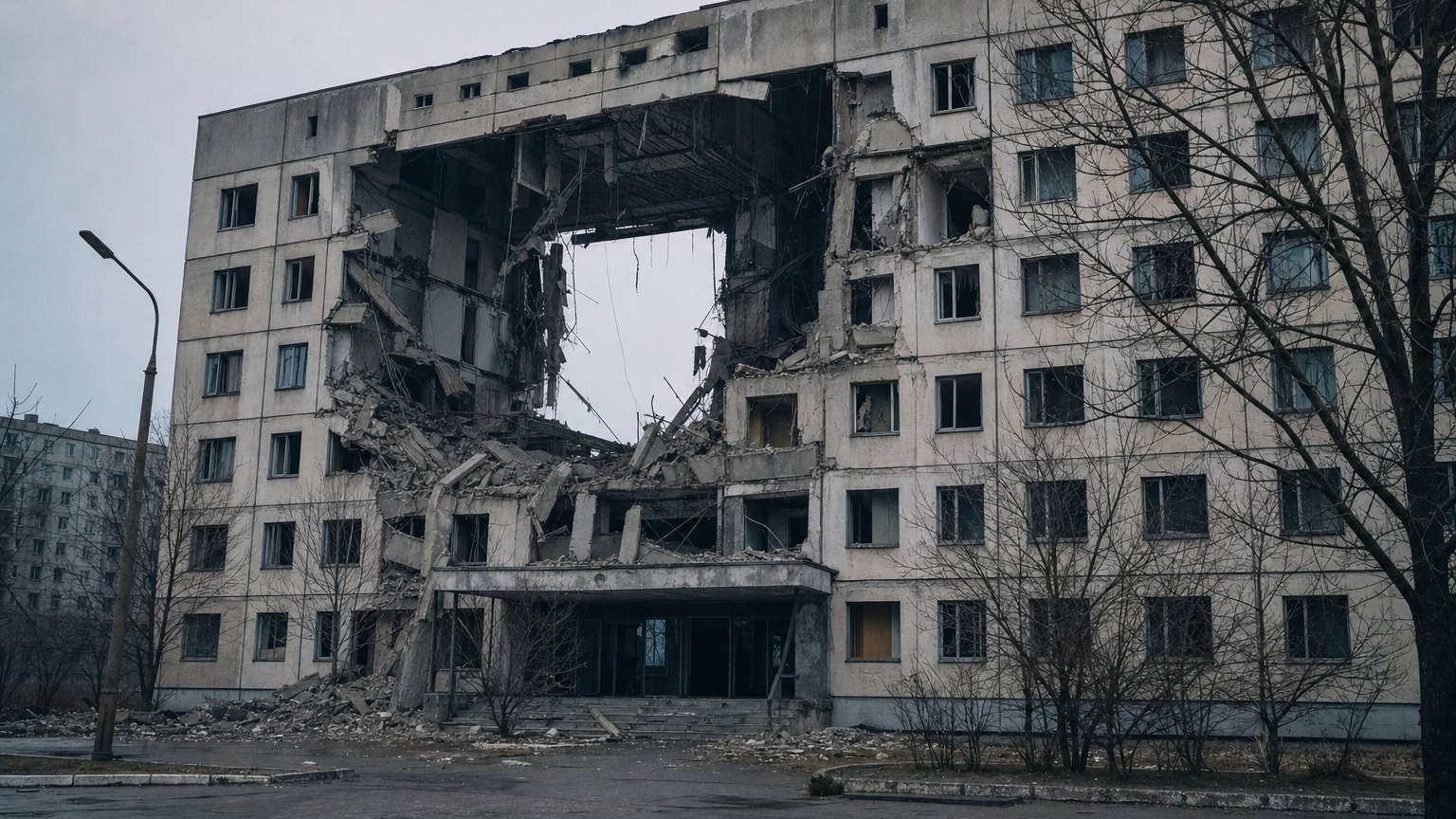
Lee describes how the cities have changed. They are more dangerous now because KABs are hitting buildings there, and the accuracy is far from perfect: bombs miss their intended buildings by 100 to 200 metres and hit civilian buildings instead. The last hotel he used to stay in at Sloviansk has been destroyed by KABs.
Farrell gives the closest view of it. In Dobropillia in May he saw drone teams at almost every entrance of every big building, and many of those buildings had huge gaping holes from KABs. The position he was in was destroyed by a KAB a week later.
His point is about what the bombs are aimed at. They are inaccurate, but they are a sledgehammer available in huge quantities, and Russia uses them on exactly the areas where Ukraine has a lot of drone teams. Those teams now carry the main weight of the fight at the tactical level: ISR, strike and frontline logistics. Hitting the buildings they work from goes after the thing Ukraine relies on most.
Ukraine's supporters have not solved the problem
Lee calls it frustrating that, three years after Russia developed glide bombs, Ukraine's foreign supporters have not developed a way of dealing with them. Some air defence systems can shoot KABs down. But a Buk cannot be brought up near the front line, because drones will hit it.
A number of the soldiers they spoke to hope that Gripens and the Meteor missile might push the Russian 34s further back. Lee's view is that for now the problem stands, and they do not have an answer for it.
He also names a cost that rarely gets discussed. Traumatic brain injury will be a huge post-war issue. Many soldiers are not pulled out of position but keep taking concussions, and the effect is repetitive.
Ukraine's own glide bombs are the exception
Samuel Cook asks whether Western aviation and Western glide munitions have made a discernible difference. Lee says they have not heard much about it. The munitions are being used: against UAV positions in Pokrovsk and elsewhere, and against bridges during a mechanized assault in the summer. He finds the exact effect hard to assess, which he puts down partly to it sitting at a higher level than the people they usually talk to.
The limit is distance. Fighters can only come so close to the front line, which caps how deep they can strike. Russia still has four to five positions that Ukrainians know are there and want to target, but they lack the assets to hit them. HIMARS does not have the punch to get through. If fighters could come close enough to drop glide bombs on targets beyond the front line, Lee says, it would certainly help.
Farrell heard a couple of anecdotes of a commander calling in an air strike with a glide bomb for a particular target. It was the exception rather than the rule, a very limited option, and not something they can do every day.
The disparity runs both ways
Farrell frames KABs as one asymmetry among several rather than the whole picture. Russia has a huge hammer that Ukrainians cannot do much about. But Ukraine has its own edge in middle strike, flying Hornets against Russian logistics, and everyone understands that if Russia could do the same to Ukraine's supply routes it would matter a great deal. Ukraine has a strength in heavy bombers; Russia has the Molniya.
The two sides meet at the tactical level with large differences in manpower and equipment. KABs are one of the areas where Russia's advantage is definitely felt.
What to watch
- Gripens and Meteor missiles against the 34s. Soldiers hope they push the aircraft back. If KAB pressure on frontline drone teams does not ease once they are in use, that hope was misplaced.
- Whether KABs ever enable a breakthrough. Three years without one is Lee's central claim. A Russian advance clearly opened by glide bombs would break it.
- Ukrainian glide bomb strikes becoming routine. Today they are the exception. Fighters getting close enough to hit the four to five known Russian positions would show up in commanders' accounts.