 Ukraine Military History Institute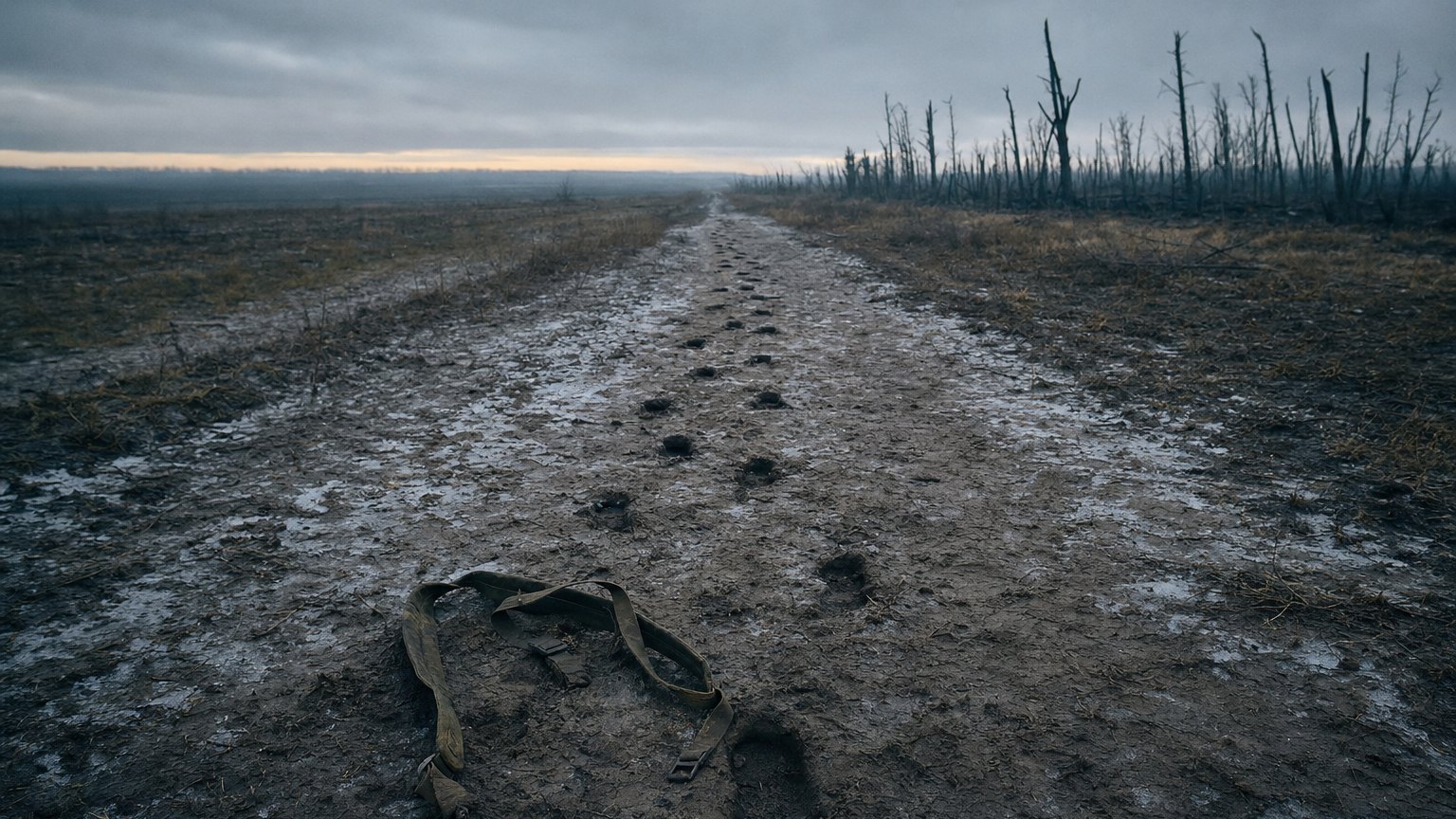
The useful definition is not weapon range
"Kill zone" gets used loosely. Often it means something close to a weapons engagement zone: how far an FPV can reach. Rob Lee points out that on that definition the number is large, since FPVs can hit things maybe 30 kilometres past the front line, depending on where the positions are.
The people he and Francis Farrell spoke to on their latest week at the front used a narrower and more practical definition. The kill zone is where vehicles stop. It is the point beyond which a vehicle will most likely be destroyed if it keeps going, so it does not keep going.
Lee offers an even simpler way of asking the same question: how far do your infantry walk to their positions? That distance, he says, is basically what the kill zone is.
In Kostiantynivka, the walk is 15 to 20 kilometres
The answer depends on the sector, on the geography, and on whether a unit is fighting from a semi-encirclement. But in some cases Lee puts it at 15 to 20 kilometres, and he names one place: infantry in Kostiantynivka are walking about that distance.
That is the cleanest single measurement of how this war has changed. It is not a range on a specification sheet. It is the distance a soldier covers on foot because nothing with an engine is expected to survive the trip.
Pushing drone crews back turns geometry into a staffing problem
The expanding zone does not only affect infantry. Lee's more technical point is about the Mavic reconnaissance teams.
Mavic positions used to sit closer to the front line. As they are pushed further back, more of every flight is spent travelling to and from the area being watched. Lee estimates that leaves 10 or 15 minutes on station.
The consequence follows directly. Units keep constant aerial coverage by running a carousel of teams, and less time on station means more teams in the carousel. That is a new requirement for more Mavic crews, and with it new pressure on manpower and equipment.
The same distance hurts strike responsiveness. Lee's rule of thumb is that a regular radio signal FPV takes about a minute to fly a kilometre. So every kilometre an FPV position sits further back adds roughly a minute between locating a target and reaching it. He is careful to say it varies, but the direction is clear: FPVs can become less responsive as their crews are pushed back.
The logistics chain is running in reverse
Lee describes the usual brigade pattern, which the podcast has covered before. UGVs deliver to the Vampire positions and to FPV and Mavic positions. Vampires then fly supplies forward to the infantry.
In some places that chain has broken. UGVs do not always reach the FPV positions, because those positions are too far forward and too dangerous, so Vampires deliver to the FPV positions instead. In other cases Vampires cannot make it to the front line at all, and units resupply infantry with a large FPV small bomber for the last leg.
Russia has noticed. Lee says tactical interdiction is a priority for both sides. The Russians are going after night bomber drones, and UGVs are a significant priority too. Some units told him the Russians may now target UGVs even more than vehicles, because they know logistics is really done by UGV.
Infantry who are told not to fight infantry
The strangest part of Lee's account is what happens at the end of that walk. Infantry fight from underground, and forward positions are, for the most part, told not to engage unless they have to. The aim is concealment, not contact.
It cuts both ways. Lee says the Russians also deliberately avoid engaging positions in many cases. On both sides, the intent is for the infantry not to fight the other infantry and for drones to fight the other side instead. There are exceptions: clearing teams exist, and infantry are sometimes used to clear positions. But the default is restraint.
Lee is plain about what that means for the soldier: "it's a terrible life." You are not really fighting the other side much, because you are trying to stay concealed and not let them know where you are.
Why the maps disagree
This is the part with consequences for anyone following the war from outside. When infantry from both sides are mixed through a city and avoiding each other, Lee says it is really hard to tell who controls what. Opposing positions can be in the same building, just using different entrances.
He does not think even the units could give a clean answer about what they control. "It's impossible to map this kind of thing," he says, and that is why there are big disagreements on mapping, with one side's ground claimed for the other.
He compares it to Toretsk, a confusing battle where the maps were all over the place and Russians were maybe behind positions in some places. Infantry there might spend hundreds of days on position, even without rotation. And he points to Chasiv Yar, where Ukrainians are still just outside the city after a battle of more than two years.
Not a collapse, and not a forecast
Lee does not turn any of this into a prediction. His one clear takeaway is that the units he spoke to did not seem to be in a critical situation. The Russians are across the city, but these units think they can hold their positions for the time being, and they are still fighting for it.
"We'll see, obviously," he adds. Some battles like this have gone quickly and some have gone on for a very long time, and he says it is impossible to give any kind of prediction about which this will be.
What to watch
- The walk itself. If the distance infantry walk to positions in Kostiantynivka grows beyond 20 kilometres, the kill zone is still expanding on Lee's own definition.
- The last leg of resupply. If more units report large FPV bombers doing the final delivery to infantry, Russian interdiction of UGVs and Vampires is working.
- Map convergence. If the major mapping projects keep disagreeing about who holds Kostiantynivka, that supports Lee's claim that the fight is genuinely unmappable rather than simply under reported.