 Ukraine Military History Institute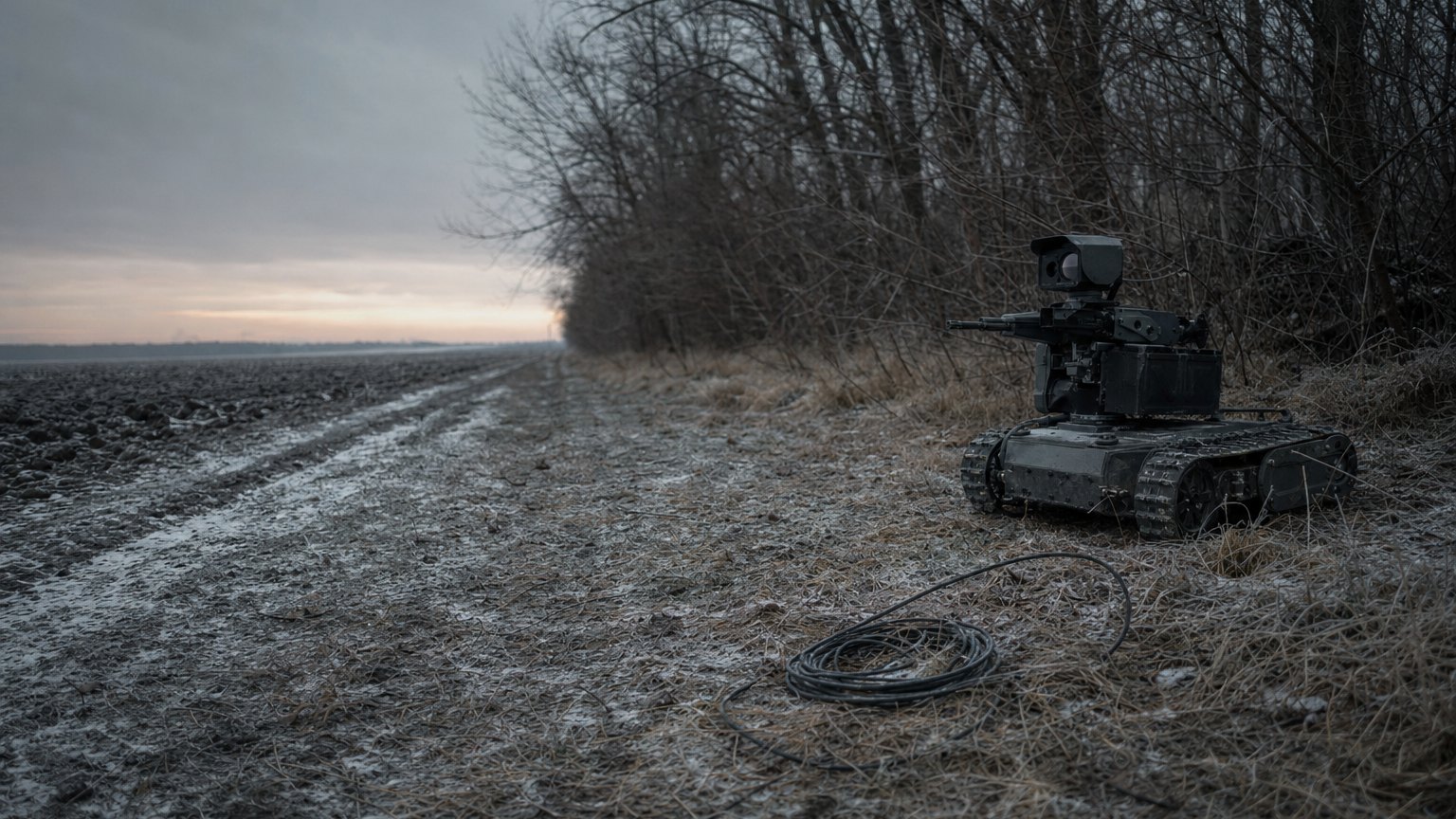
The drone advantage is a moment, not a settlement
The standard picture of the front is a line frozen by drones, where anything that moves in the open is found and struck within minutes. Rob Lee does not dispute that picture. What he disputes is that it is permanent.
His framing is that the war is in a specific moment, one defined by a single demand: how do you counter FPVs? A moment like that produces answers. Lee's expectation is that developments will arrive that are cheap enough to counter them, and that FPVs will remain a threat and a problem without remaining the biggest problem on the battlefield.
That is a narrower claim than "drones are finished," and it is a more useful one. The question is not whether FPVs disappear. It is whether they stop being the thing that decides who can move.
He is careful about pace. How fast the technology arrives, he says plainly, he does not know.
The slower drones are the easier targets
Lee picks out one category as among the really big issues for Ukraine: the FPVs guided by a cable, which Russia has in large numbers and which are quite effective.
His point is that the same features that make them effective also make them vulnerable to the right defence. They fly slower. They are usually bigger, because they carry the big coil of cable. A slow, large target is exactly what a gun turret with camera guidance is suited to engaging.
The same turrets, he adds, could also shoot at the drones that sit waiting on the roads, the zhdun, which lie in ambush for vehicles rather than hunting them. Those are static by design, which again favours an automated gun over a human operator.
This is the core of the argument. The counter to a cheap drone does not have to be expensive. It has to be matched to how the drone actually flies.
Robots at the front, armour in the crosshairs
Lee also sketches how ground robots fit into this. UGVs can be put up there ahead of time and staged close to the front line. If the enemy brings up armoured vehicles, the UGVs could start engaging them on the way in.
The implication runs in both directions. Pre-positioned, remotely operated firepower is a defensive tool, but the same logic, cheap systems placed forward so that people do not have to be, is part of what an attacker will need too. Lee's summary is simply that a lot of interesting things are happening, and that the speed at which they succeed is the open question.
The comparison is World War One, but not for the usual reason
Lee reaches for World War One, and he is explicit that it is not because the front line looks like World War One. It does not.
The parallel is in the sequence. New weapons entered this war, and he lists them: FPVs, Mavics, bombers. Initially they favoured defence. Defence then gained the upper hand. And now, he says, comes the tinkering over how to reestablish offensive operations.
That tinkering has two halves in his account: technological changes and TTP changes, meaning tactics, techniques and procedures. Both, he says, are being worked on in Ukraine right now.
This is why the stalemate reading is a snapshot. A defence-dominant phase is not the end of a cycle. It is the phase that forces the next round of adaptation.
Lee hedges the timing, and then leans in
He does not promise an offensive. Ukraine might not see a successful offence this year, he says, and the war might end before that happens.
But he is clear about the direction. At some point the conditions for reestablishing maneuver are going to come back. And he adds a sharper prediction on top of the hedge: he would not be surprised to see some successful armour assaults this year.
Those two statements sit together on purpose. A full offensive and a successful armoured assault are different things. The second is a local event that could happen well before the first becomes possible.
Sam Cook's addition: doctrine came before the tank
Sam Cook connects this to an earlier episode of the podcast with General Zabrodsky on World War One and how the Germans restored maneuver to the battlefield.
His point is that the decisive work was combined arms doctrine and training, which he notes is always harder for offensive operations than for defensive ones. The Germans were not as successful as the Allies were by the end of the war, because they had not invested in tanks. Yet even without tanks, they restored maneuver before the Allies did.
He calls that a huge lesson, and it lines up with Lee's argument. The answer to a defence-dominant battlefield is not only a new machine. It is the organisation, training and procedure that let existing forces move again.
On the prospect of the war ending first, Cook is sceptical. He does not see Putin getting serious about peace until he is actually losing, while allowing that he may be wrong.
What to watch
- Camera-guided turrets engaging cable-guided FPVs. Lee's argument depends on the slow, large drones becoming reliably shootable at low cost. Fielded turrets with credible engagement records would confirm it.
- A successful armoured assault this year. Lee said he would not be surprised to see one. A local armoured breakthrough that holds is the first observable sign that maneuver is returning.
- UGVs staged forward as firepower, not only logistics. If pre-positioned ground robots start engaging armoured vehicles, the balance he describes is shifting.