Eveline Buchatskiy of D3 on the fund nobody would bank, why founders must drop the dual-use disguise, and what Ukraine’s front line teaches that no test range can.
“If you haven’t tested your product in Ukraine, you don’t have a weapon, you have a toy.”
“If I follow what’s in this book, we will lose for sure. So we need to do something different, and your job is to robotize the front line for me.”
“We had capital, we couldn’t invest. Why? Nobody would bank us, because it’s defense tech.”
“If you are a huge hustler, you can come up with a product that gets certified and procured in three months.”
“I don’t understand founders that don’t have that burning desire to come and talk to the most experienced, modern, badass military in the world.”
“What you described goes way beyond feedback. I would call that R&D. Free R&D.”
“If I were a founder in defense tech and I wasn’t doing this, I would die from imposter syndrome.”
“The only place with a sophisticated EW jamming environment is in Ukraine.”
“It takes six months for the U.S. Army to approve any one change to a program of record.”
“If the U.S. learns less from this war than China, we’ve just failed.”
“That’s my favourite fig leaf. Americans come to Ukraine, their product doesn’t work, and they go back and tell everyone that they’re corrupt.”
“This is not a 12-year war. This is a 900-year situation that needs to be resolved once and for all.”

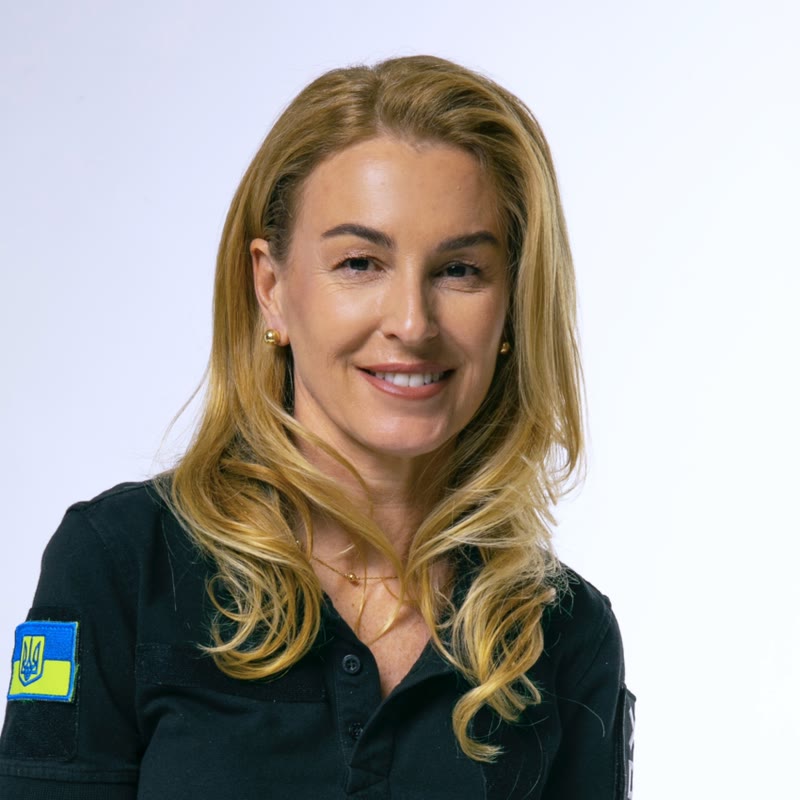
Hi, it's Sam Cook, the founder of the Ukraine Military History Institute and the co-host of the Ukraine Military History podcast. In the fall of 2022, General Valerii Zaluzhnyi, then the commander-in-chief of the Armed Forces of Ukraine, pulled a book off his shelf, a book about traditional war, math, force ratios, artillery, counts, manpower tables. And he said to the woman sitting across from him, "If I follow what is in this book, we lose, for sure. So we do something different, and your job is to help roboticize the front line." That woman is today's guest, Eveline Buchatskiy, managing partner of D3, Dare to Defend Democracy, the Kyiv-based venture fund that was investing in pure-play defense technology when, in her words, "You could call the idea crazy." A chem- chemical engineer out of Berkeley, the investor who ran accelerators on two continents, whose very first investment became Preply, and who helped lead a company with 850 engineers in Kyiv when the full-scale invasion began. When she launched D3 in July of 2023, not a single bank would open an account for a defense tech fund. Three years later, she has 27 portfolio companies across every domain of this war: air, land, sea, and the software that binds them together. Rob Lee and I sat down with her in Kyiv, and this conversation is the map of how defense innovation actually gets funded and proven, why she tells founders to drop the dual-use disguise and commit to defense, and what her companies did to earn it. The interceptor family that was the first to reliably kill Shaheds, the German joint venture that turned battlefield credibility into a $128 million Bundeswehr contract for 10,000 strike drones, a factory that President Zelensky himself opened in Munich, and the front-line units that took a 100-kilometer range drone, bolted Starlink to it, and more than doubled its reach. She calls that what it is, free R&D from the best, most innovative military laboratory on Earth. And she gives every founder the sentence to write on the wall, sharper even than what Brave1's CEO told us one episode ago. "If you haven't tested your product in Ukraine, you don't have a weapon. You have an expensive toy." Then the conversation turned sharply towards our own country, the United States. Rob lays out how y- Russia is doubling its unmanned systems forces to 165,000 people, while the US Army quietly disbanded its one experimental drone battalion in Europe. And policy still requires six months to approve a single change to a fielded drones program of record. If America learns less from this war than China does, we have failed. That part of the conversation is uncomfortable, and it was meant to be. If you get value from these conversations at this level, please subscribe now on YouTube, App- Apple Podcasts, Spotify, Amazon Music, and all the links that are in the show notes below this video or podcast episode where you're listening. If you're on YouTube, please hit the bell to subscribe. Before we get into it, a brief word about the people behind this podcast. This show is produced by the Borderlands Foundation, a nonprofit that we established with a simple mission, making sure that Ukraine's heroes are never forgotten. We run two centers. The Ukraine Military History Institute preserves the lessons of Ukraine's wars and translates them into English for soldiers, historians, and allied militaries worldwide. Our main project is this podcast. We are building a university course on Ukraine military history. We are working on workshops for serving officers in allied militaries, and we'll build, in the future, a professional military journal based in Ukraine. We also organize Ukrainian soldier delegations to allied countries to share lessons learned, and we organize the annual Ukraine Freedom Summit and the Heroes of Ukraine golf tournament. The next one will take place in March of 2027 in Dallas, Texas, in partnership with the George W. Bush Institute. The second program we are building is the Ukraine Center for Traumatic Stress, bringing cutting-edge PTSD research and treatment to Ukrainian veterans. The mobilized men and women in this episode's story will come home to build the industry Eveline describes, and many of them will need this care first. Finally, the foundation is sponsored and funded by the Borderlands Group, the company I run that advises defense companies operating inside Ukraine, acting as a bridge between Western defense technology and Ukrainian battlefield validation. More about this at the end. Before we start, I gave a talk in San Francisco this summer to a room of defense tech founders building defense technology on why war matters, the power law of war, and how nations actually pay for wars, and what happened to the y- American defense industry after the Cold War. It's an hour, it's free, and it's the same history that we do here. I'll leave a link in the description to this video. Okay. The fund nobody would bank, the general who threw out the war math, a weapon or a toy, and the free R&D of the best military laboratory on Earth. Eveline Buchatskiy of D3 Ventures, filmed here in Kyiv at the end of August of the year 2026. Welcome to the Ukraine Military History podcast. Welcome, Eveline, uh, from D3 Ventures, uh, to the podcast. It's, this is a episode we've been looking forward to here. Uh, one of the things we're trying to cover here is not just the military situation, but also the innovation and the defense technology, because, uh, that is a critical part of the fight. And I think that, as Rob definitely, uh, has a lot of experience going out to the front, myself with m- working more in the defense industry, want to kind of fuse these two conversations, 'cause Rob also knows a lot of people in the defense space. So thank you for joining, and, uh-
Thank you for inviting. We've been trying for quite some time to get this-
Yeah
... going, so I'm happy to be here.
Yeah, you're, you're, uh, very busy doing a lot of good work.
All of us.
Yes.
All of us.
Uh, so Eveline, you started, uh, a long time ago, uh, in venture. Well, actually, you've been in the tech industry for, for quite a period of time. It's been your- ... uh, adult career. Talk about your background, what, you know, before you got into defense tech and, and what brought you to Ukraine. You've, you've got a lot of connections and deep roots here.
Yeah. Well, I'm a chemical engineer by training, and I worked as a chemical engineer for a decade before business school. And then with business school, it coincided with me moving to Ukraine. That was 2007. Um, why? Well, back then, this is like pre, post-Orange Revolution, pre-Maidan, pre-financial crisis. Uh, Ukraine was, uh, experienced like a period of extreme growth, uh, largest, uh, foreign direct investment, uh, amount, uh, globally. So essentially everybody wanting to, to be here. It's a land of opportunity back then. Um, my husband is .
And, and you're not, because a lot of people assume with your last name that, that you are because you speak-
I was born in Brazil.
Mm-hmm.
And I left Brazil, uh, very young to study in the US. So I went to school in California at UC Berkeley for chemical engineering. Then I worked for, uh, a large American corporation in industrial gases, oxygen, nitrogen, argon. And, um, so, so that's where I met my husband, who is a Jewish refugee from Odesa. Uh, that was the only way to get out of the Soviet Union, so he started his paperwork prior to the Soviet Union collapsing. And then right around the time, uh, of Ukraine's independence, he moved to the US and we met there, two engineers. And, uh, you know, in 2007, we saw the land of opportunity, and, uh, we moved here. So it's been almost 20 years. However, uh, when the war started in 2014, was a b- very bizarre time. Uh, we didn't expect the war, although if you read history, you should expect this war. [chuckles] Uh, but maybe we were all in denial. Um, so it was a little bit different from this full-scale invasion in the sense that it, it felt a bit of, of a shock. Um, and, uh, we thought it would be like a one-year situation. Um, I went to, to the US to, to run the Techstars Boston program, which is an accelerator, uh, in, in Boston for early-stage, uh, companies, uh, general, not defense tech, but any kind of technology. And, uh, and then, you know, from one year it went to two and three, and it just kind of like, you know, um, continued, and when the full-scale invasion started, I moved back full-time and forever.
Mm-hmm.
So I'm here for the bitter end. [chuckles]
Yeah. Like, like I think all of us here, it's a, it's a new group. I remember when I was living in Ukraine, I moved here in 2018. I had a whole bunch of friends, and they were all in a tech startup. I actually went to LA Techstars with their, our startup, and then all those people left, and then we came back and just made a complete whole new set of friends, your- yourself, Rob, and all the people, and it's, it's a, it's a whole different expat crowd. [chuckles]
Yeah. Very different. But I got into tech because of Ukraine.
Mm-hmm.
Uh, I was working, like I said, for a big corporation as an engineer. Then here comes business school and, uh, you know, Ukraine. Uh, so when I arrived here, I was like, "Okay, you know, very interesting, but, uh, I'm not gonna work as an engineer likely. What else can I do?" And then there was this businessman who had just sold a bank, and he wanted to just invest in, in, in many companies. Uh, so my job was to diligence these companies, to do diligence, uh, find out the interesting ones. So I was sitting in a room looking from like walnut farms to like ultracapacitors, GPAC, and everything in between. So I fell in love with this ultracapacitor company, and, uh, the investment committee said, "Okay, you can, uh, we can invest, uh, you know, and we want you to become CEO of the company. If the founding team is okay with it, then, then that's what we're gonna do." So I joined as CEO of that startup, and that was my introduction to the startup world, and then from there, another one and another one. And then finally I said, "Okay, this is amazing. I don't wanna go back to the corporate world, uh, but I wanna switch places and become an investor." So, you know, switch sides on the table. And so I proposed to the same businessman, "Look, uh, let's be the matchmaker here. Uh, lots of talent in Ukraine, uh, but no capital coming this way, no venture capital coming this way. How about we launch an accelerator locally?" And, and that's what we did, and it was called East Labs back then. We invested in 19 companies. My very, very first investment was in a company called Preply, which is one of the-
It's doing very well
... yeah, one of the, uh, biggest, uh, success stories from Ukraine. And, uh, and yeah, so, so then we were doing extremely well, and then Maidan, and then, you know, war. Uh, then I went to the US, as I said, and then came back, uh, for this version of the war with a different mission to, uh, invest in defense tech, and that's the contribution to Ukraine's victory.
So when was the moment you realized, obviously the, the shock of the full-scale invasion, although you said you were expecting it more so than 2014, but what was the moment- Was it someone called you? Or what, what inspired you to get into defense tech in, in 2022? That was a very early, uh, entry into the market.
True. Unlike you guys, I do not have a military background. Uh, my family is not in defense either. So what happened is when the full-scale invasion started, I was part of the leadership team of an startup that grew to be very large. So, uh, it, it grew to, uh, 1,050 people.
And that was in Boston, right?
The headquarters was in Boston, but practically the entire team was in Kyiv.
Mm-hmm.
So we had out of the 1,050 people, we had 8- 850 in Kyiv. So we were at the Parus Business Center, like four floors. So the entire R&D was done here, um, support and several other functions, and back office. Uh, Boston was just a handful of people. And, yeah, it grew, uh, autonomous. It, it is one of the most successful, uh, SaaS tech companies out of Ukraine. It's called airSlate, doing workflow automation. And, uh, so of course we needed to reorganize the company, create new offices. And then after, uh, six months, uh, around October, I get a call, uh, from my previous investor and saying, uh, "Look, uh, there is this other US investor who came to Kyiv for the YES conference and, uh, doesn't wanna be another, uh, guy that comes here for a selfie with Zelensky, and that's where the story ends. He actually wants to have a big impact, and he's willing to put, uh, a large check into something that will be meaningful f- towards Ukraine's victory. What do you think?" So we created sort of like a little think tank to, to strategize around what's the best use of the money. And that's where the idea of D3 came about. We presented to this, uh, American investor who comes from the big tech world, and, uh, he loved it, and he said, "Okay, I'm ready to launch. Let's go." Um, and the idea was to create this early-stage venture capital firm, and it sounds so, uh, mainstream right now. Trust me, back then it was absolutely fringe. Uh, it was absolutely not popular, and you can even call it crazy. But we had the conviction that, uh, Ukraine would have to rely on technology because it couldn't, as you guys know better than me, rely on traditional war math. It was at least, you know, to a few people here, it was obvious that we needed to do something out of the box. And we went to talk to the commander-in-chief of the Armed Forces of Ukraine back then, uh, General Zaluzhnyi. And I remember him, uh, taking like a book out of his bookshelf that talks about, uh, traditional war math, and he said, "If I follow what's in this book, we will lose for sure. So let's not, you know, even hypothesize. It's just a for sure thing. So we need to do something different, and your job is to robotize the front line for me. Um, so that's the future. That's what I need. Um, go after." I said, "Okay. Um, got it."
[chuckles]
Um, so I, I understood that we really could have an impact. And back then, uh, no investors were touching Ukraine with a six-feet pole. Uh, I was part of, for example, uh, groups like signal, uh, groups of v- investors in Western Europe or the US, and they were still talking about Afghanistan and Iraq, and it was, like, shocking to me. I'm like, "In your backyard, a war right now. How about we talk about Ukraine?" Uh, of course, we are in a completely different scenario right now. Uh, needless to say, there are several funds launched, uh, with the mandate to exactly engage with the technologies that are useful in Ukraine. Um, so it's a completely different scenario, but, but this was three years ago. Uh, so, uh-
So the, the fund launch date was-- When did you actually launch the fund? So-
July 19th, 2023.
Okay.
Three years ago.
Wow.
Yes.
So, so from October of-
'22
... you did the planning, came up with it all, and then you launched the fund in July of-
Yes. Uh, we first started to talk about it in October '22. We had a meeting with the investor in Zurich on January of '23, and then it does take about, uh, six months to just do the... to launch a fund-
Mm-hmm
... basically, 'cause you, you have fund formation.
Mm-hmm.
You pick jurisdiction. There's certain set of, uh, legal docs you have to go through. Uh, so it's normal to, to have this, um, period of fund formation. So we launched in, um, on July 19th of 2023. And again, just to give you a sense on how different the situation is today from that time. We launched, we had capital, we couldn't invest. Why? Nobody would bank us because it's defense tech.
[chuckles]
I mean, unimaginable, right?
Yeah.
So we couldn't find a single bank to, uh, open a bank account for us. You know, defense, kinetics, let's make that clear.
Yeah.
Ukraine, what could go wrong in their compliance-
[chuckles]
... you know, procedure, right?
But let's see. You got the reputation of corruption. You've got- Defense and it, it's just
It's, uh, and it's not only like defense because quite frankly, uh, a lot of, uh, folks back then that said they were doing investments in defense tech, in reality they were doing deep tech or dual use. They were not doing pure play defense or anything that was kinetic. And we understood right from the get-go that we are not gonna make that r- to restrict ourselves. We were going to be a pure play, you know, defense, and we were going to cover the entire kill chain. We were basically gonna cover any technology that would give the war fighter an advantage.
I, I love-- We've had many conversations about this, and, and you're very against, um, founders at the beginning in defense tech trying to say they're dual use or focus on dual use. Talk, talk about your fund's thesis and, and, and your actual pitch that, uh, that you make, 'cause it's very clear.
Well, naturally, a lot of these technologies are dual use.
Mm-hmm.
Drones, logistics, agriculture-
Mm
... you know, uh, strike, reconnaissance. I mean, they are dual use. Uh, and, and many other technologies, radar, EW, et cetera, the, a lot of it, uh, could be dual use or as a minimum could be used like in the civilian world by police, border control, narco, uh, control, and so on. Um, what I, uh, where I'm different from most investors, and again, things have changed, uh, is that they, uh, a lot of them had this obsession with dual use that didn't keep up with the times. Uh, they were slow to recognize that we are living in different times. Yes, I understand the obsession with dual use because the, uh, procurement cycles are so slow in defense that you need to have like a, a safety plan B or something to keep you going in the civilian world until you can actually strike a decent contract with, uh, the Department of Defense or, or MOD. Um, so I understand the rationale for having that as a requirement, uh, for defense founders back then. It's not the case today. I mean, look at Ukraine. You can, if you are a huge hustler, come up with a product that gets certified and procured in three months. Um, you can establish direct relationship with, uh, brigades, with military charities. There are multiple procurement channels that you can explore to, to get to a contract. And if you do that, if you focus on the defense use case versus trying to hit in every direction, you have a higher chance of running faster than competition, and you have a higher chance of actually having prod- product market fit because you're paying attention, uh, to, to the soldier, to, to what the brigades are telling you. Um, and also from just a macro situation, the times require focus. Uh, so they, I don't see a financial reason or moral reason to be asking these founders to go in two different, very different directions right from the early stages of the company. If you are a large prime, yes, you can, you know, uh, have m- multiple divisions and so on. But, uh, for early-stage companies, which is the case for, for us, these are the companies we work with, you need to have, to have focus. So that's why I'm, you know, uh, I'm not the one who's gonna go on a panel and say proudly, "I only invest in dual use." I say actually the opposite. I hope the founders will focus on defense so we can get more done faster.
Mm-hmm. So Rob, um, I know you got a lot of questions for Eveline too. Thank you, Eveline, for allowing me to, uh, give all of the people who wanna pitch you on your investment a, a very good understanding of who you are and what your philosophy is. So let me let Rob jump in and ask some, uh, questions here.
Yeah. E- Eveline, may- maybe you can talk about the portfolio you've got of, of what companies you invested in, you know, what direction defense they're working on, and, and why you thought those companies were in particular important to help out Ukraine.
Yes. Um, for us, our mandate is such that, uh, the companies we invest in need to be aligned with our main goal, which is to win this war. So they have to have Ukraine, uh, as a either primary go-to market or a very important user on their agenda and their product development roadmap. So it starts with that. I- if it's not the case, if they're more focused on Indo-Pacific, uh, Australia, you know, all power to them, that's needed too, uh, but it's just not a match for us. Um, so w- what did we invest in? Initially, as you would expect, in unmanned systems. So we wanted to have a footprint in every domain. We started with aerial, uh, the recon and strike drones. Then we went to land with the UGVs, and then we went to maritime, uh, with the investment in UFORCE. Um, so we now have a pretty good coverage of unmanned systems in every, uh, domain. And then, uh, we understand that these, uh, these platforms are just a host to software. We talked about a little bit before the podcast that, um, by next year, the expectation is that they will be fully autonomous. So there's a lot of software from last mile targeting to GNSS-denied navigation, to coordination, uh, to also communication between these drones, uh, that goes with that, and therefore the investment in, in such autonomy systems, as well as a little bit of battle management, a C2 type of situation. Another, uh, investment that we see is popular now, uh, we were one of the early movers on that, is the whole orchestration of the var- various attributable systems into one operating system that gives the commanders full visibility of the frontline and some intelligence to take action. So we have that as well. We have, uh, air defense, which is a very critical, uh, niche for, for Ukraine. So naturally, we have the interceptors, the drone detection, as well as the automated turrets, uh, every possible way, uh, of, you know, air defense. Uh, we are also looking now at laser. We don't have an investment in lasers quite yet. Um, we have sensors. We also, uh, made an investment in a battery company, modernized one to power the frontline. You know, there's a lot of charging and recharging-
Mm-hmm. Yeah
... of, uh, thousands of systems, so we need to make the batteries portable. You know, price point needs to be there, so that as well. So we did a little bit of de-mining, uh, mostly for moral reasons. You know, Ukraine is likely first or second top most contaminated country in the world now with, uh, landmines, so we did that as well. So that is a bit of the map, uh, that we have. Um, a lot of AI now. Uh, AI came a little bit later for us. Again, in the beginning, we were more focused on the hardware. Uh, now we have made some AI investments for defense. So, so yeah, that's the, the portfolio we have. Mm-hmm.
For AI, can you... So there's a lot of talk about AI and, and, and obviously it's different components and, and some of it is, is, I think, over-hyped, and it's always a question. Could you maybe explain what role is AI playing right now in the war in Ukraine, and where do you think it's gonna go next year?
Yeah. I think there is, um, like you said, a little bit of a discrepancy between what you read on prominent media-
Mm-hmm
... and what is actually happening out on the kill zone, right? Uh, I think the, the operators of the various unmanned systems have much lower expectations, uh, than, you know, the sci-fi stuff that's written out there. Uh, and, and I also, you know, speak to investors who, uh, have never come here, and when they're asked what's the future, they're like, um, like, "These ro- robots, like, look like humans." I'm like, "We're so far from that." You know?
Mm-hmm.
"We're, we're really so far from that." So the reality is, uh, it's almost like baby steps. So what the army is asking us to do is, like, one step at a time versus trying to do all at once.
Mm-hmm.
So for, you know, aerial drones, the last mile targeting was a big deal.
Yeah.
I think we conquered that. So there are several companies that pretty much have tackled that in the last mile targeting. Then it comes the, the navigation. Navigation has not been addressed yet. Several companies with claims and promises, but for the most part, it has not enjoyed mass adoption. There's no perfect solution out there yet that I know. Uh, but that's coming. I am very sure that by the end of the year we'll have, uh, something that is-
I- is this like terrain mapping software? Uh-
A visual navigation. Visual navigation.
Okay.
Yeah. Mm-hmm. Visual navigation, uh, so they can, you know, uh, be independent from a radio link-
Mm-hmm. Yep
... that is for sure gonna be jammed. Um, so that gives that level of autonomy. I think for the UGVs, that's next, but it's more complex.
Yeah.
For the UGVs, as you know. Uh, so that's gonna be, like, coming right after. Uh, although, you know, the, the military's not asking for that quite yet for the UGVs, right? Um, uh, but, but, you know, it's, it's coming. I think by next year, uh, uh, there's gonna be l- uh, mass adoption of UGVs in general, and therefore they're gonna start getting, to get a little bit more fancy in what they do with it.
Mm-hmm.
Um, there's also, uh, one of the companies that we invested in is called Agon Technologies. The, it's a UK company. Uh, you know, they are doing, they are more on the simulation side of things. So with all the data that they, uh, that's available now to, to defense founders in various ways, um, you can, uh, optimize the, the product design cycle. You don't have to go to the polygon, the testing range, you know, seven times a week. You can probably, um, uh, predict cer- some s- scenarios that, uh, you stress test your system-
Mm-hmm
... uh, through, uh, using AI, and that's what they're trying to do, to essentially make that whole product design cycle, uh, more efficient, faster, cheaper. Um, so and especially true for, uh, companies not in, in Ukraine because they don't have access to as many testing ranges as we do, uh, with, like- the possibilities that Ukraine offer in terms of everything that you can do. You can blow things up, and I mean, our testing ranges are, I think, uh, the best in the world from-
Mm.
Like, a, what you can do with them.
Right.
Um, so, so there's that aspect too, like the simulation side of, uh, things, uh, how you operate the, um, the unmanned systems, um, and communication, navigation, uh, targeting, and, uh, coordination of these systems. So, uh, it's well known that we invested in the company called Swarmer, which, uh, went public. Swarmer is more into that coordination, uh, of drones and, um, these drones all know of each other's presence and goals and, and then they can, uh, be coordinated, uh, towards a mission, and these missions are, you know, many, uh, different types of missions, uh, from very simple to extremely complex. So that's the case for Swarmer. We also have, uh, the whole, uh, situation with planning.
Mm-hmm.
Uh, I mentioned, uh, a company, the operating system company. It's actually a company called Kela Technologies-
Mm-hmm
... uh, out of Israel. We both know them. And they started with this idea of operating system, but then they evolved to, to much more. And having such-
Mm
... uh, you know, system allows you to help the commander with planning of operations. So, so there's that as well, and, and so much creativity also on what you can do with the information from the enemy side.
Mm-hmm. Yep.
Uh, you know, we know companies that, uh, or, or units that, uh, understand the communication between, uh, you know, uh, different units of the enemy side and what they plan to do and how to react to that-
Yeah
... and, and, and not just wait for-
Mm
... whatever their next step is, but be, you know, more proactive based on what an AI is telling you that is the most likely scenario on their side.
Yeah. And, and I mean, I've only... I'm, I'm very much an amateur on, on AI issues, but, you know, the things I can see, one is Ukraine has a huge amount of data, right? With, with obviously great software like Delta and other systems, huge amount of UAV feeds, but not enough people to analyze it on their own. And so s- uh, any way you can automate some of the, you know, the look at the data, try to figure out trends, try to put things together to, you know, reduce man-hours is obviously a huge priority. Um, and you said, you know, I know there are companies that want to develop UGVs where it can be au- they can, uh, go on a, a, a route automatically and not need a human operator, but battle scarring is a problem, and if there's any kind of disruption on the road, if there's like a, you know, a, a, a mine strike or a, a, a cab strike, then the AI doesn't recognize it because it's different than what it thought before. And so I know little things like this are, are, are quite difficult to work through. Um, and so, and, and the same thing, you know, with the, with the target recognition, um, you know, the, the Hornet from Perennial Autonomy, q- quite well-known drone right now, is very, very successful on the front line. But even some of the operators, some of the best operators only use it in manual mode because they, they prefer just operating on their own. They don't need the AI. Um, it's, so it's, it's... I think we're, we're in a phase where AI is certainly playing a role. It's starting to, to, you know, have an effect, but it's maybe not where people think it's at yet. It's not there yet. There are lots of little issues that have to be worked out. And, you know, as you said, I think the question is how long does it take until it really gets to that phase where we start, you know, removing, you know, kind of p- you know, jobs or other positions? Uh, and that's, that's one of the big questions, right? Is it next year when we see swarms? Is it, is it in the future? Is it in this war? Is it the next war? Um, but it's, it's interesting to see that kind of development.
Yeah. I think, uh, the, uh, military is very pragmatic about AI, uh, very far from, like, thinking sci-fi.
Mm-hmm.
Um, so, uh, you know, some of the solutions that they're thinking have applicability, like, tomorrow, you know? Uh, versus again, these, uh, almighty goals that will take a decade to, to fulfill. So, so that's, uh, one very applicable to today, uh, scenario, uh, and completely achievable and working already is the whole automated turret-
Mm-hmm
... for, uh, counter, uh, category one drones. You know, you have the sensors, the visual, the acoustic, uh, uh, sensors, and then based on that and the AI models, you can identify the, the drone and take it down. So it's a very pragmatic-
Yeah
... you know, uh, use of AI that is happening right now. Uh, same thing with acoustic sensors. The, the network that Ukraine has built to identify Shaheds, uh, that's a very simple, very useful, pragmatic use of AI, uh, because they can understand, you know, the different sounds and-
Right
... and with trained models, they can detect the Shahed versus other systems. So, uh, I think, yeah, Ukraine is very pragmatic about AI.
For, for acoustics, you know, like they keep saying there, so Skyforge is obviously well known. Zvooq also these systems for, you know, uh, measuring Shaheds coming in. Um, I know there's, there are people trying to use acoustics on the front line too, and that, you know, there's different ways to, to maybe detect certain movement of, of vehicles, or maybe there's small modules you can drop somewhere. W- where do you think acoustics are gonna be going in the future of, of the application on the battlefield?
It's a good question for the military. [laughs]
[laughs]
I mean, there's counter battery, uh, as well. There's e- even a company in Ukraine that does that, uh, well. Um, I think all sensors are gonna just... I mean, the role of sensors is just gonna grow because, again, you can do something with them.
Mm-hmm.
Uh, as long as the, um- are not high maintenance-
Mm-hmm
... because obviously you don't wanna be charging these sensors.
Right.
They are cheap, not high maintenance, and, uh, then they have, uh, applicability because, uh, you can do a lot with the data that they bring. Now, one, you know, call it sensor, but, um, a like a big thing that's gonna happen in the next couple of years or so is a change in the in radars.
Mm.
So I think that's the next big kind of like push in sensors-
Mm-hmm
... is a whole set of innovation in, in radars to make it more distributed, uh, you know, cheaper-
Yep
... uh, faster to scale, uh, 'cause it's n- it's not a good situation right now. The dependence on like a handful of, uh, radars that are not, uh, ideal and are very expensive.
And they get targeted. And then they-
And they get targeted, and then they create blind spots-
Mm-hmm
... and then corridors.
Yeah.
Uh, that's not a, a good situation. Yeah, we were just talking to a commander last week that I was explaining exactly that, that, you know, they get targeted, and then they create these blind spots, and then, ugh, you know. Um, and, and so he was thinking that the future is actually, in his view, uh, was airborne-
Mm-hmm. Mm-hmm
... uh, situation versus, you know, distributed, uh, cheap, uh, you know, ground that can be... Either you go mass-
Yeah
... if you take one down, okay, so what? Or you put them up in the air, um-
Or you do both.
Or you do both.
Mm-hmm.
Yes. Um, so I do expect, uh, like lots of innovation in radars in the next year or two. We ourselves invested in two companies, um, recently. One as recent as, uh, a couple weeks ago in the US-
Mm-hmm
... and, uh, one in the UK. Uh, and, uh, one is, uh, in stealth. The other one is out of stealth. Uh, immediately after we invested, uh, Khosla Ventures, uh, invested, and, uh, soon I hope to bring them here-
Mm-hmm
... uh, for SpaceX people. They will use, um, a different technology that is passive and is based on reflection from Starlink satellites. So, so, so it's very different from, uh, the other kinds of radars we have out there. Um, so yeah.
They probably know a, a bit about the, the Starlink system coming from SpaceX.
And that's exactly why we invested because, you know, these are like insiders to, to the Starlink, uh, technology. They, they can tackle that, um, yeah, and develop a good system.
So Eveline, one of the things, um, as you go through, you, you mentioned a lot of different fields that you've invested in. Um, what is the mix of versus foreign companies that, that you've h- invested in from the beginning? Did that change? Um, was it more companies at the beginning versus now? Uh, I know you have companies from all over the world that are operating here, but what's your mix of-
Yeah
... locations of companies?
In the beginning, it was very important for us to, uh, focus primarily on companies, uh, for several reasons. One, we had the privilege to be next to them. Uh, so we knew we had differentiated, uh, knowledge of th- this market, and, uh, you know, why not, right? So we were the first ones here, boots on the ground. Uh, that's, you know, that's a, a privilege to have that kind of, uh, view. Also because we wanted to send the signal that these are investable people, that there is something special happening here, that, you know, they are VC-backable. And then invite our friends to look at them, to, uh, syndicate with us. So, so there was that reason as well. It just made a lot of sense to focus on companies in the first six months to a year. Then when we had a, you know, pretty sizable portfolio of these companies, uh, we understood that, okay, there are some gaps that will not be easy to fulfill from, you know, the companies. We can invite the others to, to come and join, and, and so we can invest. And, uh, also by that time, we had a little bit of a reputation already, good reputation, so the, the international companies could trust us to give them the soft landing in Ukraine. Uh, it was a different concept that, you know, we, uh, we kind of like spread the word, and, and these companies started to, uh, look for a partner like us. So naturally, we evolved to, to invite, uh, international companies here to invest in them. So right now, the breakdown is that we have 27 portfolio companies, 10 of which are Ukrainians.
Mm-hmm.
And the rest is distributed between US, UK, uh, Germany. Germany is a very strong, important hub for us, Munich area in particular, and one Israeli company.
Mm-hmm.
Mm-hmm.
And as you see the US, uh, companies coming in here, this is something we actually were discussing on the last, uh, uh, interview we just did with the CEO of Brave1, Andre.
Mm-hmm.
And, uh, one of my favorite quotes from that was he said, "If you're n- if you're in defense," or sorry, "If, if you're not in Ukraine, you're not in defense." Um, and I was just in Silicon Valley talking to a bunch of people who were investing in defense and, you know, had ties to the DIU. Uh, I won't say specifically who, but, but I got into a bit of a ... discussion about whether it was important for a US defense company to come to Ukraine. Uh, what is your position on that when people ask you that, uh?
I have a little bit of a different version of his, uh, quote. Uh, what I say is, uh, "If you haven't tested your product in Ukraine, you don't have a weapon, you have a toy."
[laughs]
So that's the reality. Uh, for instance, when you are, um, you know, selling interceptors that are based on G- GPS, I mean, who are we trying to fool here, right?
Mm-hmm.
Uh, obviously that's not gonna be a real case scenario. Um, so it's extremely important to, uh, come and engage with the military. I honestly don't understand founders, defense tech founders that don't have that desire, that, um, burning desire to come and talk to the most experienced, modern, you know, badass military in the world, and have them... and, and have the privilege of them giving you feedback. To me, it's strange. Uh, it, it would, it's an immediate red flag. And, and the, you know, the funny cases are when they say, "Okay, my insurance company..." And that's when they lose me right away.
[laughs] My mom, my wife. Yeah. [laughs]
My girlfriend, my mom, my, yeah, my wife. I understand the, the mom and the, the wife. I, I do not understand the insurance.
[laughs]
I'm like, what?
It's a pretty bad fake life.
Or, or when they say, "Well, I'm not sure my future investors will like that." I'm like, well, you, you need to really select a different set of investors. If an investor in defense tech doesn't want a founder to be exposed to the user, then what are we doing, you know?
Mm-hmm.
So, so yeah.
You said something very interesting there. The most modern, you know, most capable. I think what you've touched on is, is something I've seen just watching and knowing people in America, is that we still have a bit of a cultural arrogance in our military. Rob, we've, we've had many conversation of, of drinks about this, which is, um, the US military is not, is broadly sitting out this war in terms of learning the right lessons. Um, we, we've seen some good, good things here and there, but compared to European partners and militaries, um, I think we're really missing it.
I think, uh, there's, there's some of it's arrogance, but there are a lot of Americans who 100% see, uh, Ukraine as the, as the future of where we should be learning things.
Mm-hmm.
And there are tons of American military people who, who are going above and beyond to try and do as much as they can. So it's-
But they're being held back.
It's, I, it's a mixed picture. Part of it's bureaucratic. The way we mansag you, people come here for a couple months, 'cause the commands don't wanna give them up for long. And so people don't come here long enough. There isn't a strategic thought process of the future commander of Army future. Yeah, if you... Or, or futures commands.
Mm-hmm.
It should be someone who comes here for six months to a year, sees modern warfare, what's happening, and then goes back to US and says, "Okay, here are the things I've learned from Ukraine I want to implement into the US military."
Mm-hmm.
That's not happening. Um, I do think, you know, when I talk to people, the, this is, the only place you can do real combat testing and modern warfare is here, right? The only place with a sophisticated EW jamming environment is in, you know, is in Ukraine, and even if you test a drone in Zaporizhzhia, it may not work in Pokrovsk or vice versa. And that's one thing to keep in mind is that, you know, your thing may work. It might work for a week, and then the Russians will adapt to it, and now it no longer works. And it's the companies that can demonstrate consistency and effectiveness over time that really matters. And I think, you know, one of the things that I, I've learned is it's not, it's not getting a product, right? It's not just saying, "This drone is gonna be there for 20, 30 years," right?
Mm-hmm.
'Cause that, that, that kind of program is not happening the same way. It's about company, the companies need to say, you know, "We're here to s- help the war fighter. Whatever they need, we will update the product as soon as possible." And so whatever the feedback is. And so, like, the good companies, they have, you know, single chats with units. The units will say, "Hey, we had a problem today with this drone." And immediately the company will start working on a fix. They'll get it back to it, and they'll innovate very quickly. And that innovation cycle from the company is really important. Some companies do a great job. Some foreign companies do a great job. Usually Ukraine ones do better because it's, it's the sense of urgency is here. But the companies that don't respond quickly, that's when it's a liability.
Yeah.
Because it, it really means it's okay if you come over and you have problems initially. Most, like, American drones had issues here. Some companies innovated, and they proved it, and they, they listened to what the Ukrainians needed, and they're doing well.
Mm-hmm.
And, and, and, uh, you know, my view is when we're thinking about procuring drones with the US military in the future, it, it, it's an easy question, is what, what did you do in Ukraine? What were your results? What would the Ukrainians say about your drones, right?
Yeah.
And again, like that's, that's, you know, I, I... There are some companies that I will talk highly about. Perennial anytime, I've seen the results, 'cause I've talked to units who use, you know, Merops, you know, Bumblebee, Hornet. And again, they're not perfect. They had problems at different phases of this, but they kept innovating, they kept improving it, and now the units are happy about that.
And they're here.
Yeah.
I mean-
They're, they're here. And, and again, every day they are demonstrating, they are hitting targets, going through EW and succeeding. Whereas other companies, if you're not succeeding here, you know, my view is I'm like, "Hey, it's a liability." 'Cause I don't, I don't know if you'll succeed or not in real combat. And we don't have a, we don't, we don't have the time to, you know, to leave this the, to, as a question. We need to know it will be effective on day one as opposed to have a question mark.
So, so one of our clients, um, came over here. They're a program of record for the Army Short Range Reconnaissance drone, Redcat.
Mm-hmm.
And they said, "Hey, if we just put our drone over here, we've, we've done eight months of testing. We failed, we failed, we came back, we kept doing it. Now, now the units actually wanna test it on the front lines." Like, have it, they trust it to take it to combat. And, and then the, they're talking to someone in the embassy, and they're like, "Hey, did you make those updates on the American drone?" He said, "No, we can't, because it takes six months for the US Army to approve any one change-"
Right
... to a program of record. Which means that every one of our drones in the US Army, structurally Because Department of War policy is not fit for combat because of a policy. And what, what's crazy to me is the US Army I don't think has figured this out yet. Maybe they're, there's something in the works to change it. But the, the drone that... And, and by the way, they're not getting paid anything to come over here and test their drone. They're doing it all on their own risk, and they can't even update the drone that our war fighters are issued because of Department of War policy. So it, it's just, you know, we're killing ourselves on the military industrial side.
Uh, I think there, there are legal changes we need to make, regulatory changes we need to make. Um, and, you know, we were talking to Andre earlier about Brave1. Some, you know, DIU is, is something new that's trying to kind of move it in a-
Well, it's not, it's not that new. It's been around since Ash Carter, so.
But, but they, they are... Okay. So, so I would say Department of Defense, Department of War-
Yeah
... there, there's a recognition that drones are very important.
Yeah.
There's, there's approval from, from the Secretary of War himself, and his, his intent going down.
Yeah.
Um, where does that occur at every level is not fully clear. It's not clear it's, it's working yet. Um, I don't think lessons learned are being done nearly well enough, partially because we're just, we're not, we're not seeing Ukraine as not only is it an investment in security, like it's good for, it's good for us if Ukraine wins, but it's good for us if Ukraine holds off Russia. It's also good for us 'cause Ukraine is learning a ton of lessons, and when I talk to Ukraine service members, they're almost always very willing to, to, to share information. They're very grateful for any kind of support they get. And then it's, it's, it's frustrating to see the US not trying to get that information, not, not kind of, you know, saying, "Oh, we definitely need to get, bring these guys back. We definitely need to be, you know, doing more kind of, you know, cooperation." Um, so I mean, it's, it's frustrating that aspect to it. But I, I don't think we've fully, it's fully sunk in, um, what we're missing yet and, and the risks of not learning as much from, from this war as we can. And again, they, you know, they, there, there are lots of Ukraine government officials and military officials who are more than happy to share information, to bring defense companies over here to test their things, all that kind of way. You just have to be proactive about this.
But US government just canceled a lessons learned briefing where a bunch of defense leaders and military officers were gonna brief, and the Department of War just said, "No, we're not gonna hear from them." So there's something going on at the policy culture side that's, that's crazy. But Evan, let's, let's bring it back to defense.
Well, what do you guys think about the recent announcement of, uh, they're eliminating that drone unit, uh-
Oh, and yeah, the 173rd Airborne Brigade had a-
Yeah.
Yeah, so they made, they, they made one of the battalions into experimental drone assault battalion.
Mm-hmm.
Um, they've now done away with it. I've heard different suggestions, but these are, these could be rumors. Like, like all militaries like rumors.
Mm-hmm. Mm-hmm.
Um, that there was some argument that maybe there's, uh, the g- the generals who, who had been replaced, that maybe this was, you know, changing the, the previous guy's kind of policy and doing something new. Um-
You mean, uh, the Secretary of the Army?
No, um, General Donahue.
General Donahue.
And that it might, this might have been a response to that. I'm not sure what the, the reason was, but, um, I, it, I mean, structurally, we're not moving fast enough. I think that's a huge issue. And, uh, you know, the military now, they are planning doubling the size of unmanned assistance forces this year.
Yeah.
From 87,000 to 165,000 people. Um, right now they wanna create, I think, 10 unmanned assistance forces brigades right now in the military. So every district will have one. They also have two under, like two or three under, uh, centralized subordination. And then every army, command army will have a unmanned assistance regiment. Every fleet will have a regiment, and then every division will have a battalion and plus of MIUs.
Mm-hmm.
Um, they're, they're moving a very significant way. It's a significant reform of the military to, to adopt, uh, UAS, UGVs, naval drones, so on. Ukraine's already moved this way very quickly. Um, we are not moving nearly fast enough. And e- and if, if, uh, my concern is it's, you know, we look at FPVs, okay, FPVs are interesting. Let's put those in a battalion. That's, that's missing the idea. It's a full ecosystem of, of different types of drones, which really the capabilities, but also the software, everything else that goes with it.
The training, the training, maintenance, supply.
A- and then it becomes different tactics, different organizational changes, and, and the way we organize has to change too because, you know, every Ukraine brigade has a workshop, a UGV workshop, a drone workshop.
An R&D-
They have to have mechanics at the brigade who can fix things so that when they receive things. We don't have that right now.
Right.
But, um, I mean, at corps of R&D labs, they are doing their own innovation at the corps level 'cause they, they want it to be decentralized. It's important to do that. We don't have that.
Brigades, brigades have their own R&D labs now.
Do they?
7th Corps, every single brigade, this is a s-
Mm.
And, and this is what's interesting is the 7th Airborne Corps commander met him. He's like, "Hey, I'd love to connect with American-
Yeah.
Mm-hmm
... airborne commanders."
I know.
And I can't imagine, I don't understand why an American division commander, some of my classmates who I'm, I'm sure at West Point are commanding brigades, would love to connect with these guys-
Right
... and get on Zoom and share lessons learned. And he's saying, "I'm happy to talk to any American division commander-
Yeah
... to share my lessons." And, and right now nobody's taken him up on that. And it's, I don't know what's going on with the US military.
That, that's, you know, what Snake Island Institute is-
Yeah
... trying to do a little bit.
Yeah.
Uh, you guys should get-
Oh, yeah
... them on the podcast. [laughs]
Exactly. They'll be the next one on.
Uh, so-
I heard you know some people there. [laughs]
Yes, I actually can recommend one of the founders.
Yeah.
Um, but, uh, but that's a bit of the gap. Obviously, it's not, uh, to the level of G2G, institutional, you know, ties like you would hope.
Mm-hmm.
But in the absence of that, they are trying to close that gap by, you know, bringing all these data and lessons learned in TTPs, uh, to the military in the US with their, you know, delegations that they bring to several military bases in the US for lectures in various, uh, niches such as the maritime, uh, you know, TTPs that they did, and the air defense ones. So, so yeah, that's w- I mean, a small Then in the universe of, you know, military to military-
Yeah
... transfer of knowledge.
And, and it's classic style bottom-up lateral communication, because somehow at the general level in American Army, if you seem to be too pro-, you're now out of command, and [laughs] there seems to be a very strong institutional, "We don't need that support," at the highest levels. And I, I don't know where that's coming from.
I, I think there's a, a certain level of incoherence in some Ukraine policy.
Yeah.
Where on one hand there's, there's certain types of support for Ukraine are still very strong, and intelligence sharing are the dynamics. Other side, uh, it's, it's not clear what's happened. The rhetoric is kind of all over the place, depending on the week. Um, but a- a- again, it is, you know, it, it is in our own interest, the US, to learn as much from this war as possible, to help Ukraine as well, 'cause the Chinese are certainly learning. They're, they're learning a lot from this war. The North Koreans have fought. The North Koreans are adapting their tactics. They are cha- They, they are, uh, building Shaheds in North Korea. They are-
The Iranians
... adapting FPVs. And they are ve- they're very tough guys. Like, they, when they fought the Ukrainians, these guys are very physically tough. Very, very, like, things ... People, we should not underestimate them. The Iranians, we know they're sharing information with Russia. Obviously, Shaheds. The technology came to Russia, and now Russia's providing it back to Iran, so Iran is improving these systems. So, um, there are other countries who are not friendly to America who are learning from this war. And at a minimum, if the US learns less from this war than, than China-
Or Iran
... we, we've just, we've failed. I mean-
Yeah
... it's, and, and it really, it should be seen as that. And again, it's, it's, it's not that people are unaware of this, right? People know this. You can see on social media what, what Ukraine's doing. You can see all of these new kind of tactics, new techniques, these, all, all this innovation. And, but we are structurally just not, not fixing it. And that's why you said horizontal connections are so important. Um, it, it's, it's often things don't always happen at the vertical level, but if you have the right people at different levels, you know. And it could be, it could be Brave1, it could be D3, it could be Snake Island. It could be, you know, like, s- you know, some guys in US military reach out to me and are asking certain questions, and I'm like, "Sure, I'll, I'll share what I can tell them." And sometimes it can actually be quite ef- effective and useful. Um, it's just, it's not standardized, and that's the really frustrating thing is that, that it should be standardized, it should be something we, we're learning from the future, and we're not, we're not there yet.
Yep. Mm-hmm.
And that's why we do the, the Freedom Summit to bring soldiers over to America and let them share their lessons directly. And, uh, I guess we just need to settle for we do it on our own initiative, uh, for, because that's the right thing. But-
Mm-hmm
... it is incredibly frustrating. Eveline, going back to the founders that you see who are not from Ukraine-
Mm-hmm
... that are successful here, uh, what are they doing that you would recommend every defense founder does, um, who doesn't wanna have a toy, they want a, a weapon?
Yeah. I mean, first of all, uh, I wanna be clear that it's an investment.
Mm.
It's an investment of time, resources. But I have not seen a single case where the investment didn't pay off-
Mm
... if you take it through the finish line.
You mean if you, if you don't leave after the first time you come here and it doesn't work? Which it won't.
Yes. And worse, when you leave and you go back home and you say, "Oh, Ukraine is corrupt."
Oh.
You forget to say that, "Well, my product didn't quite work."
Right.
That, that's-
You know?
... that's my favorite, that's my favorite fig leaf, that Americans, they come to Ukraine, their product doesn't work, and they go back and tell everyone that they're corrupt.
Yeah.
And that's the only reason their product wasn't procured, and that's not true.
Yes, absolutely not. Uh, and my catch is like, "Okay, tell me the specifics. Who, when, how?" And then the conversation ends quickly.
[laughs]
Uh, but, uh, but on the other hand, it is an investment. Uh, so don't come here thinking that, "Okay, I'll go there, I'll talk to a couple of brigades. They will give me good feedback. I'm done. I'm combat proven." It's not.
Mm.
Uh, you need to leverage what's at your disposal here, which is, again, the trained army that will be happy to engage-
Yeah
... with you. Very accessible, very approachable. Um, but then you need to hire some local folks-
Mm-hmm
... uh, that can be not only the translator, but they can keep things going while you are back home.
Right.
So having a bit of a footprint here, you know, office, people, and then it can grow, uh, with your success. And then be persistent.
Mm-hmm.
One test, another, another version, another version, until you actually get to the point you can even be certified. Or make use of the backdoor, which is, which is, uh, military aid packages.
Yeah.
Mm.
So you come here enough times that you have a product that works in c- in combat or at least in the testing range. Then you collect letters of request from the brigades that you are working, working with. You take those letters of request back home to, you know, the embassy, to your home country embassy here. You talk to the military attachés, and you enter the military aid package. It's not the case for US quite.
That, that is, that ship has sailed. [laughs]
Yeah. That sh- ship has sailed. But guess what? Uh, I am extremely, like, grateful to Germany, for instance.
Yeah.
Germany-
European countries will buy US equipment that works.
Yes. Yes.
Amazingly still.
Amazing. Yeah. They are really looking at this, like, like, long-term. Like, not tunnel vision, but rather, like, "Okay, this is broader than, like, my, you know, backyard procurement, you know? Uh, we have a war to win that's very consequential to the history of Europe." So Germany, I have to say, has been amazing. Signing contracts very fast, uh, based on, you know, performance, based on what the military actually needs. So this investment pays off-
Mm-hmm
... because the contracts that you end up signing, either directly with Ukraine or the, through military aid packages, which is the more, the faster route, um, are in a different level, different order of magnitude than what you can get back home.
And it takes forever. I, I know American founders, they, they, they have to make tough choices, and some of them wanna do everything at once, and okay, I'm gonna hire a lobbyist. Why? Because it takes me two years to get written into some National Defense Authorization Act to get my, my budget. Well, if you only have a limited amount of money, w- you know, and a war is going on, why would you spend a bunch of money and precious resources on a lobbyist? You could do both if you have the money, but, um, you know, it's very interesting.
Yeah. Uh, yeah. So that, and there's als- it pays back also in terms of, uh, equity, uh, financing, because if you have that experience here, then you can go back to the smarter investors and say, "No, I am the real deal."
Yeah.
"It actually works."
Mm-hmm.
"I, you know, here are, uh, the units I work with. Here are the results, the logs-"
Mm
... "the videos," you know, and so on. And, and if it gets to the point of procurement, you know, here are the units using it. So, so y- you are the real deal. You go back to investors, and you close around the financing, another one and another one, and I have examples of that in my portfolio. And, uh, you know, some of these companies really raised, uh, uh, you know, substantial money, uh, and/or, uh, have received, uh, substantial, meaningful contracts. I mean, I have in the portfolio, uh, companies that have l- like two, three-year-old companies, uh, we are talking about, with, uh, revenues in the half a billion a year, uh, and/or, uh, you know, funding in the half a billion already.
Mm.
You know? So it pays off, you know, the, this perseverance, this, uh, boldness. And there are examples. You guys mentioned Perennial Autonomy. Uh, Perennial Autonomy, I can only, you know, applaud them.
Mm-hmm.
Really, they were, you know, fearless. They... I remember the engineers came here, like, and they were going to command centers out east, um, really fearless and, and insistent, persevering, and they had local alliances with, you know, I cannot give all the details, but, you know, manufacturing partners and whatnot. Uh, so they did all the right things, and therefore, huge impact-
Mm-hmm
... uh, on the war, which is the most important KPI. I mean, really changing the history of war with the mid-range success, with the interceptors. Uh, Mariupol was the first one to, to have a decent, uh, success rate on intercepting, uh, the Shaheds. Um, another good example that has paid off is Quantum Systems.
Mm-hmm.
Right? Quantum Systems is very bold. Uh, they went-
It's a German, German company
... German company. And, uh, I also applaud them because, uh, not only, you know, they were here, they have over 500 people here, they persevered, they understood the importance of Ukraine, but also they were not afraid to create strong partnerships with companies, either through direct investment-
Mm-hmm
... or JVs that translated into large contracts.
Yeah.
I have an example in my portfolio. They created a JV with Frontline Robotics, uh, called Quantum Frontline Industries. Uh, under that JV, they received a $128 million contract, uh, from the Bundeswehr for the delivery of 10,000 Lyncea drones, the, the strike drones. And I had the pleasure to be in Munich for the opening of the factory together with Zelensky.
Mm-hmm.
Uh, they essentially repurposed, uh, an air mobility, uh, factory towards making drones, and so it was very quick, kind of like turnkey situation. So that's a success story of an international company that, uh, understood that they couldn't casually be here, but they had to really plant a flag-
Yeah
... and create a local team, office, uh, all kinds of resources and partnerships and investments that would, uh, soon enough translate into, uh, big contracts and investments.
But I was thinking another thing about innovation, you know, for, for Perennial Autonomy, 'cause I've, I've talked to units who operate Hornets and so on. The Hornet, you know, the initial idea, the company had an idea of what are we gonna be, and, and the initial, I think max range was like 100 kilometers. And I, and, and, um, you know, Azov updated a few times, right? They, they put a satellite gun up first, and they, and they changed the batteries. And again, the company's like, "Fine with you modifying it. It's like whatever, whatever you guys want, it's for you guys to help." So-
You mean it's not a program or record you need to follow, but that is okay.
No, no, no. It, it, it's not something where you, you can't, you can't modify it. And so, and so Azov was like, "Hey, we, we, you know, we think we can do more with it." So they put a satellite gun on it, they changed the batteries, they, they reduced the payload size, and they started hitting targets at more than twice the range. And I know the max range, I won't say it, but-
Yeah
... the, from open sources, their least strikes are more than 200 kilometers done by this.
Mm-hmm.
And it's by the unit. The unit kind of did this innovation, and the company's like, "Oh, like it does work this way." And it's been combat tested many times, and so now the drone is a, a better option. It is a more effective option because you let the unit modify it, improve it to, to suit what their needs are, and they know better than anyone else because these are the guys who are fighting. And now the company's better off because it's, it has a platform that is achieving things it didn't, they didn't think was possible.
And same thing with Bumblebee. The Bumblebee was initially was kind of, it was, it was idea as a, as an FPV. And then they later on realized, hey, actually we need, you know, some kind of Mavic type, you know, UAV or a bomber option. So the initial frame was for a, a kamikaze. It wasn't ideal for a bombing, so the, the new version they've got coming out will do those two kind of things. And again, it's based on feedback of the guys fighting who are determining, "Here is what we need. Here's what we need to counter the Russians." And now the, the company has a better drone because they got all this feedback. And you have other companies back in Europe or America who are not getting this feedback, who are kind of theoretically coming up with, like, what our drones should do or what. And, and it's like, guys, like, you've got guys with combat experience who are, who know exactly what you need to add and how to improve it, and then you've got companies who are doing things on their own without that experience. And I, I think, again, when the war ends, the, the people who have been here, they're gonna have a huge benefit. The companies will have a huge benefit and a huge advantage, and the ones who are not here, it's, it's gonna be a bit of a liability, I think.
What you described, I think, goes way beyond feedback. I would call that R&D.
Yes. Yeah.
Free R&D.
Yeah.
It's like, you know, uh, way better than your top engineers from, from MIT.
Mm-hmm.
You know? Because it's really, like, you know, stuff that works. Um, so j- just, I mean, imagine this, you know, scenario where you have, like, free R&D, and that's what happens. Like, here-
Yeah. The, these core and brigade R&D labs will work side by side with you on your product to make it better, and they are brilliant.
Yeah.
And, and, like, why would you not put those people in your team?
You know, I think if I was, uh, if I were a founder in defense tech, and I wouldn't be doing this engaging, um, I would, uh, die from imposter syndrome.
[laughs]
Seri- seriously, I would, like, have, like, such level of anxiety, I... It would... I would just die from imposter syndrome. You know, it would be the first case in history.
[laughs]
But, uh, but yeah.
Yeah. So Eveline, um, thank you. Uh, this has been amazing. I wanna give you a chance to kinda step back and leave us with what y- what is your vision? You said you're, you're in Ukraine till the end, myself included. My wife and I definitely wanna raise our, our kids here, and, and, um, I think you're all in on Ukraine. Rob, I think you're all in as of right now.
I, I'll be sticking around.
Yeah. Okay. So, uh, what's your vision for the defense industry, uh, 10 years from now? What, what is, what is D3 and this ecosystem that you're really a leader of, uh, you know, on the private side and the investment side that we're all trying to build together, what does success look like for the defense industry in Ukraine and more broadly Ukraine, uh, with that industry as its anchor?
As you know, the, the, this domestic industry now, uh, supplies a lot of what Ukraine uses, and success of the industry is we win the war-
Mm-hmm
... on the battlefield, right? So that is, you know, really what drives everybody. But it needs to survive beyond, uh, the, the victory. Um-
And, and what kind of victory is that? Is, does Russia still... You know, this is, we won't go into the politics of what victory looks like, but the victory for a lot of people right now is we just freeze the front lines. For other people, it's going back to 1991 borders. For other people, it's Russia has to collapse because otherwise they're always gonna be a threat. But-
I-
... what, what kind of victory are you talking about?
Victory is that we achieve true independence.
Mm-hmm.
We... I mean, Ukraine is able to set its own course. If it wants to join NATO, if it wants to join the EU, if it wants to have a militarized country, if whatever it chooses to do, it has the freedom to do so. That's victory. Victory is a country which, uh, already is the case with a mandate, a mandate that, you know, energizes the young generations to, to build upon that mandate every day and build the nation that they all deserve to have. Uh, you know, a nation that ha- is set on a different set of values than was the case, uh, 35 years ago. So, so to me, that's victory. We can live in peace-
Mm-hmm
... live, uh, thrive, uh, with a prosperous society, with, uh, the young Ukrainians living in Ukraine. That's one of the biggest tragedies of this war is how many-
And coming back. Yeah
... how many people, young people, left the country, and, and unfortunately, because it has been so long, they, they are settled in, you know, speaking a different language. You know, they left as little kids, and now, you know, like, teenagers or, or college age, and, and now they speak a different language for the most part. So that's the tragedy of Ukraine is that, you know, that new generation, uh, hopefully comes back and builds, uh, Ukraine to be the, the nation that they so aspire, uh, to, to become. To me, that's victory, you know? And it wouldn't be bad if we get all the territory back.
Yeah. [laughs]
And, and, you know, also very important aspect of victory is that this never happens again.
Mm-hmm.
That there's a way to secure, uh, stability such that Ukraine is never subject to this tragedy again.
Mm-hmm.
And if you, as you guys have read a lot about history, you know this been, this is not a 12-year war. This is a 900-year-
Yeah
... uh, situation that needs to be resolved once and for all.
Mm-hmm.
So that's victory to me. As far as the defense sector, um, you know that there is the Council of Defense Industry, which is the association that takes care of the industry in general. I'm on the board of that association. I think they do a superb job. And that association exists to exactly secure the future of the defense sector on a sustainable basis for A long time. The same way we have agriculture as a strong, you know, pillar of the economy, uh, you know, steel production and a, a, you know, a few, uh, heavy industries. Uh, same needs to be with defense. Uh, defense has to be here for, to stay, uh, first for strategic reasons and also to leverage everything that was learned, you know. Like, a lot of people that are in, uh, that are mobilized now, they will come back to civil society. We need to, to leverage that and give continuity. Uh, I think, uh, Ukraine needs to, to triple down on the, uh, engineering talent and, and, you know, kind of like revitalize the legacy of engineering for-
Mm
... defense, which was the case during the Soviet Union, right? Uh, and it got destroyed and a little bit of chaos, and now it's back in a, in a big way. Uh, and we need to build upon that, you know, create, uh, more engineering schools, uh, invest in those, invest in the talent, and the talent will take care of itself. So if, uh, society and government, uh, ensures that there is good engineering education, a good foundation, that base will come up with the innovation, with the companies, and will keep this legacy, uh, going and thriving and, and growing, uh, to ensure that, you know, Ukraine stays as one of the top, uh, defense players in the world.
And I think with that, I, y- you didn't say it, but I'm, I'm sure you, you meant it, was the, the industry will be s- really strong if it's a, if it's an exporter or if it's, like, a world... You know, these companies that you've invested in become massive suppliers for Europe and, and the rest of the f- the world that supported Ukraine with weapons.
Mm-hmm.
To not only prevent what happened to Ukraine happening to Ukraine ever again, but to our allies that supported us.
Absolutely. Absolutely. One, one company that I haven't invested yet, but I'm absolutely open to it, is a company sort of like PNC style.
Mm-hmm.
You know, defense-as-a-service style.
Mm-hmm.
Something that, you know, captures this training, everything that was learned, and packages there that in modules such that other armies can, you know, uh, learn from and take advantage and get prepared and increase the level of readiness of our partners in Europe in particular, and US as well. So I'm looking for such company, you know?
Well, I'm sure you'll find them.
[laughs]
Well, I, I think Swarmer might be getting into the air defense area.
They are. They are.
Uh, so.
And we discussed that quite a bit, um, yeah, during the recent, uh, trip, uh, here. And I think it's fascinating what they're doing.
Yeah. Mm-hmm.
I strongly believe in that. And it also kind of like, you know, uh, it has the aspect of civil society have a stake-
Right
... on overall readiness. You know, that's the beauty of what happened in Ukraine is Ukraine is where it is today in terms of success. A lot of it is because the entire society, the private sector, roll up their sleeves and didn't just leave-
Hmm
... the business of defense for the government to take care of, and the army. They were like, "Okay, we are part of the solution. What can we contribute?" Right? And with that, uh, air defense as a service for, uh, infrastructure, companies, and so on to use, it's along those lines of, like, hey, you can, like, help, uh, save your and secure your nation.
Yeah.
You know? You, you have a role to play. It's not that separation between government, military, and civil society, I think is gonna, like, diminish. It's gonna, like, it's gonna get more and more the business of everybody.
Well, you know, I think for, for counter UAS, I think at some point for even for insurance purposes, companies are gonna need-
Yeah
... some kind of capability. The big oil companies, you know, tankers, they're gonna need some kind of, you know, way of protecting because the police are not ready yet. The military cannot do it everywhere. It's gonna be something else. So I absolutely think it's a, you know, sadly a growth industry, but, like, I think this is the, the future of what we're gonna see.
Yes. Agreed.
Well, Eveline, on, on that note, I actually was just in San Francisco and I gave a talk to defense founders about the future of war, and the third part of it was the, the way I see the security situation evolving. And people don't really realize this, but in grad school I, I read a book by Jane Thompson about, it's called, like, "Pirates, Mercenaries, and Sovereigns," and she made this argument that the current situation where governments have a monopoly on military force and violence is not normal. In fact, in Europe, it wasn't until the 1850s that they got rid of piracy and there were laws against mercenaryism. And going back to Ukraine's founding and the, the modern state founding under the Cossacks, Ukraine was just the world's first private military company in a Europe that was dominated by private militaries, where 90% of the military of Gustavus Adolphus was private soldiers. Ukraine was so good at it, they helped save, they helped the Polish save Vienna in the Battle of Vienna in 1683. They were so good at it, they just created their own state by demanding rights 'cause they were such a good PMC, and they were just a legendary group of fighters. So for, I think we're going back to the future. That's my argument, which is-
Fascinating
... a world of -led private military defense as a service to protect against piracy in Straits of Hormuz and all these other places, uh, and train other militaries, because if we don't, if Ukraine doesn't I think the world's gonna be a much more dangerous place
Yeah. Ukraine has the cards.
Yeah.
Well, I always say that, you know, when, when this war ends, we're gonna see a huge number of, of experienced people from this war who are gonna go elsewhere, right? So we're gonna see FPV teams, um-
Yeah
... either they're part of Africa Corps or they're mercenaries. They're gonna go to Latin America, Africa, Middle East. They're gonna be a huge problem, and Ukraine-
Someone's gonna have to take care of them
... is gonna have expertise in countering this, right?
Yeah.
And so-
100%
... I, I mean, again, it's, it, there will be a PMC side of this. There will also be a government side of this-
Mm-hmm
... where it'll be important to have this kind of, uh, expertise. And, uh, and again, you know, to some extent, while Russia's focused on Ukraine, there's, there's a kind of a reduced threat to, you know, NATO to other places. When this war ends, then Russia can deploy people at other places, and that, that could be a really significant change and a, a huge new threat.
Mm-hmm.
Yeah. 100%.
Well, that's a whole nother podcast, and we'll have to, uh, all read our books about PMC and the history of it for that one.
Yeah.
Sounds good? [laughs] All right. Well, Eveline, thank you. Um, definitely wanna have you back. Uh, we also wanna talk to the people you know at Snake Island-
[laughs]
... uh, uh, Institute and other places. Um, and thank you again for all that you've done for the defense industry and security of Ukraine and, and obviously, uh, you know, building the ecosystem here that we're all part of. That was Eveline Buchatskiy of D3 with Rob, Lee, and myself here in Kyiv. Here's what she gave you, the investor's view of the same machine that Brave1 CEOs showed us from the government side. A defense market that went from unbankable to indispensable in three years, where a hustler founder can go from idea to certified procured product in months if they commit to defense instead of hiding behind dual use. Put boots in Ukraine, hire locally, and treat every frontline complaint as free research and development. The proof is in her portfolio. Merops from Perennial Autonomy, the first drone to intercept Shaheds at an a- acceptable and high rate. Quantum Frontline Industries, a German JV that converted persistence here into $128 million Bundeswehr contract for 10,000 strike drones. And the Hornet, a drone also by Perennial Autonomy, a drone whose frontline users doubled its range beyond anything its engineers thought possible because the company let the men and women fighting with it improve it. Against that, the warning to Washington. Russia doubling its drone forces to 165,000 while American policy takes six months to approve one change to a drone program of record. A Pentagon that has just canceled a lessons learned briefing from the very officers o- from Ukraine offering to teach. Bottomup Ties, D3, Brave1, the Snake Island Institute, this podcast are carrying the weight that institutions in America are refusing to do. And hold on to how she defined victory. Not a line on the map. True independence, Ukraine free to choose its own course, its young generation coming home, its defense industry standing next to agriculture and steel as a pillar of the nation, and a 900-year problem settled once and for all so this never, ever happens again. Eveline, thank you for the trust, for the clarity, and for building the ecosystem the rest of us get to work in. We'll absolutely have you back on any podcast when you wanna come back, and we're definitely gonna take you up on that introduction to the Snake Island Institute. If this conversation gave you something you didn't have 90 minutes ago, do two things. Subscribe on YouTube, Apple Podcasts, Spotify, Amazon Music, or Apple, and leave a five-star review on your favorite platform. It genuinely changes how many people find these conversations. Now, the organizations behind this work. The Borderlands Foundation. Our mission is to make sure that Ukraine's heroes are never forgotten. We have two centers. The Ukraine Military History Institute, which preserves, translates, and distributes the lessons of Ukraine's this war and all wars useful to winning this fight into for soldiers, historians, and allied militaries worldwide. A university course, this podcast, workshops for serving officers, professional journal, soldier delegations, and the Heroes of Ukraine Tours. That is our vision. Eveline said Ukraine's story runs 900 years deep from Cossacks who are Europe's finest fighting force to the drone units rewriting warfare today. Writing that story down in is the institute's entire reason to exist. Support us at ukrainemilitaryhistory.org. Serving military and veterans get our publications free. Register on the site. The Ukraine Center for Traumatic Stress, PTSD research, treatment, and education for veterans. The mobilized engineers and soldiers who will build the post-war industry Eveline described if they get the care to come home whole. Donate through the Borderlands Foundation. The Borderlands Group, the company that funds all the above, and the main thing I wanted to tell you about today. Everything Eveline told founders tonight, test here. Listen to the units, convert battle- battlefield results into contracts. It's literally the work we do every day. We help Western defense and technology companies validate their products with frontline units under real combat and electronic warfare conditions, then convert that battlefield demand into funded procurement, whether it's letters of intent, letters of request for funding, and even allied government contracts. Validate, fund, and then scale. We've helped companies close over $58 million in client sales, $150 million have been raised by our clients, and we've served over 15-plus defense companies. If you wanna build for defense and you want your system proven where it matters, not on a test range, but on a battlefield, that is what the Borderlands Group does. One more thing. I gave a talk this summer to a room of people building defense technology on why war matters and why Ukraine matters. The objections you hear every time someone considers going, and what 15 companies on the ground actually found. Part one is free. The link to it is in the description. If you run a military technology company, or you work for the government, or you're in service, this video is specifically helpful for you. And finally, Story Funnels. A weapon or a toy is a line every defense founder needs to hear this year, and one upload shouldn't be the only place it lives. Story Funnels is a technology we built for our foundation that turns one episode into a month of content. Articles, clips, posts, in your own voice, distributed where search engines and AI, uh, like, uh, ChatGPT and Claude will actually surface them. It's at [email protected] AI. Go check it out. The same software that we use to, to publish and promote this podcast is live at storyfunnels.ai. Go check it out. My name is Sam Cook. Thanks for listening to the Ukraine Military History podcast, where we make sure that Ukraine's heroes are never forgotten.
Get an email when a new episode drops. No spam, unsubscribe anytime.
 Ukraine Military History Institute