 Ukraine Military History Institute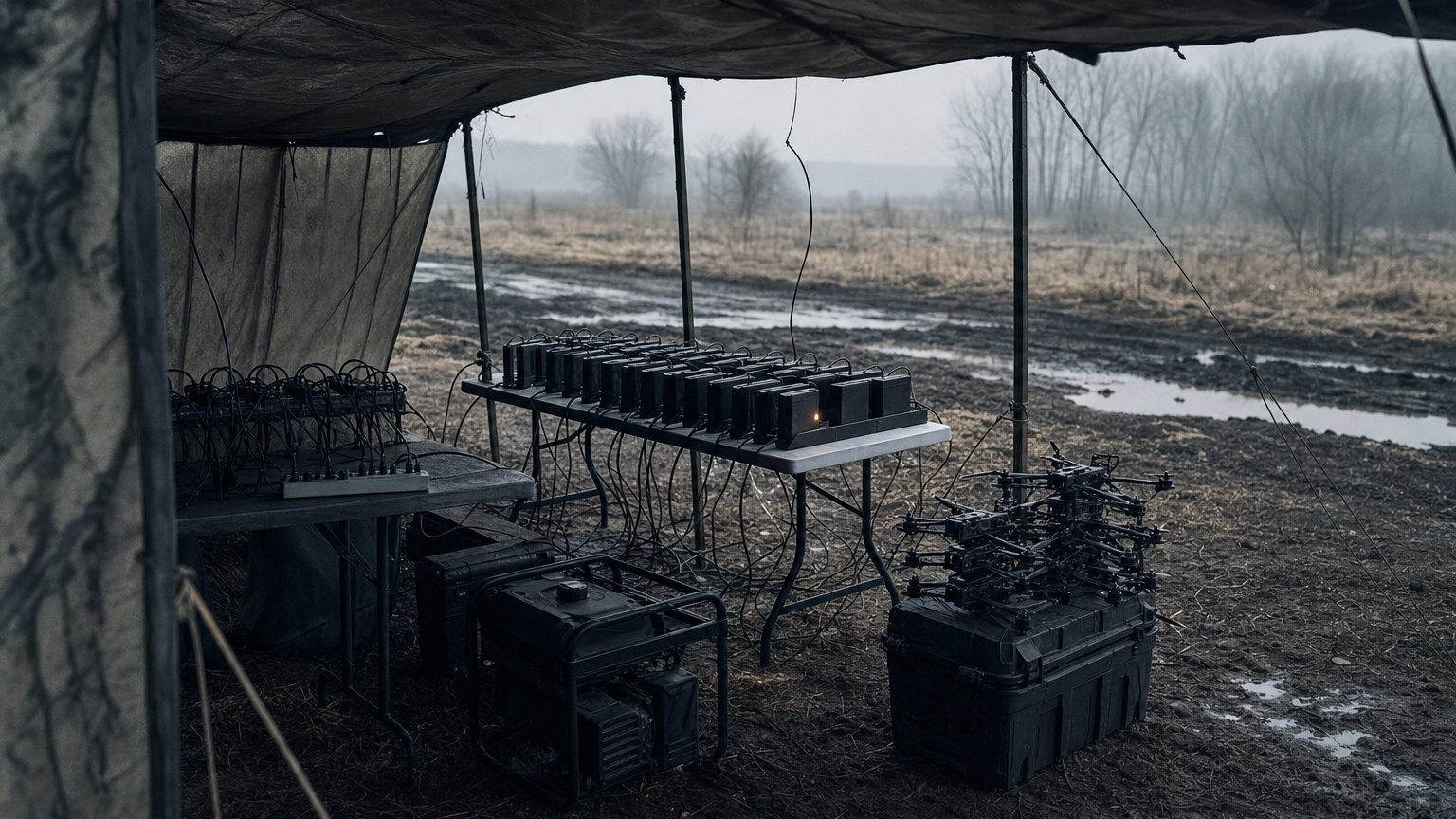
The mandate rules out most of defence tech before the pitch starts
Eveline Buchatskiy describes D3's investment mandate in one sentence: the companies it backs have to be aligned with winning this war. In practice that means Ukraine must be either the primary go-to-market or a very important user sitting on the product roadmap.
That is a filter most funds would never apply, and she is candid about what it excludes. A company built for the Indo-Pacific or for Australia gets her good wishes, and she says that work is needed too. It is simply not a match for D3.
The consequence is that the portfolio is not a bet on defence as a sector. It is a bet on a single theatre, and every line in it is an answer to something the front is short of right now.
Unmanned systems came first, in every domain, and in a deliberate order
The fund started where you would expect, with unmanned systems. Buchatskiy says the goal was a footprint in every domain, and the sequence was aerial first, then land, then sea.
Aerial meant reconnaissance and strike drones. Land meant UGVs, the ground robots. Maritime arrived with the investment in UFORCE. Her summary is that D3 now has pretty good coverage of unmanned systems across all three.
Taken alone that reads like a standard drone fund. The next point is where it stops being one.
The hardware is a host, and the value is moving into software
Buchatskiy's framing of the platforms is blunt: they are just a host to software. The expectation she reports is that by next year these systems will be fully autonomous.
She lists the software layers that have to exist for that to be true. Last-mile targeting, so the drone finishes the attack when the link is gone. GNSS-denied navigation, so it knows where it is without satellites. Coordination between drones, and communication between them.
That is why the fund invested in autonomy systems, and alongside them in what she calls a little bit of battle management, a C2 type of capability. If the airframe is a commodity and the autonomy stack is not, the investor who owns the stack owns the margin. The portfolio follows that logic.
She also flags a category she says is popular now and that D3 moved into early: orchestration of the many cheap expendable systems into one operating system that gives commanders full visibility of the frontline and some intelligence on which to act. The claim to watch there is the word early. Being first into a category that later crowds is where venture returns usually come from.
Air defence is treated as a critical niche, and lasers are still on the sidelines
Air defence, in her words, is a very critical niche for Ukraine, and the fund has tried to cover every possible way of doing it. She names three: interceptors, drone detection, and automated turrets.
Then she adds the gap. D3 is looking at laser systems but does not have an investment in lasers quite yet. It does have sensors.
That is a useful tell. A fund that has backed interceptors, detection and turrets, and is studying lasers without committing, is signalling where it thinks the technology is mature enough to deploy and where it is not. Lasers remain in the second column for now.
Batteries and demining are the unglamorous lines, and she defends both
Two investments sit outside the drone story, and the reasons she gives are different for each.
The battery investment is practical. D3 backed a modernised battery company to power the frontline, because thousands of systems need charging and recharging. Her requirements are specific: the batteries have to be portable, and the price point has to be there. A drone fleet is only as useful as the power that keeps it flying, and that constraint rarely appears in the pitch decks.
The demining investment, by her own account, was made mostly for moral reasons. She says Ukraine is likely the first or second most mine-contaminated country in the world now. It is a small part of the map, and she does not dress it up as a return thesis.
AI arrived late in the portfolio, and she says so
Buchatskiy is clear about the order of events. In the beginning D3 was more focused on hardware. AI came a little bit later. The fund has now made some AI investments for defence, and she says there is a lot of it now.
Read together with the autonomy point, that sequence matters. The fund bought the platforms first, concluded that the platforms were hosts, and then moved its money into the software that rides on them. That is a coherent story about where value is migrating in this war, told by someone whose portfolio has already made the move.
What to watch
- Full autonomy by next year. Buchatskiy reports this as the expectation. Whether portfolio systems are operating with last-mile targeting and GNSS-denied navigation on that timeline is checkable.
- A D3 laser investment. She said the fund is looking and has not committed. If one appears, the maturity judgement has changed.
- Whether the single-operating-system category crowds. She says D3 was an early mover and that the category is now popular. Count the entrants.