 Ukraine Military History Institute
 Rob Lee
 Ryan O'Leary
 Dmytro Putiata
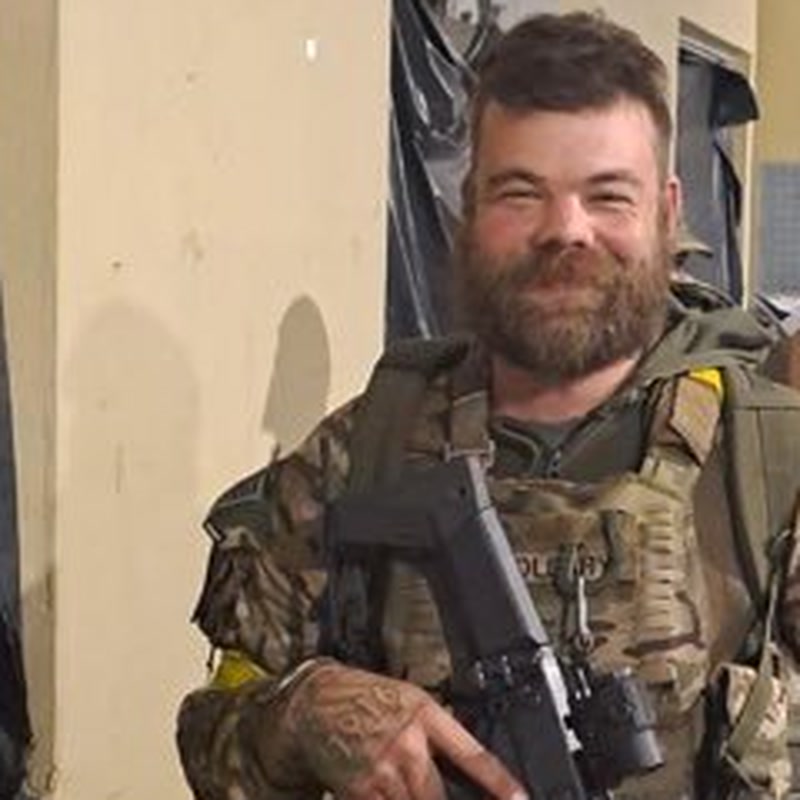
Most foreign fighters leave Ukraine's army over the system, not the fight, says Ryan O'Leary, an American volunteer serving in the Armed Forces of Ukraine. "The biggest issue isn't can you get foreigners to fight, it's can you get foreigners to stay on contract," O'Leary said, as he and Rob Lee, a senior fellow at the Foreign Policy Research Institute, went through Mykhailo Fedorov's exit speech as defense minister the day after it.
Fedorov said he wanted 30 to 50% of infantrymen or assault unit guys to be foreigners, Lee told him. O'Leary, who said he has been in Ukraine four years, was not impressed. "I think it's a pipe dream to figure out if you want even 20% of your infantry to be foreigners."
His argument is about retention, not recruitment. Foreigners are typically more motivated, O'Leary said, because "we don't come here because we have to," and most do not come for money, though some do. But "you can recruit 5,000 foreigners a month, but it doesn't matter if after six months they all leave." Or "if 90% of them leave, 'cause like you're just this revolving door. We recruit 5,000, 4,000 leave." He offered those numbers as illustrations.
Hear Ryan O'Leary on foreigners and retention at 51:35.
The transfer problem
O'Leary's central example is one he says he knows "firsthand because I'm dealing with this now." It is "still outlawed to do inter-agency transfers," O'Leary said, so a foreigner in the land forces cannot transfer to the National Guard, or the other way. He quotes what he says an officer at the general staff told him: "You can either cancel contract and join the National Guard, or you can go AWOL and join them."
O'Leary then walks through what canceling means. Cancellation takes seven to 14 days. Then comes a week of medical at the processing center, then 30 to 60 days of waiting on a background check done six months before. "So, like, you could be off-contract and sitting around Ukraine for three months," O'Leary said.
Armiya Plus is the other half. In year four of the war, O'Leary said, the general staff has not once advocated allowing foreigners into it, other than just recently under Fedorov. His example is the yearly health and welfare bonus. A Ukrainian colleague logs in and submits the documentation. For a foreigner, it is "like five freaking pieces of paper," stamped by the battalion commander, the brigade commander and on up. With Armiya Plus, he said, "a lot of the stuff is easier."
Hear Rob Lee on this, at 0:00From “E-Points, Busification, and the Generals Nobody Can Fire”What a six-month contract buys
O'Leary also makes it a matter of cost. "It costs Ukraine much more than what they get back for a foreigner to stay six months and leave," O'Leary said. He counts 51 days of basic training, a 14-day cooling off period at the unit, and, at drone school or in units such as Azov or 3rd Assault, another four weeks. Lee qualified that: some do, he said, but some get two weeks of adaptation training and then go to the front.
Then comes waiting for a rotation. O'Leary's conclusion is that "a person on a six-month contract might spend a total of two weeks to a month at the front and then leave."
His target is modest. If 85% quit at six months, O'Leary said, posing it as an example, the question should be "how can we reduce that 85% to 50% and get them to stay nine months? And then after that, 12 months."
Ukrainians do not face this choice in the same way, O'Leary said. "Ukrainians, they're stuck on contract." Their retention level "is either AWOL or injury or death."
What he would change
His fix is an ombudsman, a foreigner running the office, covering Spanish, French and the other main languages. "Hey, when you sign a contract, here's a card to your military ombudsman," O'Leary said. If you have "an issue with missing payments," cancellations or vacation, you call the number. His example of why: "we had a guy whose mother died, and he couldn't get 30 days of vacation" for the funeral, "so he had to go AWOL."
He also wants foreigners used for what they can do. "Foreigners aren't being utilized properly," O'Leary said. He has known people trained in the US military for geospatial intelligence and analytical work who were offered a trench. Lee agreed on the direction: "a lot of them don't wanna do infantry," and if you give them a useful skill, "they may stick around longer."
Where Lee pushes back
Lee does not simply sign on. When O'Leary said the general staff "for four years has done very little to keep foreigners' retention high," Lee noted that "they have rotated people," so it is not the same people the entire time. O'Leary's reply: "it's just nobody does anything there." These are known problems, O'Leary said: "I talk about it every month. So do other foreigners."
They also part over who is to blame. O'Leary wants the commander-in-chief swapped: "new eyes. That's all I'm for." Lee is more cautious, wondering whether "even if you replaced him, it's not going to solve these issues right away," and pointing out that Fedorov could not fire generals or replace brigade commanders. In Lee's opinion, Fedorov "is getting blamed for some things" that were not fully in his remit.
O'Leary is no uncritical Fedorov fan on this subject. "I had issues with him too," O'Leary said, calling the privatization of foreign recruitment a "stupid idea" and predicting "human rights abuses." Lee's answer: "Depends how it's done, I'd say." What O'Leary credits Fedorov with is openness: "he could have been wrong on 80% of it, but the biggest thing was he was open about it."
The wider argument about who commands what is in what Drapatyi must fix. O'Leary's complaint is narrower: whether a foreigner can move between Ukrainian forces without canceling a contract.