 Ukraine Military History Institute
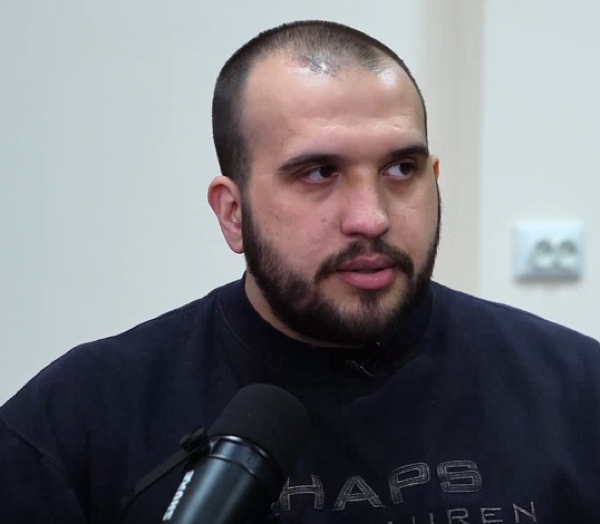
 Shaun Pinner
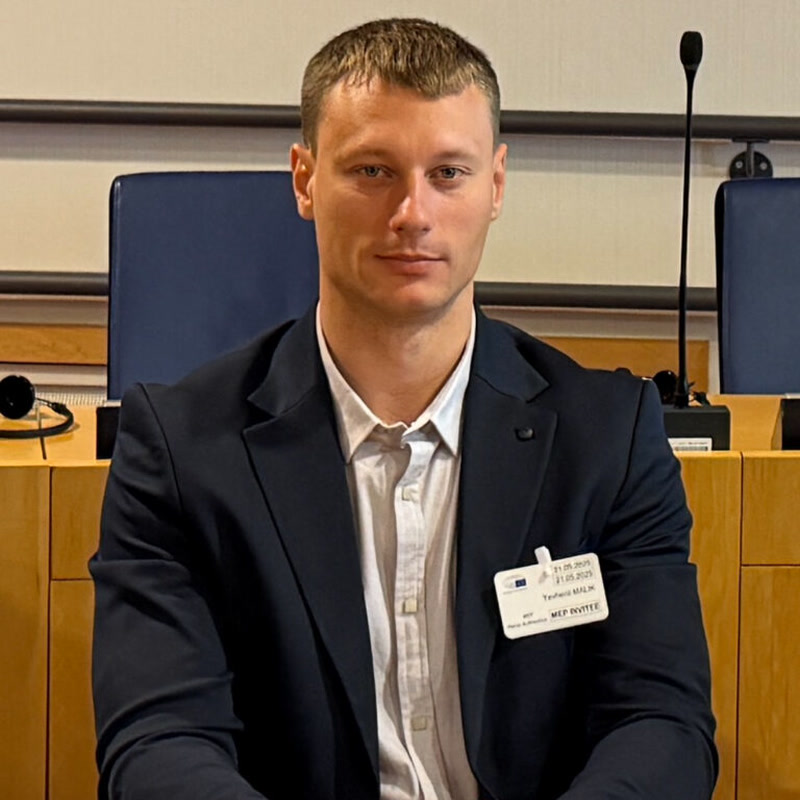 Ievgen Malik
Shaun Pinner's lesson from Mariupol is that Russian forces never corrected: mortars hit the same spot ten times, and failed assaults on the steelworks returned down one route with 8, then 20, then 30 men. Pinner, a British Army veteran who joined Ukraine's Marines, defended Mariupol in 2022, was captured trying to break out, and was sentenced to death before being exchanged.
He tells the story to Ievgen Malik, a former Marine sergeant from the same battalion who also defended the Illich steelworks and now works as a defence analyst at the Kyiv School of Economics. The two recorded the conversation in Kyiv in 2026, and it was released on 3 August 2026. Pinner now talks to NATO militaries about what he saw, and his explanation of why Russia gains so little starts with those mortars.
Who is Shaun Pinner?
Pinner was born and raised in London. He spent nine years in the British military: a covert operations platoon in Northern Ireland, counter-terrorism work, two United Nations tours in Bosnia in the early 90s, reconnaissance, and a speciality in SERE, the survival, evasion, resistance and escape training that prepares soldiers for capture.
He came to Ukraine in 2018 to visit friends in Mariupol, who were looking for instructors after the annexation of Crimea. He spent two years as a sniper instructor with Azov in the National Guard, then moved to the Marines, because as a foreigner he could not hold a National Guard contract. By then he had married and settled in Mariupol, and learned Russian before Ukrainian. "I am a Ukrainian soldier from East Ukraine who speaks Russian," he says. "Just born in London."
So when Russia came, he was defending his own city. He had a house on the left bank.
Hear Shaun Pinner on this, at 31:24From “Shaun Pinner: Surviving Mariupol and Russian Captivity”What was Russian artillery like at Mariupol?
Heavy, and uncorrected. Pinner watched Russian crews fire mortars into Mariupol ten times into the same place, with no adjusting or bracketing. "We're gonna die here," he would think, and the next round would land where the last one had. "They're not hitting anything."
Malik's summary is that the Russian side does not count anything: not ammunition, not people, not weapons. If it decides something must be destroyed, it destroys it completely, whatever that costs.
Malik's example comes from a fellow Marine, Artur Kolesnik, who was in a field with one other Marine early in the full-scale invasion when a drone appeared overhead. His companion said the Russians would not waste ammunition on two men. About 30 seconds later, a Grad salvo came in on their position. Pinner's version: they would "use like a Grad to hit two guys in a field." If the two were generals, Malik says, that might make sense. For two Marines, it is ridiculous.
Hear Shaun Pinner on Russian artillery at Mariupol at 26:44.
How did Russia assault the steelworks?
The same way it fired. When Russian troops tried to get into the steelworks, Pinner says, they would send eight men, fail, and send the next group down the same route. Then 20. Then 30. The defenders sat ready and watched each group come along a path that had already failed, past the dead from the attempt before.
Malik puts the question the attackers never seemed to ask: "They didn't manage. Why do you think that you will?"
There was no pattern to the bombing either. Russian aircraft would destroy an electricity pylon at Illich when there was already no power at all. At the Illich barracks, Malik recalls, a Russian tank fired at the big clock on the battalion headquarters building every hour, as if to remind the defenders what time it was.
Why does Russia gain so little?
This is the argument Pinner now takes to NATO militaries. Once he describes Mariupol, he says, it becomes obvious why Russia has moved so little: it lost at Kyiv, and it still makes only small gains, at what he puts at one million Russian casualties. That figure is his own, said in conversation.
His causes are specific. Command is centralised. Soldiers do not understand the situation they are sent into, and do not try to. The method that results is to bomb everything within a radius and then send in a few troops.
Malik adds the evidence anyone can check. Follow the route from Mariupol to Pokrovsk on Google Maps, he says, and everything is destroyed. The destruction is not a side effect. It is how Russia prepares a town for an advance.
The breakout, and capture
After about six weeks, there was nothing left: no food and very little ammunition. Pinner knew the encirclement was 200 kilometres deep. He had already snapped his bank cards, expecting that captors would march him to a cash machine, and Malik's unit smashed its phones, computers, radios and Javelins so nothing useful would be captured.
The order to break out came on a clear, sunny day, after a foggy one he had wanted to use. His group was ambushed at about three in the morning on the edge of Illich and he lost his platoon. He spent hours moving through buildings, checking doors for tripwires and avoiding drones, covering perhaps 200 metres in two hours. He was captured by the forces of the so-called Donetsk People's Republic about two hours outside Mariupol.
He had planned to surrender to a Russian officer if it came to that. Instead came captivity, torture and a death sentence. "You've tortured me. You've given me the death penalty," he says of Russia. "It's my job to tell people what actually happened in Mariupol." He wrote his book, Live. Fight. Survive., to answer the narrative Russia built about him while he was held.
Hear Shaun Pinner on the breakout from Mariupol at 40:00.
Malik's own account of captivity, and why Russia hurries exchanges for some prisoners and not others, is in why Russia hurries exchanges only for its conscripts.