 Ukraine Military History Institute
 Rob Lee
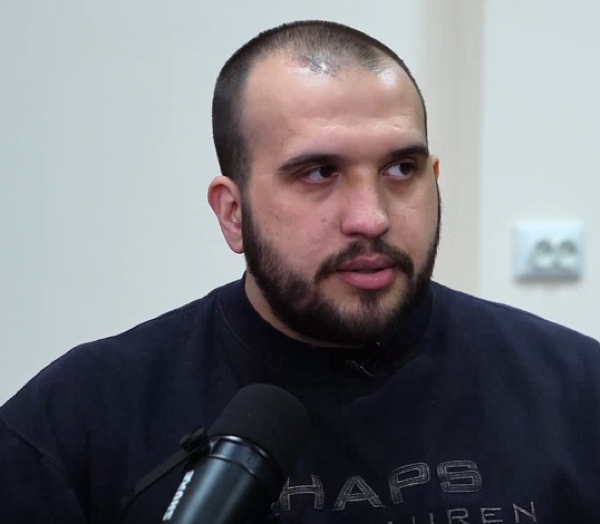 Dmytro Putiata
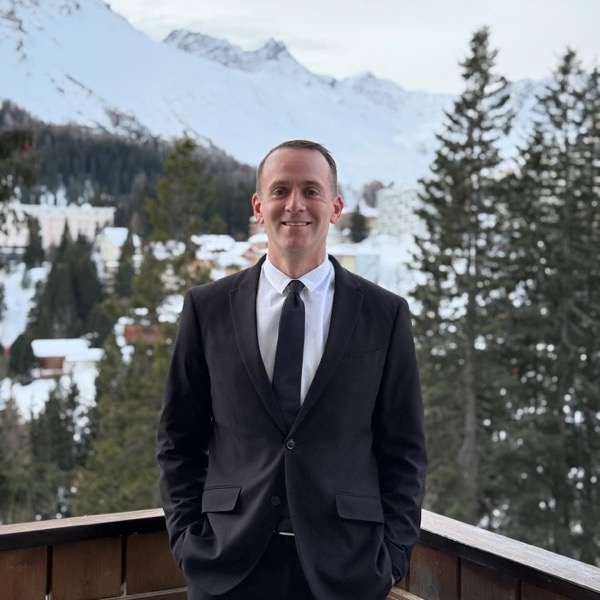 Samuel P.N. Cook host
Four things are better than they were a year ago
Rob Lee closes the conversation by pushing back on the tone of its final stretch. He calls the previous twenty or thirty minutes a somewhat pessimistic way to end, and reframes.
His baseline claim is comparative: the battlefield is better than it was a year ago. He supports it with four specific differences.
Russia was advancing faster last year. Manpower was a bigger problem for Ukraine last year. Ukraine did not have the middle strike capability it has now. And its deep strike capabilities are stronger than they were a year ago.
Each of those is a comparison against a fixed point, not a forecast. That is what makes the list useful: it describes trends that have already happened, and Lee is careful not to claim he knows what they will produce. "What will that result in? I don't know," he says. "We'll have to see."
Hear Rob Lee on the year's balance sheet at 2:10:53.
Hear Rob Lee on this, at 2:10:53From “Russia Is Learning Faster Than You Think”The war changes hands every few months, and so do the narratives
Lee's second point is about how the war gets read. It changes every few months. One side gets the upper hand, then the other does, and each swing tends to generate a narrative that is very strong in one direction.
His advice is to resist narratives that are too optimistic or too pessimistic. The war can still develop in different directions. Russia could collapse or run into big problems, but things could also get much worse for Ukraine.
He is explicit about where that leaves the present. In his view things have not changed as much as some people have said, and the war has not reached a turning point yet. The positive trends are real. They are not yet a verdict.
Russia will adapt, and the winter will be hard
Against the improvements, Lee sets what nobody can predict. Russia is going to adapt. Nobody knows when Russia might collapse, and nobody knows when the war will end.
What he does expect is that the war will run into the winter, and that it will probably be a tough winter for Ukraine again. Last winter was quite difficult, and he points to ballistic missiles as a likely problem this year.
This is the hedge underneath the optimism. A better position on the front line says nothing, by itself, about what the coming months do to the rear.
Outcomes depend on decisions, including who commands
Lee's most pointed claim is that this war is not predetermined. Results depend on choices and decisions that are made.
He names one. In his view Mykhailo Drapatyi is a good person to take over as commander-in-chief of the military and will have a positive effect. But Lee does not present the appointment as a fix. The system has a lot of problems, Drapatyi has a lot to change, and those reforms are not going to be immediate or easy.
That combination is the honest version of the optimistic case: a commander Lee rates in the job, facing a long list of structural problems that no single appointment resolves quickly.
Foreign support still matters, including from Washington
Lee is direct about outside help. Foreign support is still incredibly valuable. He notes that the EU has unlocked a loan, which is very important, and that support from the United States is still very important too.
The specific American contribution he names is intelligence support, among other things. "I know people have different narratives," he says, "but it still is impactful."
A static front still costs every day
The reason support matters now, in Lee's framing, is that time is not neutral. Even when the front line is not moving that much, every day is very damaging for Ukraine. Soldiers are being killed. Civilians are being killed. Industry and the economy are being affected.
And Ukraine already has demographic problems. The longer the war goes on, the worse the consequences for its long-term future. A stable front is not the same thing as a stable situation, and Lee's closing request follows from that: whatever foreign supporters can provide matters now, not later.
Putiata: fewer men, a better situation
Dmytro Putiata agrees with that last part. Ukraine is suffering a great deal, its economy and its society both, and with the war continuing he sees no obvious way out of that.
But he anchors his own optimism in a comparison too. The current situation is "not comparable" to what came before, he says. "Not even close." He recalls 2024 as a hard year, with a lot of breakthroughs using ATVs and armour. Now, in his words, it is absolutely different.
His most striking point is the arithmetic. Ukraine now has even fewer resources in terms of men than it had then, and yet the situation became better. That, Putiata says, is what gives him more optimism than he had before.
Read alongside Lee's list, the observation matters. If the line held better with fewer people, the improvement did not come from numbers. Lee's own answer for what changed is the new middle strike and deep strike capability, and Putiata's arithmetic is consistent with it.
Lee and Farrell's earlier reading of the same front is in where the front stood in September 2026.
Who commands, and what he inherits, is in the command problem Ukraine's new commander inherits.
What to watch
- Ballistic strikes this winter. Lee expects a tough winter for Ukraine, with ballistic missiles as a likely problem. Whether the coming winter proves harder or easier than the last one tests that call directly.
- Drapatyi's reforms. Lee expects a positive effect from the new commander-in-chief but not an immediate one. Visible structural change in the system over the coming months, or its absence, will show which way that goes.
- The pace of Russian advance against last year. Lee's whole comparison starts from Russia advancing more slowly than it did a year ago. If that pace climbs back, the case that the battlefield is better weakens with it.