 Ukraine Military History Institute
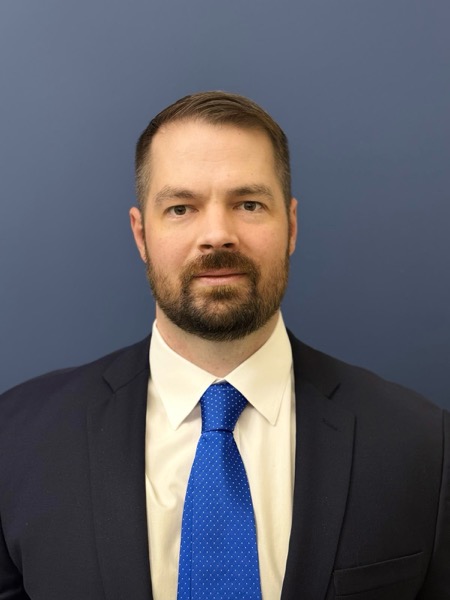 Rob Lee
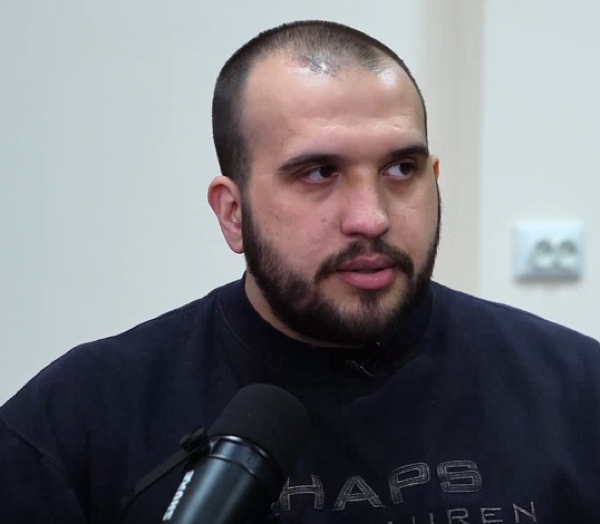
 Samuel P.N. Cook host
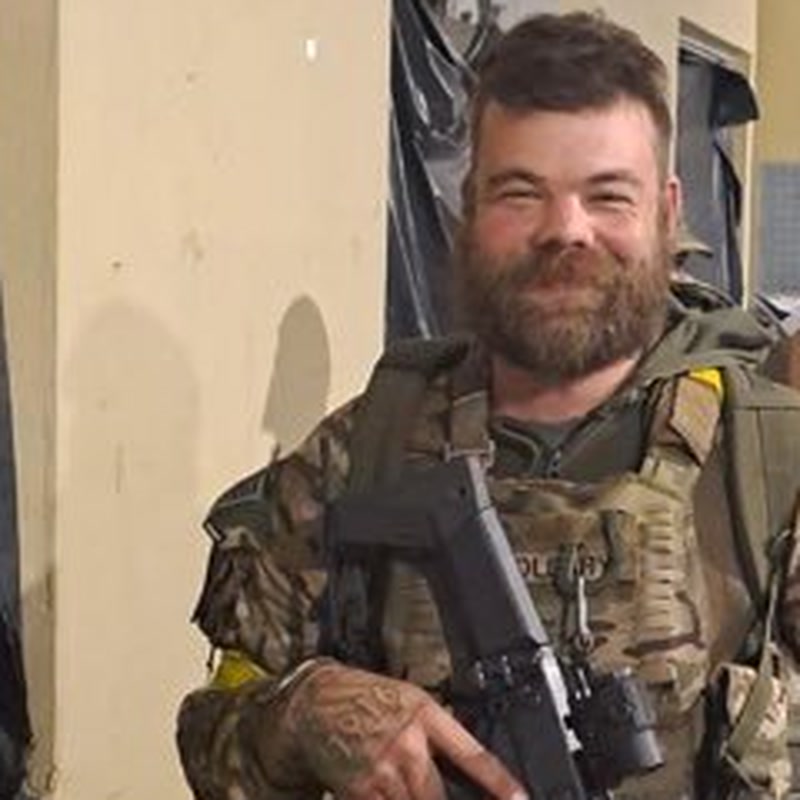
Operation Vivaldi was meant to defeat the northern pincer of the fortress belt, according to Jackie, the senior American military advisor to Third Army Corps. Pressed by Rob Lee, a senior fellow at the Foreign Policy Research Institute, on whether that meant attrition or terrain, Jackie said the corps had, "I think," two main objectives, and that the operation is not finished: "the gains keep coming, and there's no reason for us to stop."
Sam Cook put the first question: "what was the purpose of the operation?" Jackie's answer was one line. "The purpose of the operation was to defeat the northern pincer of the fortress belt."
Lee wanted to know what that meant in practice. "You could do that by just stabilizing the front line," he said. He had heard different accounts: that the corps maybe wanted the Russians "to keep feeding people in," or that it was about "a kind of terrain focused objective." Were there terrain objectives? "Yeah, and we went a bit over them," Jackie said. Cook's verdict: "Over-delivered."
Then Jackie gave the fuller version. "I think in the total end state we had two main objectives." The first was to defeat the northern pincer. The second was to put the corps and its brigades on the offensive "with minimal loss of human life."
Hear Jackie answer Rob Lee on what Vivaldi was for at 24:51.
Who was on the other side
Cook thought there were three Russian armies in the area. Jackie, who says "I am not the intel guy," confirmed it as "three army echelons of the Russians."
Cook summed the purpose up as enemy focused, and as a chance for a corps that had not had the opportunity to run offensive operations "to execute combined arms in a way that's employing maneuver and preserving combat power."
What surprised the corps? "Very little surprised us," Jackie said. "The most surprising thing is probably the Russians response at their strategic level." Jackie called it a "good surprise." Cook asked: "You mean lack thereof?"
Lee then asked the question every analyst wants answered: what was the critical vulnerability, the center of gravity? Jackie would not say. "I absolutely cannot tell you what the center of gravity or the exploit that we achieved for this operation." Then: "I will." And: "Just not today."
Hear Rob Lee on this, at 24:51From “Operation Vivaldi From The Inside”Why Jackie thinks this was the hard direction
Asked whether the same operation would have been easier somewhere else on the front, Jackie thought so. "I think we would have gotten a lot more if we were in any other direction."
The reason, in Jackie's account, is that the center "gets the most troops because this is the main direction of effort for the Russians." And troop numbers are how Jackie tells Russian units apart: "number of troops is the primary metric of how you distinguish one Russian unit from another for the most part."
Below battalion level, Jackie allows that particular Russian units may use smart tactics. Above it, "the only thing that matters for the strength or capability of a Russian unit is going to be number of troops and the competency of their drone support." Rubicon, the Russian drone unit Jackie keeps returning to, is "a stand-in for competency of their drone support."
That leaves one constraint on the corps itself. "The sheer number of troops is the only limit to us on this current offensive operation."
What is at stake around Sloviansk
Has Vivaldi changed the battlefield around Sloviansk? "It's taking the pressure off significantly," Jackie said. "It needs to be a bit more." In Jackie's words, "what we've pulled off so far is not sufficient in order to maintain the security of the fortress belt."
Jackie's argument for why the fortress belt matters runs like this. If Russian forces reach Kramatorsk and Sloviansk, they can return to "a Bakhmut sort of ... Wagner prisoner exchange for territory tactic." Inside urban terrain, "the effectiveness of our current drone TTPs significantly reduces," and "sheer number of infantry matter." So "if they get there, then at some point they will take those cities."
The stakes are political as much as military. If Russia takes the cities, Jackie said, Vladimir Putin can tell his own people that he has achieved the objectives of the special military operation "and that we will do a victorious ceasefire." Then "the spirit of Ukrainians is going to suffer immensely." Cook added the operational cost: "the road to Kharkiv and Dnipro is wide open."
Jackie described the other outcome too. If Ukraine stops the Russians short of the cities, keeps exhausting them, uses the mid-strike to pull back their logistics and the deep strike to harass their state, "then at some point there needs to be a non-victorious ceasefire which will be declared by Russia as a victorious ceasefire." Ukrainians everywhere could then laugh at the claim, because "it is obviously a joke, it is obviously a lie, and you are obviously exhausted."
Dmytro Putiata's view of what the next Ukrainian offensive would look like is in Dmytro Putiata on why Ukraine will manoeuvre again, smaller than Robotyne.
Taking the model to two more corps
Third Army Corps now sits at the head of Group of Forces Center, which, as Lee put it, "has taken over 11th and 19th Army Corps as well." Lee asked what is changing in them.
Jackie called it "an extension of what we did in 2025," when the corps "integrated an additional five brigades to our right" and brought them "up to the standard of military operations, trust initiative, and Western Mission Command." Now the same work is going from one corps to two more. It was, Jackie said, "my priority one over the summer."
So Jackie thinks the answer to Lee's question has two halves. Vivaldi was aimed, Jackie thinks, at the Russian forces pressing the fortress belt from the north, and at proving that a Ukrainian corps could attack with several brigades at minimal loss of life. On the first, Jackie says the corps went a bit past its terrain objectives and has still not done enough. On the second, the corps is now trying to teach it to its neighbours.