 Ukraine Military History Institute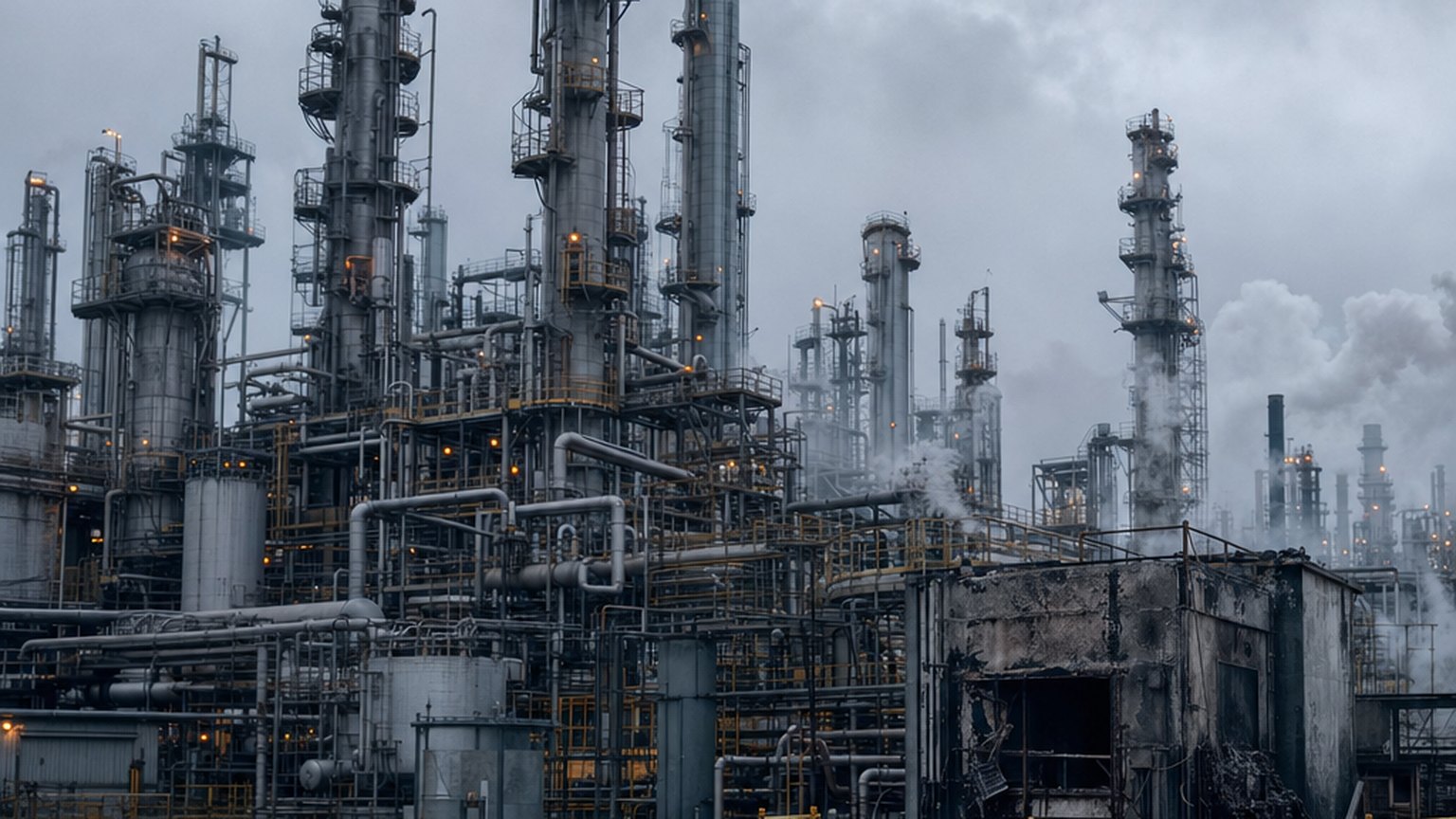
Deep-strike drones are not precision weapons, and the numbers say so
Rob Lee is direct about a distinction most coverage collapses. Deep-strike drones run on a combination of inertial navigation and GPS or GNSS guidance, and it is not perfect.
He gives the example rather than the adjective. A deep-strike drone missed one of the big factories the previous week by roughly 100 metres. These are not precision-guided munitions, because the accuracy is not there, because Russia is jamming, and because Russia has air defence.
Then the number that reframes the whole campaign: most of the drones are defeated and never reach the target. What gets through is somewhere around 15% to 30%.
So the campaign is effective in aggregate while being unreliable in the particular. That is a workable description of what a deep-strike package actually is: a volume weapon, not a scalpel.
Why Starlink changes the equation twice
Lee identifies two separate gains from a datalink, and they are worth separating because they solve different problems.
The first is terminal accuracy. If you can manually guide the drone into the target, you can hit a very specific place. With regular guidance, maybe you hit it and maybe you do not. For a refinery, where the thing worth destroying is a particular component rather than the site, that difference is the whole engagement.
The second is immediate battle damage assessment. You know exactly what you hit, without waiting for satellite imagery or anything else.
That second one is easy to undervalue. A campaign that learns what it hit within seconds can retarget the next night. A campaign waiting on overhead imagery is always working from an older picture of its own effects.
The objection: it is burning, but it is still working
Dmytro Putiata pushes back, and his is the sharpest argument in the chapter.
While Ukraine is hitting oil refineries and there are good pictures of things burning, the point is that the facility keeps working after the strike, because the critical components are not being hit.
His analogy makes it concrete. Think about striking a railway station. Destroying the depot is not the main thing. There are specific components, the ones supplying electricity to the lines for instance, that actually need to be destroyed, and you do not need to destroy everything to stop it functioning.
The same logic applies to refineries. The strikes look impressive, it is burning, and in his opinion the efficiency is quite questionable.
Lee does not fully concede but does not dismiss it either. His position is that we will have to wait until after the war to determine how successful the deep-strike campaign was and what the right priorities were. He accepts a certain percentage of refining capacity is offline and there appears to be some long-term damage, while noting that a fire which is put out in a day or two, at a small facility, means some stored oil was lost and the plant still runs.
The war became an economic campaign, and both sides are in it
The chapter then widens into something the participants name explicitly.
Russia has gone after Nova Poshta for a long time. Ukraine has been hitting Wildberries. Russia has extended the target list to Novus, Epicenter and Rozetka. Samuel Cook's summary is that it is an economic campaign now, and Putiata expects both sides to start targeting food facilities.
The maritime picture is the same pattern at larger scale. Cook notes Ukraine has struck many vessels in the Sea of Azov and the Black Sea, and reports that he had just been in Odesa, where the line of trucks was backed up halfway up the road because nothing was leaving the port.
Lee adds the piece that makes it a real change rather than an escalation of degree. His understanding is that there was some kind of understanding earlier in the war, in 2023 or 2024, that neither side would go after the other's shipping because it would be too damaging for both. That is clearly no longer holding. Ukraine has knocked out tankers heading to Crimea to isolate it, with videos most nights for weeks, and Russia is going aggressively after ships in and out of Odesa with Geran drones.
The consequence for Ukraine is economic rather than military. Most grain and other exports went through those ports. Land routes exist but are less efficient, and they create their own problems with transit countries such as Romania, which may not want the grain moving through or may not have facilities at the required size.
Who a symmetrical campaign actually favours
Putiata will not treat the exchange as an even trade, and Lee agrees with him on the fundamentals.
Putiata's hint is that Russia may win more from this than Ukraine. Lee's answer goes back to first principles: Russia is a bigger country, with more people and a bigger economy. When both sides hit the same category of target, what matters is who feels it more sensitively in a war of attrition.
That is the uncomfortable arithmetic under the whole economic campaign. Symmetry in method is not symmetry in effect when the two economies are different sizes.
Lee's final point moves it to strategy. Russia has demonstrated a strong ability to take very heavy costs. Manpower losses are known to be very high and there is no political uprising, none, with no sign of one soon. Covert mobilisation is already running through coerced contract signings, and there are indications of a further mobilisation this autumn. Whether that is a big enough political risk for Putin, he does not know. If Russia can mobilise more people and grow the force, next year could be much more difficult.
What to watch
- Whether refinery output actually falls. Putiata's objection is measurable. Refining throughput and fuel availability inside Russia, rather than fire footage, are what settle the argument.
- Repeat strikes on the same refineries. If sites are being struck again within weeks, that supports his claim that the critical components are being missed.
- Odesa port throughput. Cook described trucks backed up from the port. Export volumes through the Black Sea ports are the clearest measure of whether Russia's shipping campaign is achieving more than Ukraine's.