 Ukraine Military History Institute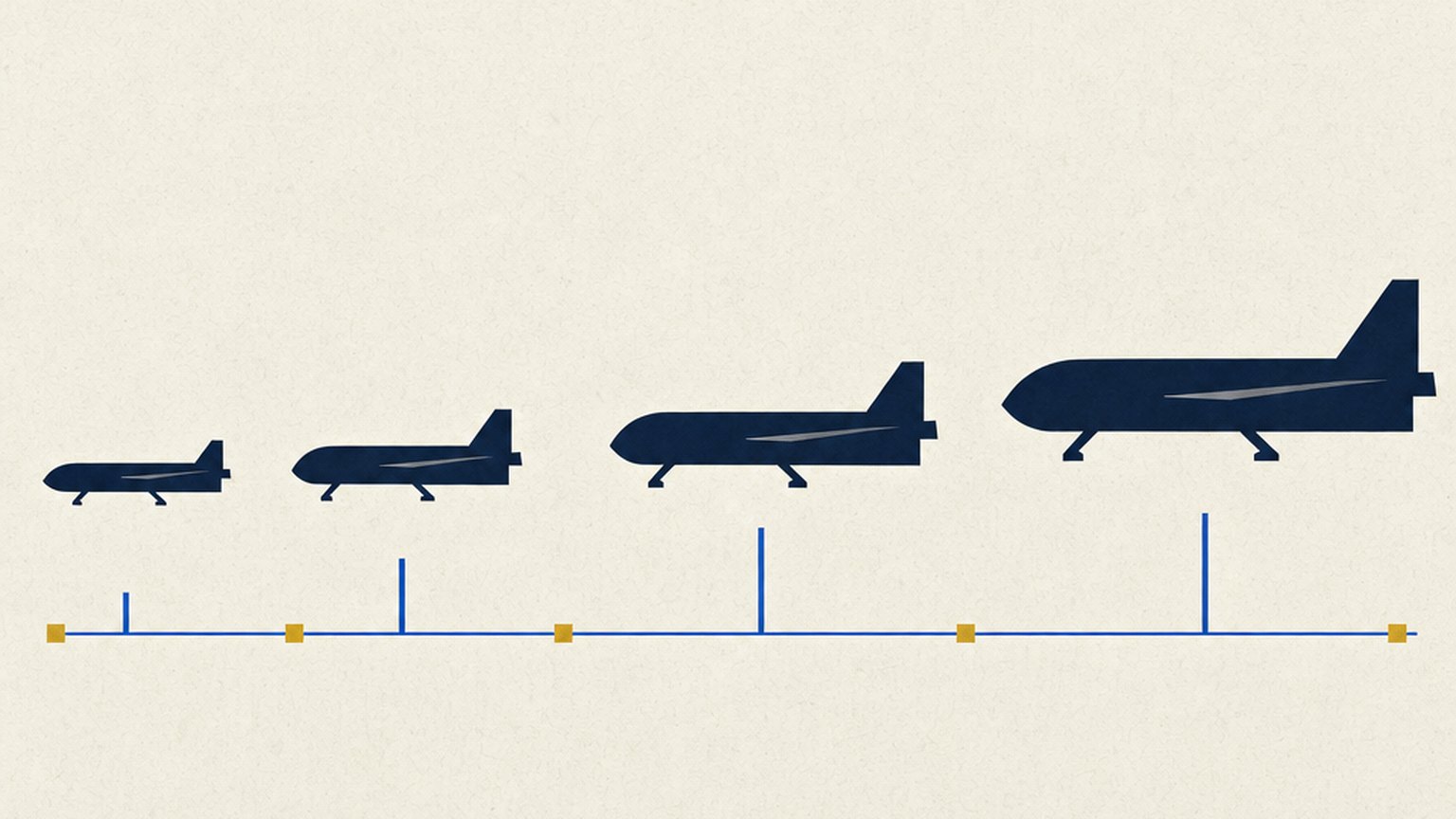
What a strike drone actually costs
Most discussion of drone warfare skips the prices, which is where the whole logic lives. This chapter does not, and the numbers are specific enough to argue with.
Rob Lee divides middle strike into heavy and light, and the split is about payload rather than range.
Heavy for Ukraine means the TB2 from Fire Point, carrying 250 to 400 pounds. That is enough to drop a bridge, collapse a building, or reach something dug in. It costs around $50,000.
Light means the Hornet, Blyskavka and Dart class, carrying roughly ten pounds or less, about five kilograms. Lee is blunt about the ceiling: good enough for a truck, not going to penetrate anything fortified. A Hornet runs $3,500 bare, around $5,000 once Starlink and the rest are fitted. Blyskavka and Dart sit near $2,000.
The point is not that one is better. It is that a commander can choose a $2,000 answer or a $50,000 answer depending on what is being hit, and both exist in quantity.
The correction that tells you more than the figures
The most valuable exchange is a disagreement.
Lee describes the Molniya as a cheap fixed-wing FPV at around $500 basic. The Ukrainian officer on the call corrects him directly: the price is nearer $1,500, not $500.
He then adds the constraint that actually matters, which is not cost at all. Russian Molniya crews sit roughly 30 kilometres back from the line, and the drone's practical reach is about 40 kilometres deep. More is occasionally possible. In most cases it is not.
That is the difference between a specification and an operational fact. The airframe's range is one number. The range you get once you account for where the crew can physically survive is another, and it is the second one that shapes the map.
The officer adds further texture: 15-inch FPVs fitted with Starlink also cost around $2,000 and reach up to 50 kilometres. Loitering munitions in the RAM 2X Bulova class cost around $40,000, and can fly roughly 100 kilometres without Starlink because a Shark ISR fixed-wing acts as a repeater.
So the same mission can be bought at $2,000 or $40,000, and what the money buys is mostly independence from a communications link.
Starlink is the hidden dependency, and Russia found out the hard way
This is the structural insight in the chapter, and it emerged from a natural experiment nobody ran deliberately.
Russia had been putting Starlink on everything. On Molniya. On BM-35 and BM-70 operational strike drones. On Geran. And, critically, on UGVs.
Ground robots have a comms problem that is genuinely hard. Lee recalls meeting UGV units in early 2025 whose entire preoccupation was maintaining a link: ground repeaters, chains of repeaters, endless workarounds. Then Starlink arrived and the problem appeared to be solved. It became, as he puts it, the option. It was going to be in everything.
Then Russia lost access to Starlink, and the UGVs largely stopped. Units reported seeing very few of them, because the communications situation had to be rebuilt from scratch. The vehicles still existed. The link did not.
They are reappearing now. But the episode is a clean demonstration of what happens when a whole capability quietly concentrates its dependency on one commercial service.
Russia's own interdiction campaign
Worth noting for the record: Russia began its own operational-level interdiction campaign in January, using the cheap end of the same toolkit. Molniya, BM-35s, BM-70s, Gerans, with Starlink fitted where possible.
This is not a case of one side discovering middle strike and the other failing to notice. Both are running versions of it, and both are constrained by the same economics of payload, range and link.
What to watch
- Whether the cheap tier keeps its range. A $2,000 drone reaching 50 kilometres is what makes saturation affordable. If electronic warfare pushes effective range back toward 20, the arithmetic changes completely.
- Repeater-based independence. The RAM 2X Bulova reaching 100 kilometres via a Shark repeater, rather than via satellite, is the template for surviving another loss of commercial connectivity.
- Whether UGV numbers fully recover. They are the clearest measure of how completely the comms problem has actually been re-solved, rather than patched.