 Ukraine Military History Institute
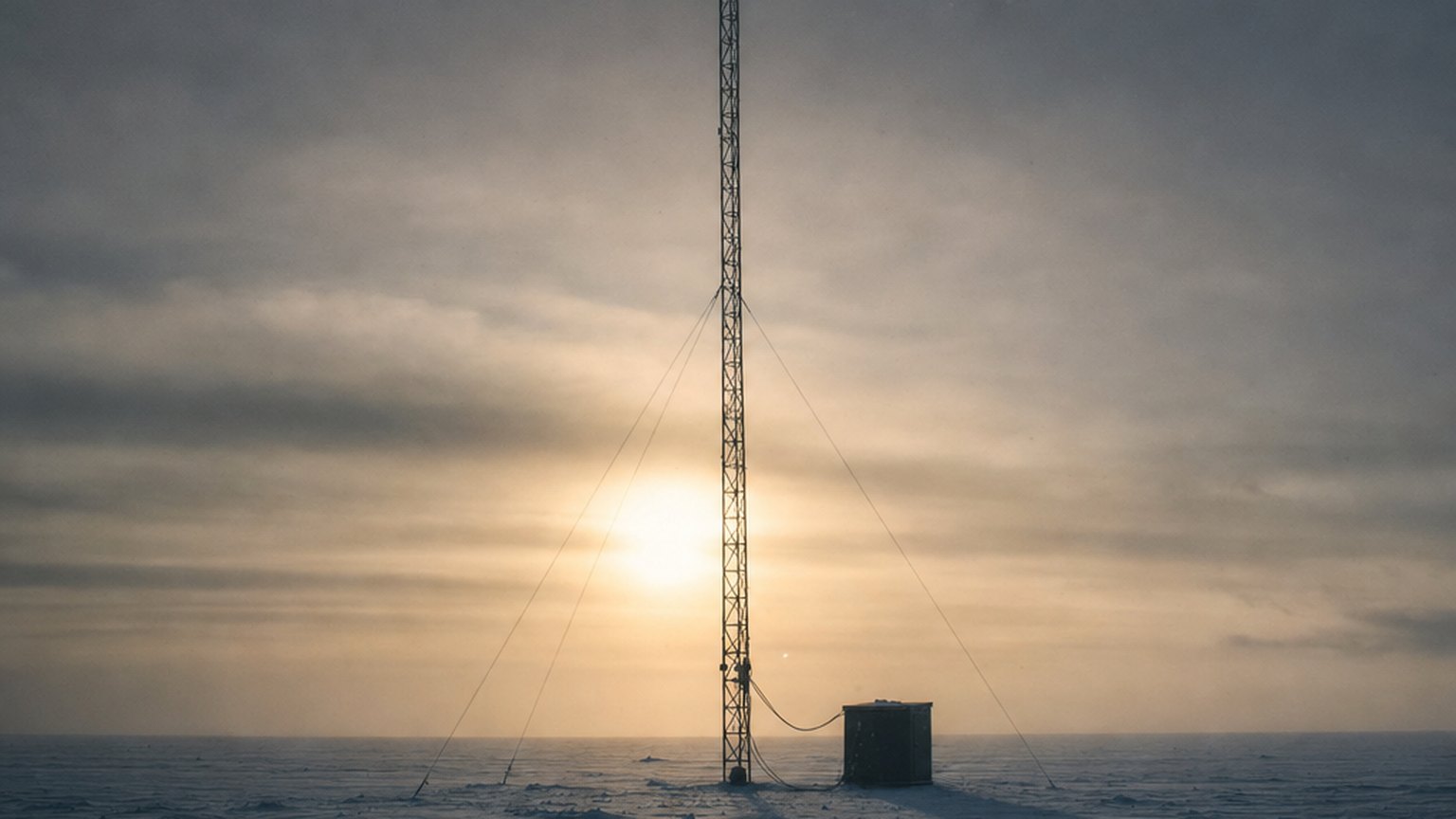
The advantage that defined the war now has a countermeasure
Starlink has given Ukraine a huge asymmetric advantage throughout this war. Rob Lee says so plainly, and then says the obvious corollary that most coverage skips: Russia knows it, which is exactly why Russia is building countermeasures. The question is no longer whether Starlink jamming exists. It is how fast it scales, and what it costs Russia to run.
The honest answer from the front is that it exists and it is not yet everywhere.
Felt in places, scaled nowhere
Lee and his colleagues ask units across the front line about this rather than inferring it from footage, and the picture that comes back is patchy.
Crimea was the priority, and jammers were known to be in use there. Zaporizhzhia is where a lot of the jamming is concentrated. Units as far away as the Sloviansk direction have felt Starlink jamming at times, which is further north than the pattern would predict.
But the texture of those reports matters more than the map. One brigade's answer, as Lee relays it, was that they felt it three months ago, once, and it had some effect, and they have not seen an instance since.
That is not a capability that has arrived. That is a capability being tested. Lee's own framing is that it is not scaled and there is not yet anything near the front line in quantity. On most of the middle-strike geography, the occupied parts of Donetsk, Kherson and Zaporizhzhia, he does not think it is affecting the campaign. Crimea is the exception, and Russia has gone as far as putting jammers on some tanker ships, because those ships are being hit by Starlink-guided strike drones.
The development to watch is production. Russia is scaling it, and Lee flags that as the important change this year.
A jammer has to emit, and a big one has to be plugged in
Here is the structural problem with the countermeasure.
If Russia switches a jammer on, that is observable. Sam Cook puts it in two words: it emits. Once it emits, it can be found, and once it can be found it can be struck. Lee describes the result as a constant cat-and-mouse game rather than a one-way degradation.
The second vulnerability is power. Lee's sense is that Peresvet-M is the most effective of these systems, and it draws a lot of power. So when units encounter one, it is typically sited near a substation or a transformer. That is another signature. A jammer that must sit next to fixed electrical infrastructure has narrowed the search area for whoever is hunting it.
Neither of those is a reason to dismiss the threat. They are reasons the threat has a price attached, which is different from how jamming usually gets discussed.
The answer is not a better link, it is more than one link
The adaptation on the Ukrainian side is not a clever fix to Starlink. It is refusing to depend on Starlink alone.
Lee notes that a lot of drones use Starlink and it plays a very big role, but that middle-strike units want a mix of assets so that no single countermeasure takes the whole mission offline. If Russia turns on a Starlink jammer, a Hornet carrying a Starlink terminal is probably not the right aircraft for that sortie. Platforms such as the Bulava and the RAM 2X use a repeater and an RF connection instead, which is a way around that particular jammer.
That is the real lesson, and it generalises. Redundancy in the link is the countermeasure to the countermeasure.
What Russia has not built yet
Russia understands the redundancy problem too. Lee says Russia wants to field combined electronic warfare groups: a Starlink jammer, a GPS jammer, and jamming across video frequencies, so that every option a Ukrainian crew might switch to has something waiting for it.
He has not really seen that yet. The intent is documented in what Russia is trying to create; the fielded reality is single systems doing single jobs.
Lee is also careful about how much he claims here. He says he does not understand the technical side and describes himself as an infantry guy talking about it. What the Ukrainians think is that there is a variety of systems, some jamming the terminal and some working against the satellite. Some of the jammers have not been effective, and the Russians are internally trying to work out why.
This is not only Ukraine's problem
The point with the longest reach is the one about somebody else's war.
Lee's warning is that the United States should not assume Starlink or Star Shield would necessarily be effective in a conventional fight. If Russia is learning these adaptations, China will learn them too, and the space domain is going to matter.
Russia is planning for the same future from the other side. Its eventual alternative constellation, Rassvet, is the long-term hedge against depending on someone else's satellites.
There is a variable that dwarfs all of this, and it is not technical. Lee raises the open debate about whether Starlink operation would ever be permitted over Russia itself. If it were, it would enable a middle-strike campaign into Bryansk, Belgorod and Kursk, pushing Russian logistics further back the way the campaign already pushed them back inside occupied Ukraine. It would also force Russia to spread its jammer production thin, across Moscow, St Petersburg and Sochi, instead of concentrating it where the fighting is.
Lee's timeline for all of it is six months to a year. Several cycles of innovation, in both directions, before anyone can say who won this particular exchange. He allows that Starlink may find its own ways of beating the jammers.
What to watch
- Whether front-line units start reporting jamming continuously rather than once. The single-incident reports are the current signature of an unscaled capability, and the shift to persistent reports is the measurable change.
- Whether combined electronic warfare groups actually appear. Russia wants Starlink, GPS and video frequencies jammed together. Lee has not seen it fielded. That is a falsifiable claim with a short shelf life.
- Peresvet-M siting near substations and transformers. If Russia solves the power problem and the systems stop clustering near fixed electrical infrastructure, one of the two ways of finding them goes away.